Understanding skip-counting Numbers Worksheets for Ages 6-8
3 filtered results
-
From - To
Discover our engaging "Understanding Skip-Counting Numbers Worksheets" specially designed for children aged 6-8! These worksheets provide a fun and interactive way for young learners to grasp the concept of skip counting, enhancing their number sense and mathematical skills. With vibrant illustrations and clear instructions, kids will enjoy practicing skip counting by twos, fives, and tens in a variety of contexts. Our carefully crafted exercises promote both understanding and confidence in solving numerical patterns, preparing students for more advanced math concepts. Perfect for home or classroom use, these worksheets are an excellent resource for developing essential foundational math skills in early learners!
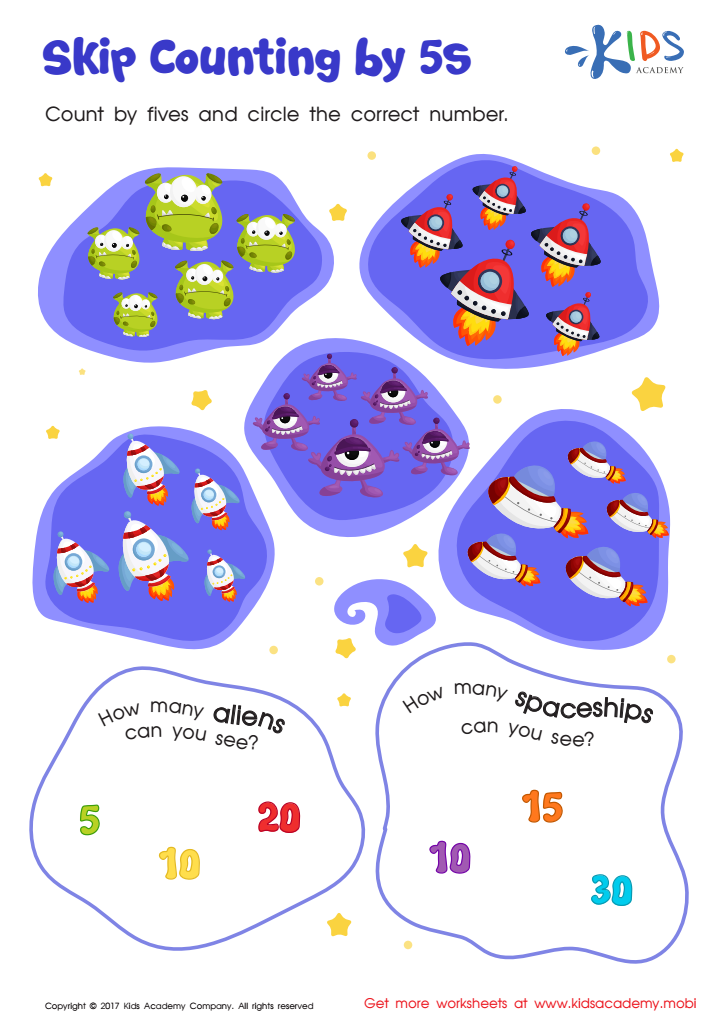
Skip Counting by 5s: Aliens and Spaceships Printable
 Assign to My Students
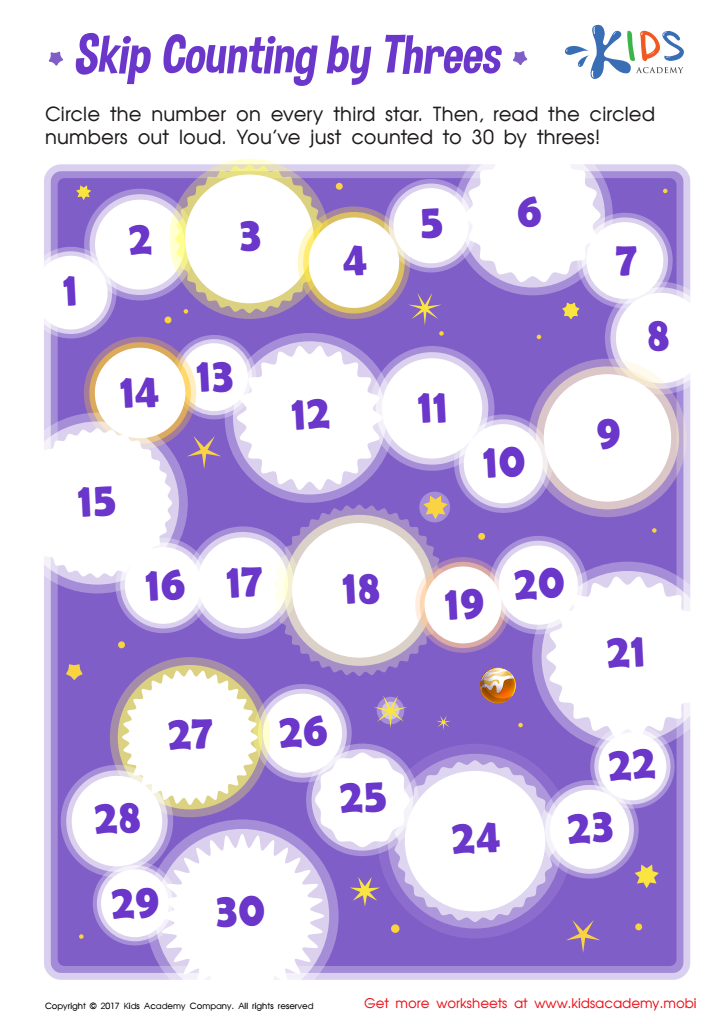
Skip Counting By Three Printable
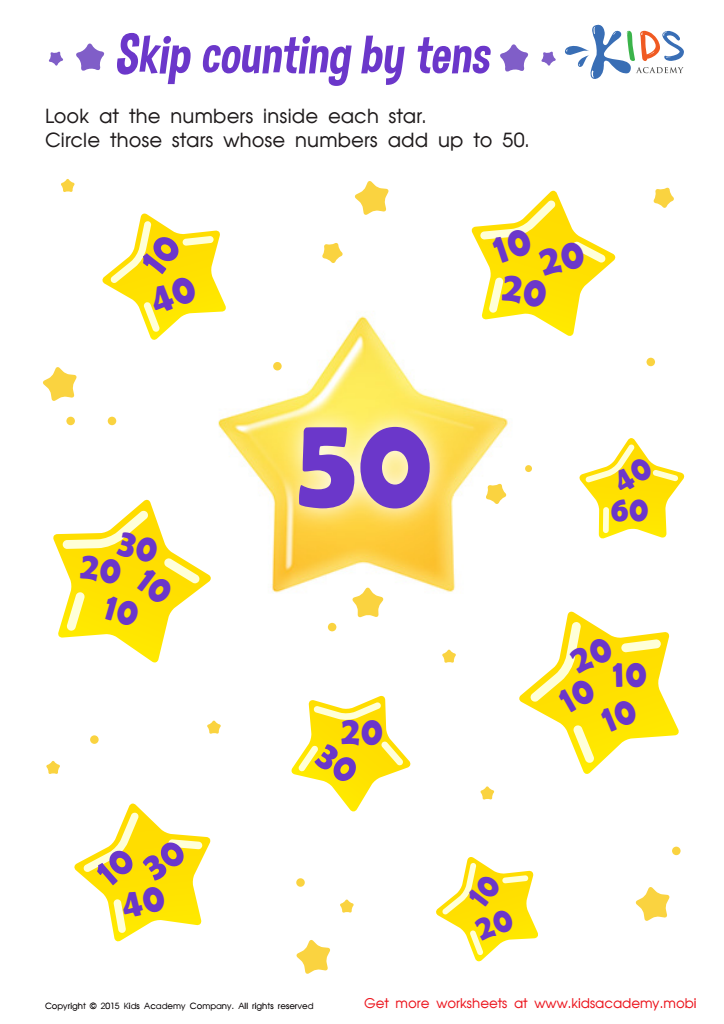
Learn Dozens: Skip Counting by Tens Printable






%20(1).jpg)

Understanding skip counting is crucial for children ages 6-8 as it lays a solid foundation for their mathematical understanding and problem-solving skills. Skip counting helps children recognize patterns in numbers, enhancing their ability to work with larger sets of data and facilitating operations such as addition and multiplication. For parents and teachers, encouraging skip counting promotes number sense and develops early arithmetic skills, which are essential for future math concepts.
Skip counting also aids in counting by intervals, which is vital for concepts like telling time, understanding money, and measuring. By recognizing patterns in skip counting, children can efficiently solve problems related to time management and budgeting, fostering important life skills.
In addition to its mathematical significance, skip counting can enhance children’s cognitive development by encouraging them to concentrate and engage critically when identifying sequences. This skill translates into better analytical thinking across subjects.
Encouraging skip counting through engaging activities, such as games or songs, can make learning fun and interactive. Parents and teachers can play a pivotal role in fostering these skills, ultimately setting children on a path to academic success, confidence, and a positive attitude towards math throughout their educational journey.








