Applying math skills Math Worksheets for Ages 6-8
3 filtered results
-
From - To
Discover a comprehensive collection of math worksheets designed specifically for children aged 6-8, to enhance their math skills through engaging activities. Kids Academy offers a variety of printables that cover essential math topics such as addition, subtraction, multiplication, and problem-solving. These worksheets are crafted to improve critical thinking and apply math skills in real-world scenarios. Perfect for both classroom use and homeschooling, they ensure a solid foundation in mathematics. Encourage your child's learning and confidence with these fun, effective resources that are both educational and enjoyable. Get started now to make math exciting!
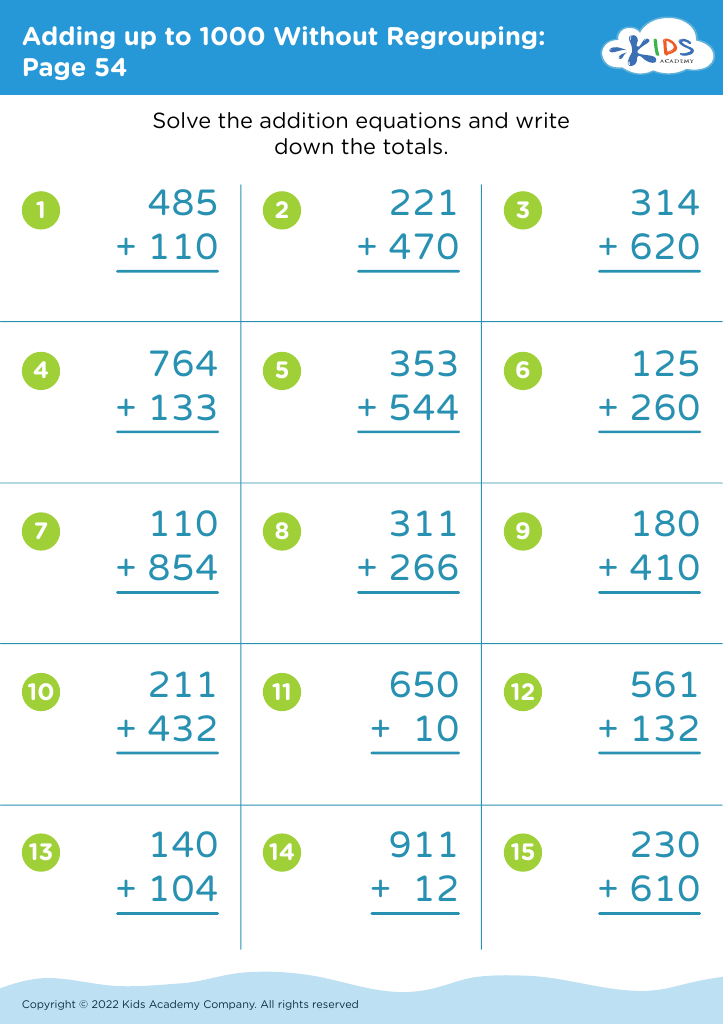
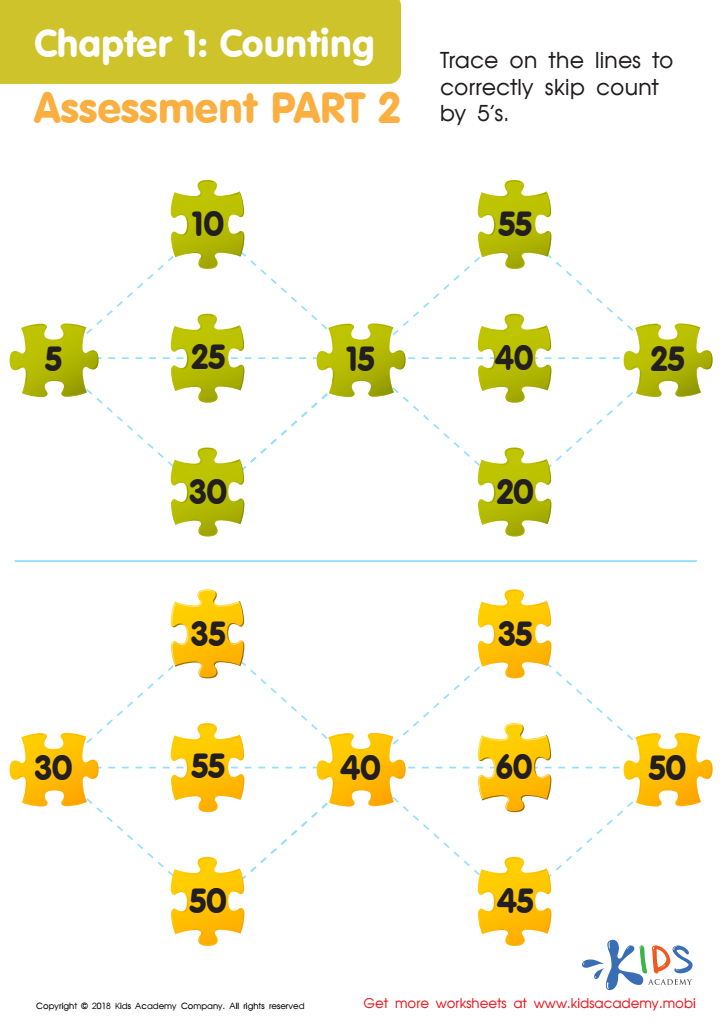
Counting: Assessment 2 Worksheet
 Assign to My Students
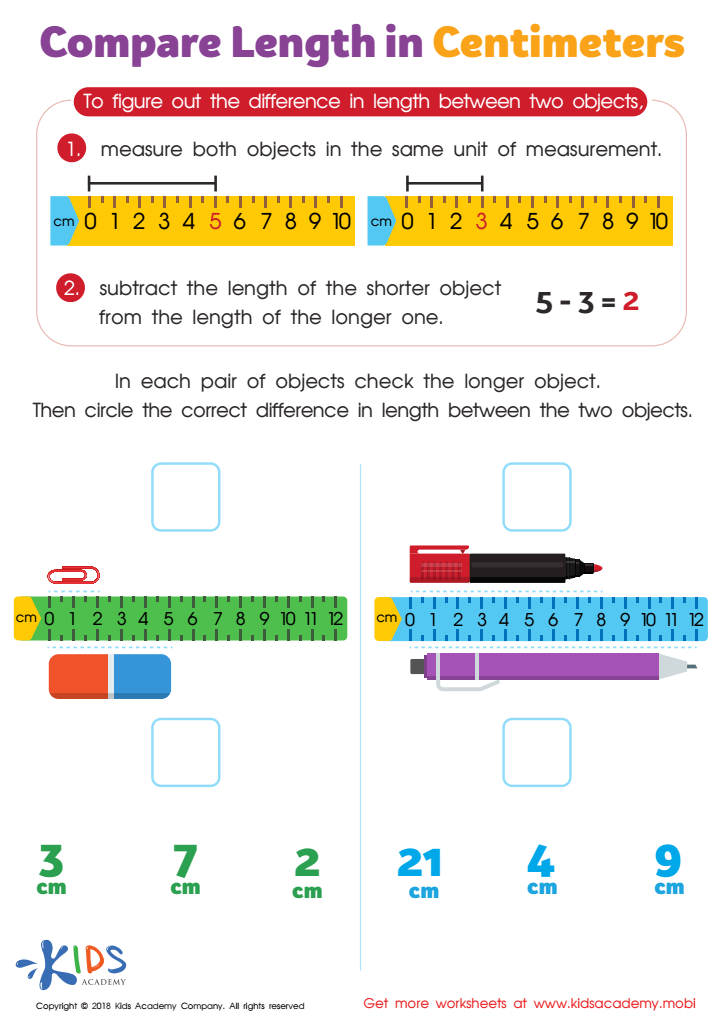
Compare Length in Centimeters Worksheet








Applying math skills for children ages 6-8 is crucial for their cognitive and life skills development. At this developmental stage, children are naturally curious and capable of absorbing new concepts with ease. Introducing math concepts at this age lays a strong foundation for more complex mathematical thinking later on.
Firstly, early math skills foster critical thinking and problem-solving abilities. Activities like counting, recognizing patterns, and basic arithmetic encourage logical reasoning, which is essential not only in math but also in everyday decision-making and problem resolution.
Secondly, math is deeply integrated into daily experiences. Understanding numbers helps children make sense of the world around them, from telling time and handling money to measuring ingredients while cooking. These everyday applications highlight the practical importance of math and make learning applicable and engaging.
Moreover, early exposure to math can foster a positive attitude toward the subject. Encouraging a love for math at a young age can reduce anxiety and build confidence, creating a solid grounding for future educational success.
Lastly, early math skills are a strong predictor of academic achievement. Research consistently shows that children who develop strong math skills early on perform better academically later in various subjects, including reading.
In summary, integrating math skills in the early years equips children with essential tools for academic success and daily life, promoting a well-rounded development.








