Enhance your child’s math skills with our Basic Addition Practice Math Worksheets, designed specifically for ages 6-8! These engaging printable worksheets make learning addition fun and effective, promoting skill mastery through interactive exercises. With a variety of formats, from visual aids to word problems, children will reinforce their understanding of basic addition concepts while building confidence. Ideal for individual practice or classroom activities, our worksheets cater to different learning styles. Perfect for parents, teachers, and tutors, our resources ensure a solid foundation in mathematics. Dive into an adventure in learning and watch your child thrive in their math journey!

Check out this FREE Trial Lesson on Math for age 6-8!

Understanding Place Value Ones and Tens

Favorites
With answer key
Interactive
  • 6-8
  • Basic addition practice
  • Math
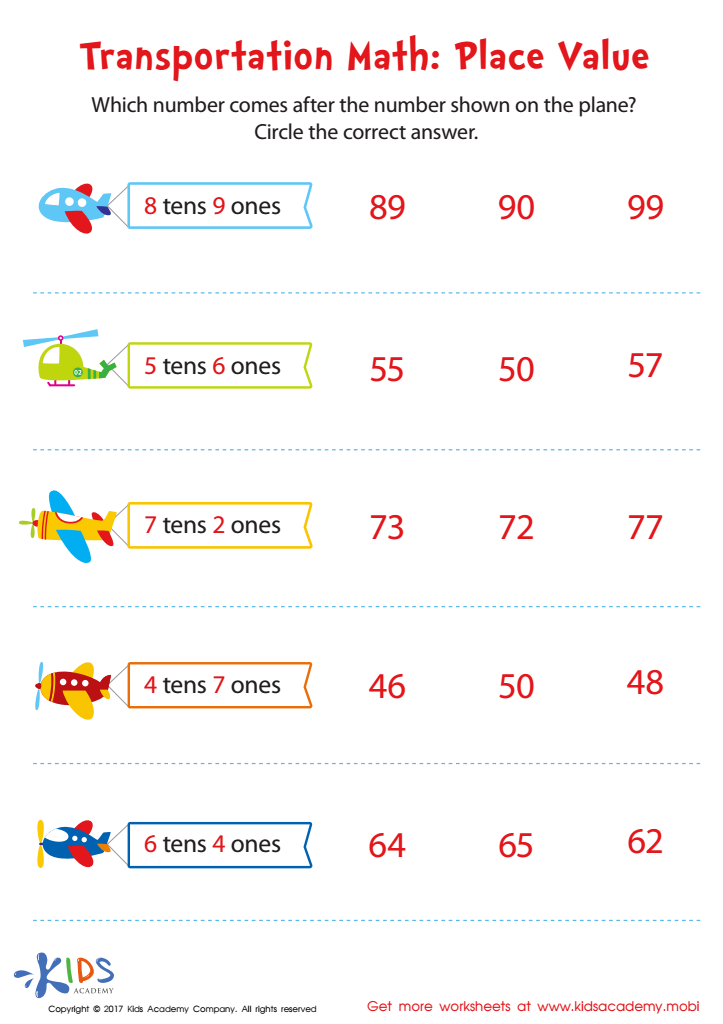
Place Value Worksheet: Transportation Math

Transportation Math Printable

Challenge your child's number sense with this Transportation Math worksheet! They'll need to recall place values and use mental addition to solve tricky math problems. It's a great way to give their brain a workout!
Transportation Math Printable
Worksheet
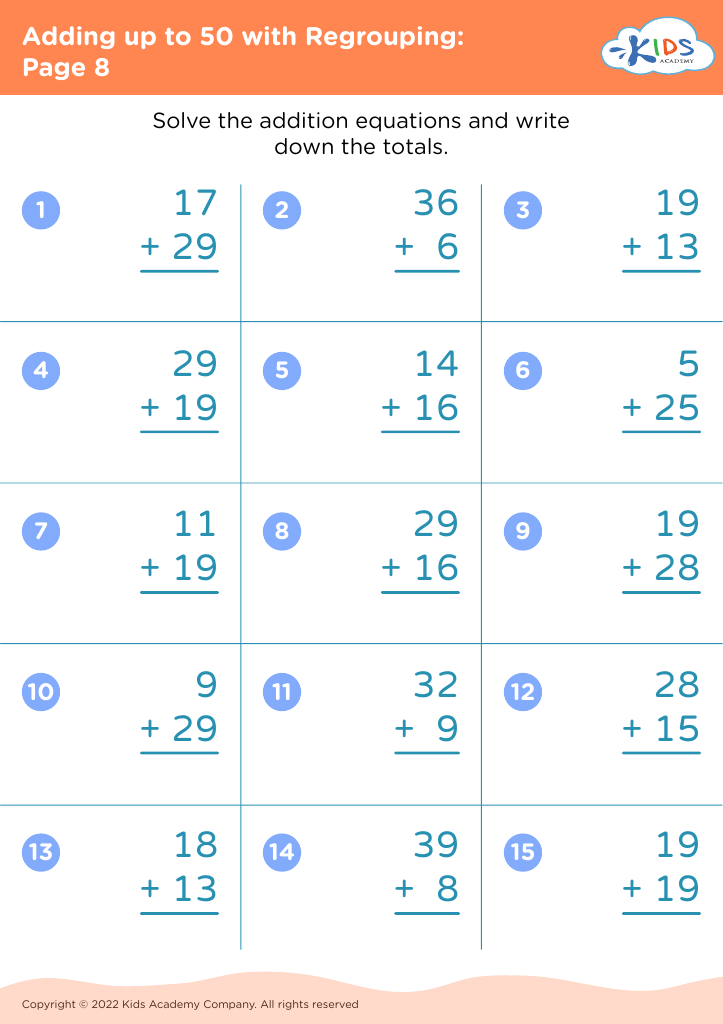
Adding up to 50 with Regrouping: Page 8
Worksheet
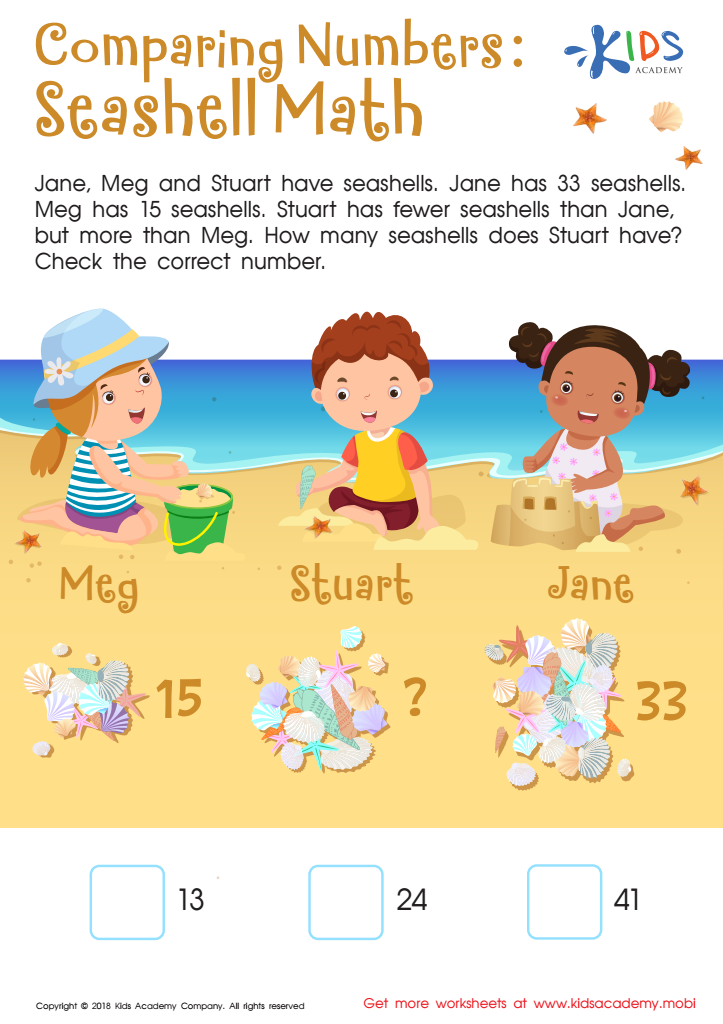
Seashell Collectors Worksheet

Seashell Collectors Worksheet

Bring beach fun into math with this printable worksheet! Carefully read the text with your child and figure out how many seashells Stuart has - more than Meg's, less than Jane's. Forget boring indoor math; your child won't want to miss out on this fun activity!
Seashell Collectors Worksheet
Worksheet
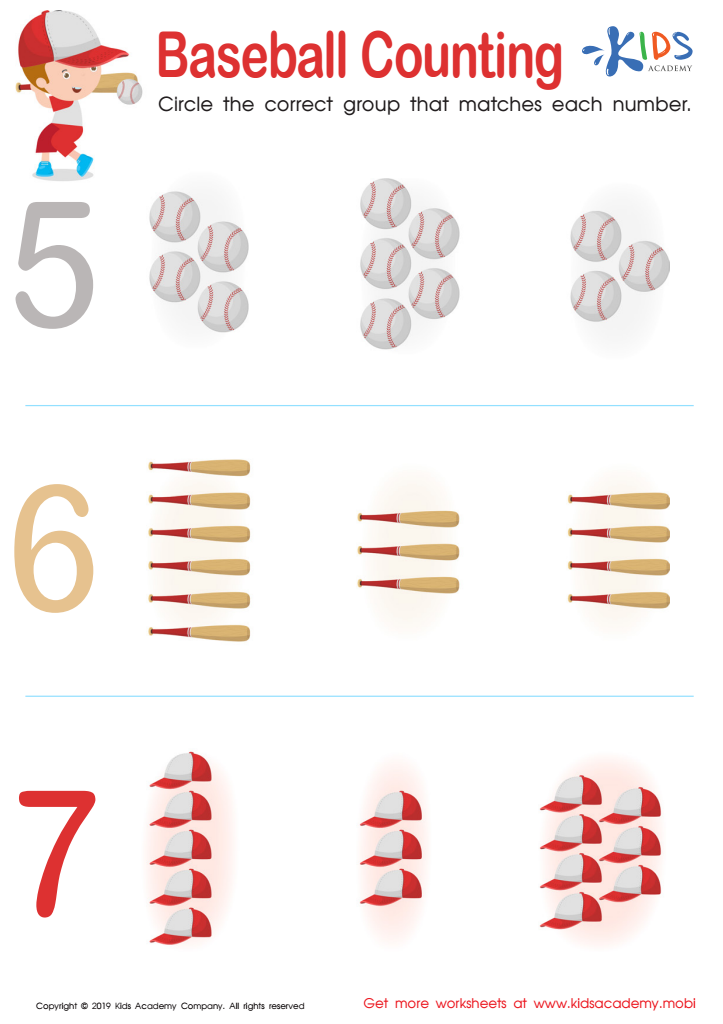
Baseball Counting Worksheet
Baseball Counting Worksheet

Does your family like baseball? Refresh their minds by asking them to count items in a baseball game. To begin, have them count from 1 to 10. Point out each object and read out the numbers. Then, help them circle the group that matches each number. It will be a fun way to test their counting skills!
Baseball Counting Worksheet
Worksheet
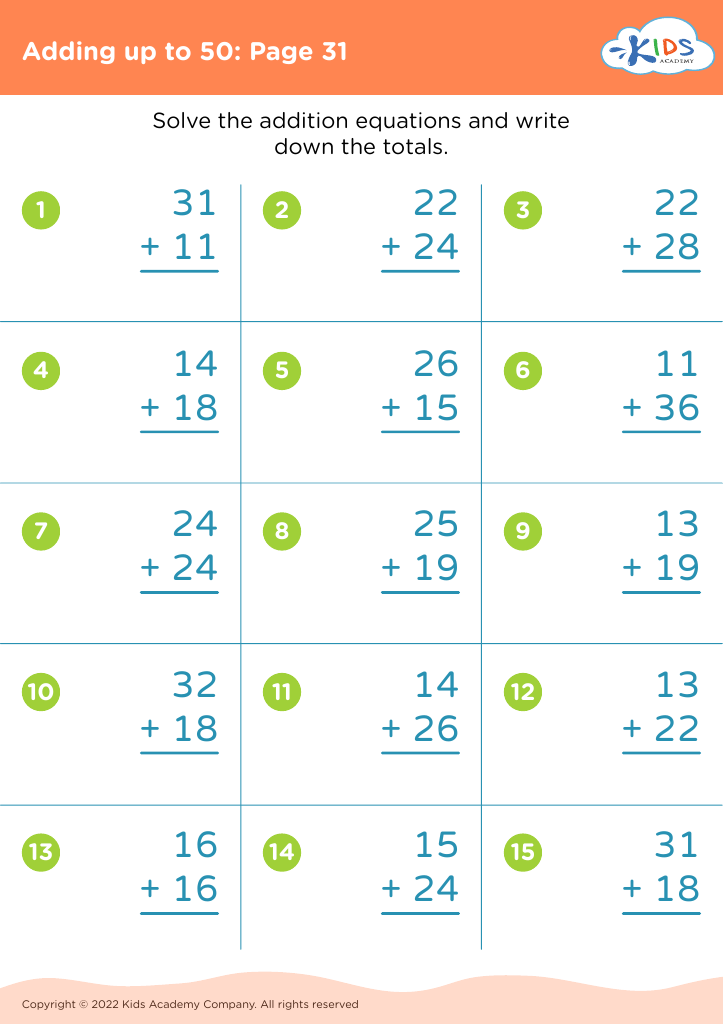
Adding up to 50: Page 31

Adding up to 50: Page 31

Adding up to 50: Page 31
Worksheet
Hoppy Hares Worksheet

Hoppy Hares Worksheet

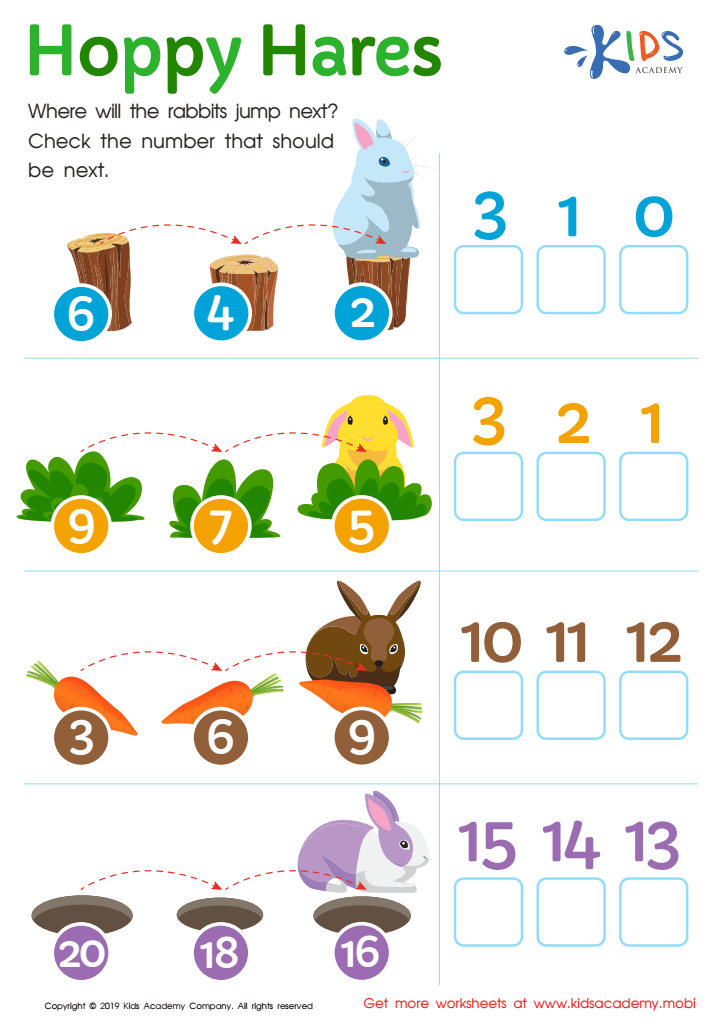
Ask your kids if they can identify the rabbits in the picture, then help them solve the math problems. The rabbits need to hop from place to place, so look at the numbers and help your kids figure out the next one. These cute and friendly little animals make great pets. Have fun solving this worksheet together!
Hoppy Hares Worksheet
Worksheet
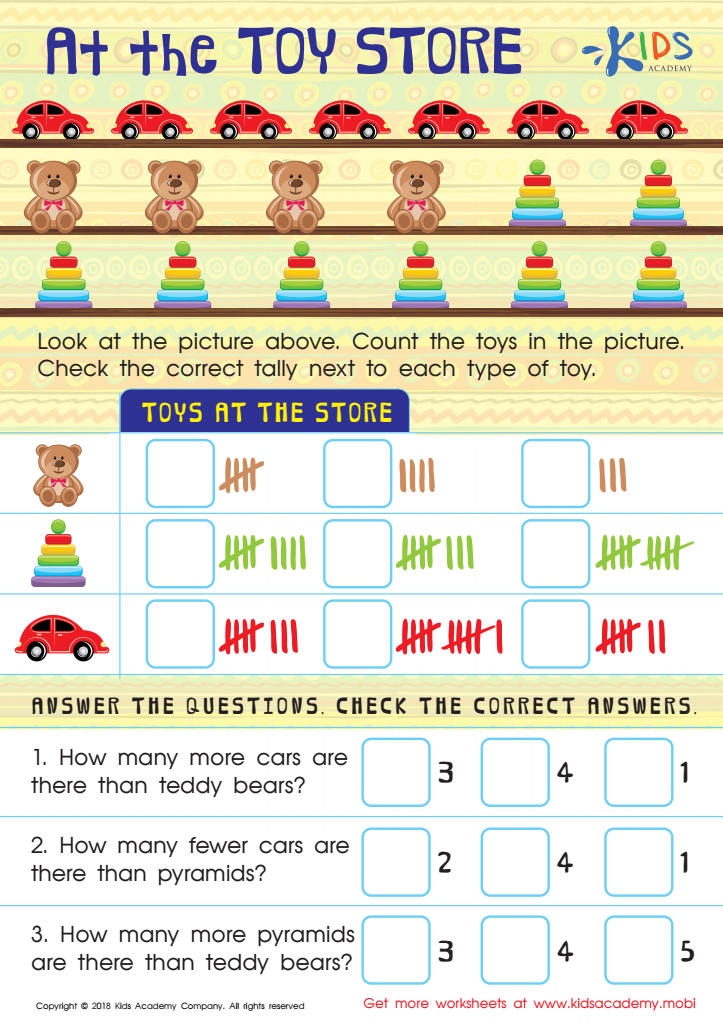
Tally Chart: At the Toy Store Worksheet
Tally Chart: At the Toy Store Worksheet

Kids Academy has a fun worksheet to help kids practice counting and using tally marks! They can think about the number of toys and compare them. At the bottom, help them answer the questions about the toys on this math page. It's an easy way to learn that one tally mark equals one item.
Tally Chart: At the Toy Store Worksheet
Worksheet
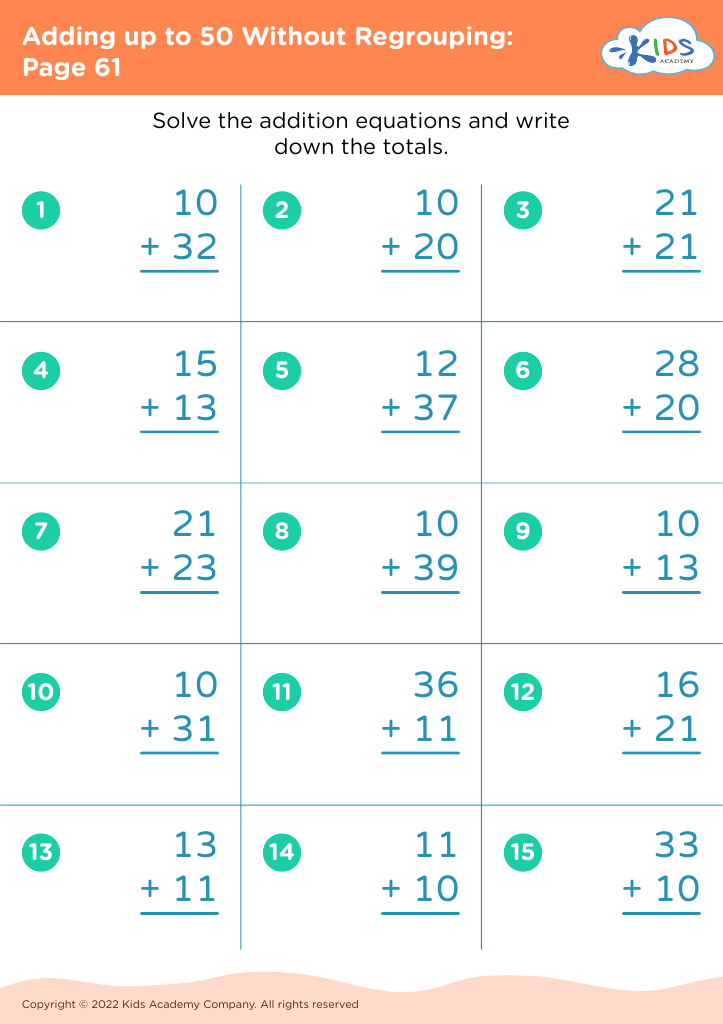
Adding up to 50 Without Regrouping: Page 61
Worksheet
Open the Safe Worksheet
Open the Safe Worksheet
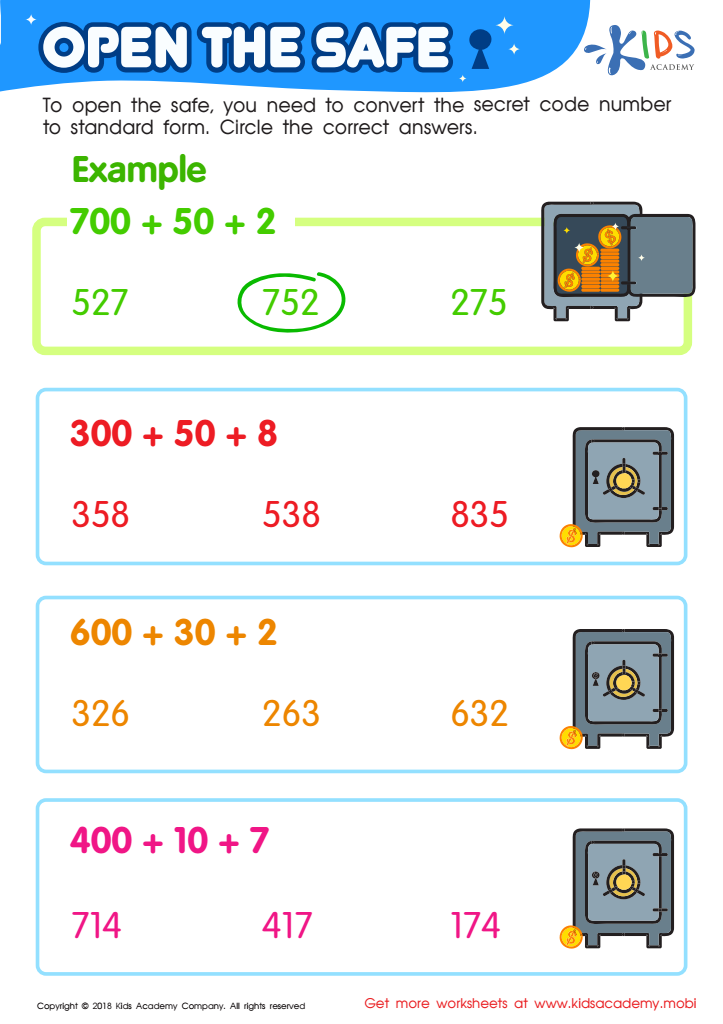
Send your child on a secret mission! Help them open the safe by giving them the code numbers to convert into standard form (e.g. 700 + 50 + 2 = 752). Get them to circle the correct answer for each safe and see all that math knowledge pay off!
Open the Safe Worksheet
Worksheet
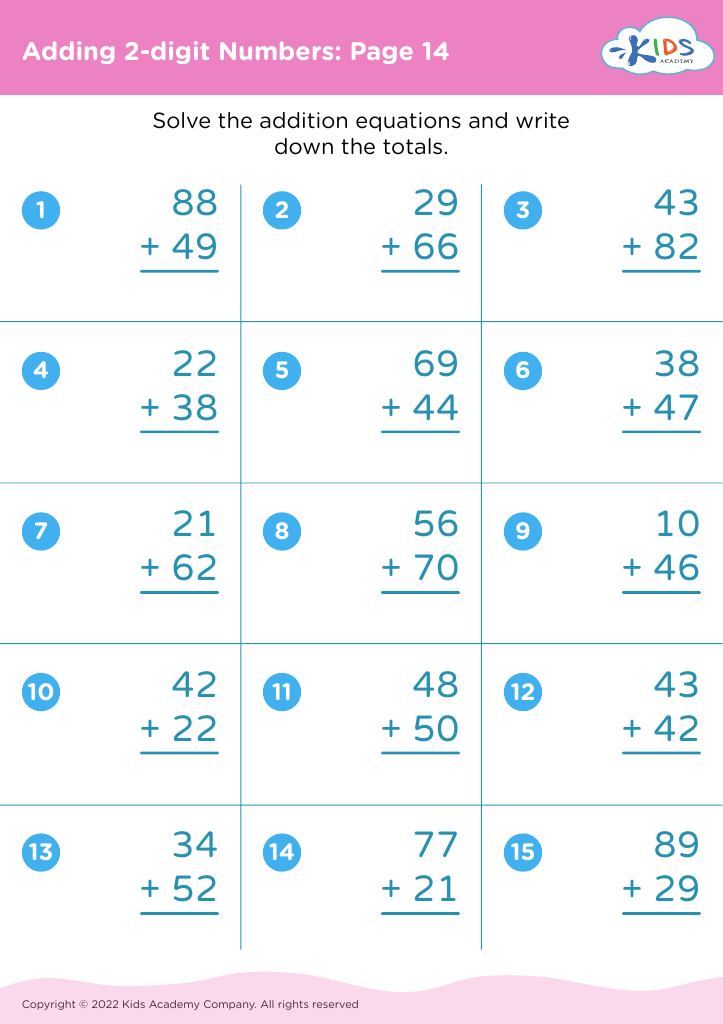
Adding 2-digit Numbers: Page 14

Adding 2-digit Numbers: Page 14

Adding 2-digit Numbers: Page 14
Worksheet
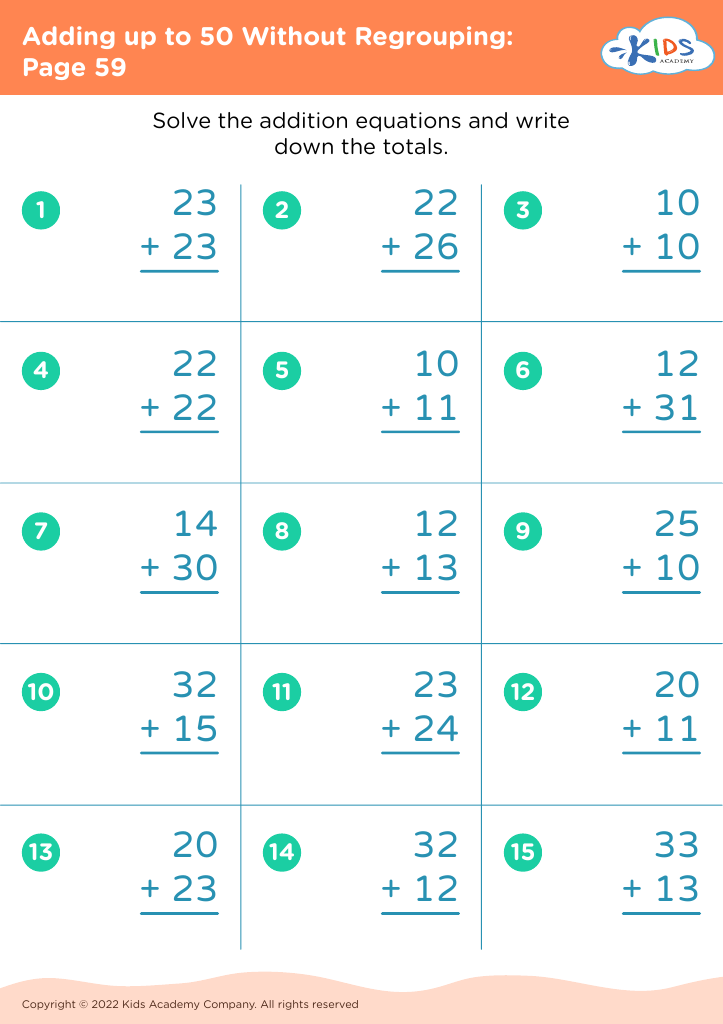
Adding up to 50 Without Regrouping: Page 59
Worksheet
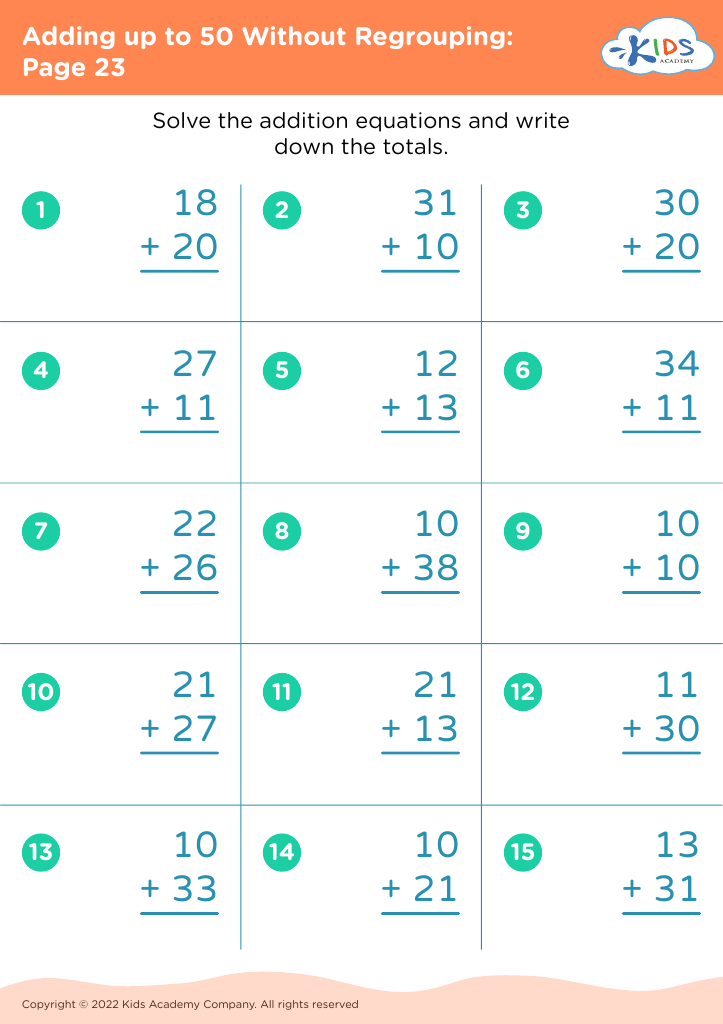
Adding up to 50 Without Regrouping: Page 23
Worksheet
Count with Clowns Worksheet
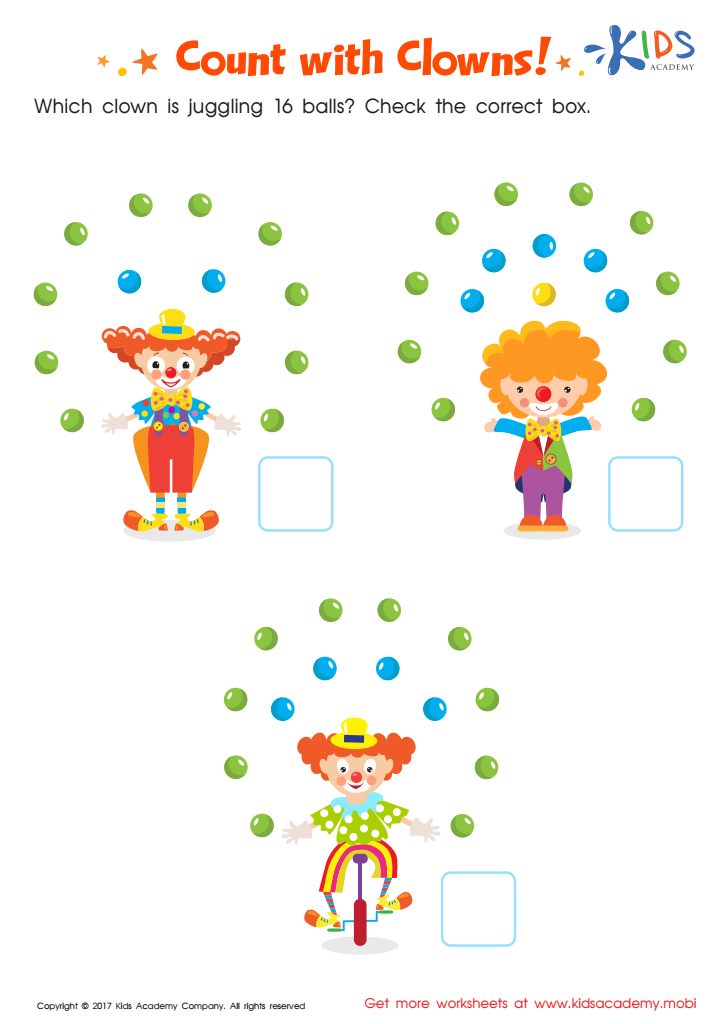
Count with Clowns Worksheet
Math may not be a laughing matter, but this worksheet sure is! Download the PDF and get ready to count balls with the clowns! Your child will have a blast and learn how to count at the same time. It's an easy, fun way to practice math!
Count with Clowns Worksheet

Worksheet
Adding 2-digit Numbers: Page 38

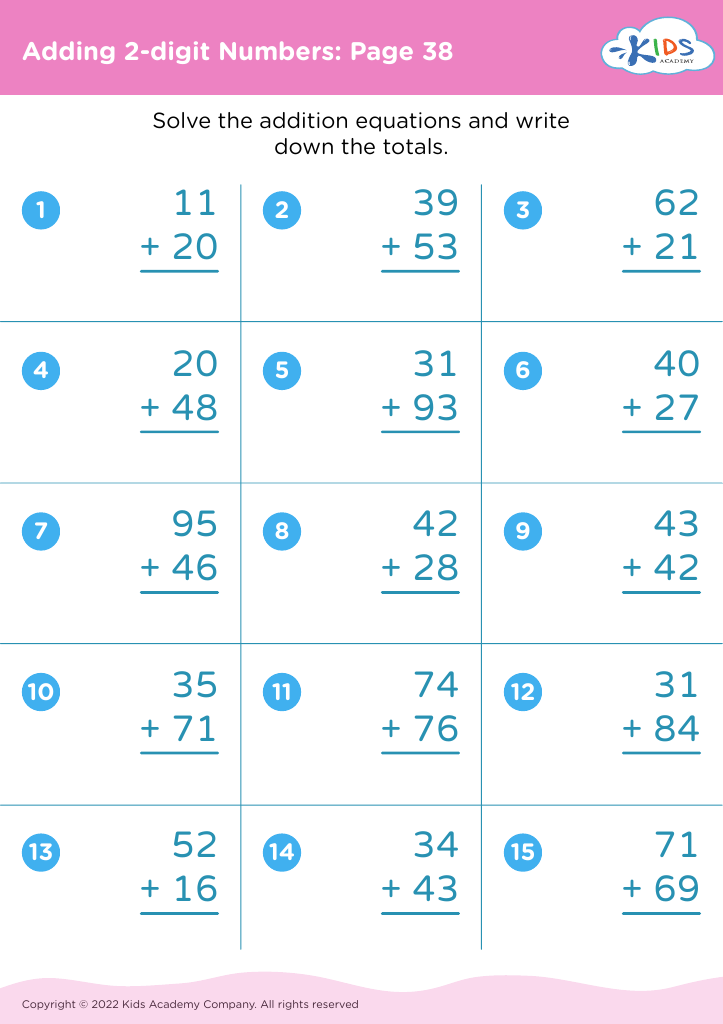
Adding 2-digit Numbers: Page 38

Adding 2-digit Numbers: Page 38
Worksheet
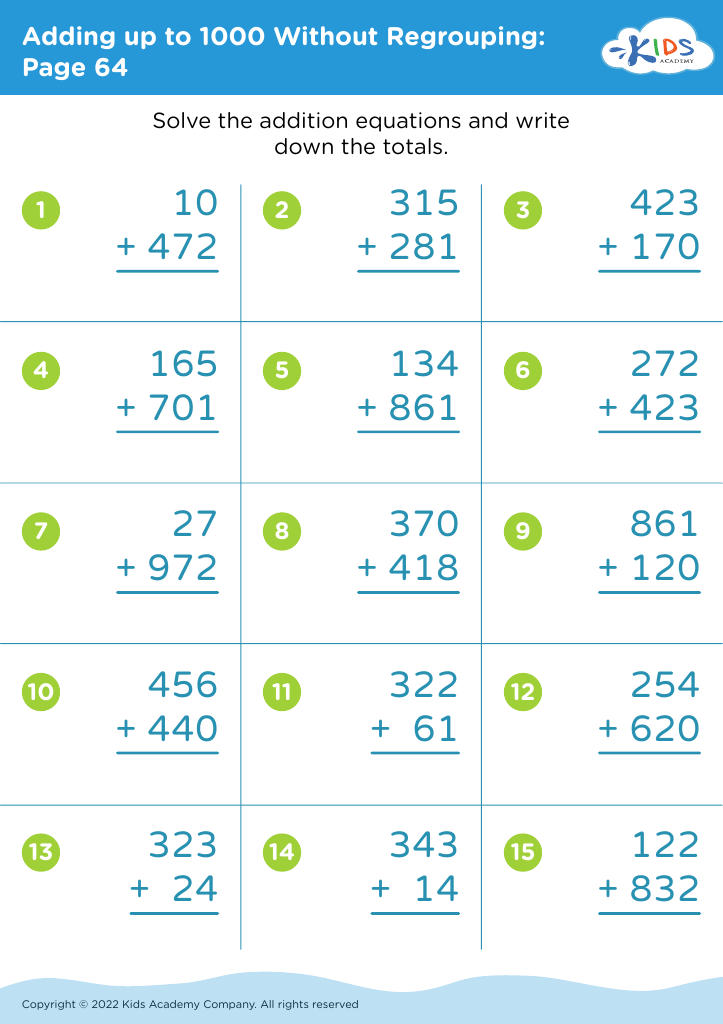
Adding up to 1000 Without Regrouping: Page 64
Worksheet
Adding up to 100: Page 1

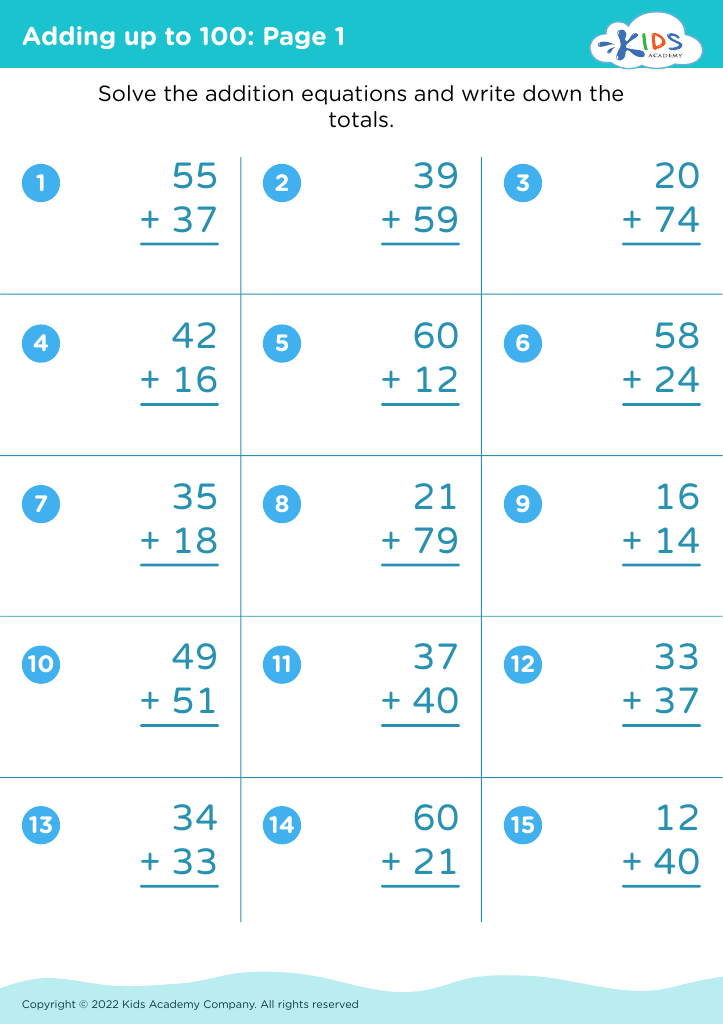
Adding up to 100: Page 1

Adding up to 100: Page 1
Worksheet


Understanding basic addition is crucial for children ages 6-8 as it lays the foundation for future math skills. During this formative stage, children are developing cognitive abilities that facilitate problem-solving and critical thinking. Mastery of addition not only builds confidence and mathematical fluency but also enhances their overall academic performance.

For parents and teachers, prioritizing basic addition practice is vital for several reasons. First, it encourages cognitive development; children learn how to process information and engage with numbers systematically. Second, strong addition skills are essential for more complex mathematical concepts, such as subtraction, multiplication, and word problems, which they will encounter around grades three and four.

Additionally, regular practice of basic addition helps develop perseverance and discipline. When children engage consistently with math exercises, they learn to tackle challenges and see progress.Moreover, parental and teacher involvement in this process fosters stronger home-school connections, showcasing the importance of collaborative learning environments. Lastly, as mathematical competency grows, children are more likely to enjoy learning and excel in school, establishing a positive attitude toward education that lasts a lifetime. Cultivating these skills early is thus not just beneficial but necessary for their long-term academic success.