Develop addition skills Math Worksheets for Ages 6-8
5 filtered results
-
From - To
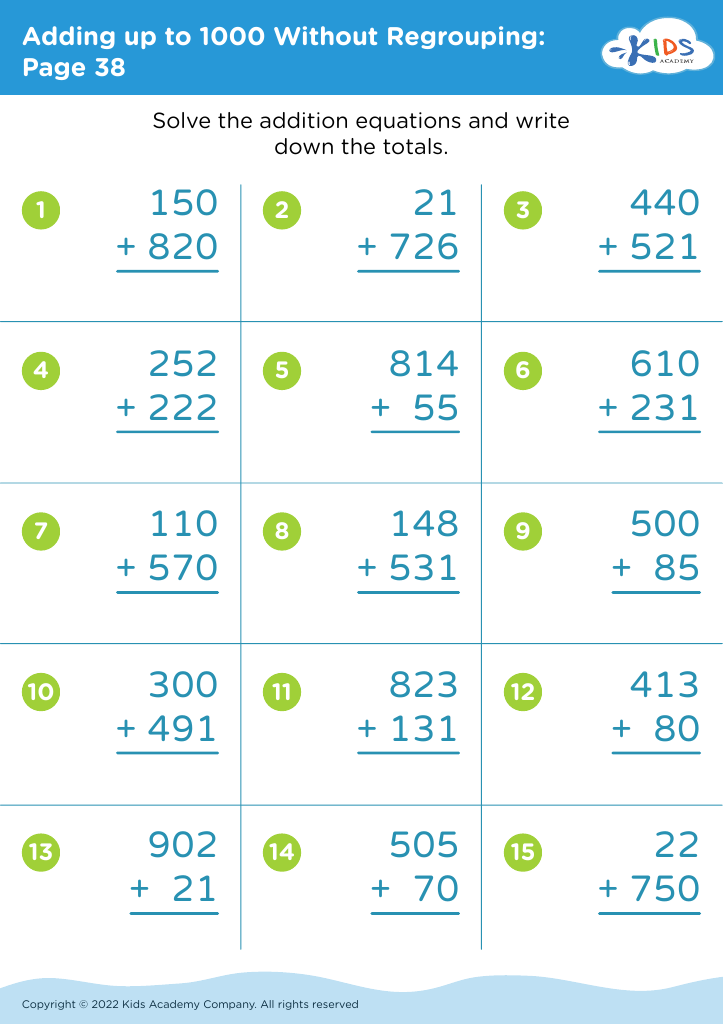
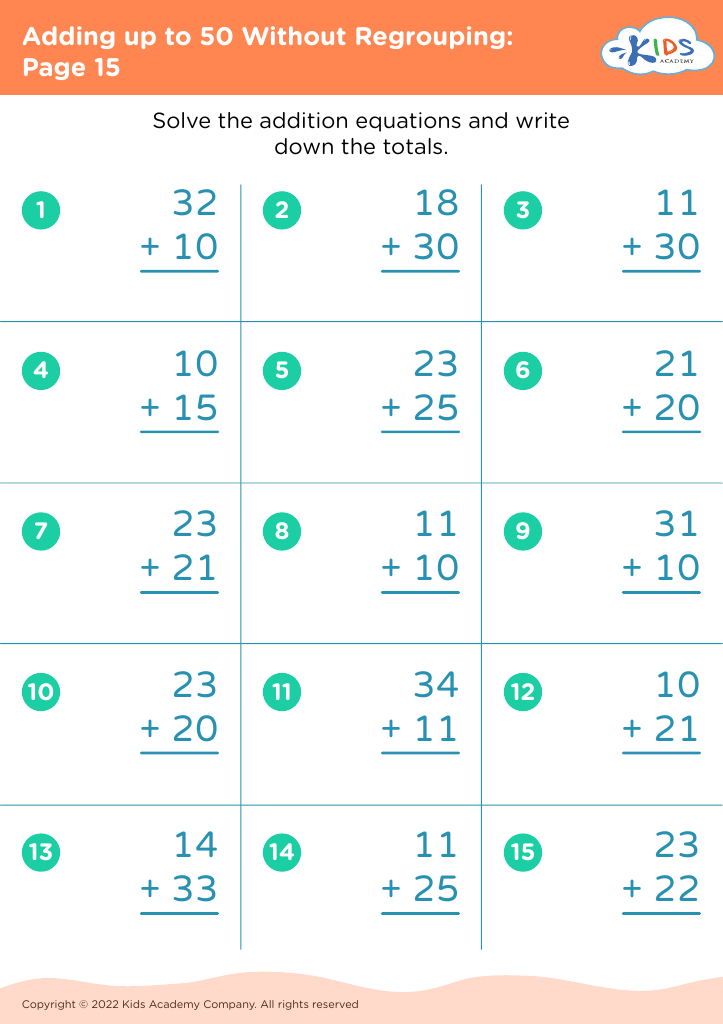
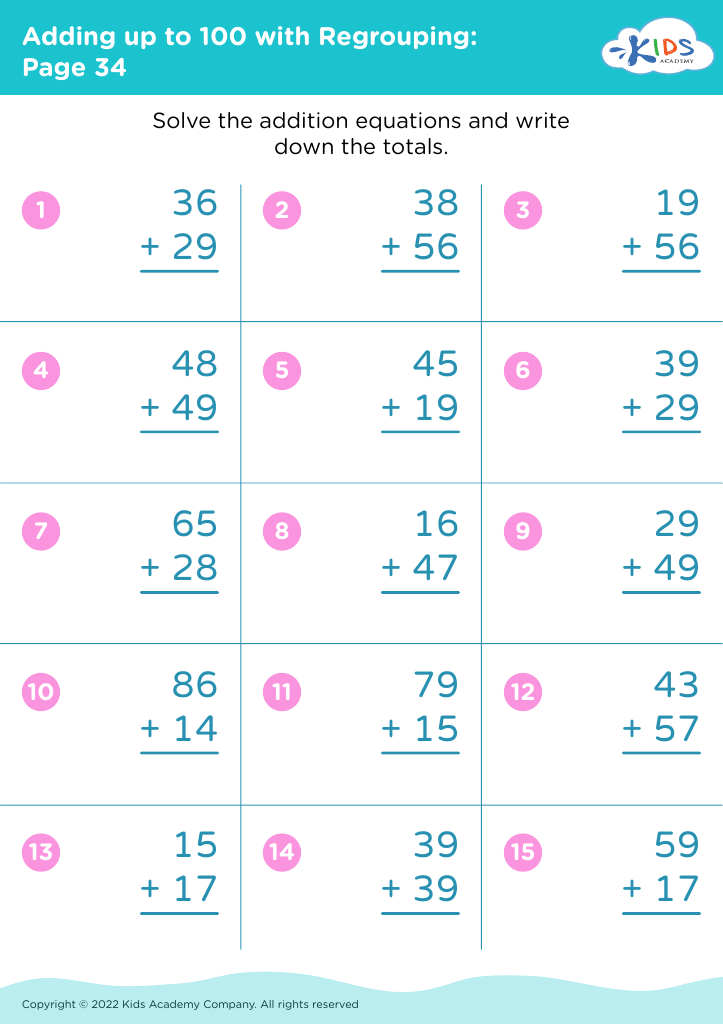
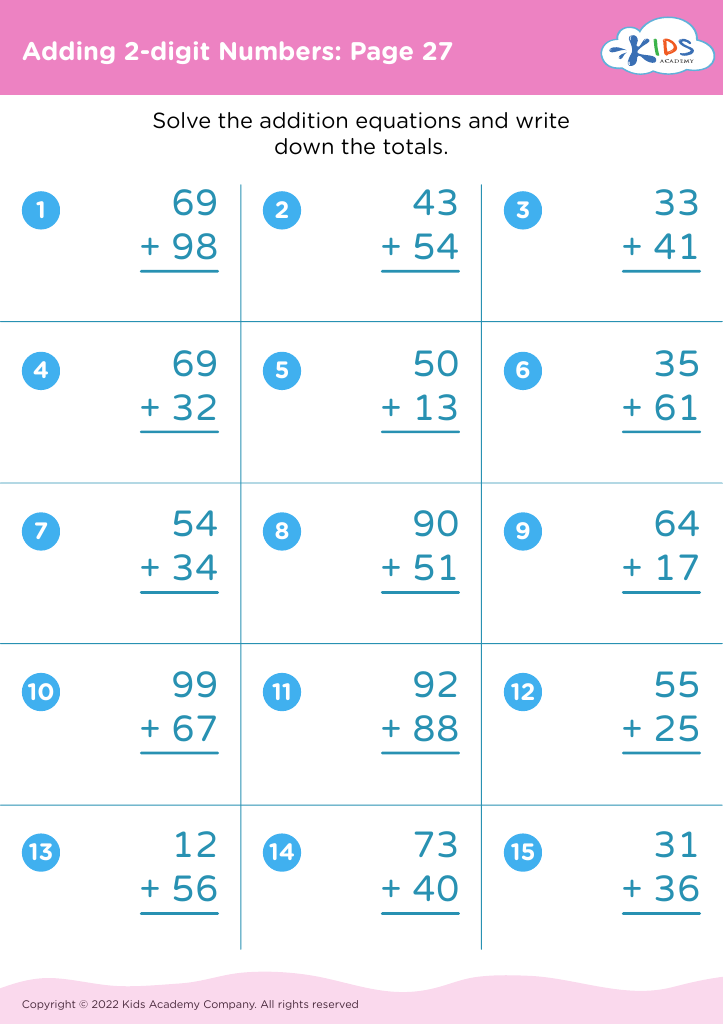
Boost your child's math confidence with our engaging "Develop Addition Skills Math Worksheets" designed for ages 6-8. These fun and educational worksheets are perfect for building a strong foundation in basic addition through a variety of creative exercises. Catered to young learners, each worksheet provides practical problem-solving opportunities, colorful illustrations, and easy-to-follow instructions to make learning addition enjoyable. Whether for homeschool practice, classroom enrichment, or extra at-home study, our expertly crafted worksheets help children master essential addition skills, setting the stage for future math success. Visit our website to explore the full collection and watch your child’s addition skills flourish!
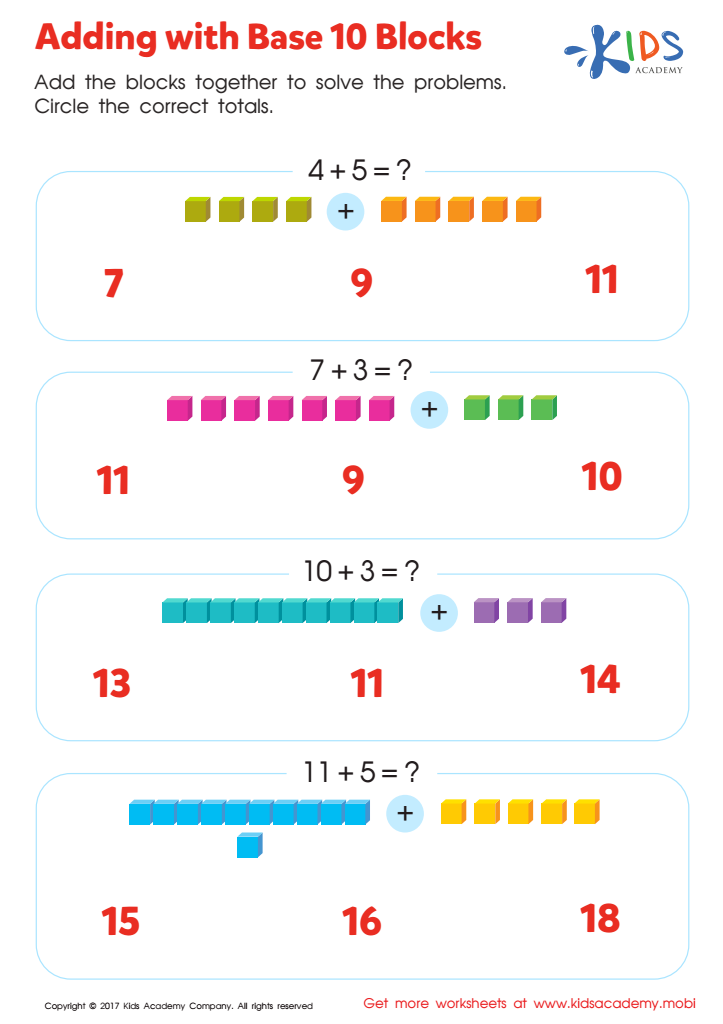
Adding with Base Ten Blocks Worksheet
 Assign to My Students






Developing addition skills in children aged 6-8 is crucial for several fundamental reasons. First, it lays the foundation for all future mathematical learning. This age group typically transitions from simple counting to more complex operations like addition and subtraction, which are the building blocks for multiplication, division, and higher-level math.
Second, proficiency in addition helps develop critical thinking and problem-solving skills. When children engage in mathematical thinking, they learn to see patterns, make connections, and understand the logic behind numbers. These cognitive skills are not only vital for math but also for other academic subjects and real-world scenarios.
Moreover, early success in math boosts a child's confidence and encourages a positive attitude towards the subject. Math can often be a source of anxiety; early proficiency helps combat this by fostering a sense of achievement and competence. Children who feel good about their math abilities are more likely to enjoy learning and perform better academically.
Lastly, addition skills have practical life applications. Whether it’s calculating money, estimating time, or measuring ingredients in a recipe, the ability to add numbers accurately is essential. Helping children develop addition skills at a young age equips them with necessary tools for everyday life. Both parents and teachers play vital roles in ensuring that children master these essential skills, setting them up for a successful future.








