
Develop critical thinking Math Worksheets for Ages 6-8
13 filtered results
Difficulty Level
Grade
Age
-
From - To
Subject
Activity
Standards
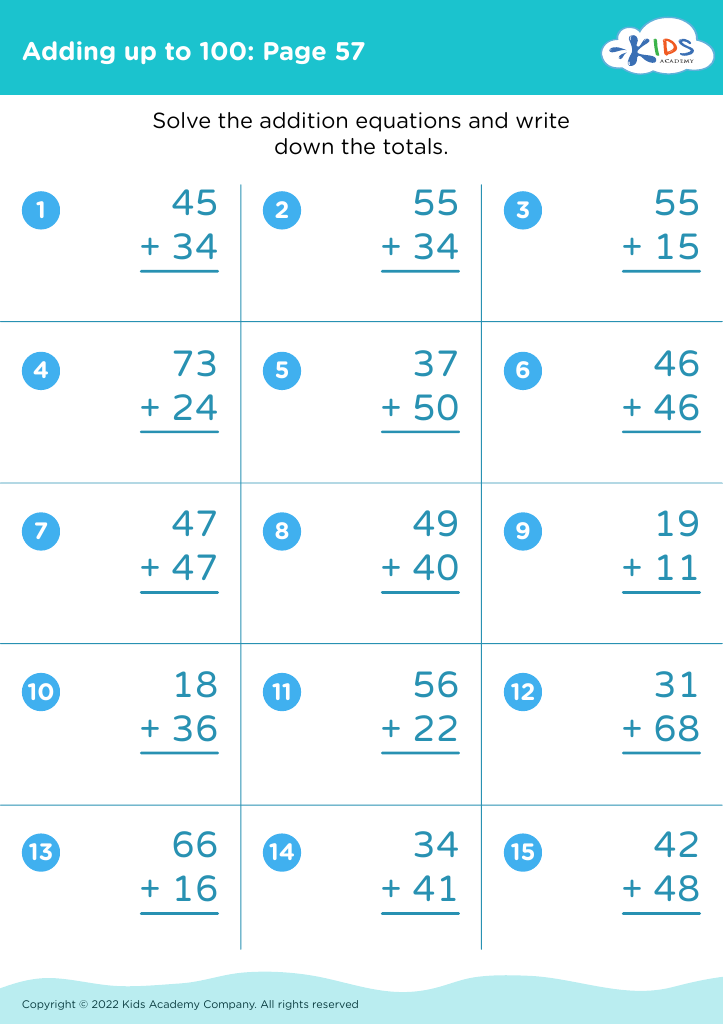
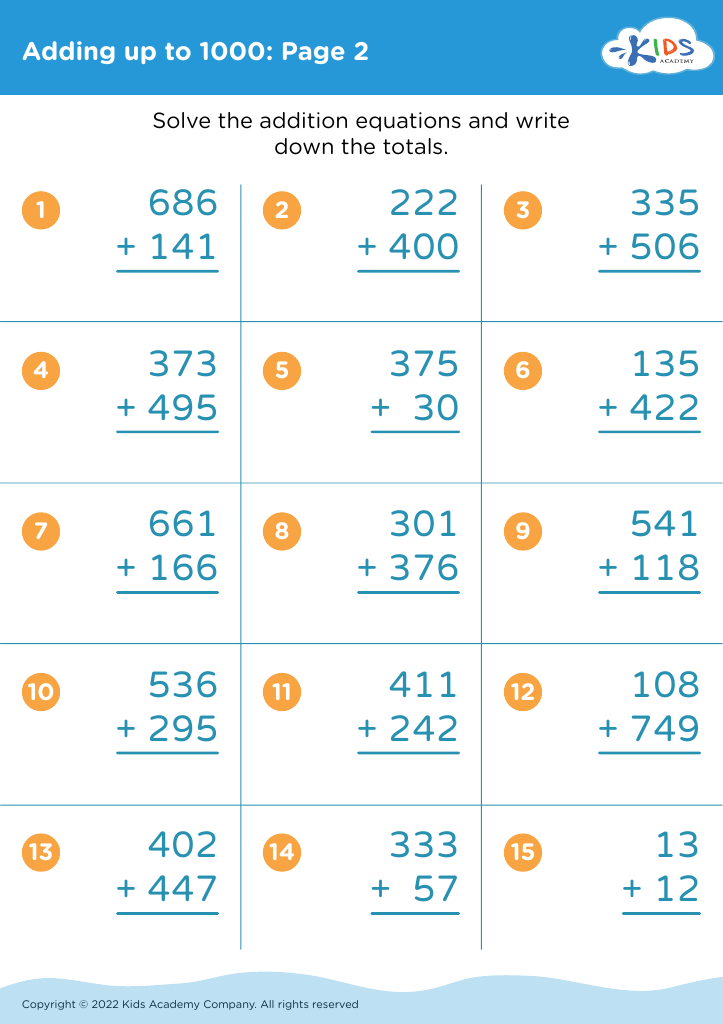
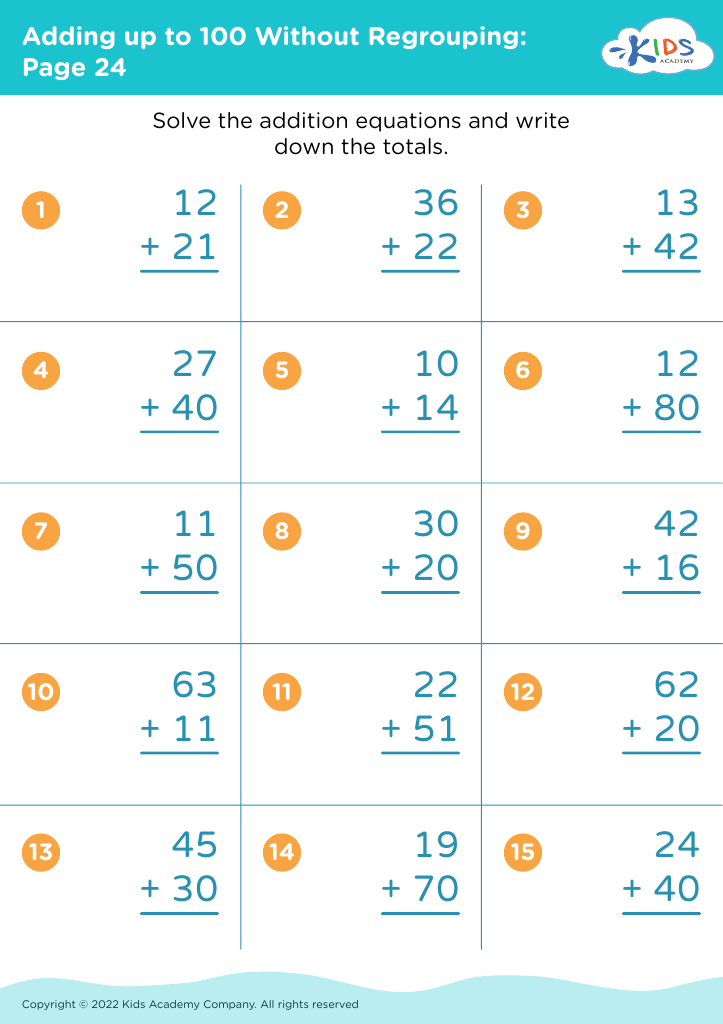
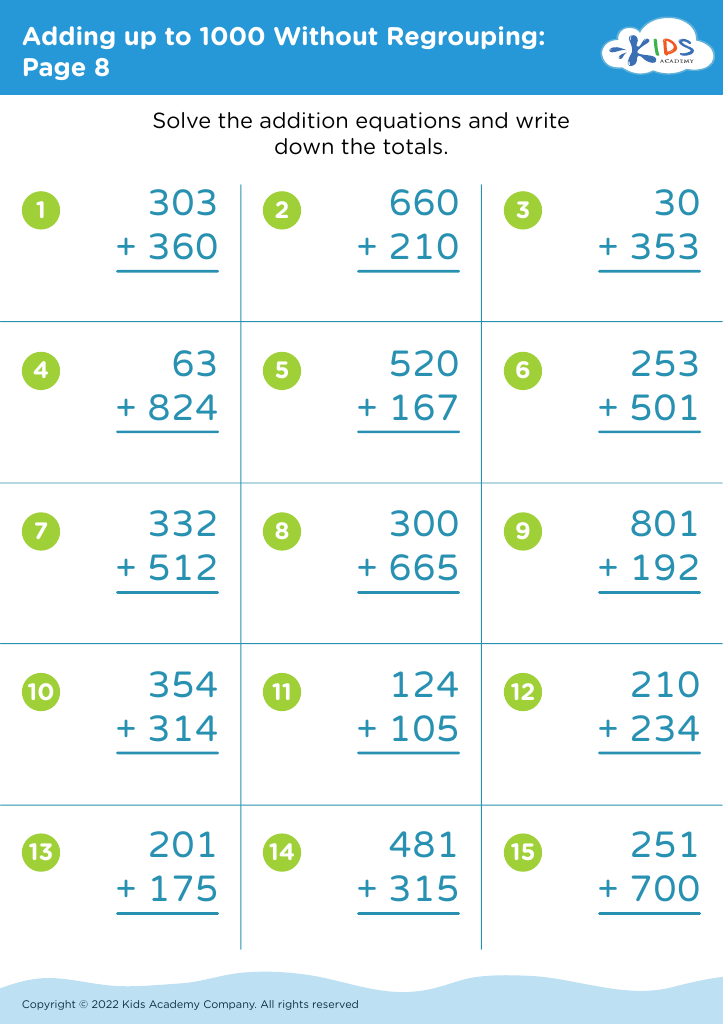
Enhance your child's problem-solving abilities with our critical thinking math worksheets designed for ages 6-8. Specially crafted to engage young minds, these worksheets go beyond traditional math exercises by incorporating puzzles, logic games, and real-life scenarios. Our resources help children build a solid foundation in mathematics while nurturing their analytical skills and cognitive abilities. Ideal for both classroom and home use, Kids Academy worksheets make learning interactive and enjoyable. Encourage critical thinking and boost confidence with activities that turn learning math into an adventure. Empower your child to think outside the box with Kids Academy's expertly-designed worksheets.
Favorites
With answer key
Interactive
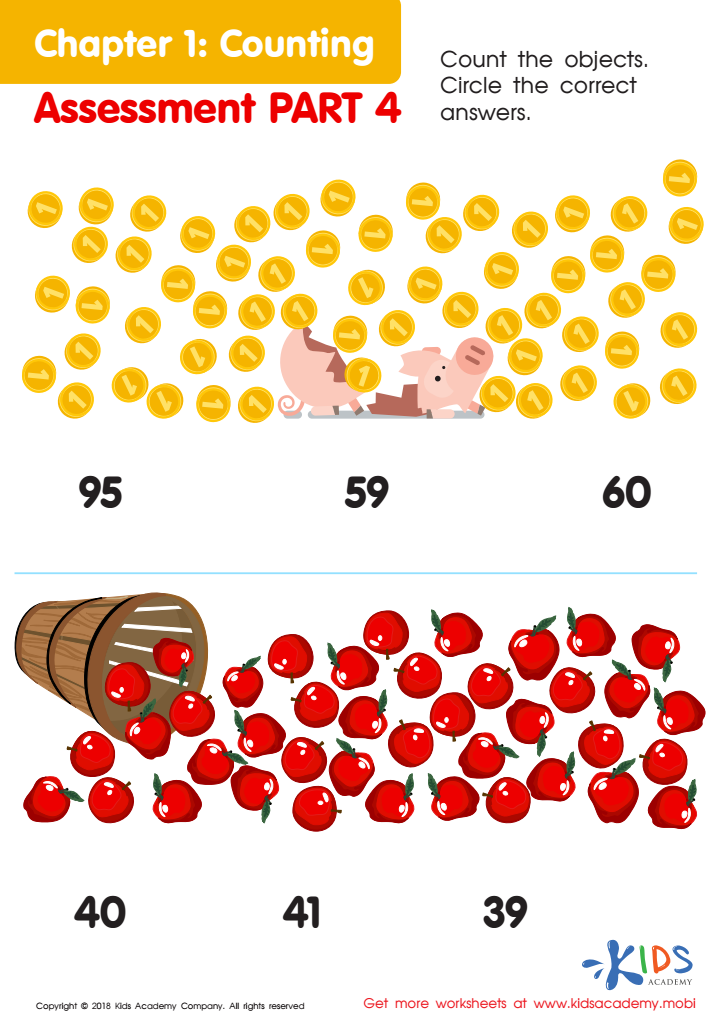
Counting: Assessment 4 Worksheet
Encourage your students to count objects in this colorful worksheet. Ask them to circle the correct answers from the options given. See how much their counting skills have improved with your guidance. Have fun!
 Assign to My Students
Counting: Assessment 4 Worksheet
Worksheet
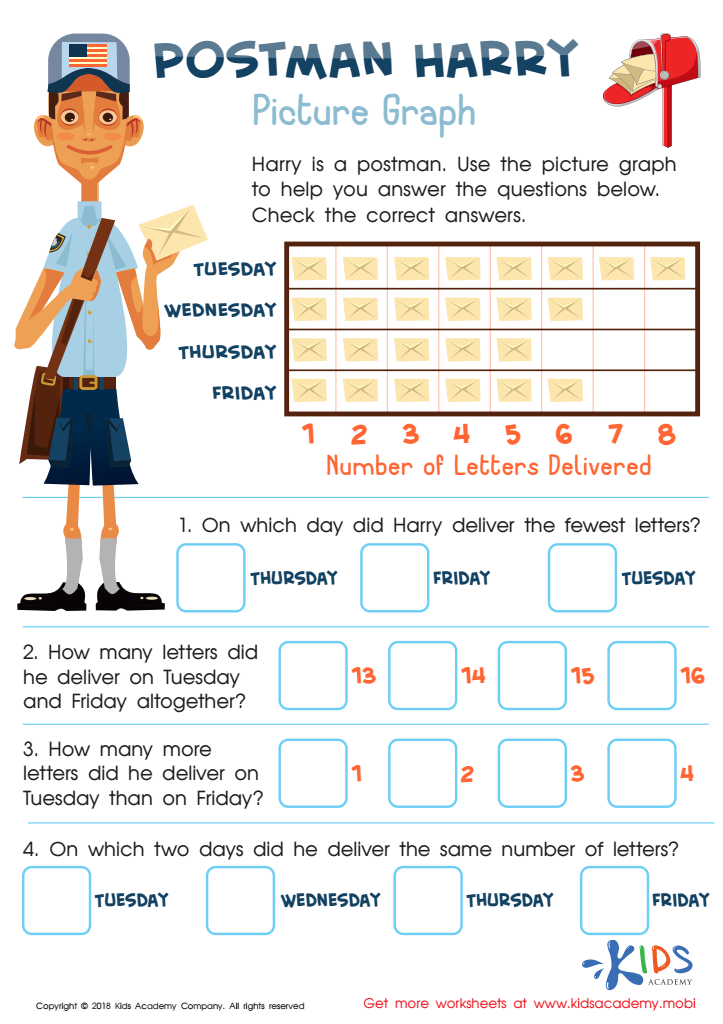
Postman Harry: Picture Graph Worksheet
Show your kids a picture of Harry the Postman and ask if they can identify his profession. Then, with this simple picture graph worksheet, help Harry out by having your kids answer the questions below the picture graph. It shows the number of letters he delivered, and on what day. Get your kids to use the picture graph to solve it.
Postman Harry: Picture Graph Worksheet
Worksheet
Join Kids Academy for Free
Who is primarily going to use this learning content?








Developing critical thinking in math for ages 6-8 is pivotal as it lays the groundwork for a lifetime of problem-solving and analytical skills. At this developmental stage, children are naturally curious and beginning to understand the world around them in more complex terms. Introducing critical thinking through math helps harness this innate curiosity and channel it into constructive cognitive development.
Understanding math concepts requires more than rote memorization; it demands logical reasoning, pattern recognition, and the ability to draw connections between different ideas. By focusing on critical thinking in math, parents and teachers encourage children to approach problems systematically, evaluate multiple solutions, and learn from their mistakes.
Such skills transcend math lessons, fostering more holistic cognitive growth. Kids learn to ask questions, explore all possible answers, and make informed decisions. This approach builds perseverance, confidence, and a love for learning—traits essential for academic success and personal development.
Moreover, as they encounter more complex problems in higher grades, a strong foundation in critical-thinking math equips them with the tools to tackle these challenges effectively. Therefore, investing time and energy into developing these skills at an early age sets the stage for future educational achievements and professional prospects, making it an invaluable part of early childhood education.








