Developing spatial awareness Math Worksheets for Ages 6-8
3 filtered results
-
From - To
Boost your child's spatial awareness with our engaging math worksheets designed specifically for ages 6-8! These interactive resources help young learners grasp essential geometry concepts, including shapes, positioning, and spatial relationships. Each worksheet is crafted to make learning fun and effective, featuring colorful visuals and age-appropriate activities that stimulate critical thinking and problem-solving skills. Ideal for classroom settings or at-home practice, our worksheets promote hands-on learning and boost confidence in math. Explore our collection today to empower your child with the foundational spatial skills essential for success in math and beyond! Make learning an adventure with our engaging worksheets!
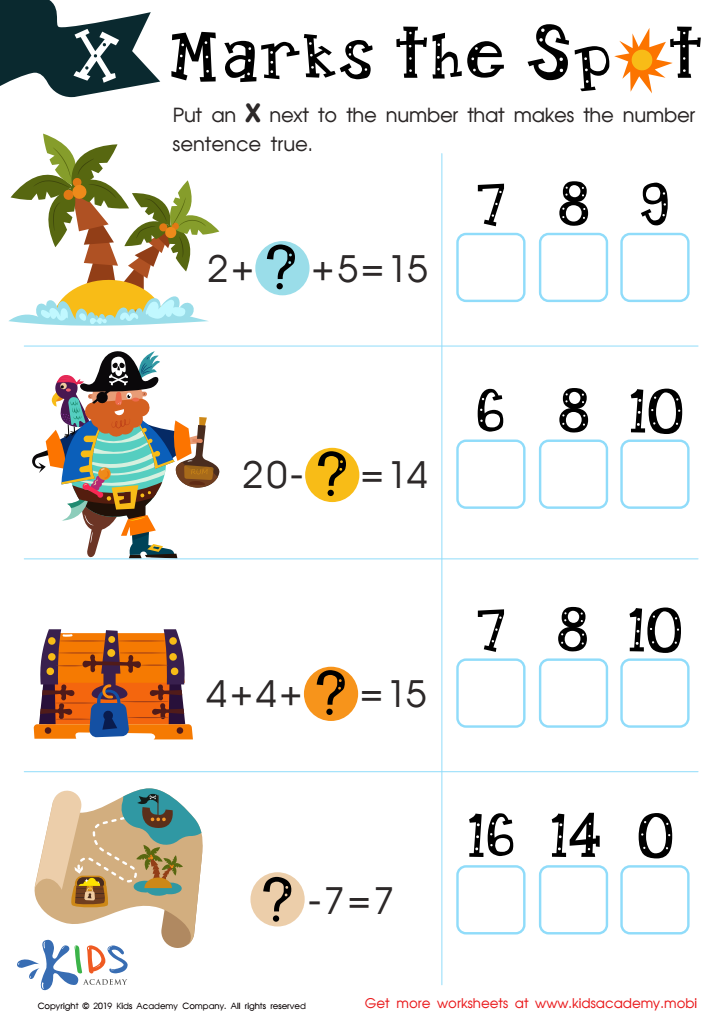
X Marks the Spot Worksheet
 Assign to My Students
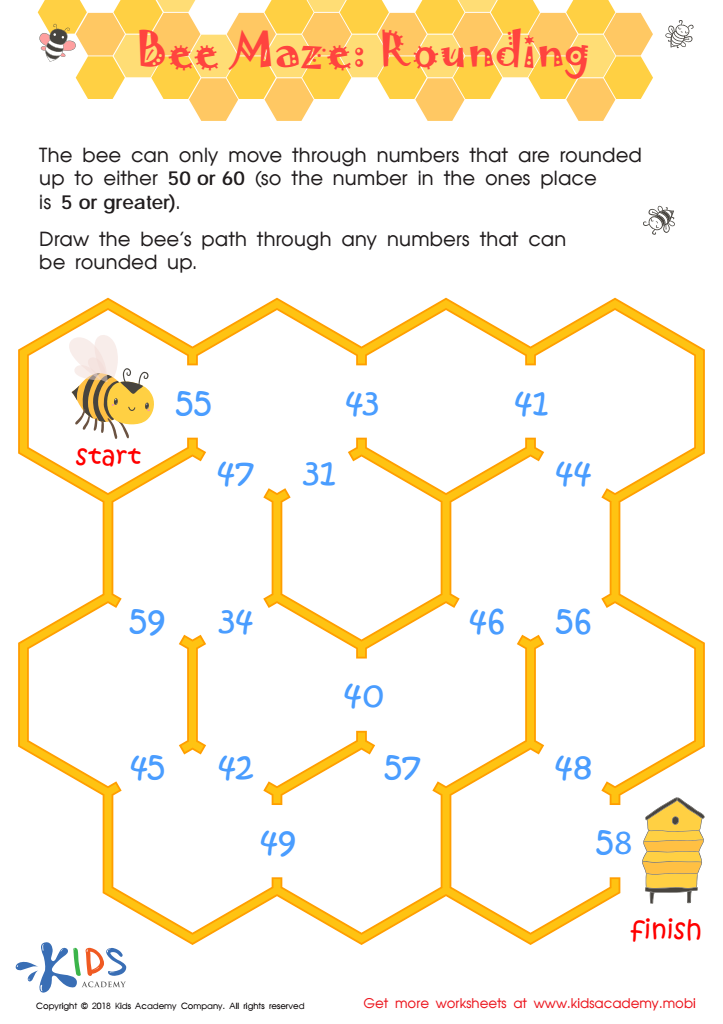
Bee Maze Rounding Worksheet
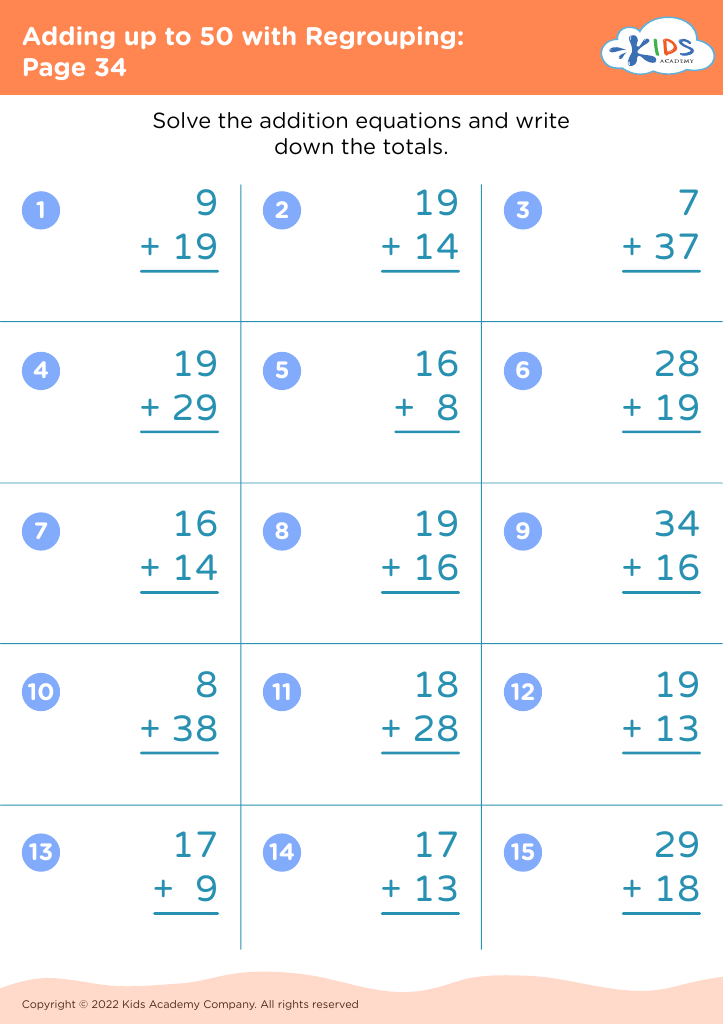







Developing spatial awareness in children aged 6-8 is crucial for their overall cognitive growth and future academic success, particularly in mathematics and science. Spatial awareness refers to the ability to understand and manipulate shapes, sizes, and the relationships between objects in space. This skill lays the foundation for geometry, measurement, and essential problem-solving techniques that children will encounter in higher grades.
For parents and teachers, nurturing spatial awareness can enhance a child's confidence in tackling math problems. Engaging activities, such as building with blocks, playing with puzzles, or drawing shapes, encourage children to visualize concepts, improving their ability to think critically and creatively. As they navigate the physical world, children also develop fine motor skills, hand-eye coordination, and logical reasoning.
In addition, strong spatial awareness is linked to improved performance in subjects like science and engineering, which are increasingly important in today's technology-driven world. By fostering this capability early on, parents and teachers help form well-rounded individuals prepared for future learning and challenges. Ultimately, investing time in developing spatial awareness during these formative years supports not only academic success but also practical life skills, cultivating essential thinkers and problem solvers for tomorrow's society.








