Discover our "Enhance Comprehension Math Worksheets" designed for children aged 6-8, aiming to boost their understanding of essential math concepts. These engaging and interactive worksheets focus on enhancing comprehension skills through age-appropriate activities that challenge young learners. From addition and subtraction to basic geometry, our curated exercises foster critical thinking and problem-solving abilities. Each worksheet is crafted to stimulate curiosity and ensure enjoyable learning experiences. Parents and educators will appreciate the structured format that tracks progress and reinforces foundational math skills. Support your child's math journey today with our comprehensive, printable worksheets to make learning fun and effective!
Check out this FREE Trial Lesson on Math for age 6-8!

Sorting Objects into 3 Categories

Favorites
With answer key
Interactive
  • 6-8
  • Enhance comprehension
  • Math
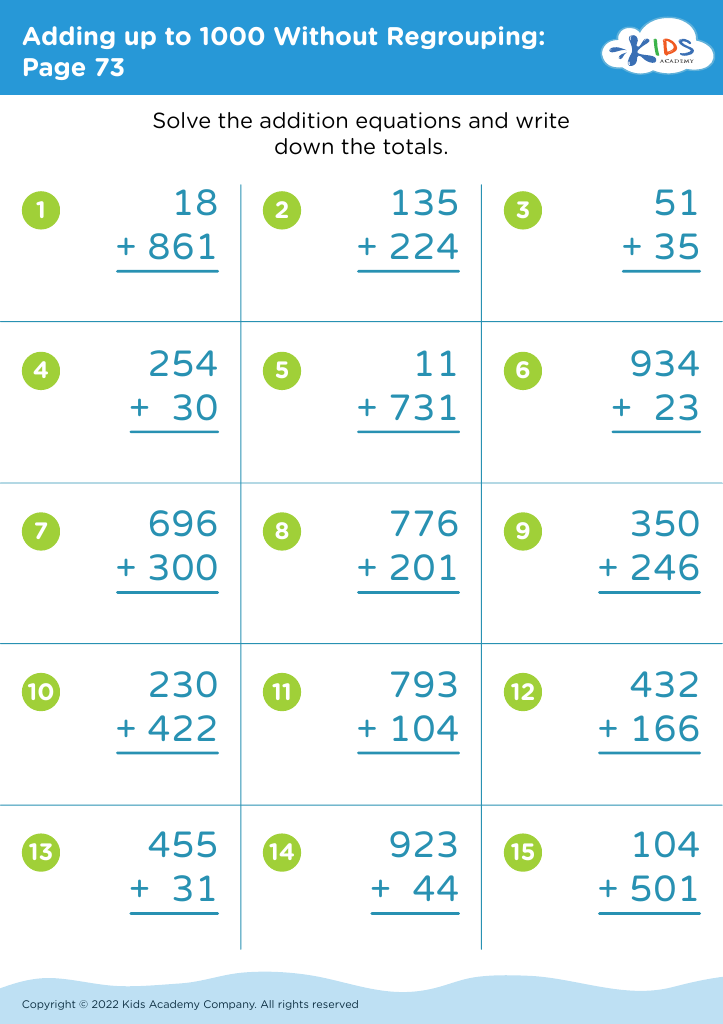
Adding up to 1000 Without Regrouping: Page 73
Worksheet
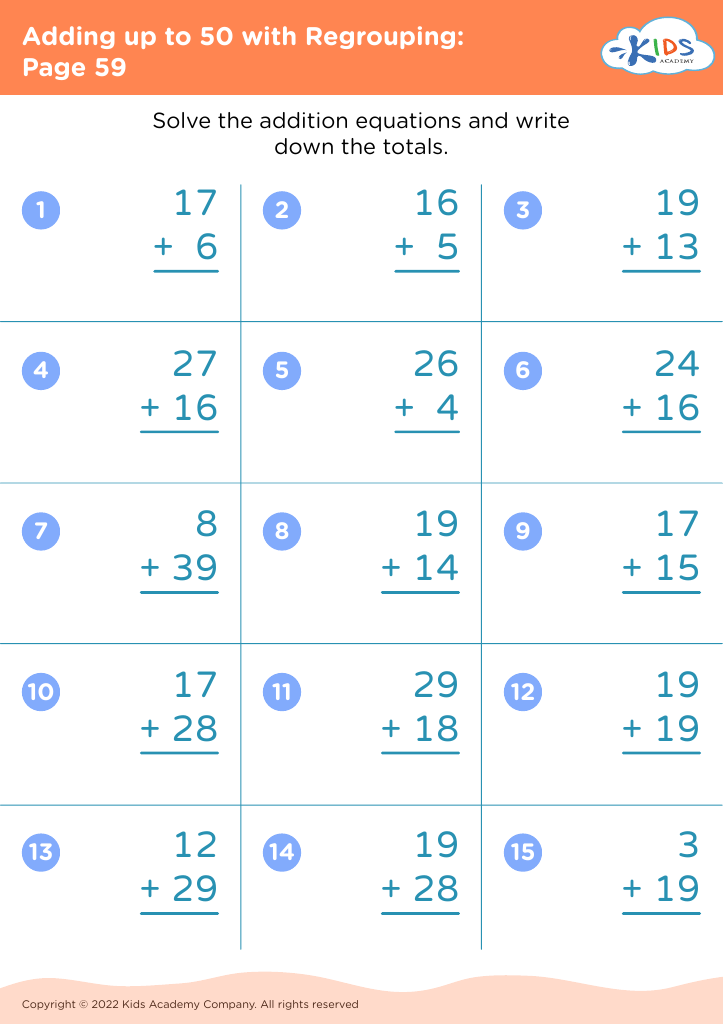
Adding up to 50 with Regrouping: Page 59
Worksheet
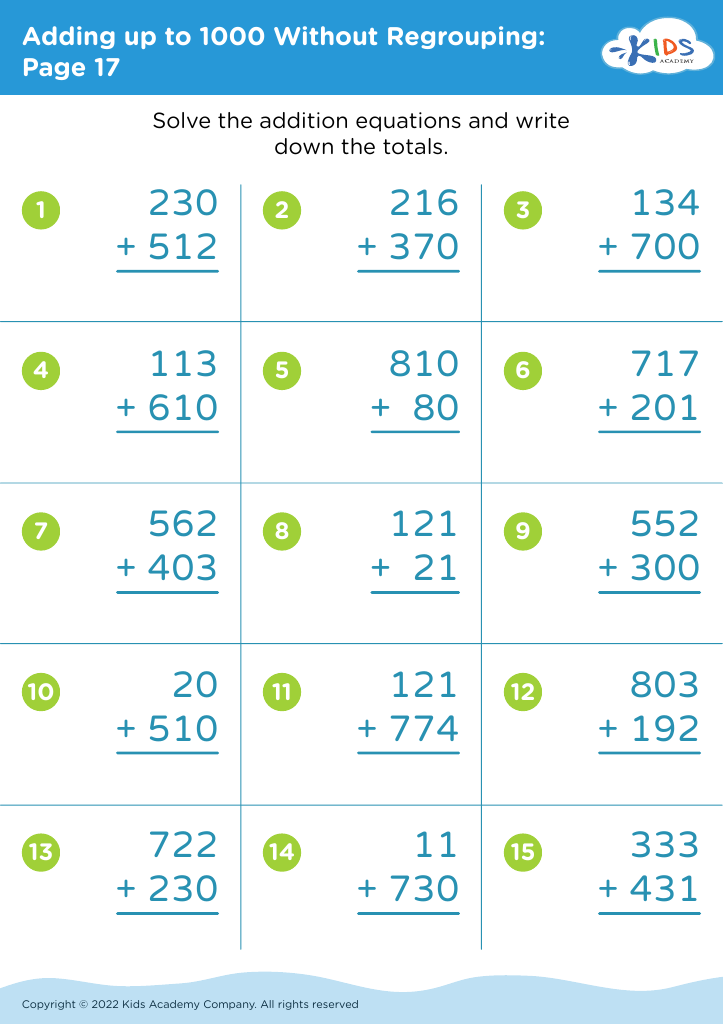
Adding up to 1000 Without Regrouping: Page 17
Worksheet
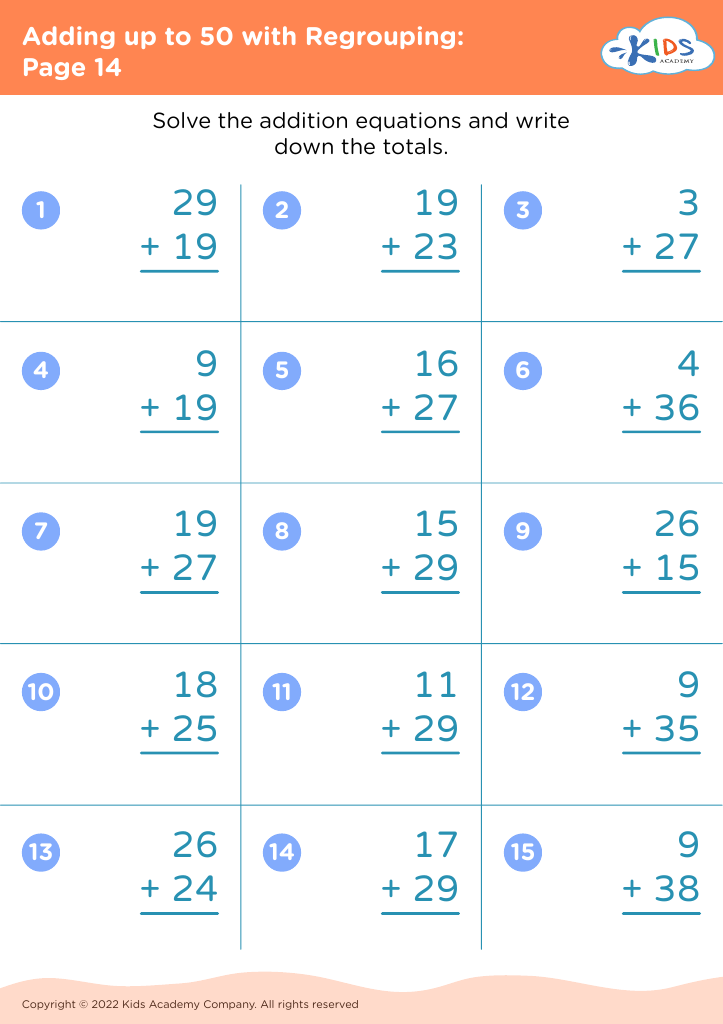
Adding up to 50 with Regrouping: Page 14
Worksheet
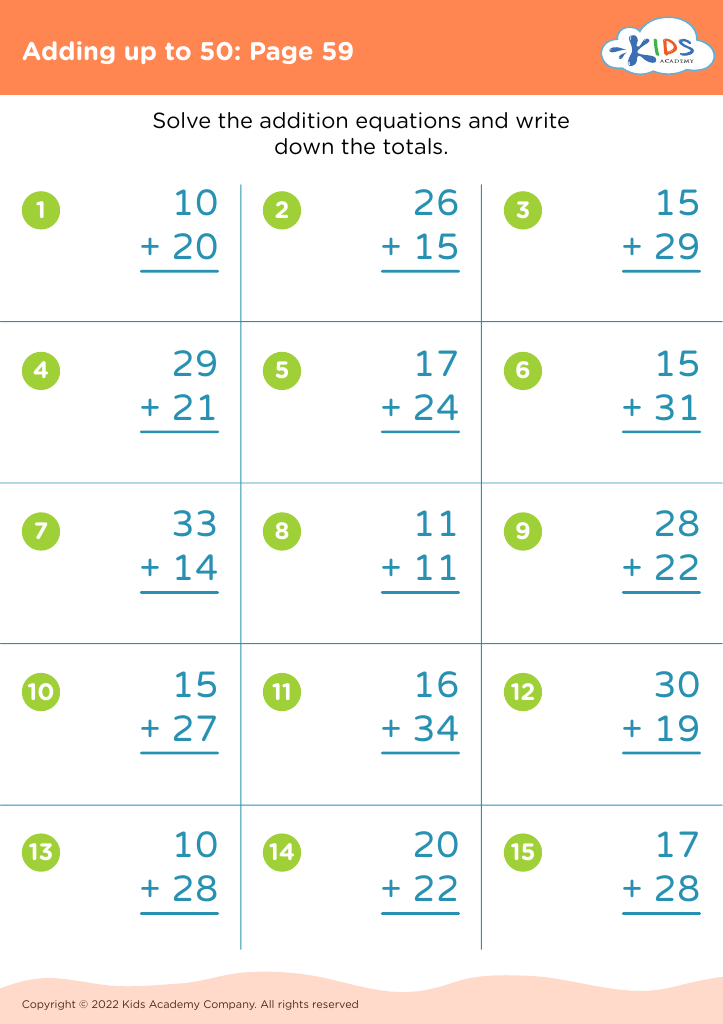
Adding up to 50: Page 59

Adding up to 50: Page 59

Adding up to 50: Page 59
Worksheet
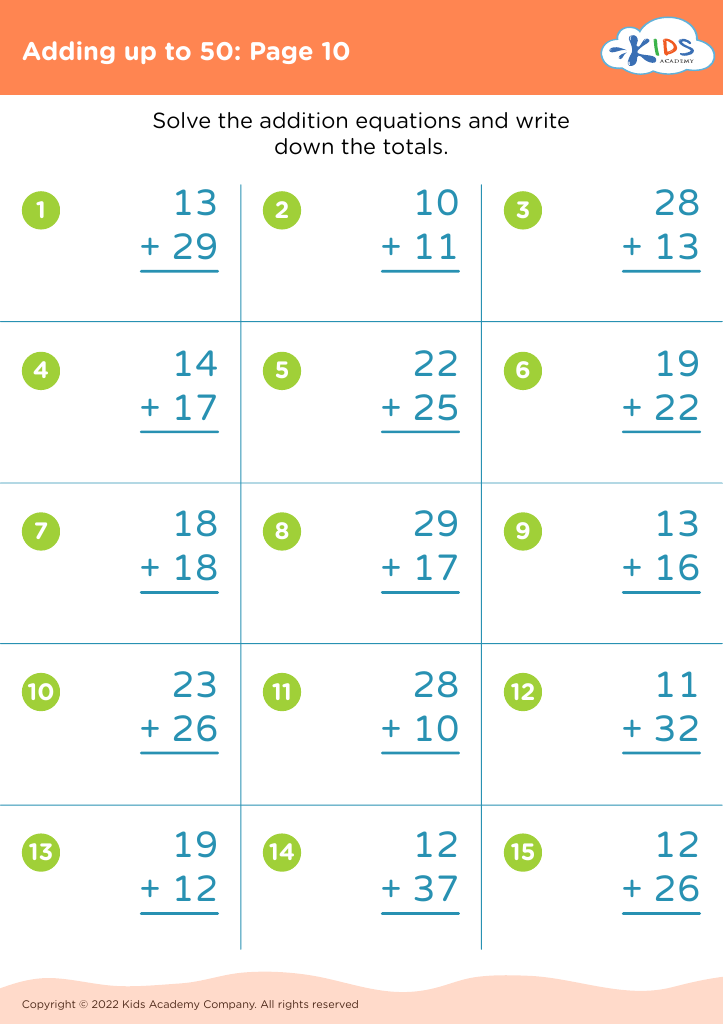
Adding up to 50: Page 10

Adding up to 50: Page 10

Adding up to 50: Page 10
Worksheet
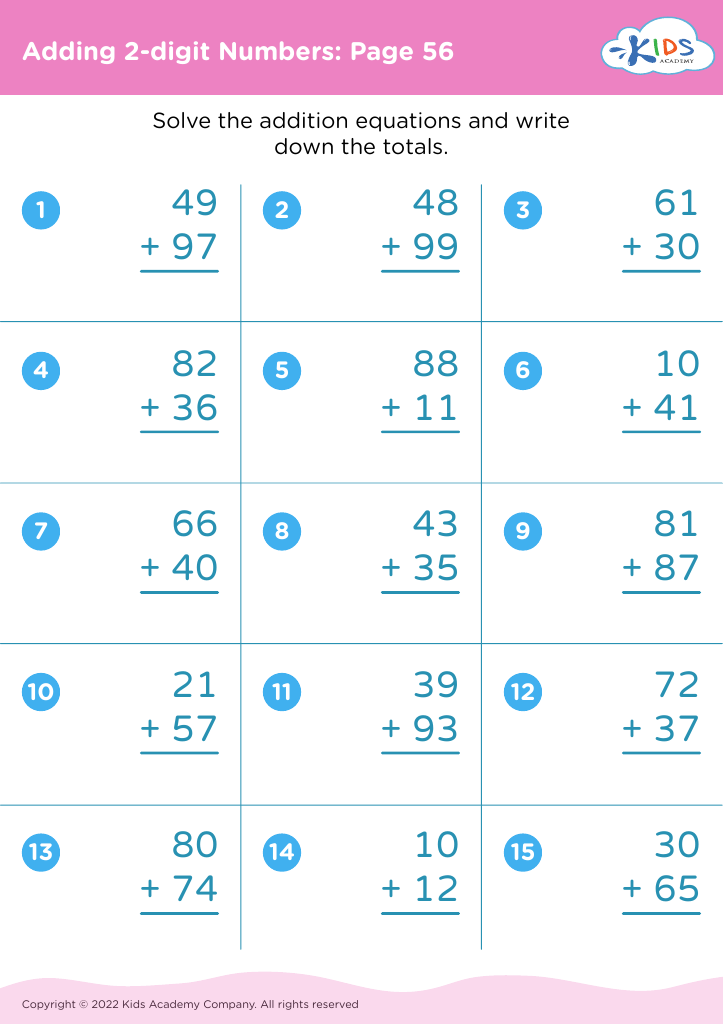
Adding 2-digit Numbers: Page 56

Adding 2-digit Numbers: Page 56

Adding 2-digit Numbers: Page 56
Worksheet
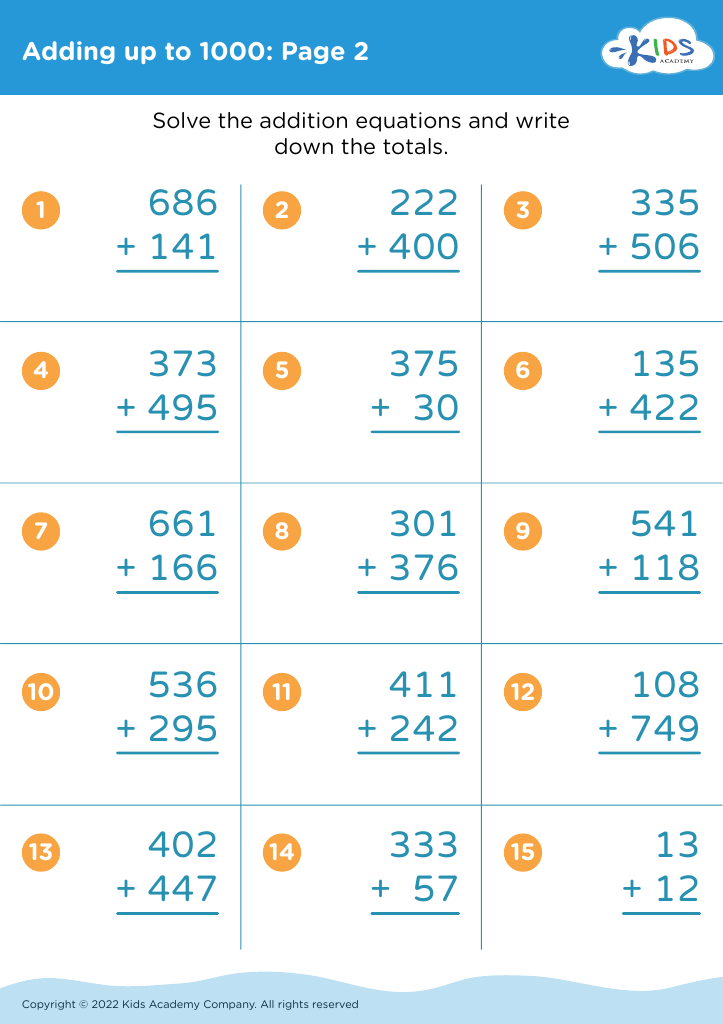
Adding up to 1000: Page 2

Adding up to 1000: Page 2

Adding up to 1000: Page 2
Worksheet
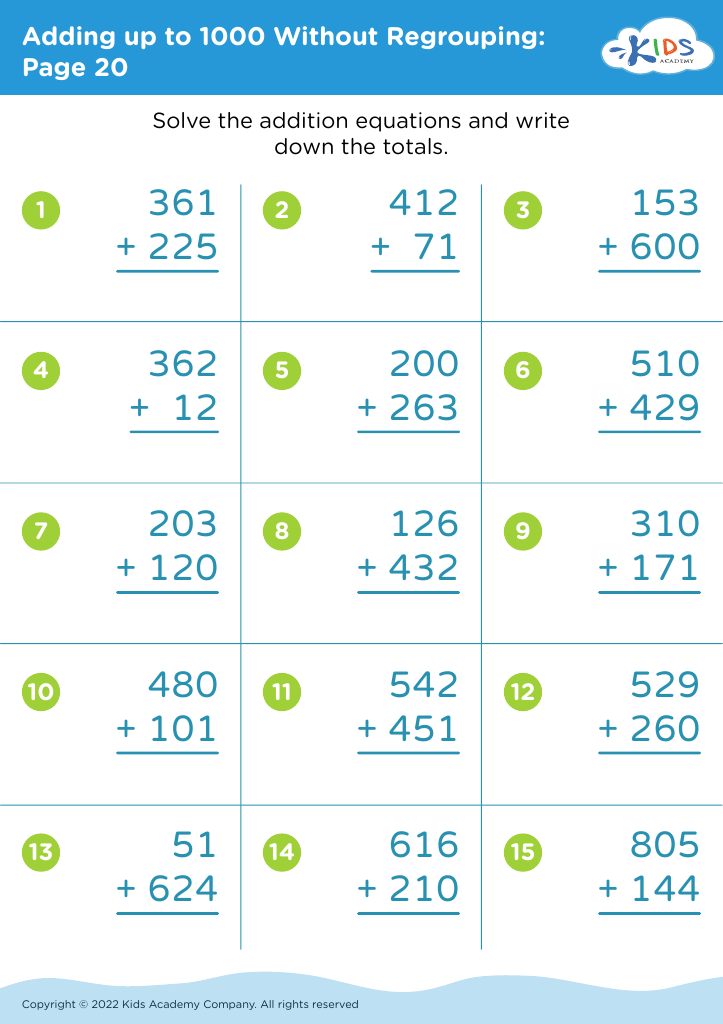
Adding up to 1000 Without Regrouping: Page 20
Worksheet
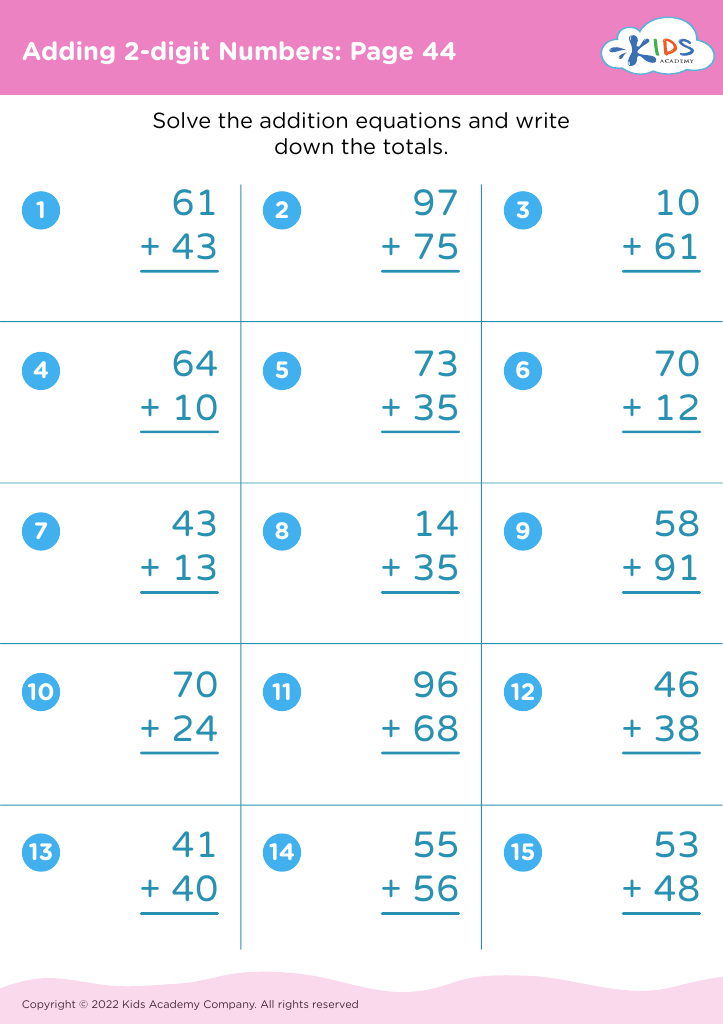
Adding 2-digit Numbers: Page 44

Adding 2-digit Numbers: Page 44

Adding 2-digit Numbers: Page 44
Worksheet
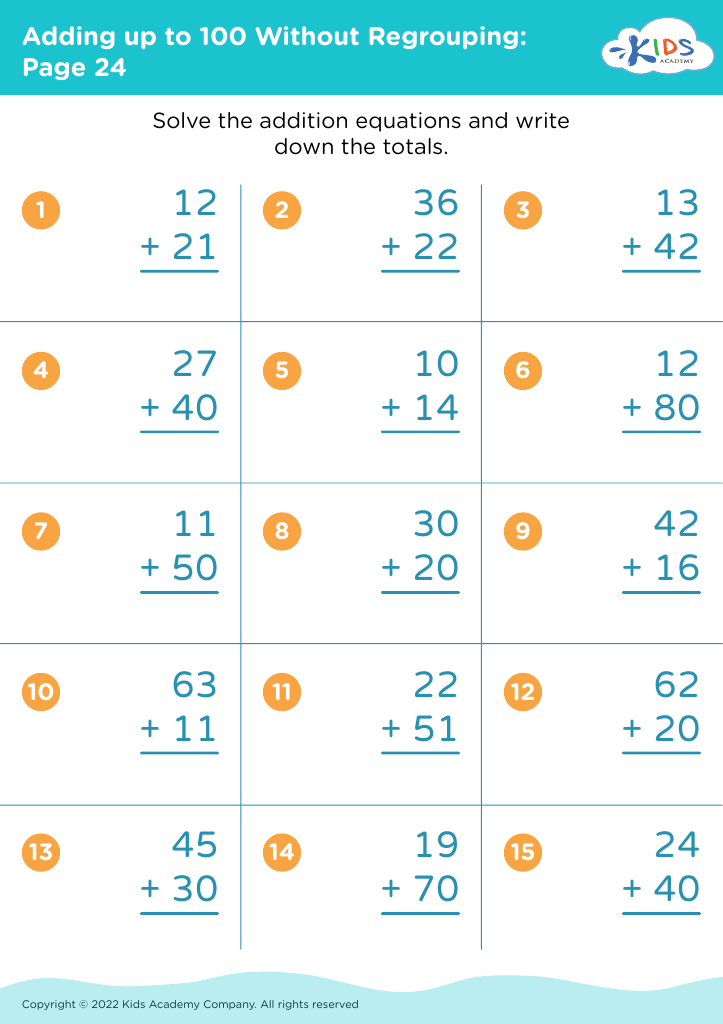
Adding up to 100 Without Regrouping: Page 24
Worksheet
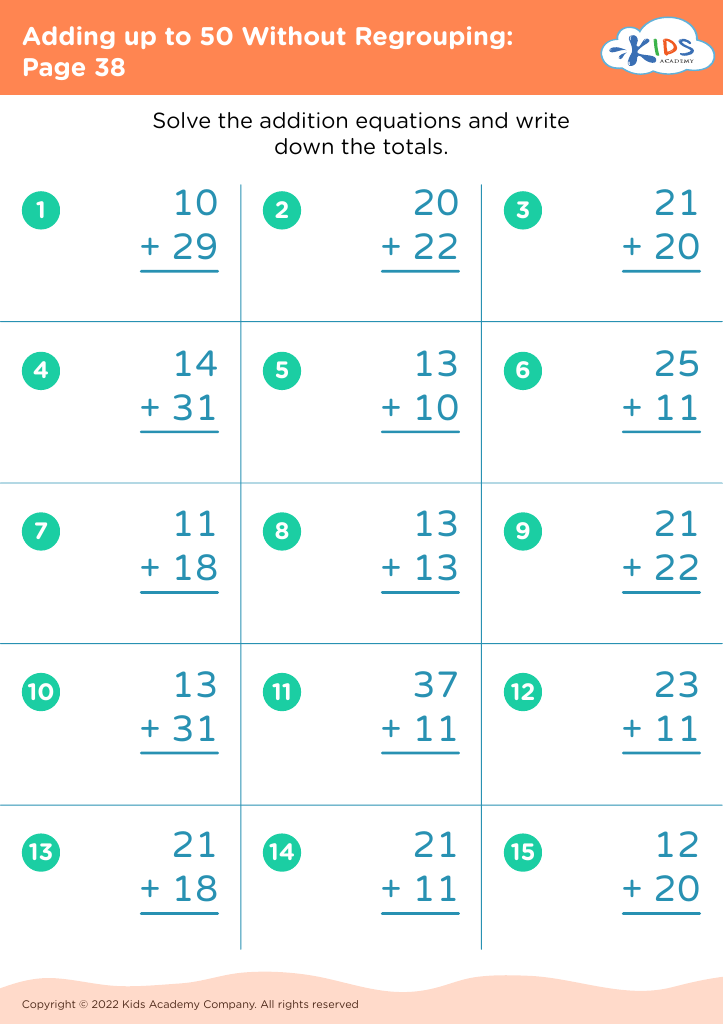
Adding up to 50 Without Regrouping: Page 38
Worksheet
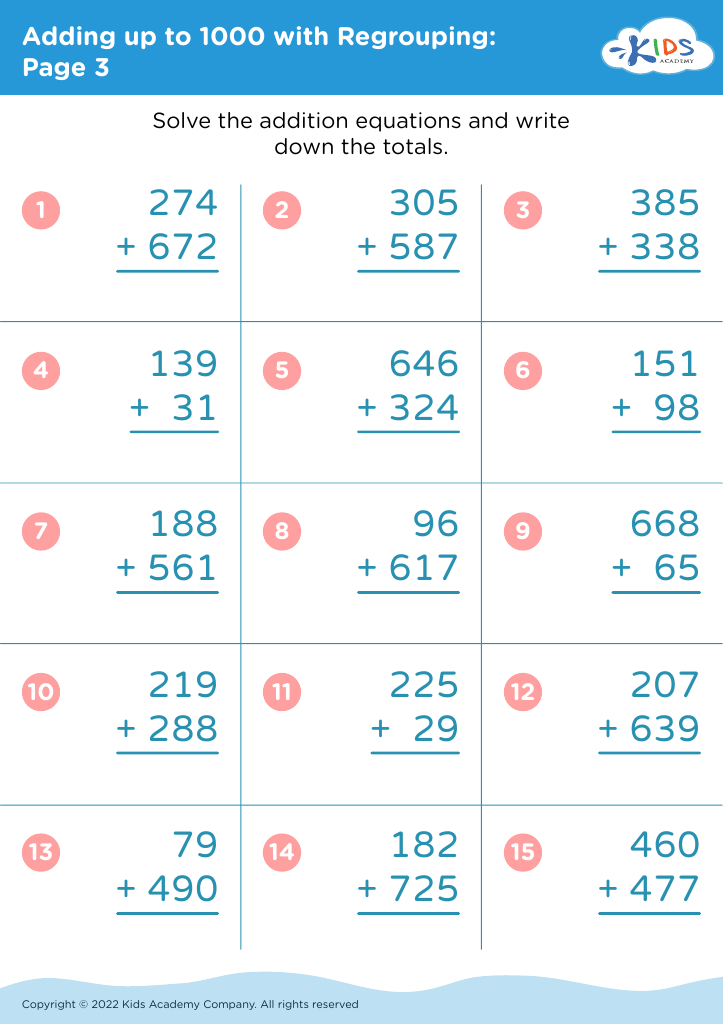
Adding up to 1000 with Regrouping: Page 3
Worksheet
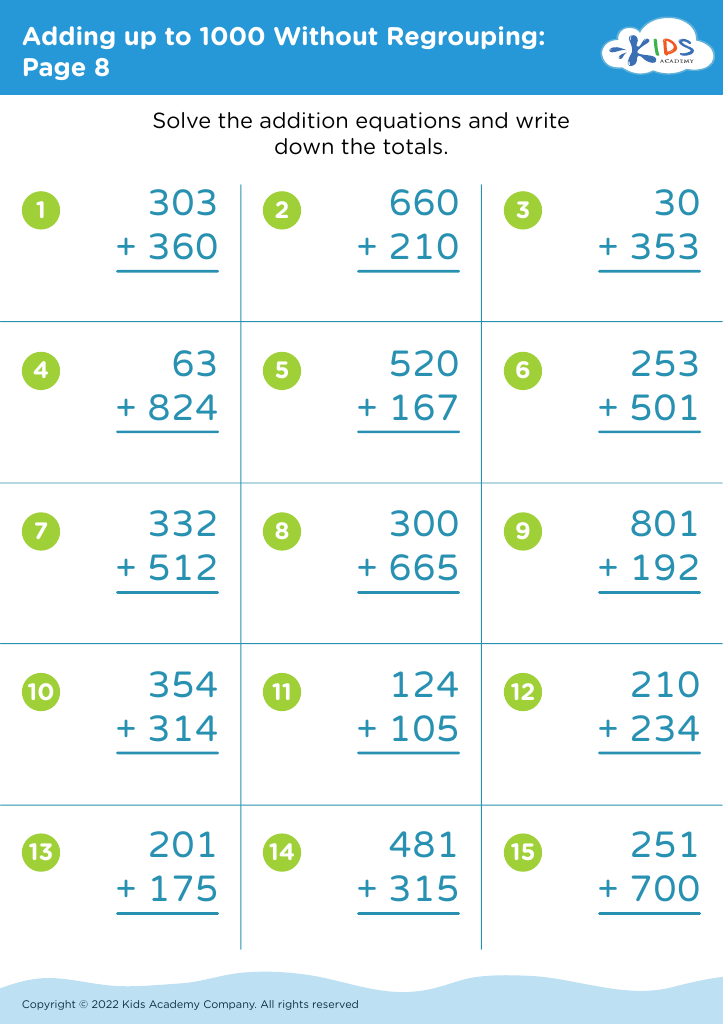
Adding up to 1000 Without Regrouping: Page 8
Worksheet
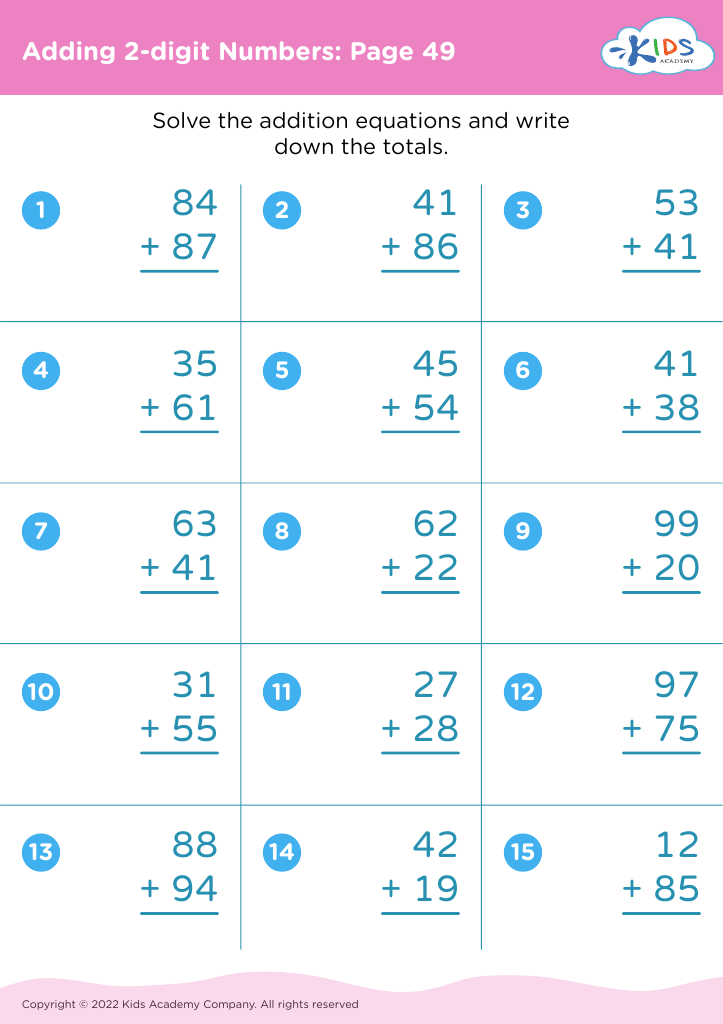
Adding 2-digit Numbers: Page 49

Adding 2-digit Numbers: Page 49

Adding 2-digit Numbers: Page 49
Worksheet
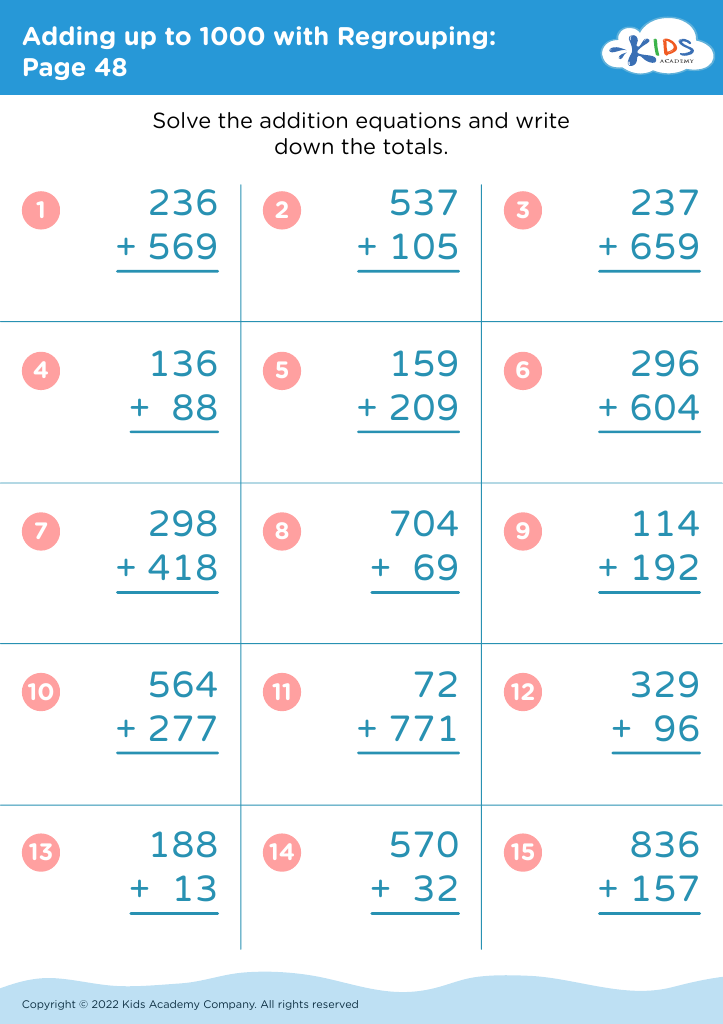
Adding up to 1000 with Regrouping: Page 48
Worksheet
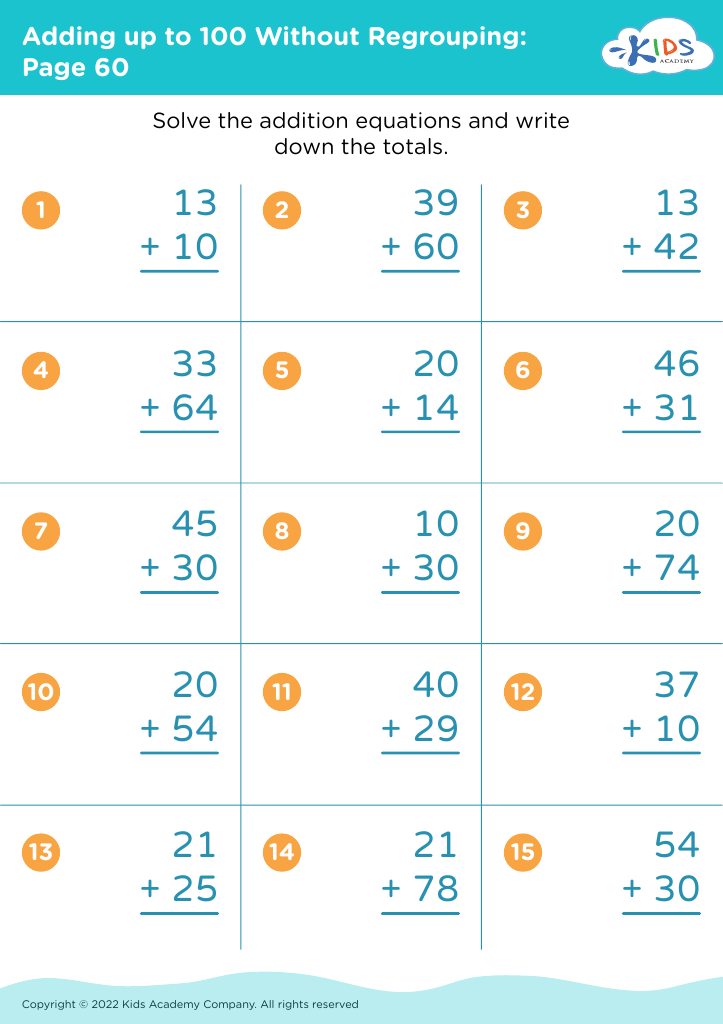
Adding up to 100 Without Regrouping: Page 60
Worksheet


Enhancing comprehension in mathematics for children aged 6-8 is crucial as it lays the foundation for their future academic success. At this developmental stage, children transition from concrete to abstract thinking, making it essential for them to grasp fundamental mathematical concepts. Strong mathematical comprehension aids in developing critical thinking skills and problem-solving abilities, which are applicable in various life situations beyond the classroom.

Moreover, mathematics is a cumulative subject; early struggles with comprehension can lead to gaps in understanding that persist throughout schooling. By prioritizing math comprehension, parents and teachers can help prevent these gaps, promoting self-confidence and a positive attitude toward the subject. Engaging children in mathematics through interactive activities, practical applications, and discussions fosters a love for learning and encourages them to persevere in the face of challenges.

Parents and teachers play a pivotal role in creating an environment conducive to developing these skills. Their support in accessing resources, providing encouragement, and reinforcing concepts can significantly impact a child's mathematical journey. Ultimately, enhancing comprehension in math for young children not only equips them with essential skills but also empowers them to tackle future academic challenges with confidence and resilience.