
Enhancing creativity Math Worksheets for Ages 6-8
8 filtered results
Difficulty Level
Grade
Age
-
From - To
Subject
Activity
Standards
Unlock your child's potential with our innovative Math Worksheets designed for ages 6-8. At Kids Academy, we believe in nurturing creativity along with strengthening math skills. Our worksheets incorporate engaging activities that spark imagination while teaching essential mathematical concepts like addition, subtraction, geometry, and problem-solving. Each activity is crafted to make learning fun and interactive, encouraging kids to think critically and creatively. These worksheets are perfect for both classroom and home use, offering a balanced approach to education that keeps young minds excited about math. Explore how our resources can transform math practice into an enjoyable adventure.
Favorites
With answer key
Interactive
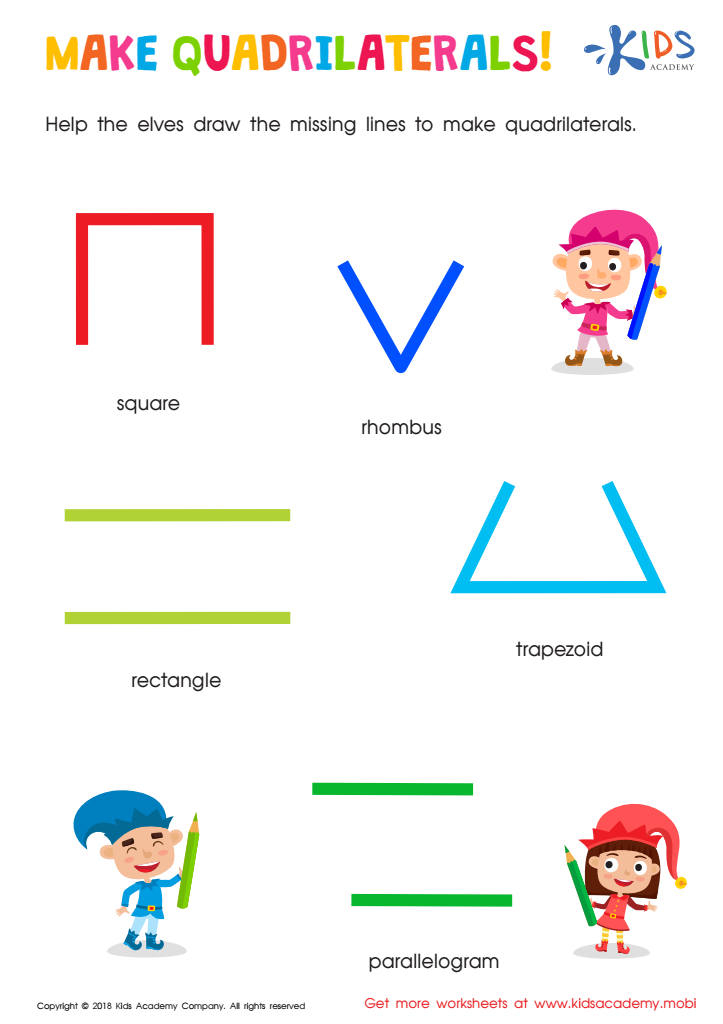
Make Quadrilaterals Worksheet
This fun and colorful worksheet will help your child understand and identify quadrilaterals. It's simple and encourages them to draw lines to create a square, rectangle, rhombus, trapezoid, and parallelogram. Stimulate their minds and watch them learn while they have fun!
 Assign to My Students
Make Quadrilaterals Worksheet
Worksheet
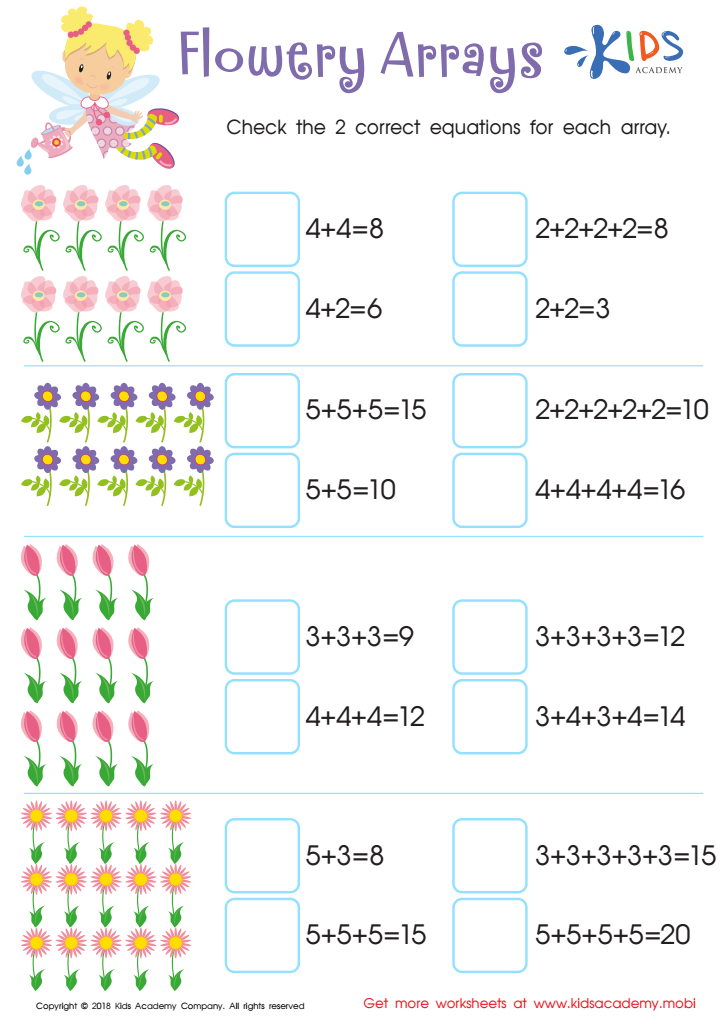
Flowery Arrays Worksheet
This worksheet helps your child learn to identify and represent arrays. For example, both 3+3+3+3=12 and 4+4+4=12 are arrays but the first is arranged in rows and the second in columns. Let your child use this knowledge to answer the four questions in this pdf and check the two correct equations.
Flowery Arrays Worksheet
Worksheet
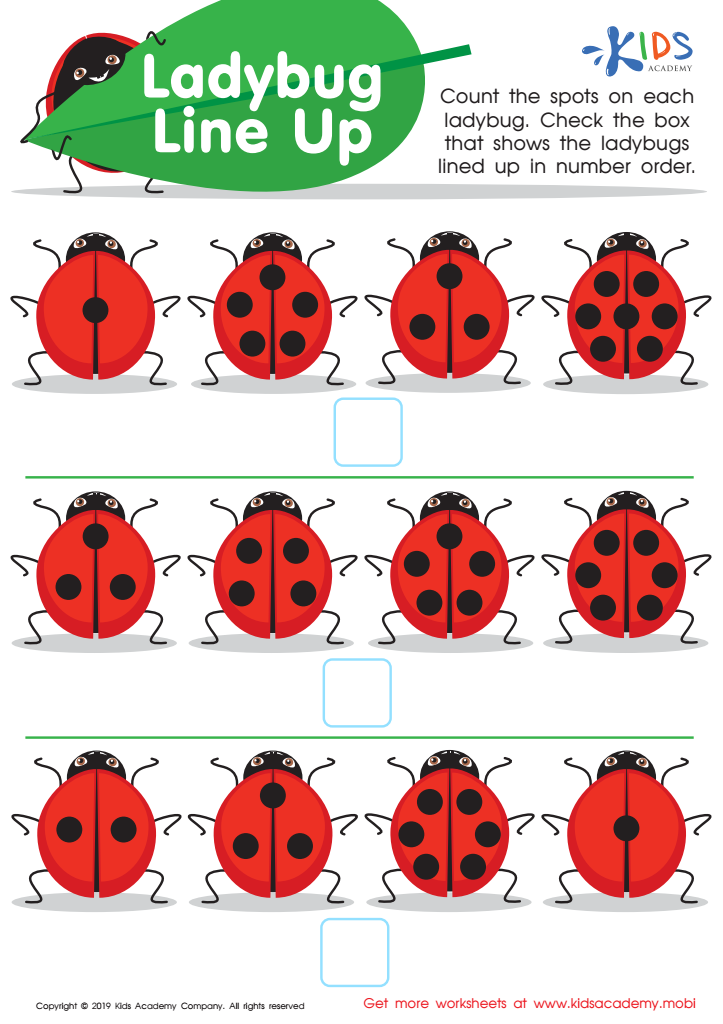
Ladybug Line Up Worksheet
Count the spots on the back of each ladybug in the three groups. Help kids check the box under each group that shows the ladybugs in proper number order. Ladybugs are an adorable insect with unique spots. This worksheet encourages counting and ordering.
Ladybug Line Up Worksheet
Worksheet
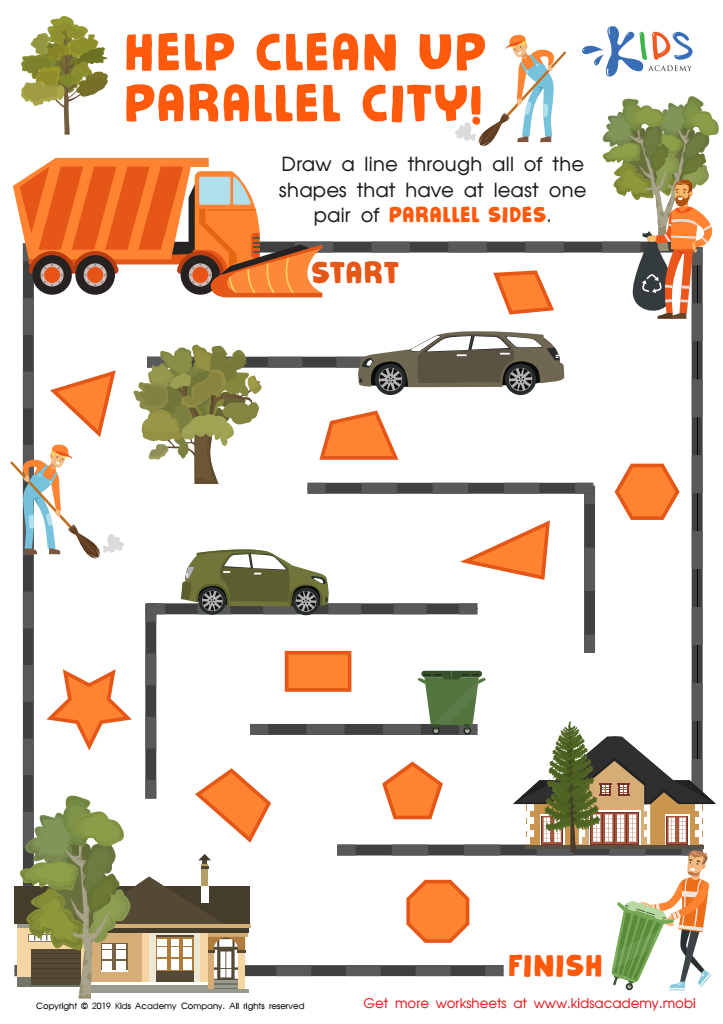
Help Clean Up Parallel City Worksheet
Explain to your kids what parallel sides are and have them identify the shapes with parallel sides in the picture. Then let them draw a line through all the shapes with at least one pair of parallel sides. This colorful worksheet will help them understand and practice this concept.
Help Clean Up Parallel City Worksheet
Worksheet
Join Kids Academy for Free
Who is primarily going to use this learning content?








Enhancing creativity in mathematics for children aged 6-8 is crucial for several key reasons. Firstly, at this developmental stage, young minds are exceptionally receptive and adaptable, making it an ideal time to nurture a positive relationship with math. A creative approach transforms math from a set of rigid rules to a playground of exploration and discovery, which can significantly diminish math anxiety and foster a lifelong love of learning.
Cognitive benefits are another critical factor. Creative math exercises improve problem-solving skills, critical thinking, and the ability to approach challenges from multiple perspectives. These skills are not only fundamental to mathematics but are also valuable across all academic disciplines and everyday life.
Furthermore, incorporating creativity into math helps diversify methods of teaching, accommodating different learning styles. This inclusion not only aids in better comprehension but also ensures that concepts are internalized more deeply and retained longer.
Socially and emotionally, creative math projects build teamwork, communication skills, and confidence. Collaborative problem-solving exercises teach children how to share ideas, respect differing viewpoints, and celebrate collective achievements.
In summary, enhancing creativity in math for young learners cultivates a positive mindset, enhances cognitive skills, supports diverse learning strategies, and strengthens social-emotional development, creating a well-rounded foundation for future academic and personal success.








