Grammar practice Math Worksheets for Ages 6-8
3 filtered results
-
From - To
Discover the fun of learning with our "Grammar Practice Math Worksheets" for ages 6-8! Designed to engage young learners, these worksheets seamlessly blend essential grammar skills with math concepts, promoting a comprehensive educational experience. Each worksheet is crafted to reinforce language arts while nurturing mathematical understanding, ensuring children develop both skill sets concurrently. Engaging exercises spark curiosity while building confidence in their abilities. Perfect for classroom or home use, our printable resources make practicing grammar enjoyable and effective. Explore our range of worksheets today and support your child's journey toward mastery in grammar and math in a playful, interactive way!
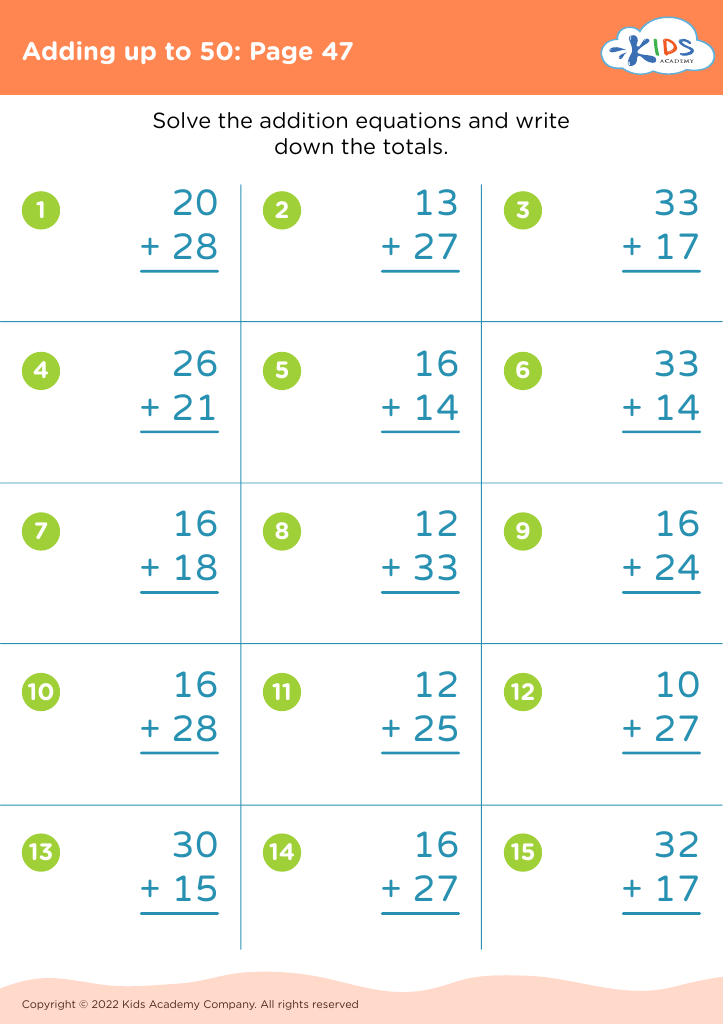
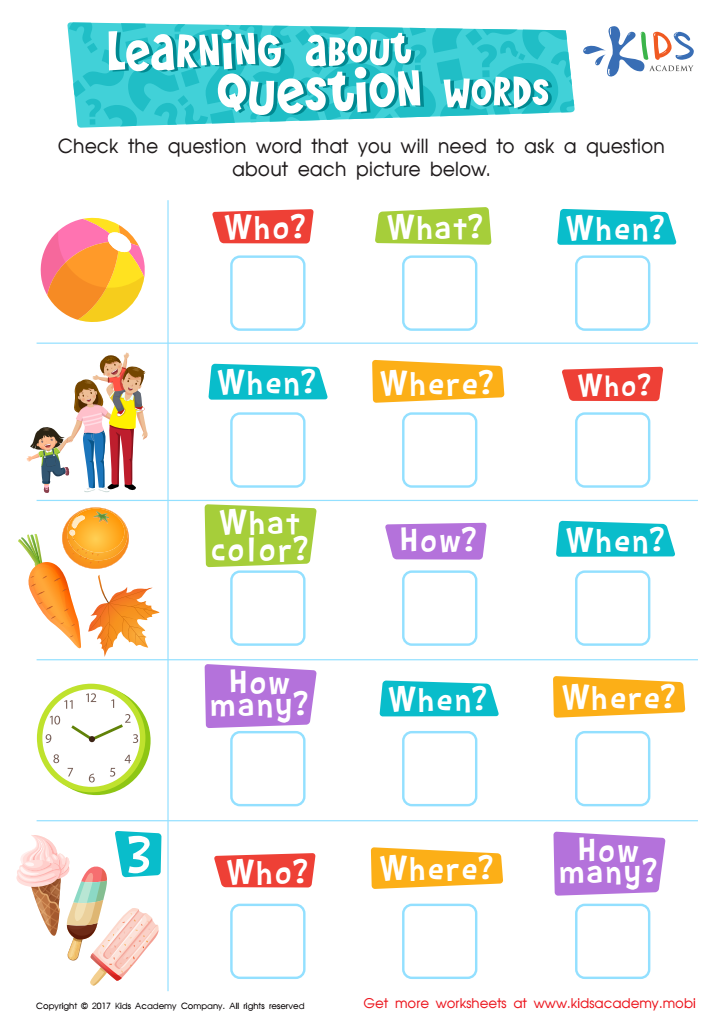
Learning about Question Words Worksheet
 Assign to My Students
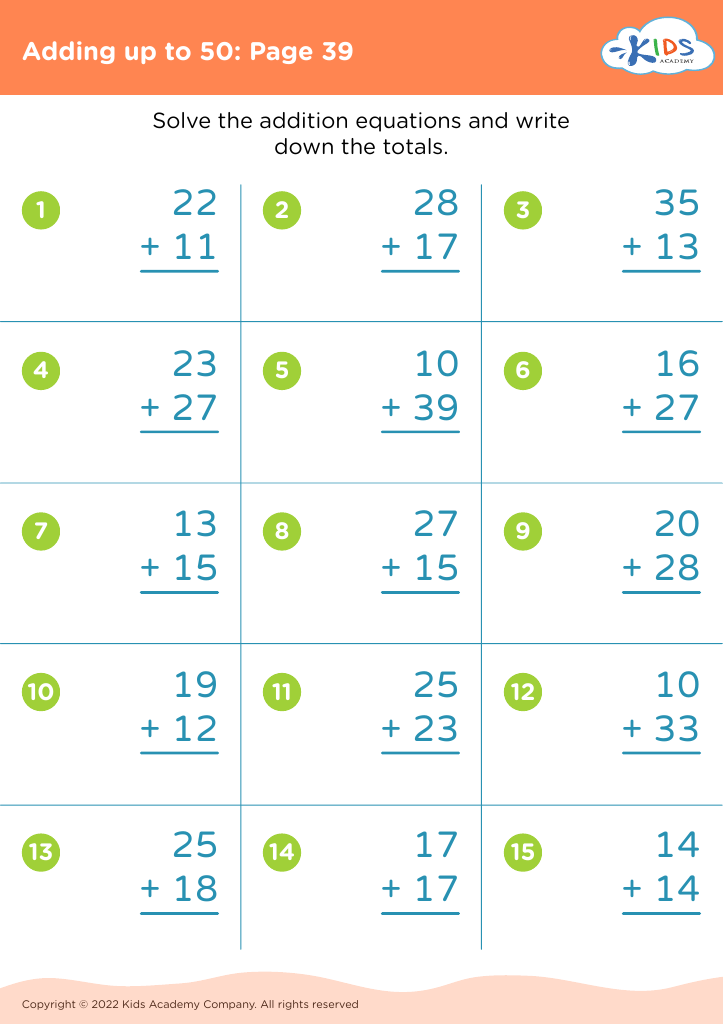








Parents and teachers should emphasize grammar and math practice for children aged 6-8 because these foundational skills are essential for effective communication and problem-solving. Grammar helps young learners articulate their thoughts clearly, enhancing both written and verbal skills. In an age where technology dominates, strong grammar equips children to express themselves accurately, avoiding misunderstandings in digital communication.
Additionally, math practice fosters critical thinking and analytical skills. At this stage, children begin to understand key mathematical concepts such as addition, subtraction, and simple problem-solving. These skills lay the groundwork for more complex mathematics in later years. Engaging with both grammar and math concurrently encourages integration of language learning, as children learn to describe mathematical processes verbally and in writing.
Furthermore, regular practice in these subjects builds confidence. As children develop competence in grammar and math, their self-esteem improves, empowering them to tackle more challenging tasks. Developing these skills early on can lead to better academic performance and a love for learning. In summary, prioritizing grammar and math practice during these formative years equips children with tools to succeed academically and socially. Ultimately, this focus supports their overall development and paves the way for lifelong learning.








