
Mathematical problem-solving Math Worksheets for Ages 6-8
6 filtered results
Difficulty Level
Grade
Age
-
From - To
Subject
Activity
Standards
Enhance your child's critical thinking skills with our engaging mathematical problem-solving worksheets designed for ages 6-8! Our carefully crafted resources focus on fostering essential math skills through interactive exercises that make learning fun. Each worksheet is aligned with educational standards and covers a range of problem-solving techniques, helping children develop logical reasoning and arithmetic abilities. From simple addition and subtraction to spatial reasoning and word problems, these worksheets are perfect for classroom use or homework. Start encouraging a love for math and build confidence in your child's problem-solving abilities today with Kids Academy’s comprehensive collection!
Favorites
With answer key
Interactive
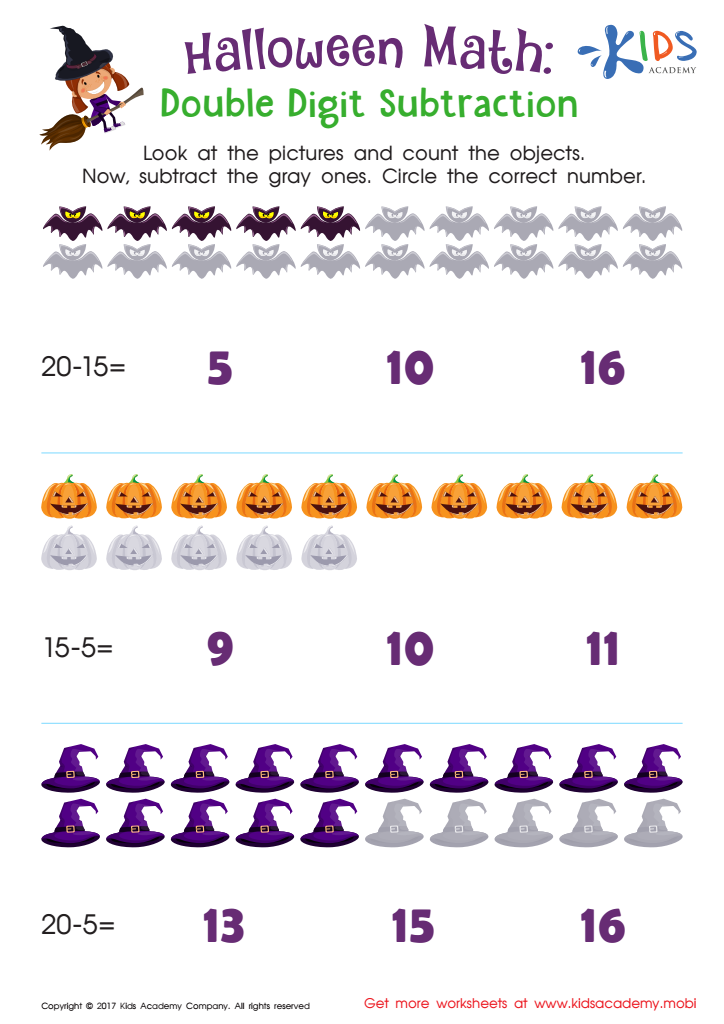
Halloween Math Subtraction Worksheet
Kids can easily understand subtraction by using the visuals provided in this worksheet. Get ready for some fun math!
This Halloween math worksheet uses spooky images to help kids understand subtraction. With it, they can count and solve double digit problems more easily. Get ready for some fun and engaging math practice!
 Assign to My Students
Halloween Math Subtraction Worksheet
Worksheet
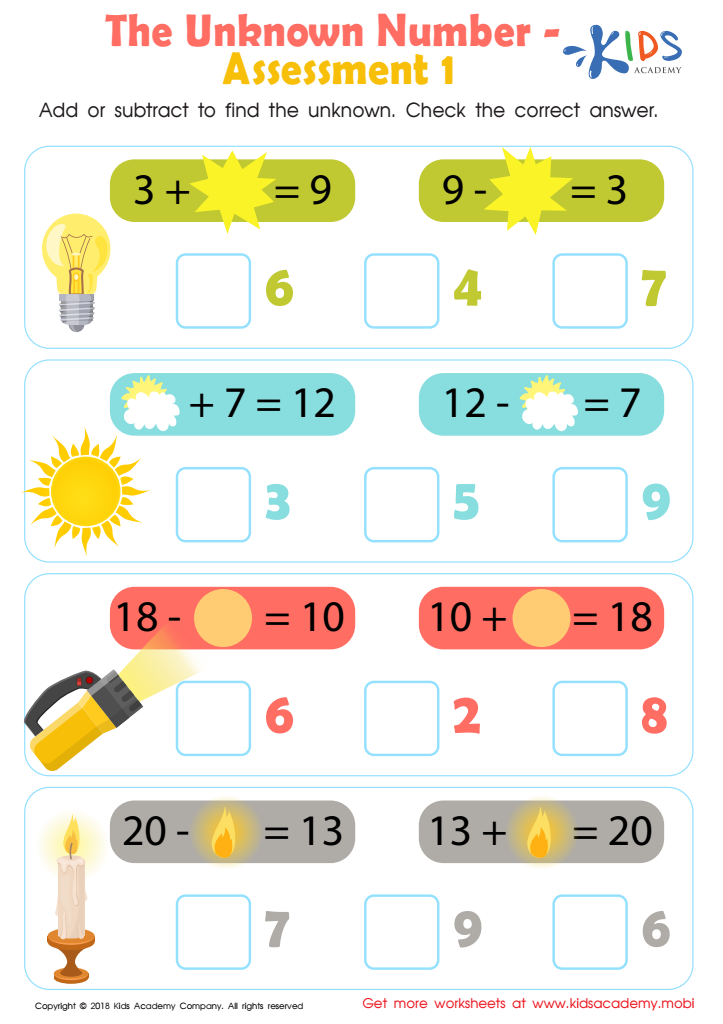
The Unknown Number: Assessment 1 Worksheet
Engage your child's mind with this simple worksheet. Help them overcome math stress and practice their skills! Add or subtract to find the unknown and help them circle the correct answer. Make learning fun and help your kids excel in math - all with this one printout.
The Unknown Number: Assessment 1 Worksheet
Worksheet
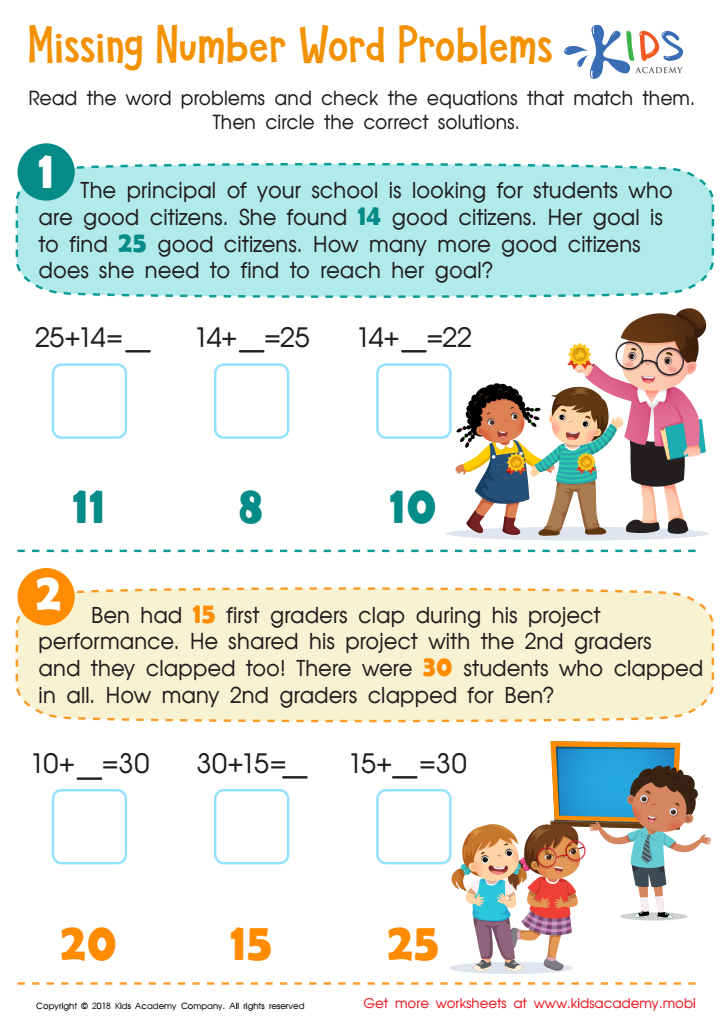
Missing Number Word Problems Worksheet
Read the word problems in this worksheet to your students. Help them understand the meaning, then translate the text into equations. Check the equations for accuracy, circle the correct solutions, and support your child as they learn to solve word problems.
Missing Number Word Problems Worksheet
Worksheet
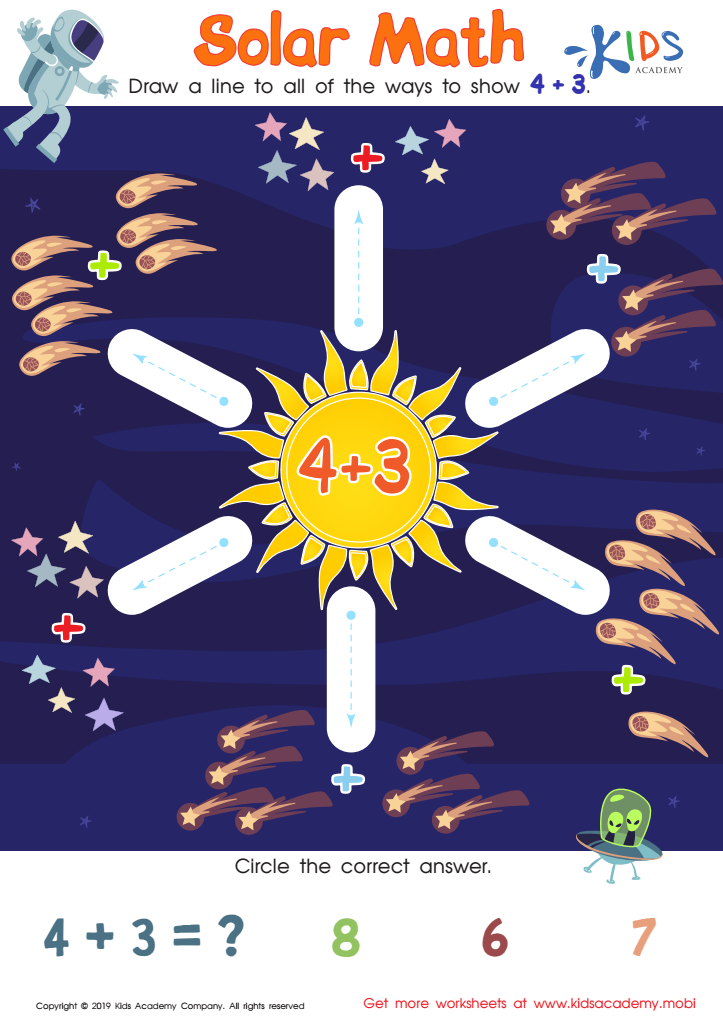
Solar Math Worksheet
Do your students need a lesson on the solar system? Use this colorful worksheet to make learning fun. Math is a must-know for kindergartners; make it enjoyable with this printout. Ask them to draw a line to all the ways to show 4+3.
Solar Math Worksheet
Worksheet
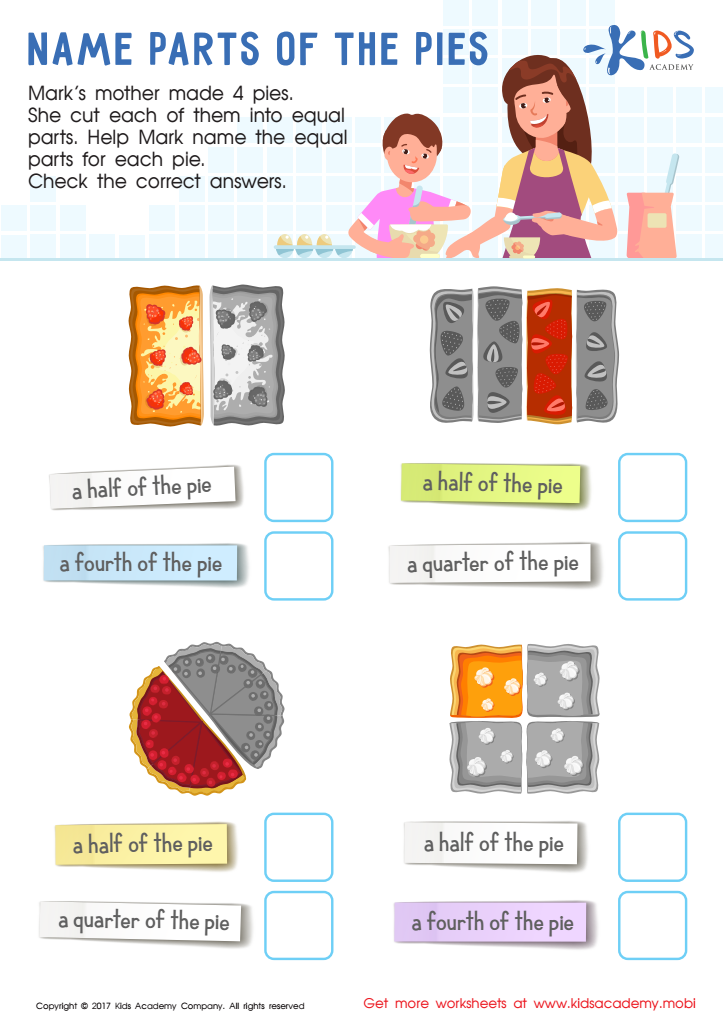
Name Parts of the Pies Worksheet
Mark and his mom are making pies. He's dividing them into equal parts and needs help to name them. Let your students aid him by checking the correct answer for each picture. Have them think of their own roles in the kitchen when they're done. How do they help their moms?
Name Parts of the Pies Worksheet
Worksheet
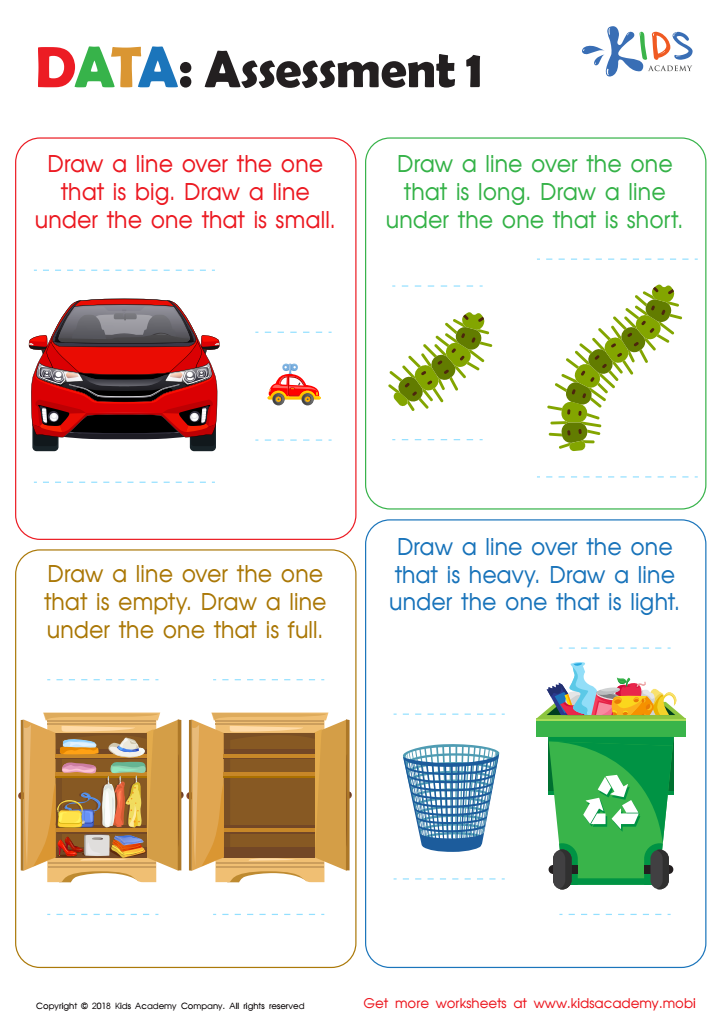
Data: Assessment 1 Worksheet
Assess your students' knowledge of measurement words with this worksheet. Have them compare and describe objects/quantities using words like "big", "small", "long", "short", "empty", "full", "heavy" and "light". Encourage further learning by asking students to provide examples of each word meaning.
Data: Assessment 1 Worksheet
Worksheet
Join Kids Academy for Free
Who is primarily going to use this learning content?







Mathematical problem-solving is a crucial skill for children aged 6-8, serving as a foundation for their future academic success and daily life applications. First, it fosters critical thinking and encourages students to think logically about how to approach and solve various challenges. By engaging in problem-solving activities, children learn to analyze situations, identify patterns, and explore various strategies, which enhances their cognitive development.
Moreover, problem-solving integration promotes a positive attitude toward math. This age group is especially impressionable and can develop a love for the subject when exposed to engaging, hands-on learning experiences. Teachers who prioritize problem-solving create an environment where students feel confident to express their thoughts, take risks, and learn from mistakes, fostering resilience and perseverance.
For parents, understanding the significance of mathematical problem-solving means reinforcing these concepts at home. Encouraging children to explore math through everyday activities, such as cooking or shopping, enhances their real-world skills. Overall, nurturing these abilities helps children become well-rounded individuals, prepared to tackle not only future academic challenges but also everyday problems throughout their lives. Investing in early mathematical problem-solving skills ultimately benefits both children and society by cultivating critical thinkers and informed decision-makers.








