Number Matching Math Worksheets for Ages 6-8
4 filtered results
-
From - To
Discover engaging Number Matching Math Worksheets designed for kids ages 6-8! Our expertly crafted worksheets help young learners build essential math skills through fun and interactive activities. Children will develop a strong number sense, improve their counting abilities, and enhance their recognition of numerical patterns. Perfect for both classroom and at-home learning, these worksheets offer a delightful way to practice and solidify foundational math concepts. Encourage your child's love for math and watch their confidence grow! Download your free Number Matching Math Worksheets today and make learning an enjoyable adventure. Visit Kids Academy for more educational resources.
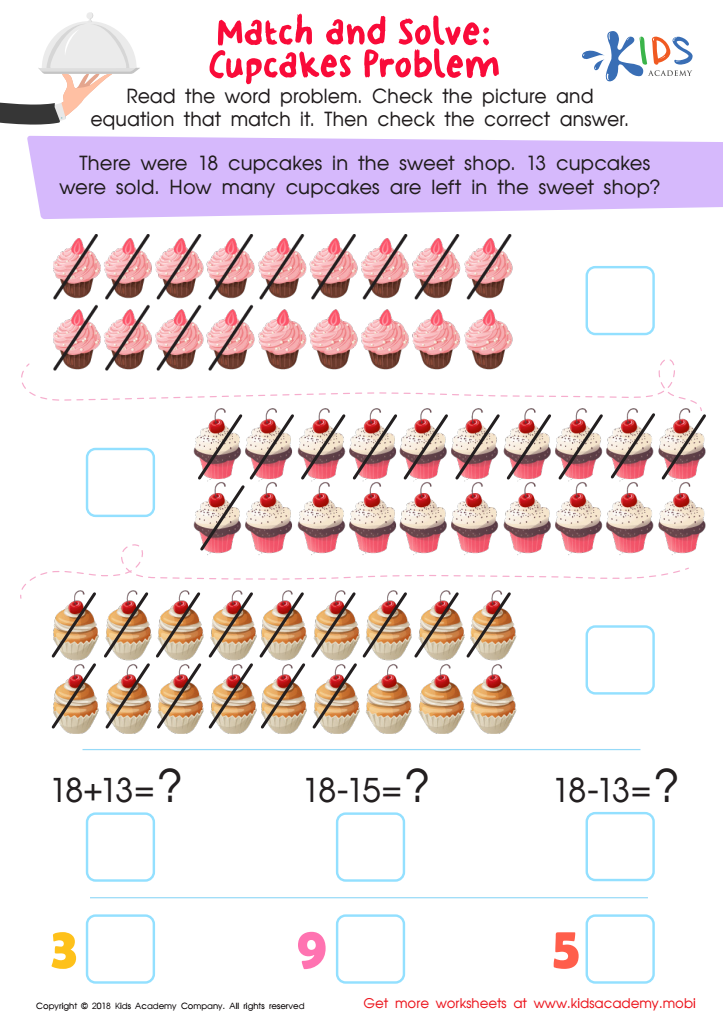
Match and Solve: Cupcakes Problem Worksheet
 Assign to My Students
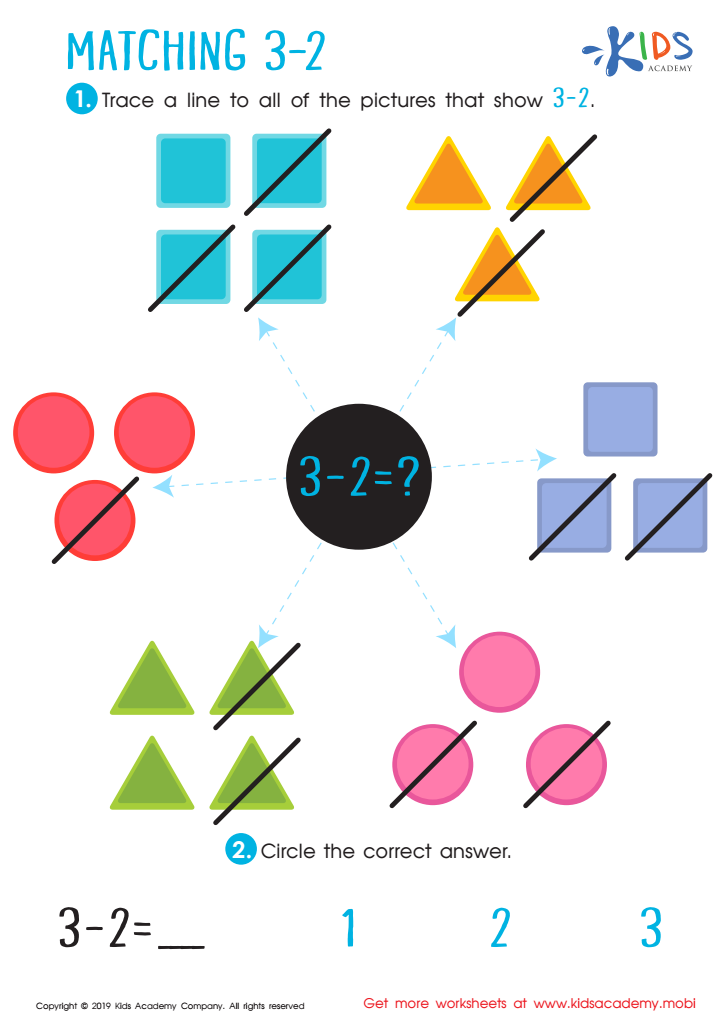
Matching 3-2 Worksheet
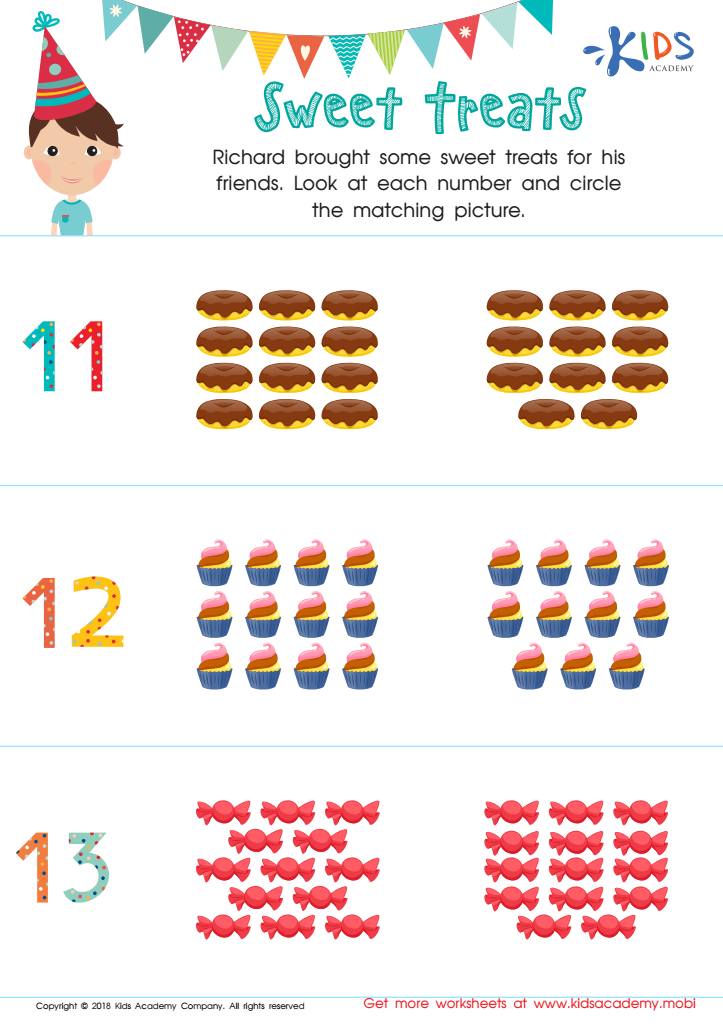
Kindergarten Math Worksheet Matching Numbers
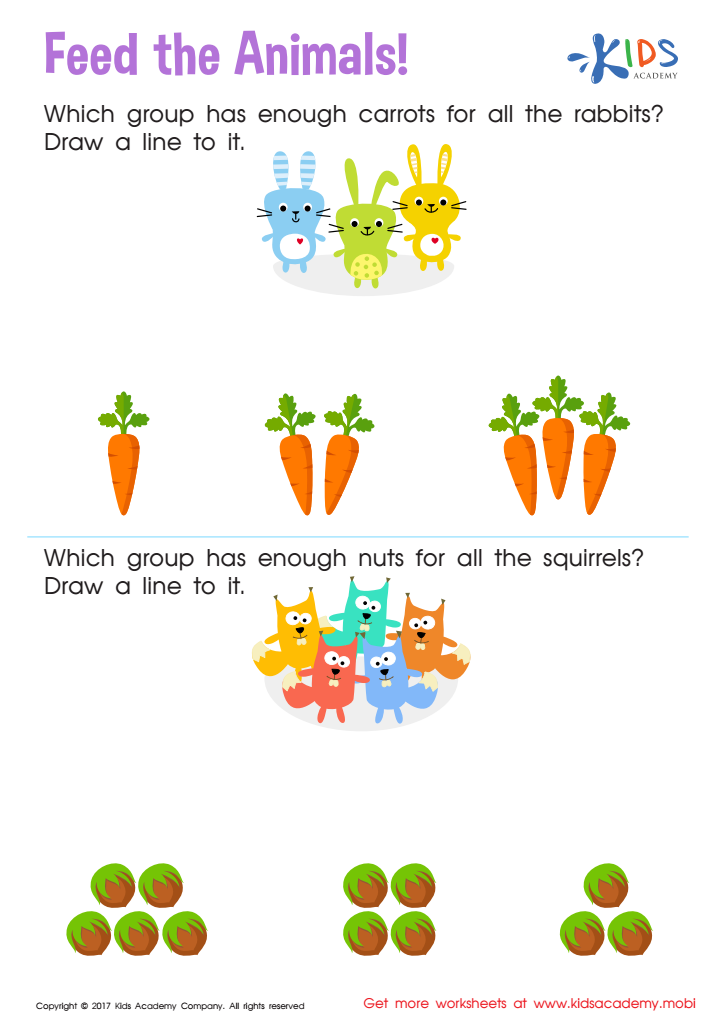
Count and Match: Feed the Animals Worksheet








Numerical matching activities play a vital role in developing foundational math skills for children aged 6-8, which is critical for their overall academic success. At this young age, children are transitioning from basic counting to more complex concepts like addition, subtraction, and understanding number patterns. Number matching helps solidify their understanding of numerical relationships by linking numerals with corresponding quantities or objects, which reinforces both number recognition and the concept of one-to-one correspondence.
For parents and teachers, using number matching activities can make learning engaging and approachable. It turns abstract numerical concepts into interactive games, which helps maintain a child's interest and motivation. This engagement is particularly important for sustaining attention and mitigating any math anxiety, which can develop if children find the subject intimidating.
Moreover, these activities promote critical thinking and problem-solving skills. By matching different representations of the same number, children learn to think flexibly and understand that numbers can be represented in multiple ways, including written numerals, grouped objects, or even graphs.
Beyond pure numerical understanding, these activities improve fine motor skills as children often use manipulatives such as cards, blocks, or digital apps that require precise actions to match numbers. This multi-sensory approach not only enriches the learning experience but also caters to various learning styles, making it inclusive and effective.








