Number pattern recognition Math Worksheets for Ages 6-8
3 filtered results
-
From - To
Explore our engaging Number Pattern Recognition Math Worksheets designed specifically for children aged 6-8. These worksheets provide a fun and interactive way for young learners to develop essential math skills by identifying and completing patterns. With a variety of exercises, including shapes, numbers, and visual cues, children will enhance their critical thinking and problem-solving abilities. Our worksheets cater to different learning styles and ensure that students remain motivated and challenged. Perfect for classroom use or at-home practice, these resources will strengthen your child's foundation in mathematics and boost their confidence in number pattern recognition. Start your child's math journey today!
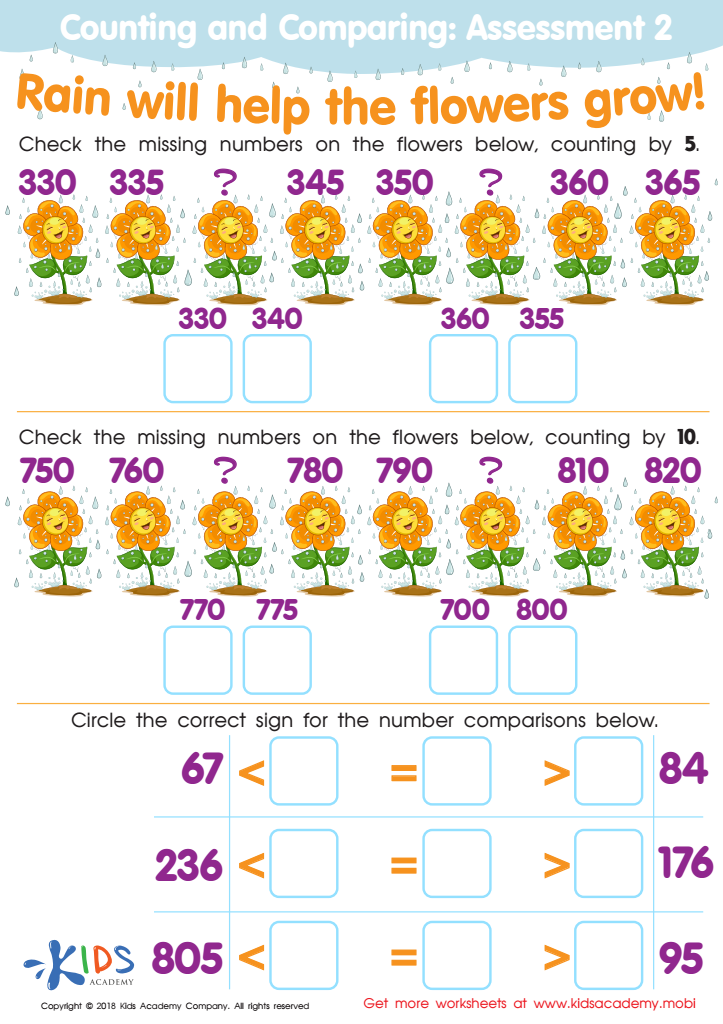
Counting and Comparing: Assessment 2 Worksheet
 Assign to My Students
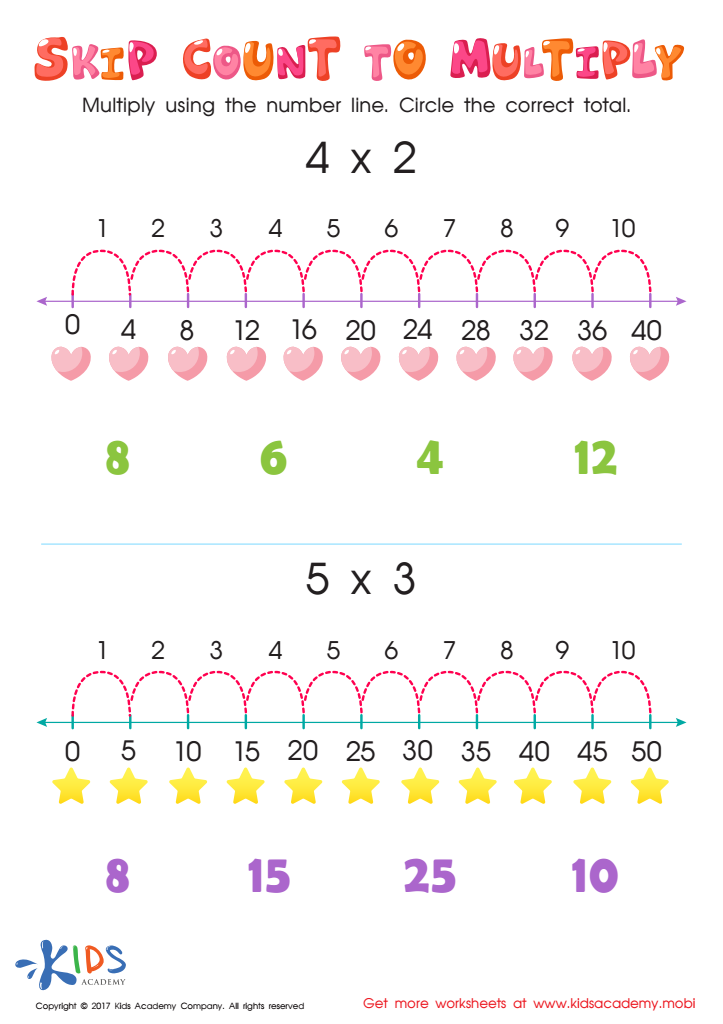
Skip Count Multiplication Worksheet
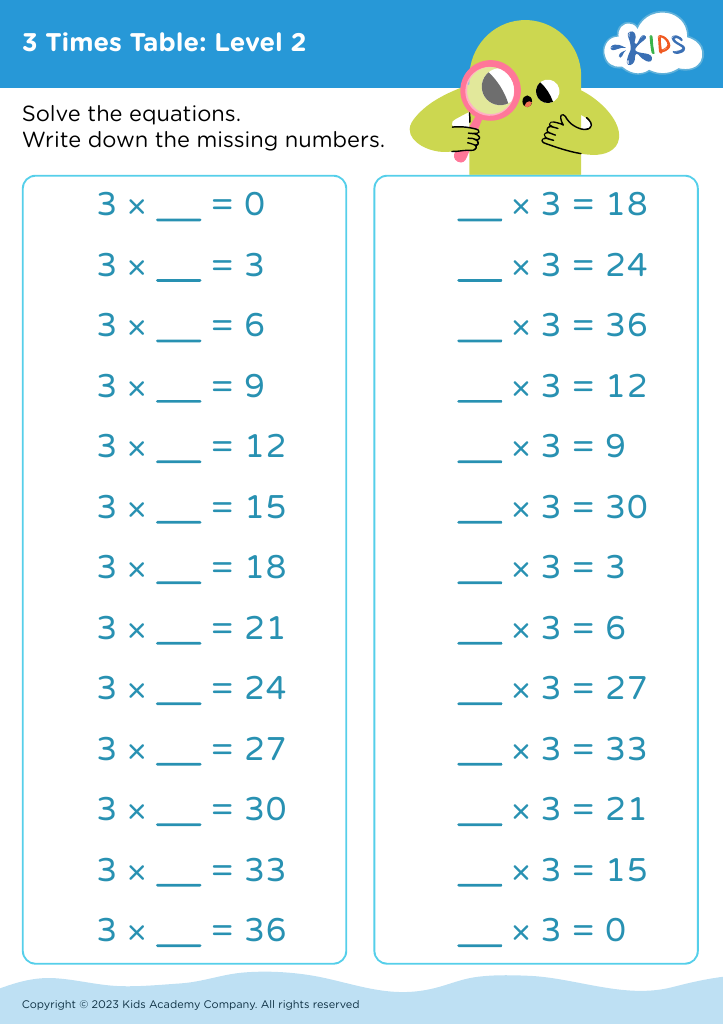








Number pattern recognition is an essential skill for children aged 6-8 as it lays the foundation for more advanced mathematical concepts. This age group is a critical period for cognitive development, and understanding number patterns enhances their problem-solving abilities, logical thinking, and analytical skills.
Parents and teachers should prioritize this type of learning because recognizing number patterns helps children increase their confidence in math. It allows them to identify sequences and relationships, paving the way for skills like addition, subtraction, and even multiplication. Engaging with patterns reinforces their understanding of numbers and enhances memory recall.
Moreover, number pattern recognition integrates well with everyday activities, making math relatable and enjoyable. For instance, recognizing patterns in nature or in daily routines can foster a love for math and learning in general.
In today’s increasingly tech-driven world, strong mathematical foundations lead to better opportunities in STEM fields later in life. By nurturing these skills early on, parents and teachers equip children with lifelong tools for success, not just in math, but in complex problem-solving endeavors across various disciplines. In essence, number pattern recognition is pivotal for building a well-rounded future for young learners.








