Practicing Arithmetic Skills Math Worksheets for Ages 6-8
3 filtered results
-
From - To
Enhance your child's arithmetic skills with our engaging Practicing Arithmetic Skills Math Worksheets designed for ages 6-8. Our expertly crafted worksheets offer a variety of fun and educational activities to reinforce fundamental math concepts such as addition, subtraction, multiplication, and division. Each worksheet is designed to complement your child's learning journey, helping to build confidence and precision in their calculations. With colorful graphics and interactive problems, children enjoy learning and practicing essential arithmetic skills. Our math worksheets are perfect for at-home practice, classroom reinforcement, or additional tutoring support. Start boosting your child's math success today!
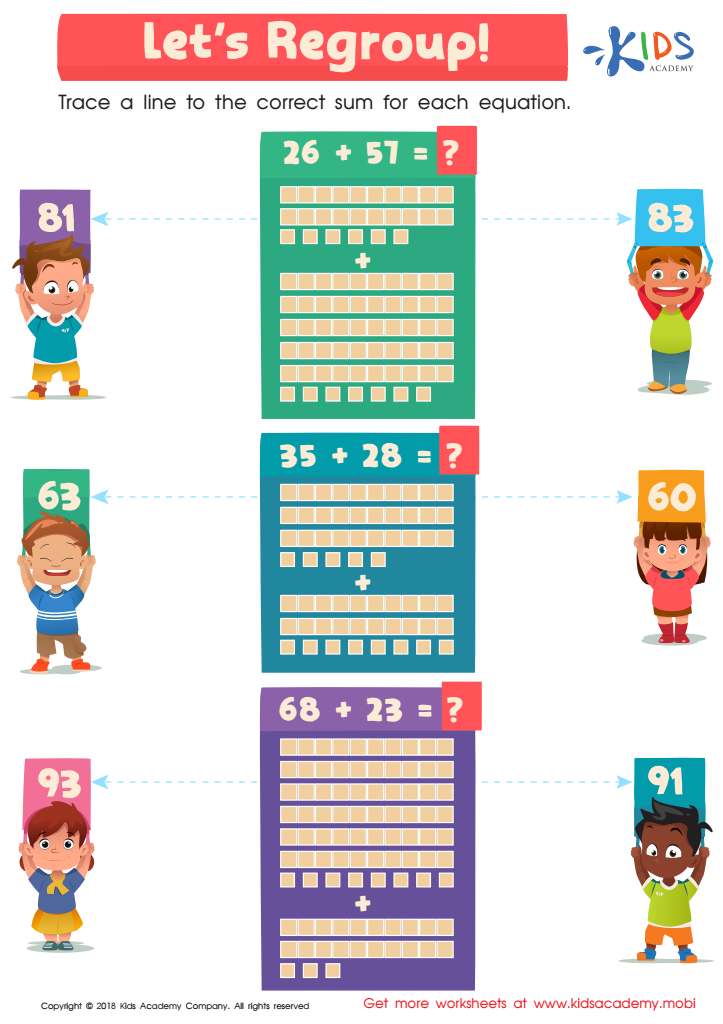
Let's Regroup Worksheet
 Assign to My Students
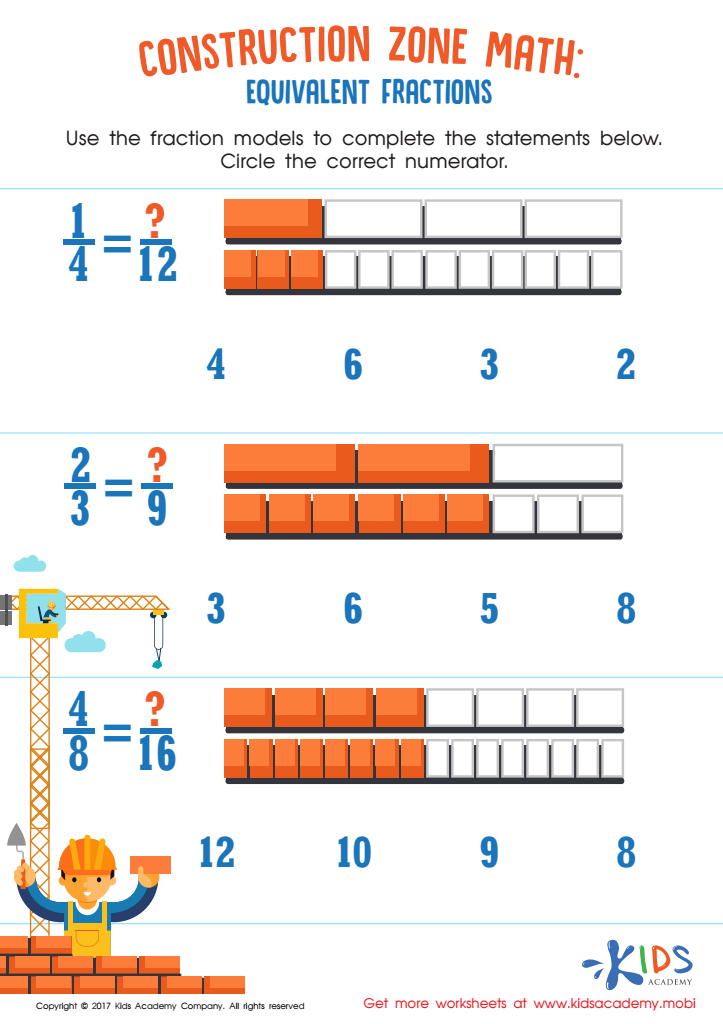
Equivalent Fractions Worksheet
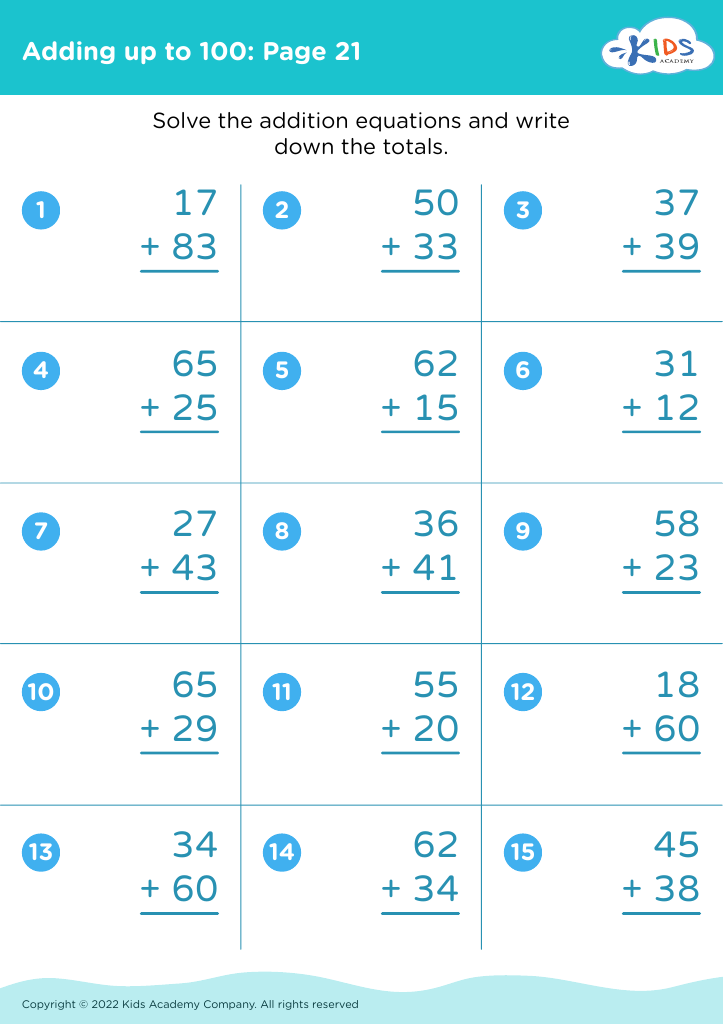







Practicing arithmetic skills for children aged 6-8 is crucial for several fundamental reasons. First, it lays the groundwork for future math concepts. At this age, children typically learn basic addition, subtraction, and understanding numbers, which are the foundation upon which more complex topics like multiplication, division, and fractions are built. Mastery of these basics ensure they are not left behind in future lessons.
Second, arithmetic practice enhances cognitive development. It helps children develop critical thinking and problem-solving skills. They learn to recognize patterns, understand relationships, and improve their logical reasoning. These skills are not only vital in mathematics but are applicable to daily situations and academics broadly.
Third, early success in math encourages a positive attitude towards the subject. Many adults attribute their dislike or fear of math to struggles in early childhood. By ensuring that students develop strong arithmetic skills early on, parents and teachers foster confidence and reduce math anxiety.
Furthermore, practicing arithmetic contributes to a child’s life skills. Handling money, telling time, and measuring ingredients while cooking all require basic arithmetic.
In summary, early arithmetic practice is a building block for academic success, cognitive development, lifelong positive attitudes toward math, and practical daily functioning. Therefore, parents and teachers play a critical role in ensuring that children at this early stage are equipped with the necessary skills.








