Spatial Orientation Math Worksheets for Ages 6-8
4 filtered results
-
From - To
Explore our engaging Spatial Orientation Math Worksheets designed specifically for children ages 6-8. These worksheets provide a fun and interactive way for young learners to develop vital spatial awareness skills essential for their mathematical success. With an array of activities, including shape recognition, direction following, and problem-solving exercises, kids will enhance their understanding of space, direction, and position. Our thoughtfully crafted resources cater to various learning styles, ensuring each child can grasp these important concepts. Perfect for home or classroom use, these worksheets empower students to build a strong foundation in math while enjoying the process of learning. Dive into the world of spatial orientation today!
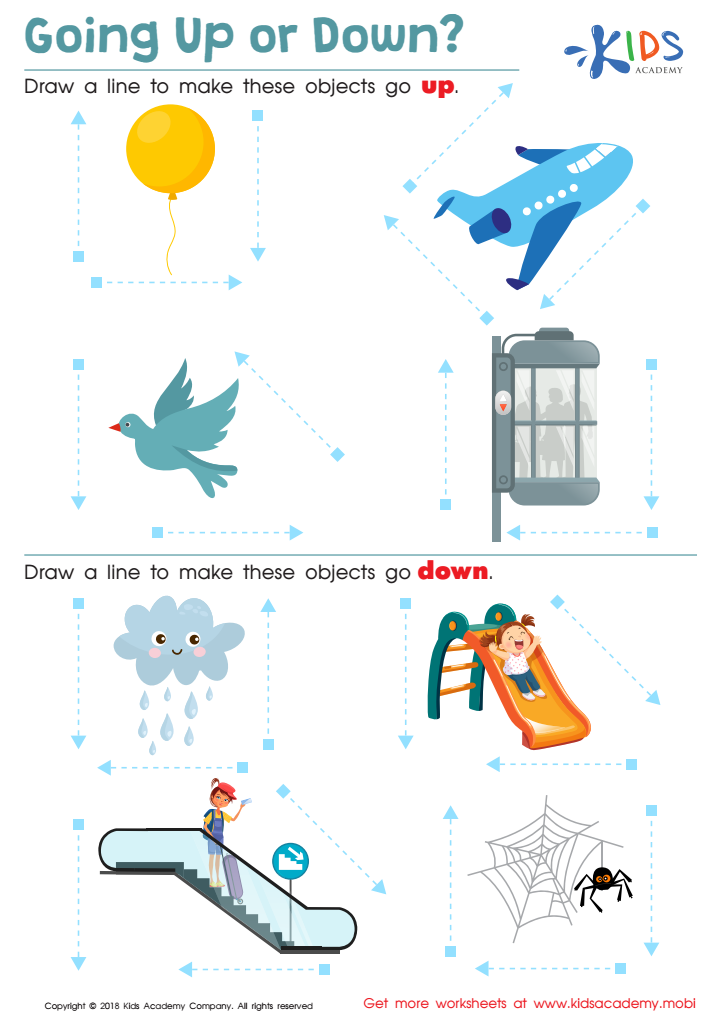
Going up or Down? Worksheet
 Assign to My Students
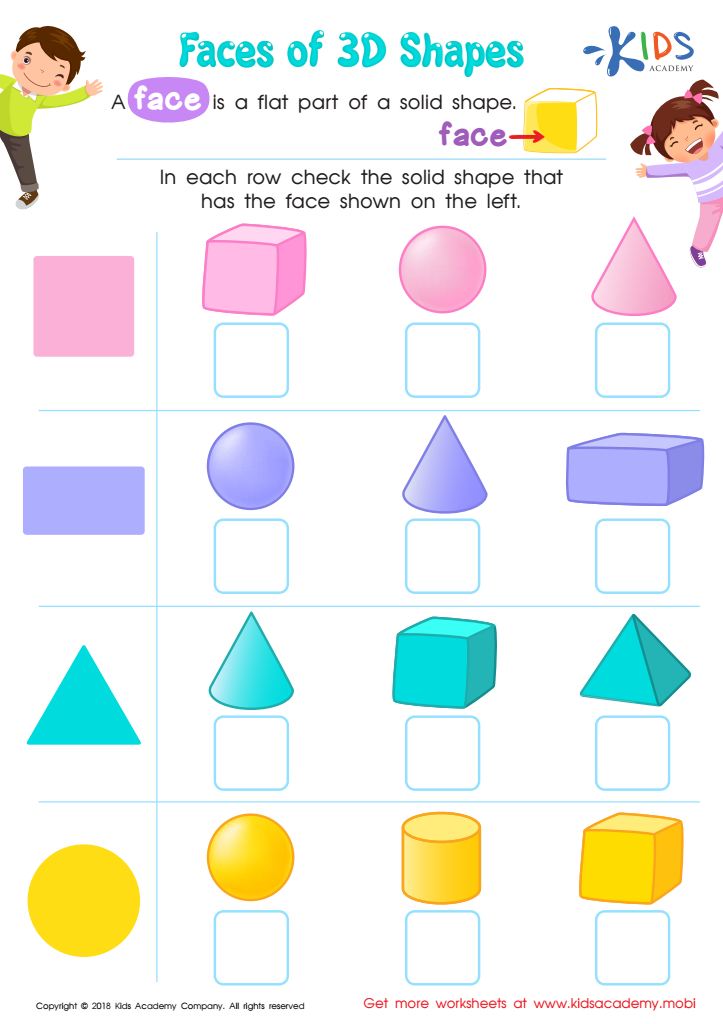
Faces of 3D Shapes Worksheet
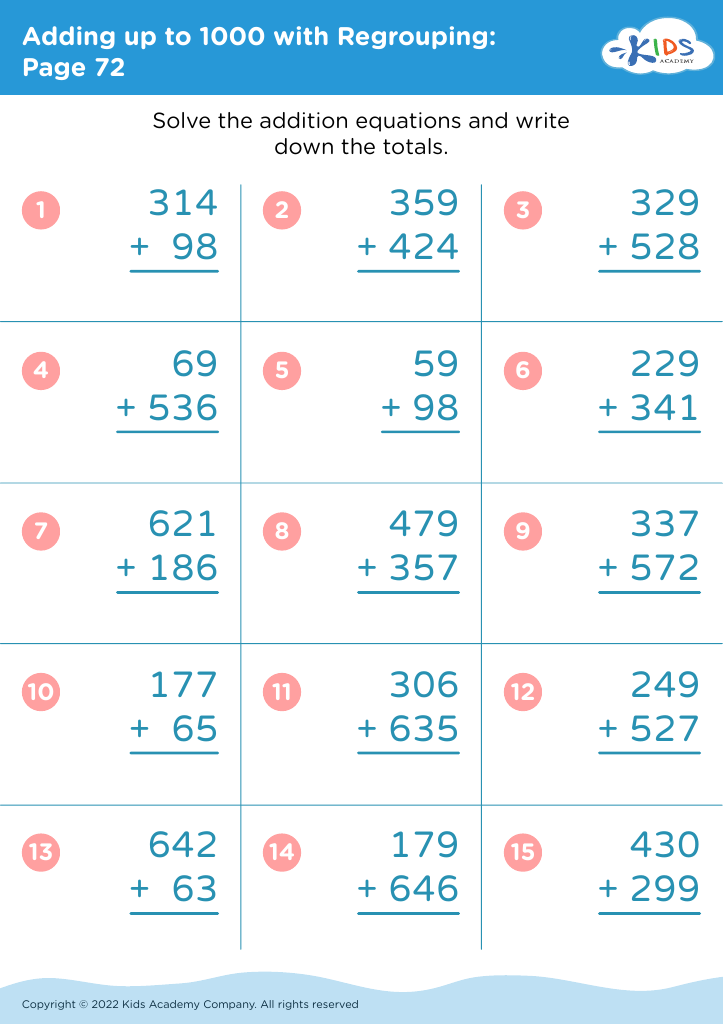
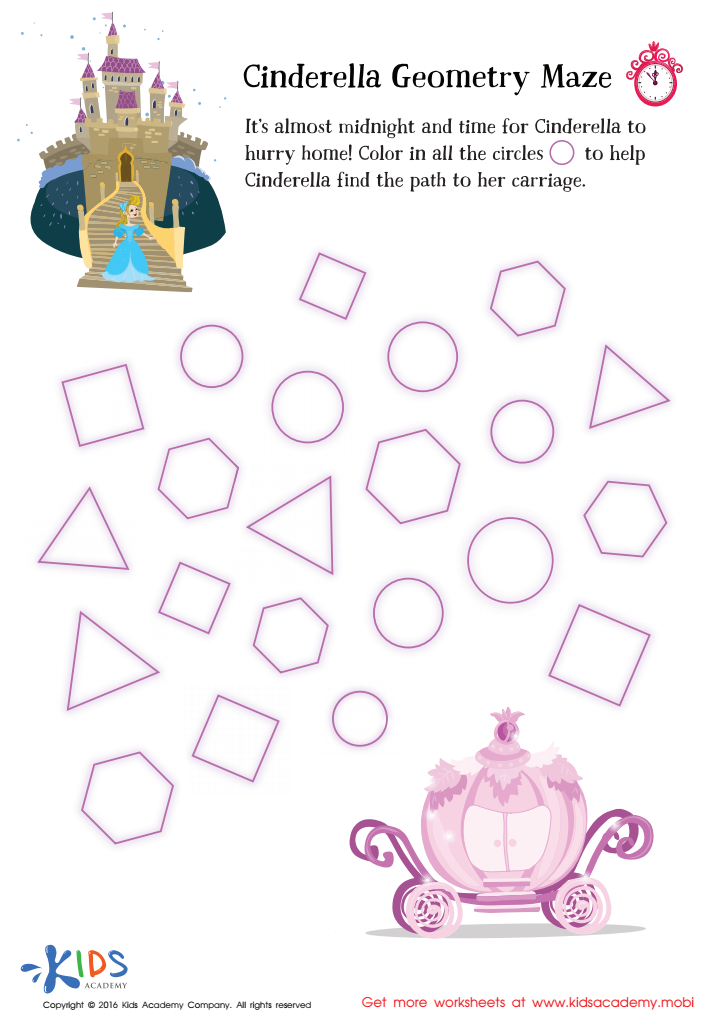
Cinderella Geometry Maze Worksheet







Spatial orientation math is a vital skill for children aged 6-8 as it lays the foundation for critical thinking, problem-solving, and future academic success. At this developmental stage, children are beginning to understand and manipulate shapes, sizes, and positional relationships, which enhances their ability to navigate both the physical world and complex mathematical concepts.
Parents and teachers should recognize the importance of spatial orientation skills as they contribute significantly to a child’s cognitive development. Mastery of these skills supports not only mathematics but also literacy, science, and art. For instance, spatial awareness aids in understanding geometry, measurement, and even reading maps and diagrams, essential life skills as children grow and learn.
Engaging in activities that promote spatial orientation, such as puzzles, building blocks, and interactive games, encourages children to think critically and encourages creativity. Moreover, strong spatial orientation skills are linked to better performance in higher-level math and science, and they enhance problem-solving abilities and perseverance in overcoming challenges. Supporting these skills early on prepares children for diverse educational pathways and career opportunities, making it crucial for parents and teachers to prioritize spatial orientation math in their curriculum and home learning practices.








