Time-telling skills Math Worksheets for Ages 6-8
5 filtered results
-
From - To
Enhance your child's understanding of time with our Time-Telling Skills Math Worksheets designed for ages 6-8. Engaging and interactive, these worksheets introduce essential concepts such as reading clocks, understanding analog and digital time, and calculating hours and minutes. Perfect for young learners, each worksheet features vibrant illustrations and relatable scenarios to make learning fun and effective. Track progress with varied exercises that cater to different skill levels, ensuring a comprehensive grasp of time-telling. Empower your child with the confidence to master this vital life skill, helping them navigate their daily routines with ease. Start your time-telling journey today!
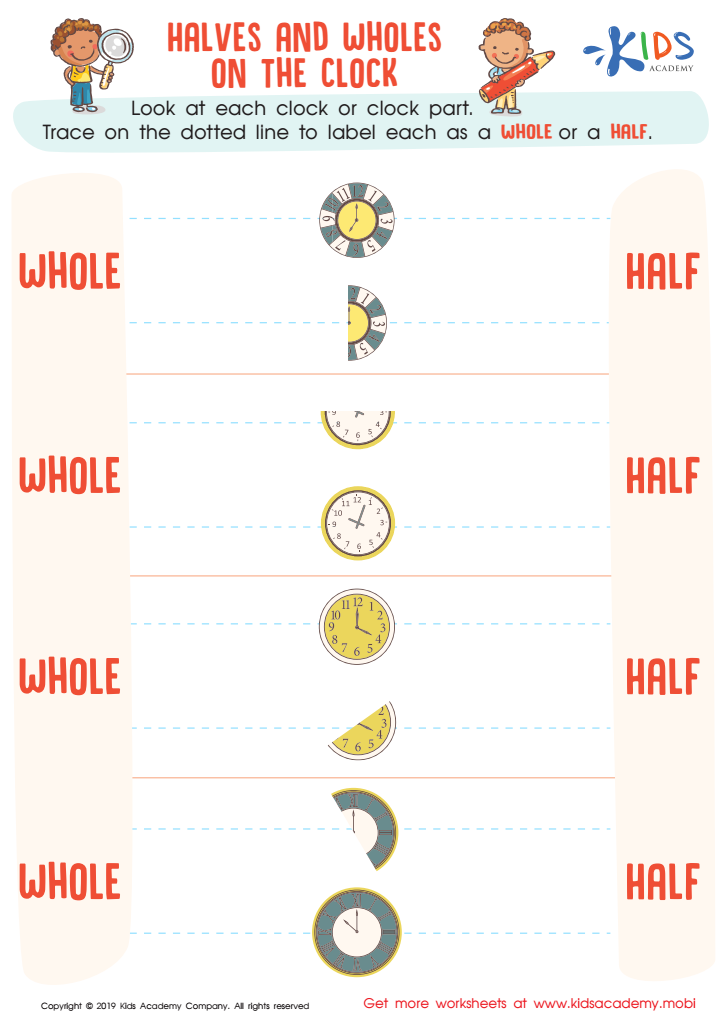
Halves and Wholes on the Clock Worksheet
 Assign to My Students
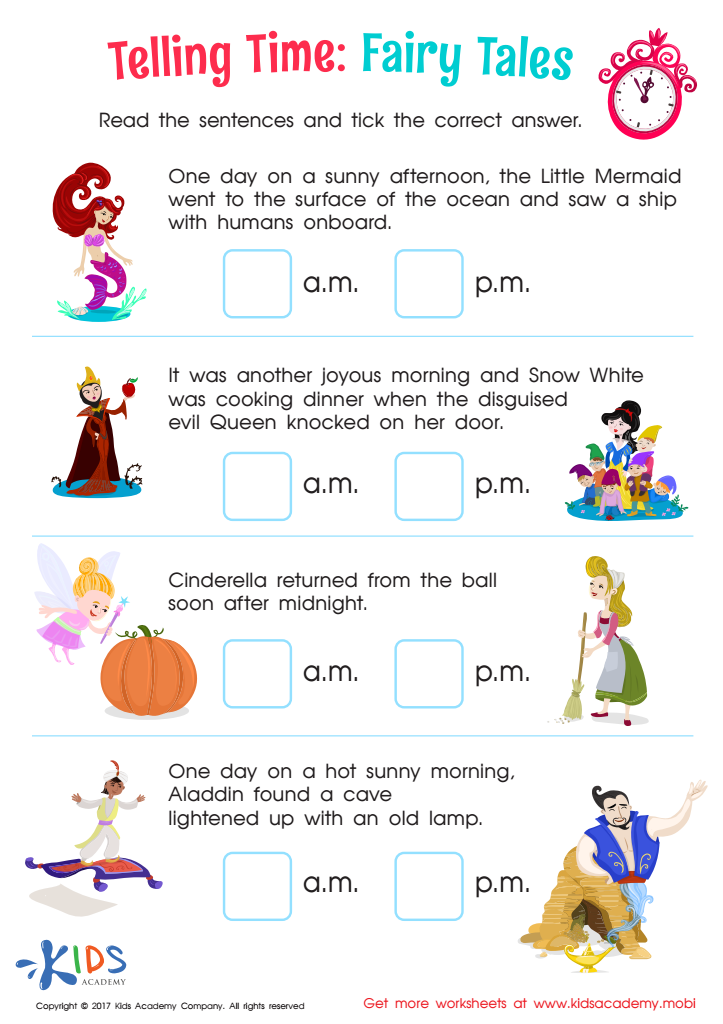
Telling Time: Fairy Tales Worksheet
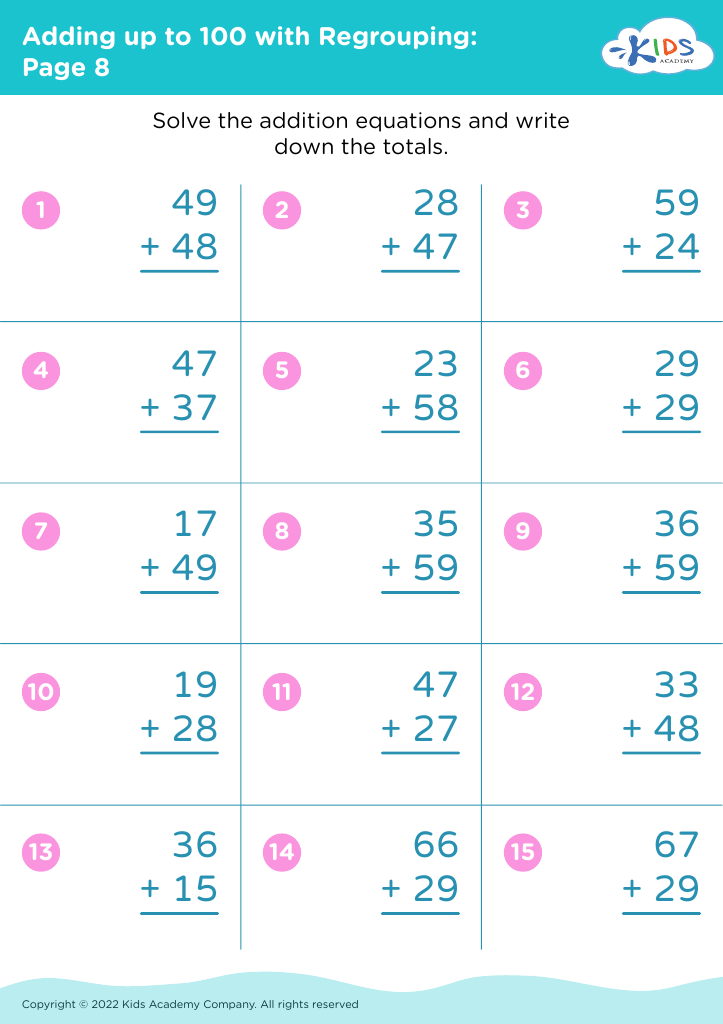
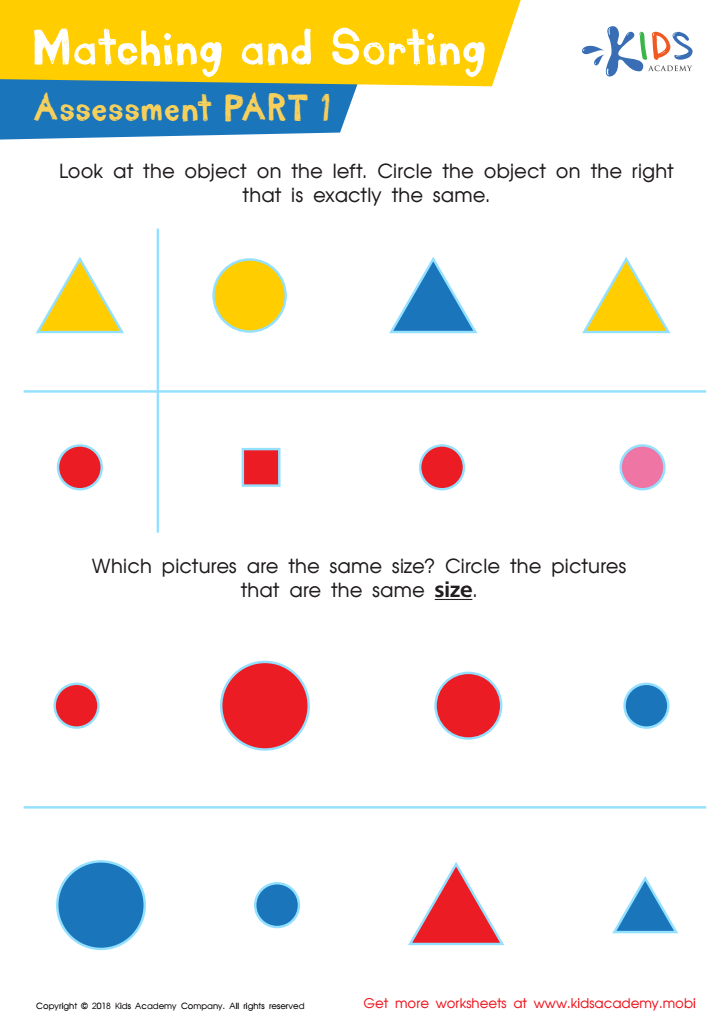
Matching and Sorting for Kindergarten: Assessment 1 Worksheet
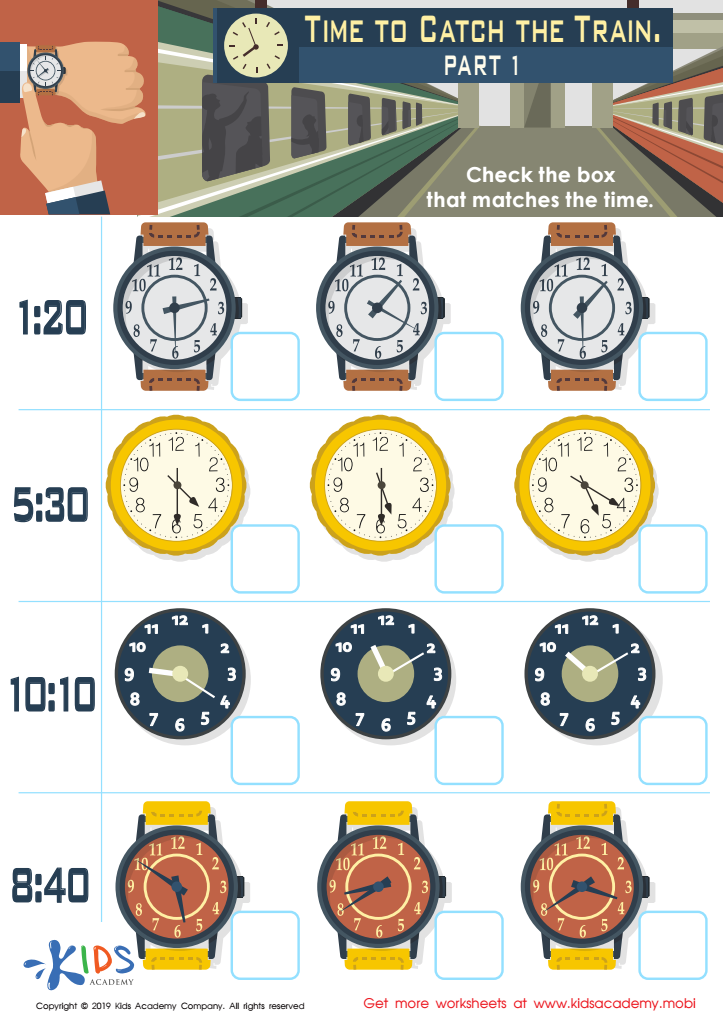
Time to Catch the Train Part 1 Worksheet







Time-telling skills are crucial for children aged 6-8, forming a foundational aspect of their mathematical understanding and daily life. Mastering the concept of time helps young learners develop essential cognitive skills, such as logical reasoning, spatial awareness, and problem-solving. Understanding how to tell time enhances their ability to manage routines, from getting ready for school to completing homework, thereby fostering independence and responsibility.
Additionally, learning to tell time introduces children to the practical application of mathematics in real-life situations. It connects the abstract ideas of numbers and measurements to tangible experiences, such as fitting activities into a day or understanding durations, which contributes to their overall mathematical literacy.
Furthermore, as they practice time-telling, children are also building essential social-emotional skills. They learn the importance of punctuality and time management, which are vital in developing habits for future academic and professional success.
For teachers and parents, prioritizing time-telling skills facilitates engaging discussions and interactive learning experiences, fostering a deeper appreciation for mathematics. By supporting children in this area, they equip them with essential tools to navigate their world more effectively, preparing them for the challenges and demands of daily life.








