Understanding commutative property Math Worksheets for Ages 6-8
4 filtered results
-
From - To
Explore our engaging "Understanding Commutative Property Math Worksheets" tailored for children aged 6 to 8. These worksheets introduce young learners to the foundational concept that allows them to manipulate numbers flexibly—an essential skill in their mathematical journey. Our resources feature fun, colorful illustrations and interactive exercises that motivate and enhance learning. Each worksheet encourages kids to practice addition and multiplication while grasping how the commutative property works, ensuring a strong grasp of math concepts. With varied activities, these worksheets are perfect for reinforcing classroom learning or home practice, making math approachable and enjoyable for your little ones!
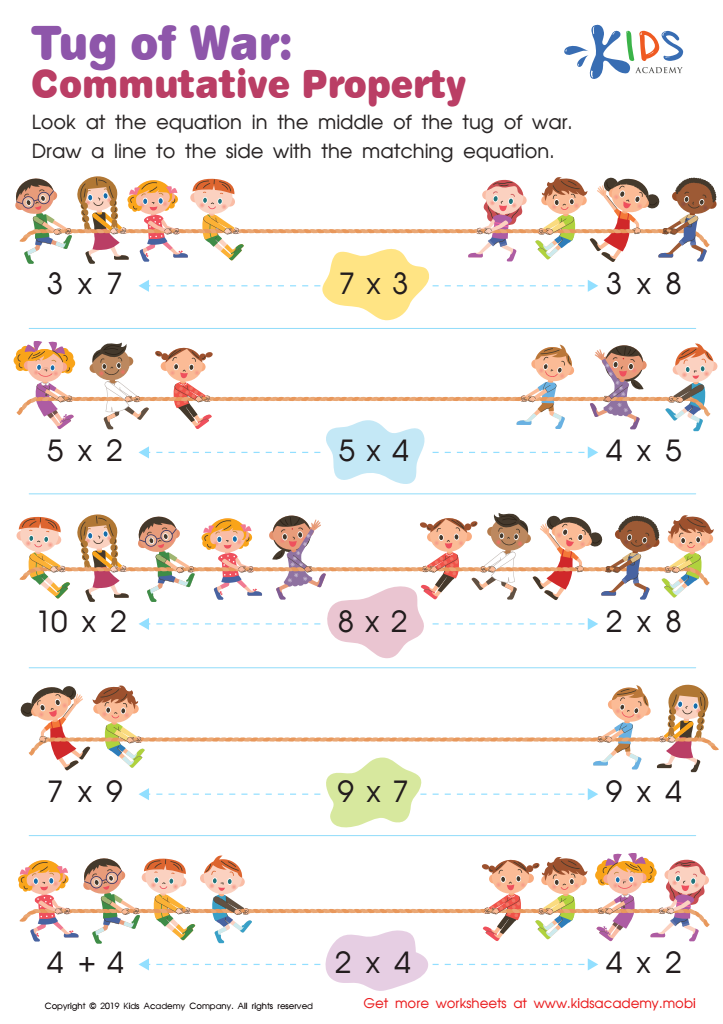
Tug of War: Commutative Property Worksheet
 Assign to My Students
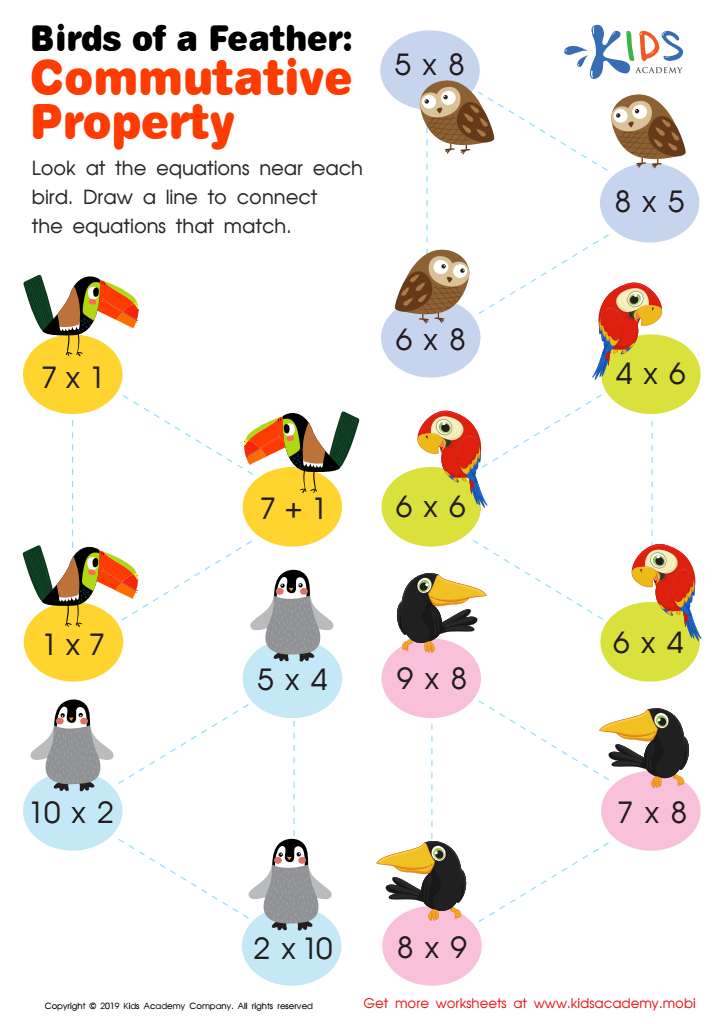
Birds of a Feather: Commutative Property Worksheet
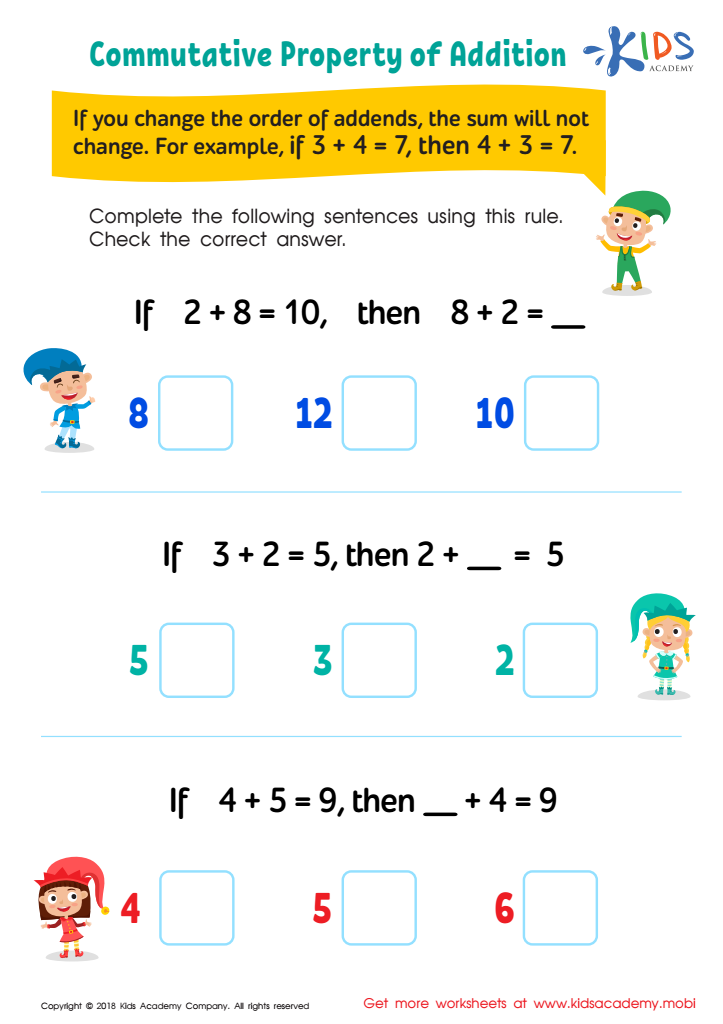
Commutative Property of Addition Worksheet
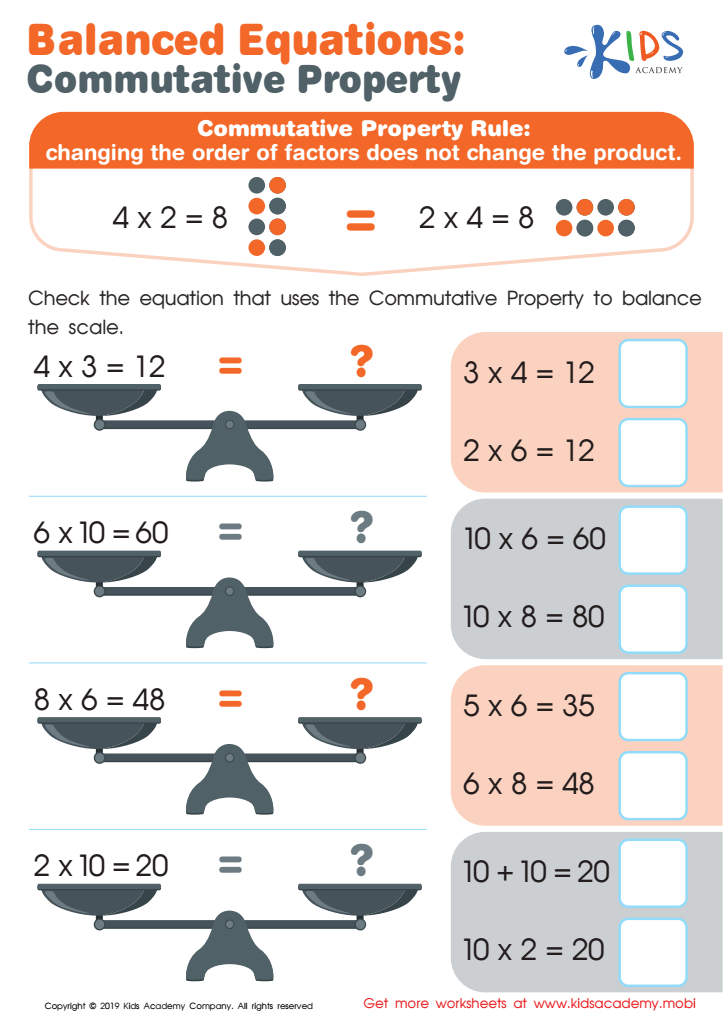
Balanced Equations: Commutative Property Worksheet








Understanding the commutative property is vital for children ages 6-8, as it lays a strong foundation for their mathematical learning. The commutative property states that numbers can be added or multiplied in any order without changing the result (e.g., (a + b = b + a) and (a \times b = b \times a)).
By grasping this concept, children enhance their number sense and flexibility in solving math problems. It empowers them to approach arithmetic with confidence, making calculations easier and faster. For example, if a child learns that (2 + 3) is the same as (3 + 2), they can use this knowledge to mentally add numbers in ways that are most comfortable for them.
Moreover, the commutative property is not just about algorithms; it builds critical thinking and problem-solving skills. It encourages kids to explore different approaches to math, which fosters a positive attitude towards learning. As children engage with peers through collaborative activities, it nurtures their social skills, too.
In summary, by emphasizing the commutative property, parents and teachers enable children to develop a deeper understanding of math. This, in turn, nurtures a love for learning and prepares them for more complex concepts in the future.








