Understanding number patterns Math Worksheets for Ages 6-8
6 filtered results
-
From - To
Unlock the world of number patterns with our engaging math worksheets designed for children aged 6-8! These worksheets provide a fun and interactive way for young learners to grasp the fundamentals of number sequences, skips counting, and recognizing patterns in numbers. Through colorful exercises, kids will enhance their problem-solving skills and build a solid foundation in mathematics. Perfect for home or classroom use, our worksheets encourage independent learning and boost confidence in math abilities. Explore the joy of number patterns and pave the way for your child's mathematical success! Start your journey toward understanding math today!
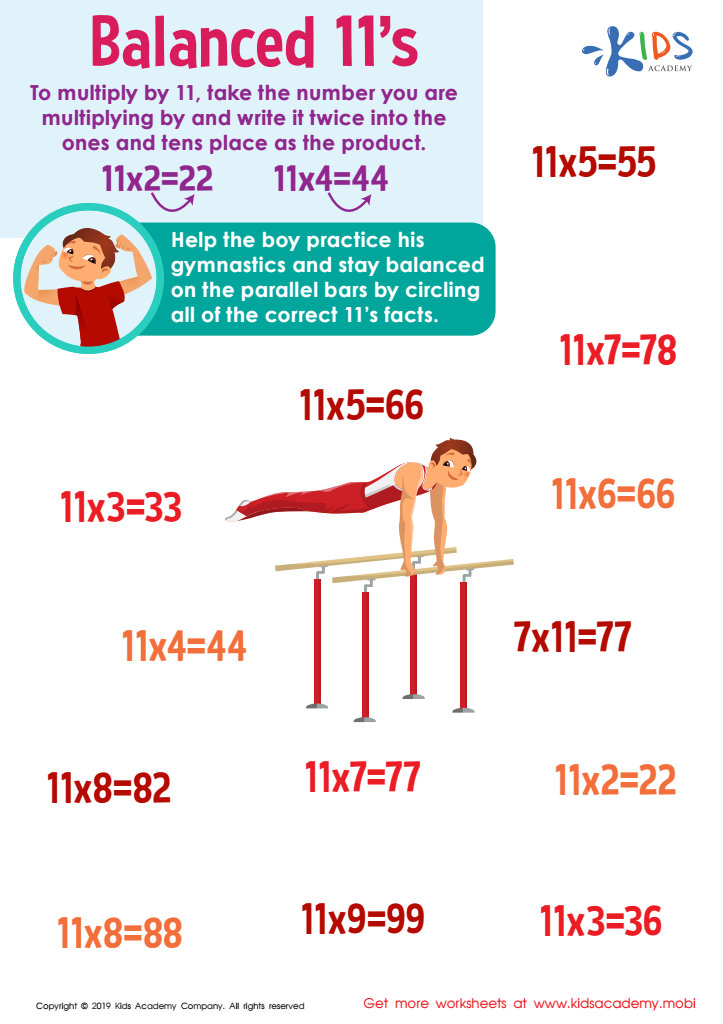
Balanced 11s Worksheet
 Assign to My Students
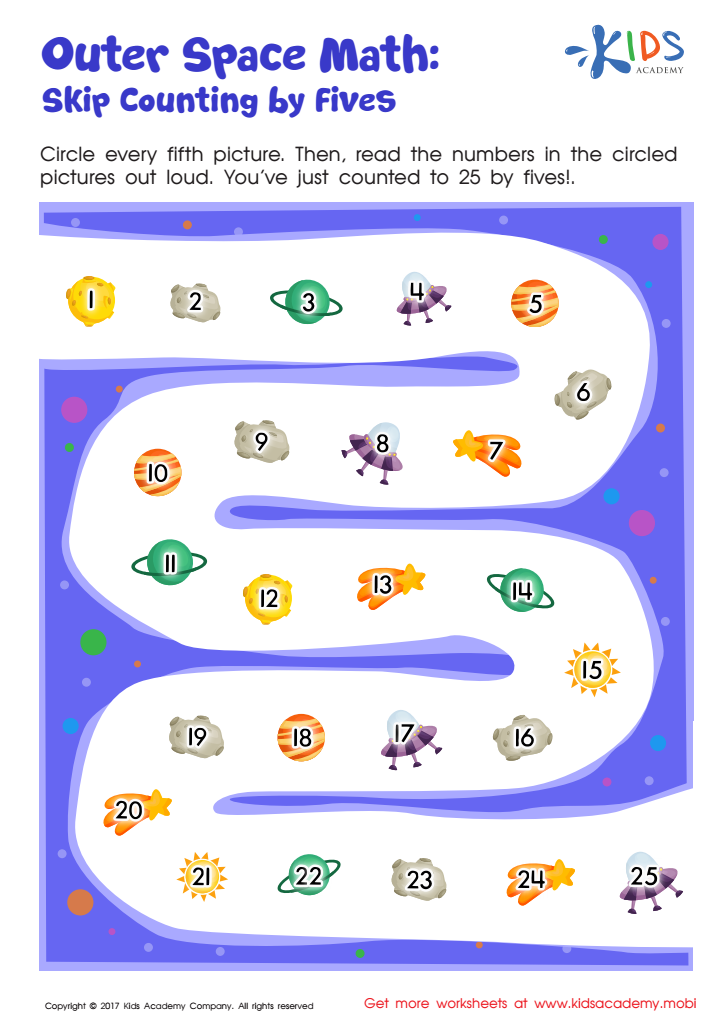
Skip Counting by 5s: Outer Space Math Printable
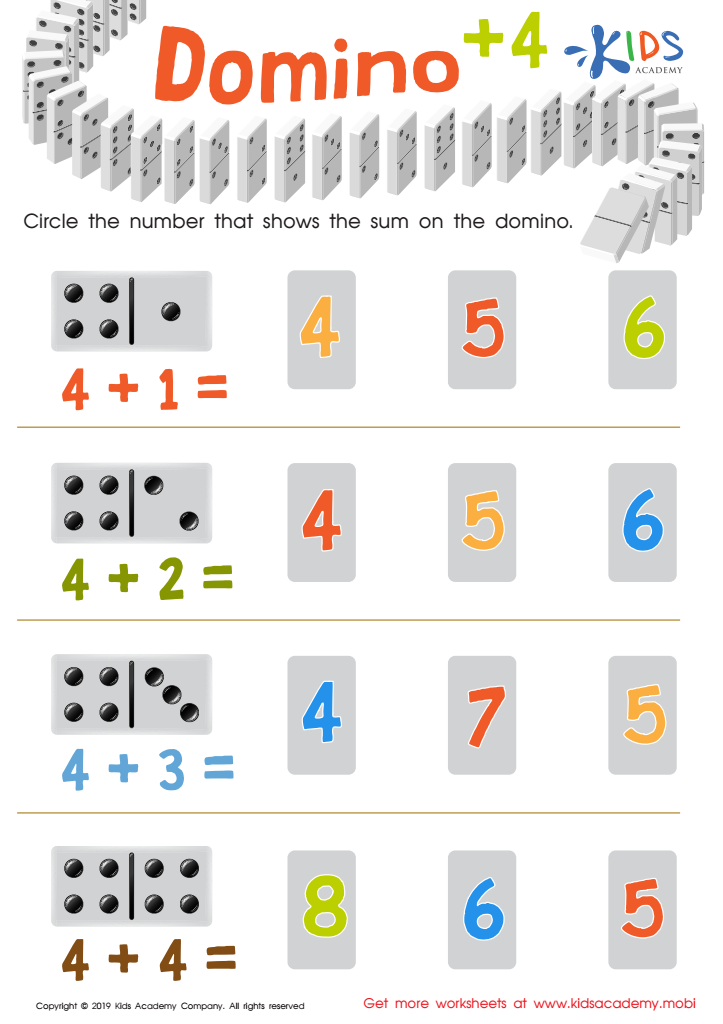
Domino +4 Worksheet
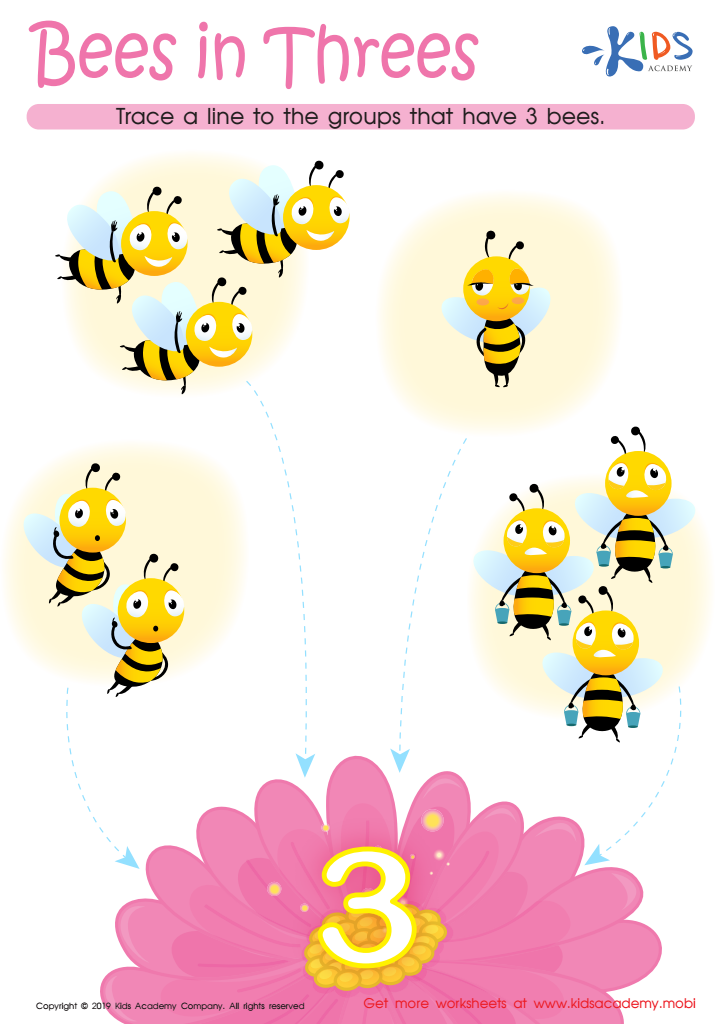
Bees in Threes Worksheet








Understanding number patterns is crucial for children aged 6-8, as it lays the foundation for various mathematical concepts they will encounter in higher grades. For parents and teachers, fostering this understanding is essential as it enhances early numeracy skills and promotes critical thinking. Recognizing, predicting, and creating patterns allows children to develop a sense of order and predictability in numbers, which is key to mastering addition, subtraction, and even multiplication in the future.
Moreover, number patterns support problem-solving abilities. When children learn to identify trends and consistent sequences, they become more adept at breaking down complex problems into manageable parts. This skill is not limited to math; it also promotes logical reasoning in other subjects such as science and programming.
Additionally, engaging with number patterns can nurture a child’s curiosity and encourage a positive attitude toward math. By exploring patterns through games, songs, or hands-on activities, parents and teachers can create enjoyable learning experiences that foster a love for mathematics.
In summary, understanding number patterns is vital for developing foundational math skills, encouraging logical reasoning, and creating an enthusiastic learning environment. This early groundwork prepares children for more advanced concepts in the future, ultimately leading to greater academic success.








