Comparing object weights Measurement Worksheets for Ages 6-8
3 filtered results
-
From - To
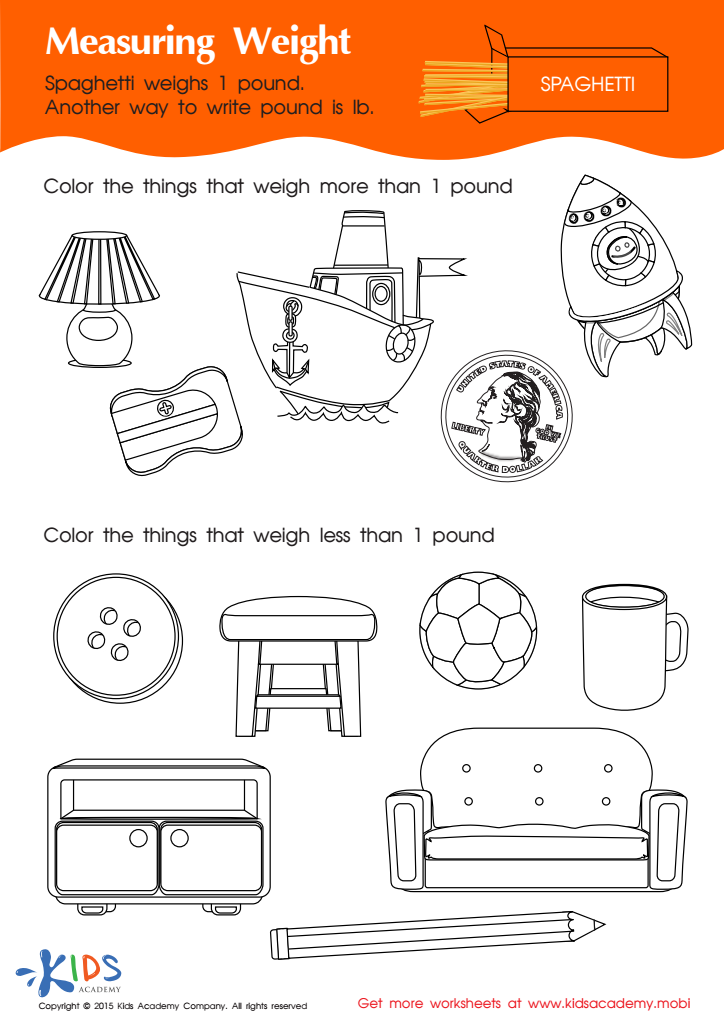
Discover fun and educational Comparing Object Weights Measurement Worksheets for ages 6-8 at Kids Academy! These expertly designed worksheets help young learners grasp essential math concepts through engaging activities that compare, measure, and analyze the weights of various objects. Perfect for classroom or at-home practice, our worksheets foster critical thinking and problem-solving skills while making learning enjoyable. Ideal for building a solid foundation in measurement, these resources introduce children to weights in a way that's easy to understand and fun to explore. Visit Kids Academy today and enhance your child's math skills with our exciting measurement worksheets!
 Assign to My Students
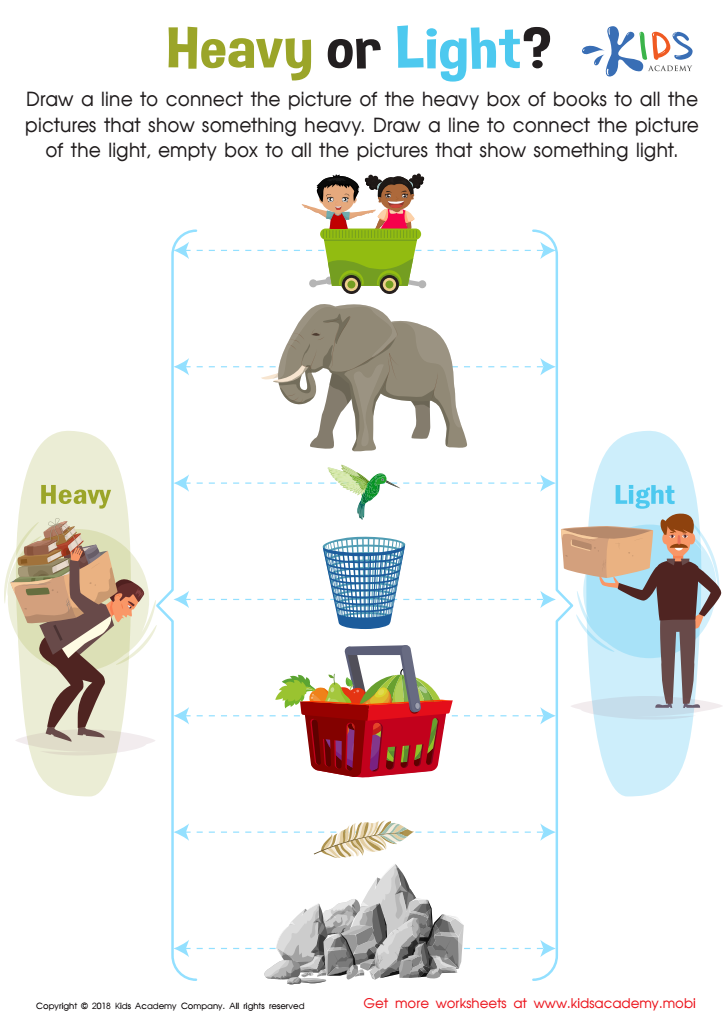
Heavy or Light? Worksheet
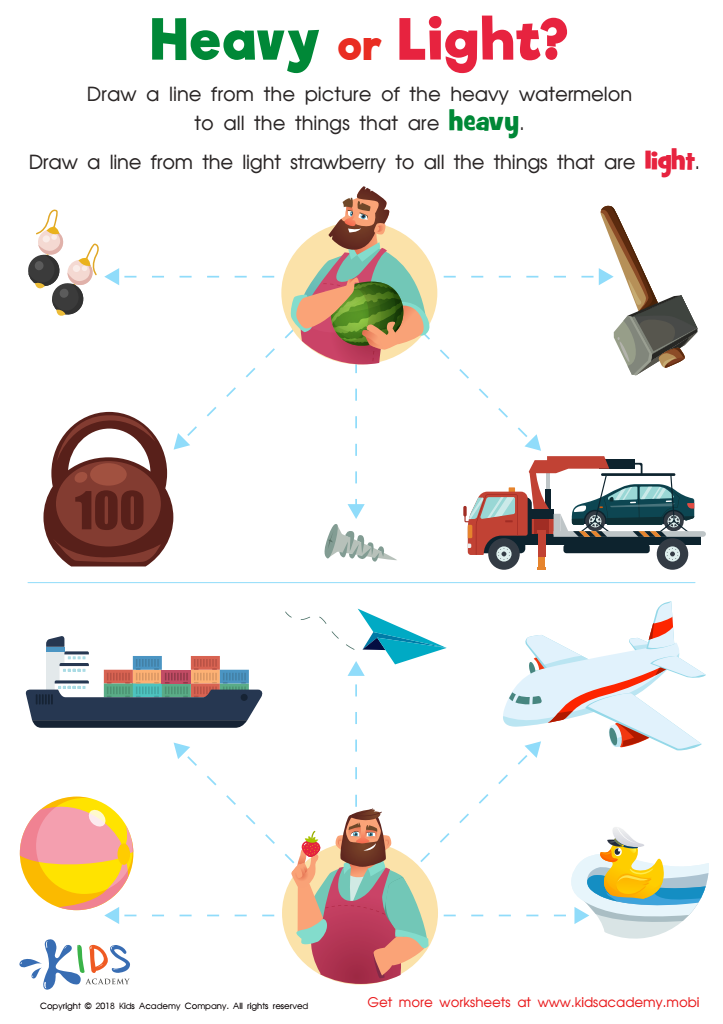
Heavy or Light? Worksheet








Understanding the concept of comparing object weights is crucial for young children, especially those aged 6-8, as it forms a foundational skill in both mathematics and science. Parents and teachers should prioritize teaching this concept because it promotes critical thinking and problem-solving abilities. For instance, when children compare weights, they learn to make observations, draw conclusions, and articulate their thoughts using comparative language like "heavier" or "lighter."
Engaging children in activities that involve weighing objects not only enhances their cognitive abilities but also their motor skills as they manipulate scales and weights. Moreover, it paves the way for more advanced mathematical concepts such as addition, subtraction, and data interpretation, which require a solid understanding of measurement.
Beyond academics, understanding weights and measurements has practical life applications. Children begin to instinctively understand the physical properties of objects around them, fostering a sense of curiosity and exploration. For example, they might compare the weight of fruits or school supplies, aiding in practical tasks like packing a bag or choosing the correct quantity of an ingredient when helping in the kitchen.
By integrating the concept of comparing weights into everyday learning, parents and teachers equip children with essential skills that are applicable in both academic and real-world situations, fostering well-rounded development.








