Understanding line plots Measurement Worksheets for Ages 6-8
10 filtered results
-
From - To
Introduce young learners to the exciting world of line plots with our engaging "Understanding Line Plots Measurement Worksheets for Ages 6-8." Designed to simplify data interpretation, these printable worksheets help children master the basics of measuring and recording information on line plots. Each activity guides students step-by-step through making and analyzing plots, enhancing their proficiency in foundational math skills. With colorful visuals and age-appropriate exercises, kids discover how to measure, compare, and present data clearly. Perfect for classrooms or at-home practice, these worksheets make learning fun and practical. Encourage mathematical curiosity and confidence with Kids Academy's expertly-crafted resources.
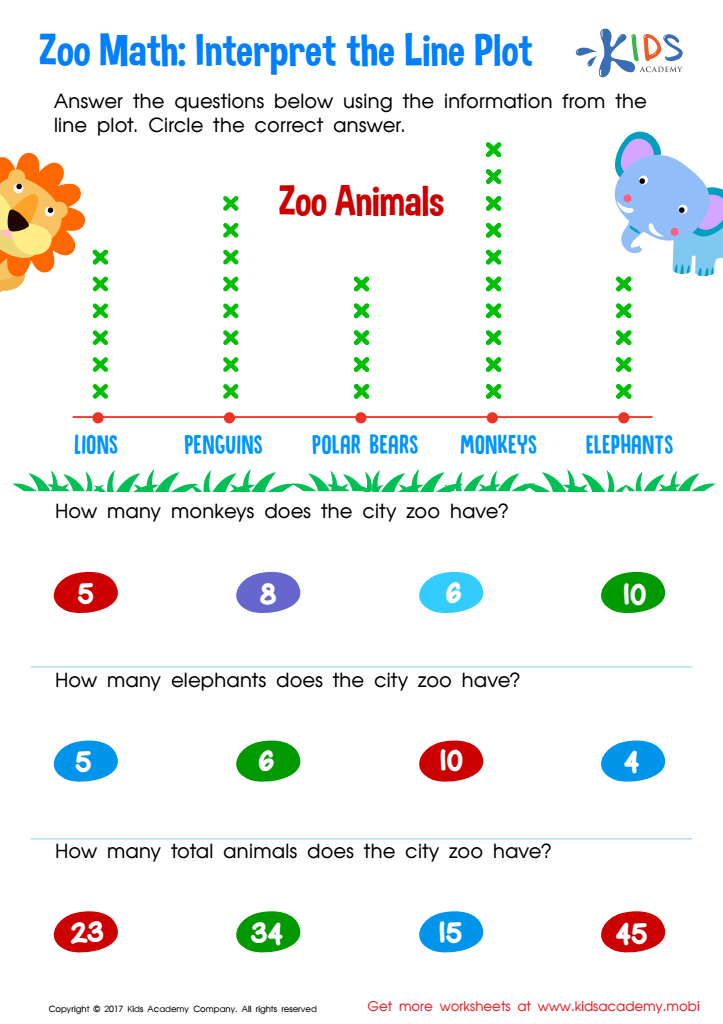
Interpret Line Plot Worksheet
 Assign to My Students
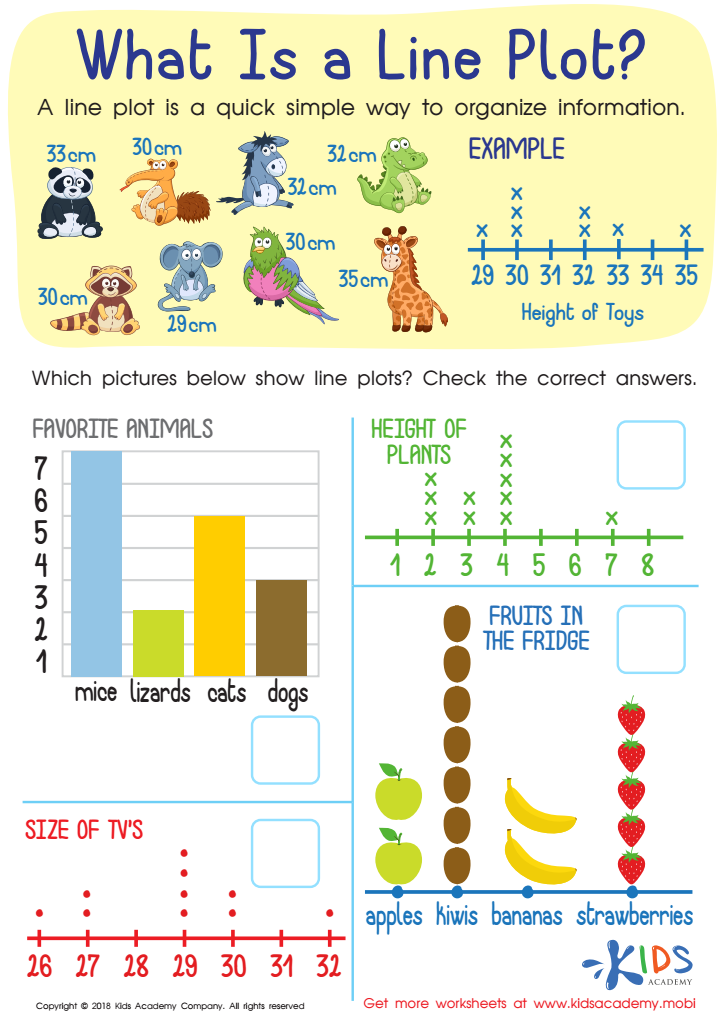
What Is a Line Plot? Worksheet
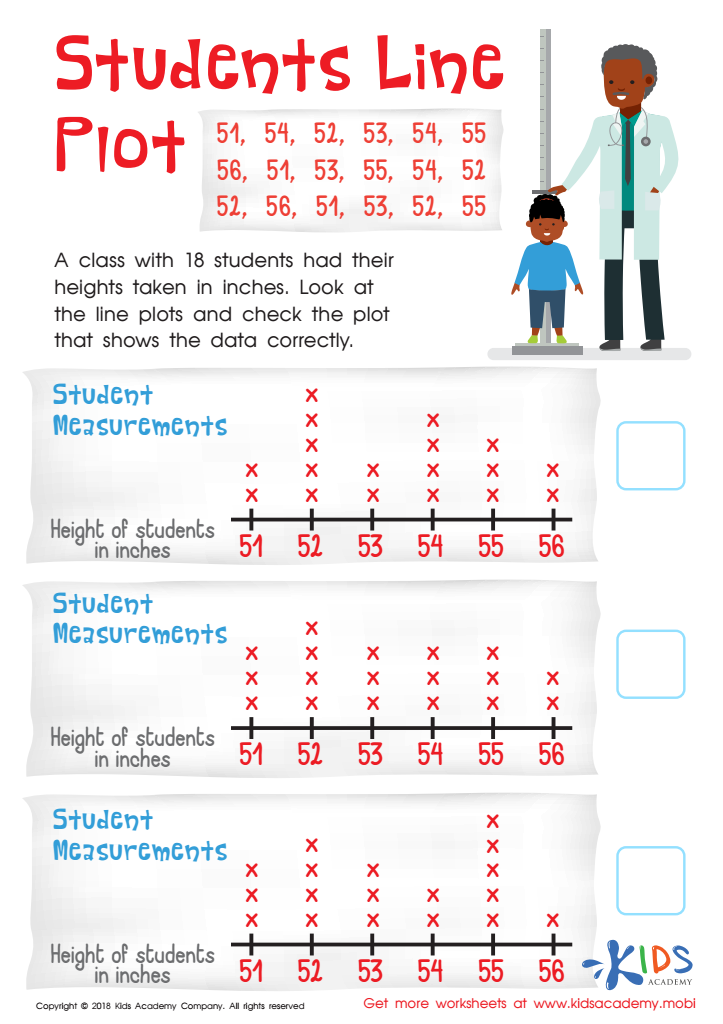
Students Line Plot Worksheet
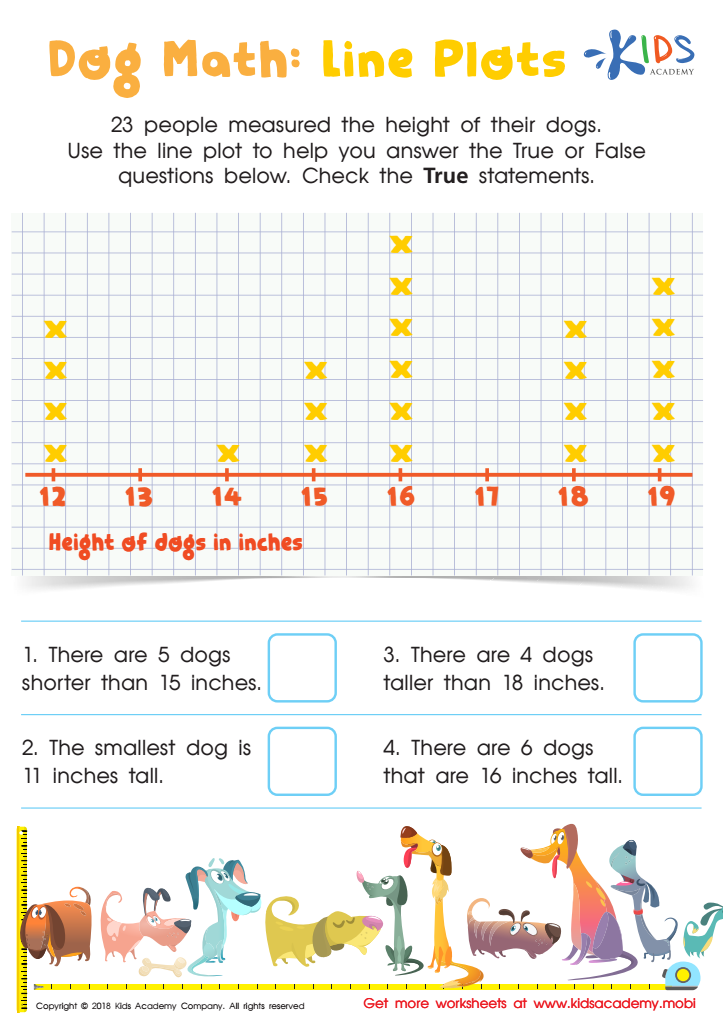
Dog Math: Line Plots Worksheet
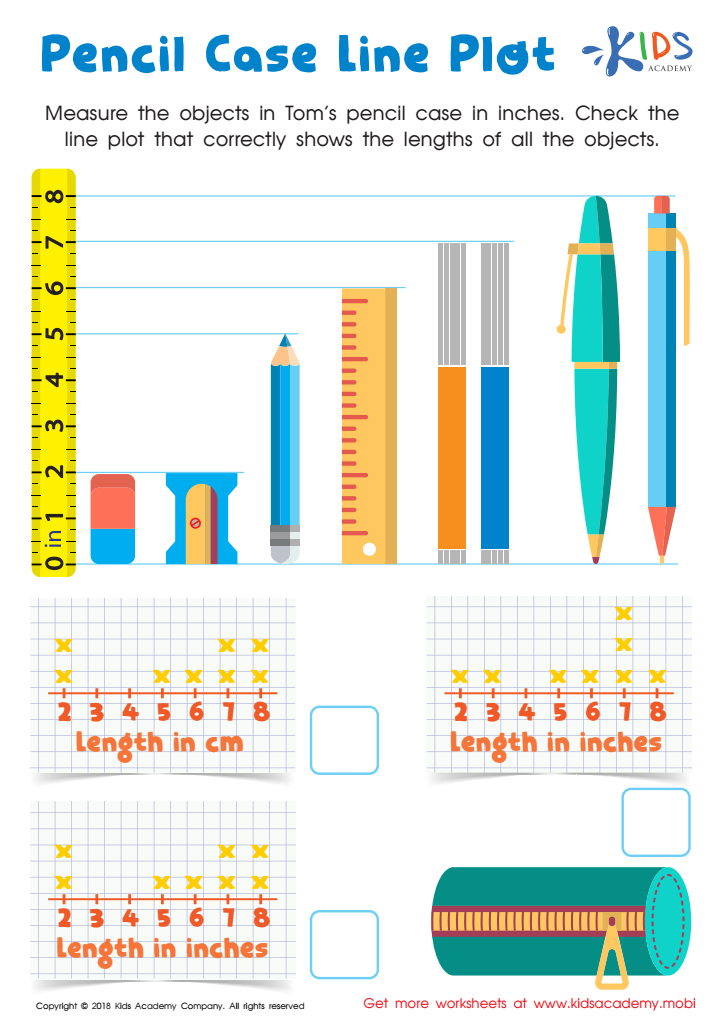
Pencil Case Line Plot Worksheet
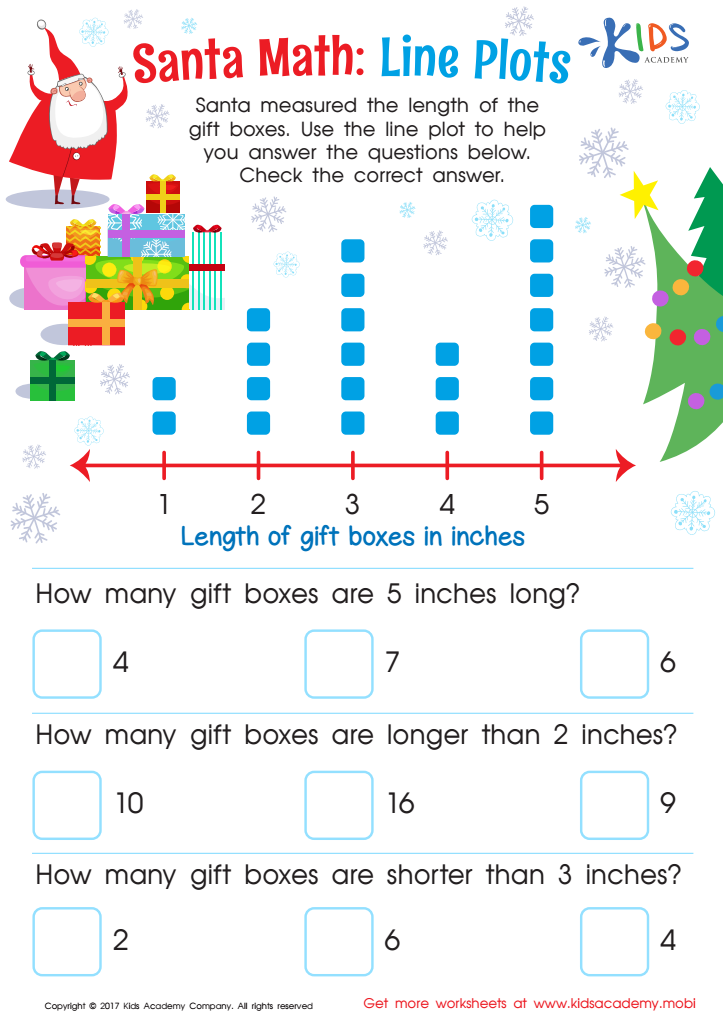
Line Plot Worksheet
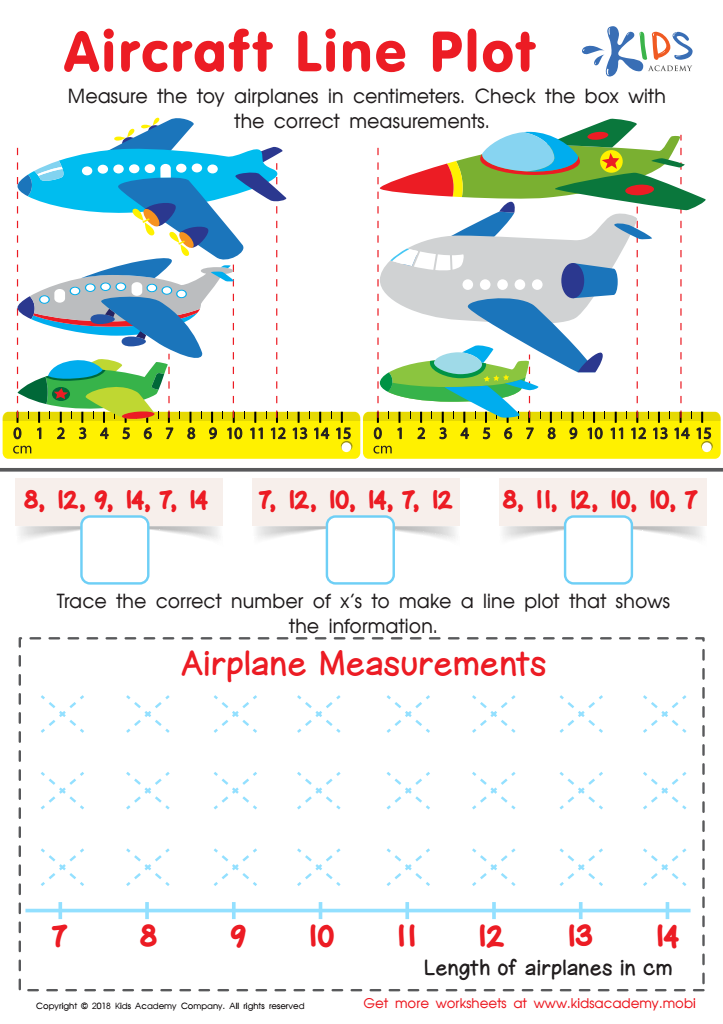
Aircraft Line Plot Worksheet
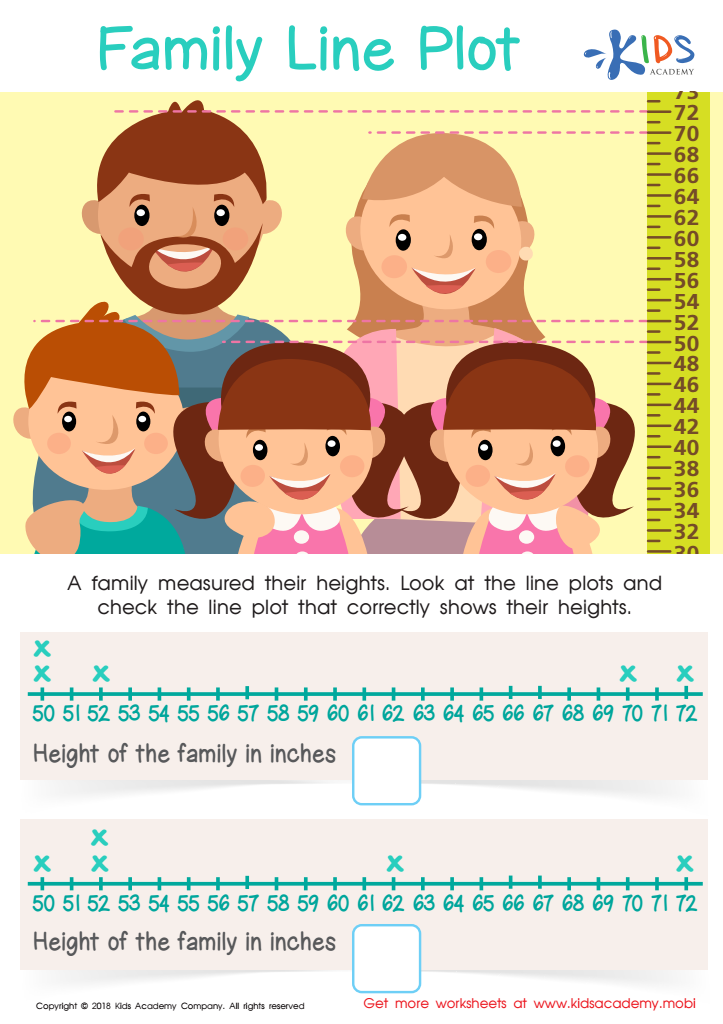
Family Line Plot Worksheet
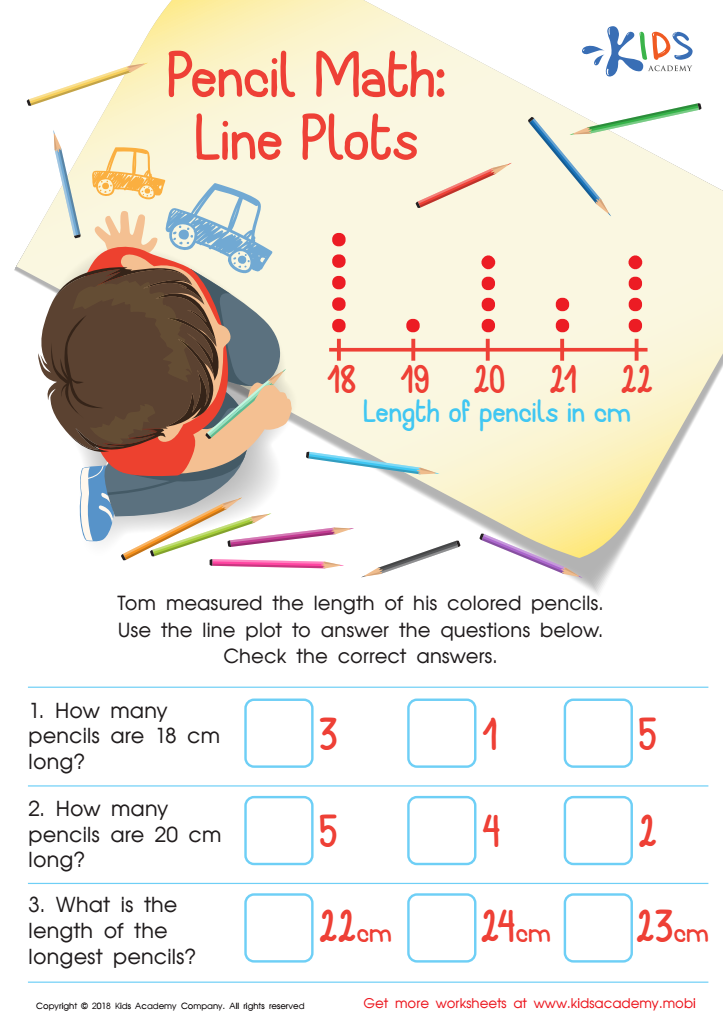
Pencil Math: Line Plots Worksheet
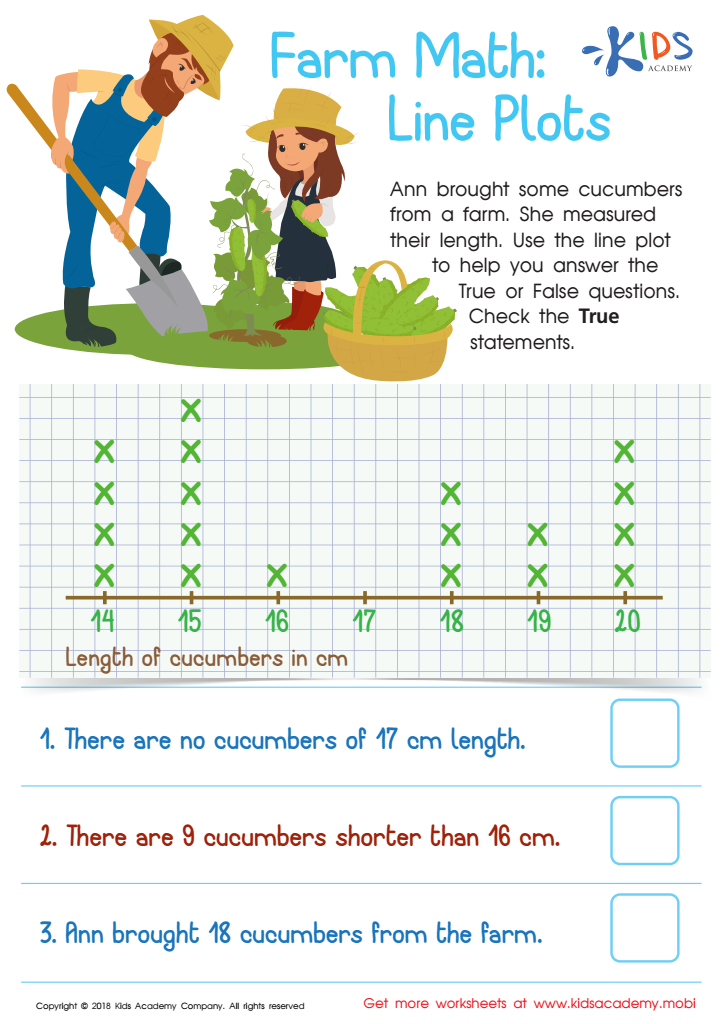
Farm Math: Line Plots Worksheet








Understanding line plots and measurements is fundamental for children aged 6-8. Line plots are simple, straightforward visual displays of data that help young students grasp basic concepts of measurement and data organization. At this developmental stage, children begin to develop critical thinking and problem-solving skills, which are essential for their future education and daily life.
Introducing line plots at a young age aids in developing these cognitive skills by allowing children to visualize numerical information. This visualization helps take abstract numbers and converts them into a concrete form, making it easier for them to understand and interpret data.
Moreover, learning measurements is crucial as it permeates many aspects of daily life. Understanding measurements helps children in everyday tasks such as cooking, determining distances, and understanding time, thereby making math relevant and practical. It also provides a foundation for more advanced mathematical and scientific concepts they will encounter later in their academic journey.
Parents and teachers play a crucial role in fostering this early understanding. By integrating line plots and measurement activities into the curriculum or daily routines, they can create an engaging learning environment. Such proactive involvement ensures that children are better prepared not only for higher education but also for real-life applications, inspiring confidence and competence in their abilities.








