Critical Thinking Multiplication Worksheets for Ages 6-8
5 filtered results
-
From - To
Enhance your child’s mathematical skills with our "Critical Thinking Multiplication Worksheets for Ages 6-8" from Kids Academy. Designed to reinforce multiplication fundamentals, these engaging worksheets challenge young learners to think critically and solve problems creatively. Each worksheet offers a variety of activities that promote logical reasoning and analytical thinking, ensuring that students not only practice multiplication but also strengthen their overall cognitive abilities. Perfect for home or classroom use, these resources support academic growth and prepare children for future mathematical concepts. Download today and make math learning a fun, thought-provoking adventure!
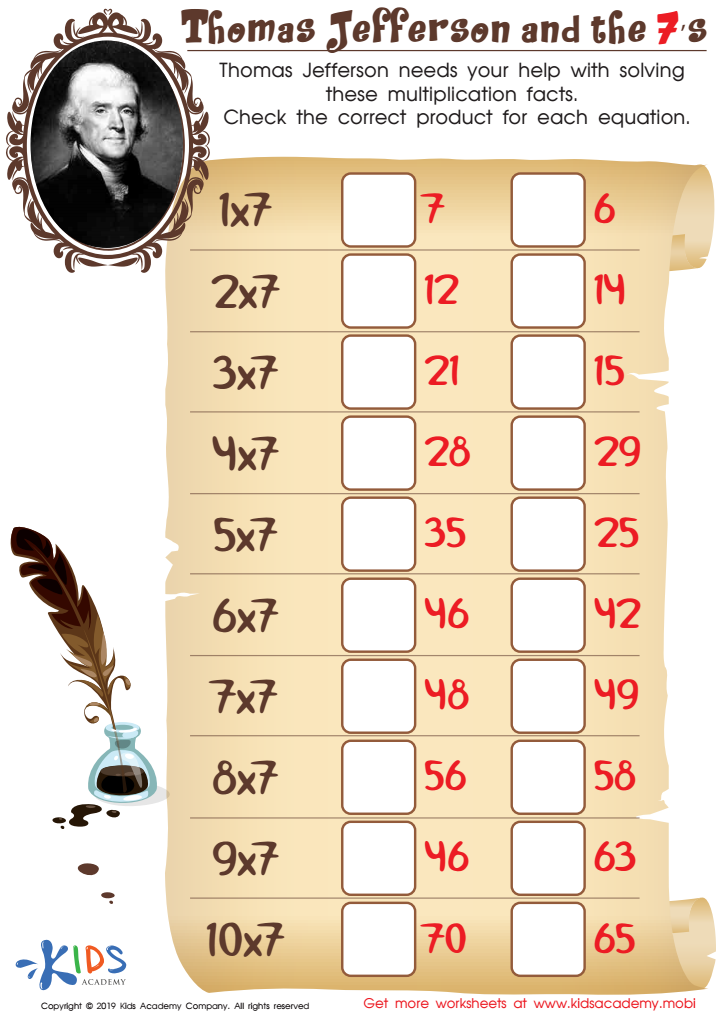
Thomas Jefferson and the 7’s Worksheet
 Assign to My Students
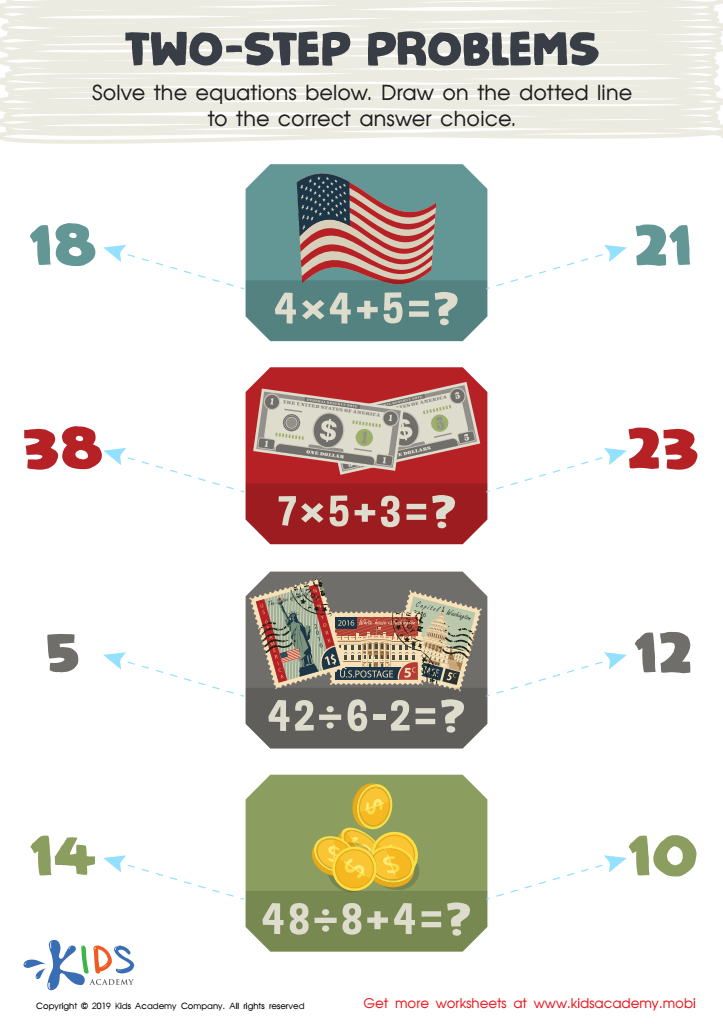
Two-Step Problems Worksheet
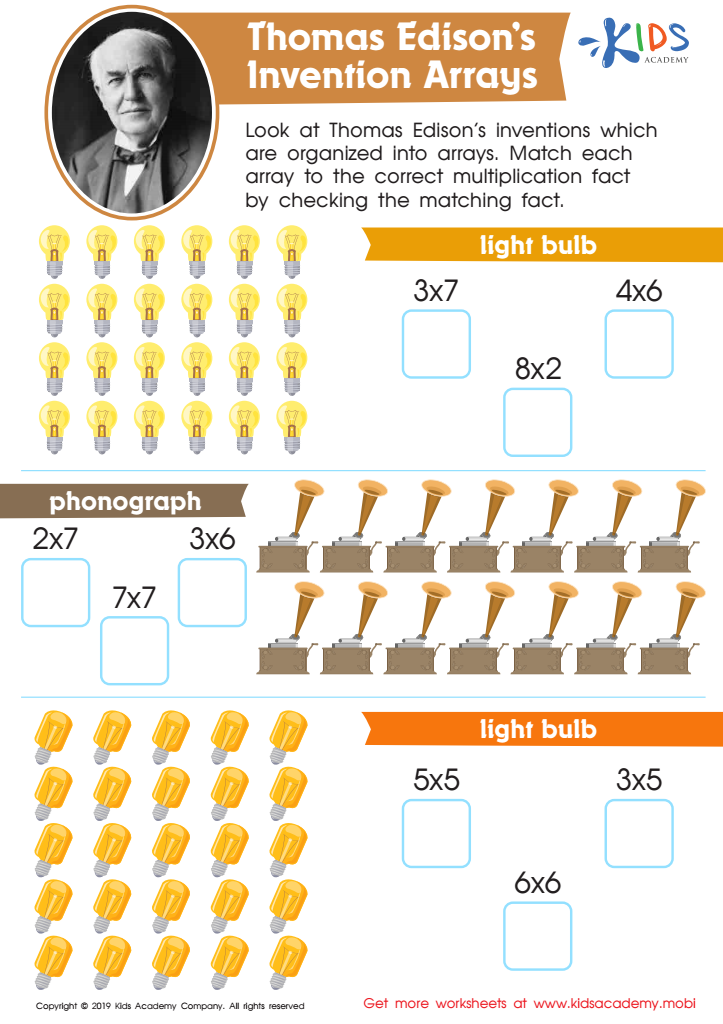
Thomas Edison’s Invention Arrays Worksheet

Growing Jamestown Worksheet
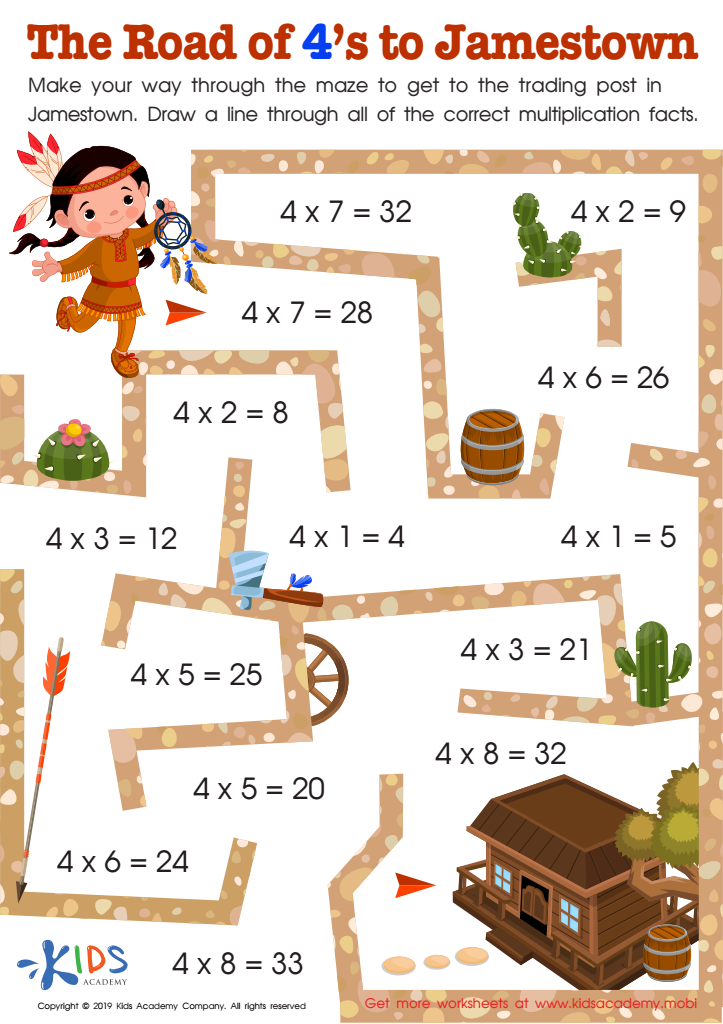
The Road of 4’s to Jamestown Worksheet








Parents and teachers should prioritize Critical Thinking Multiplication for young children, aged 6-8, because it builds a strong foundation in both arithmetic and reasoning skills. At this formative stage, children's brains are highly receptive and plastic, which means they can easily grasp and retain new concepts when taught through engaging methods.
Critical Thinking Multiplication helps children understand the 'why' behind multiplication rather than just memorizing times tables. This deep comprehension fosters problem-solving abilities and encourages children to approach math with curiosity and confidence. For instance, understanding that 3 times 4 is the same as adding 3 four times (3 + 3 + 3 + 3) teaches kids to link multiplication to addition, making math more intuitive.
Furthermore, these skills extend beyond math. Learning to think critically enhances reading comprehension, scientific inquiry, and decision-making in everyday life. When children practice breaking down complex problems, considering different solutions, and justifying their reasoning, they develop skills that are essential throughout their education and future careers.
Investing in Critical Thinking Multiplication ensures children do not just perform mechanically in math but actually understand and enjoy it, laying the groundwork for lifetime learning and intellectual independence. For parents and teachers, this represents the dual benefit of academic success and holistic cognitive development.








