Numbers up to 100 Worksheets for Ages 6-8 - Page 3
51 filtered results
-
From - To
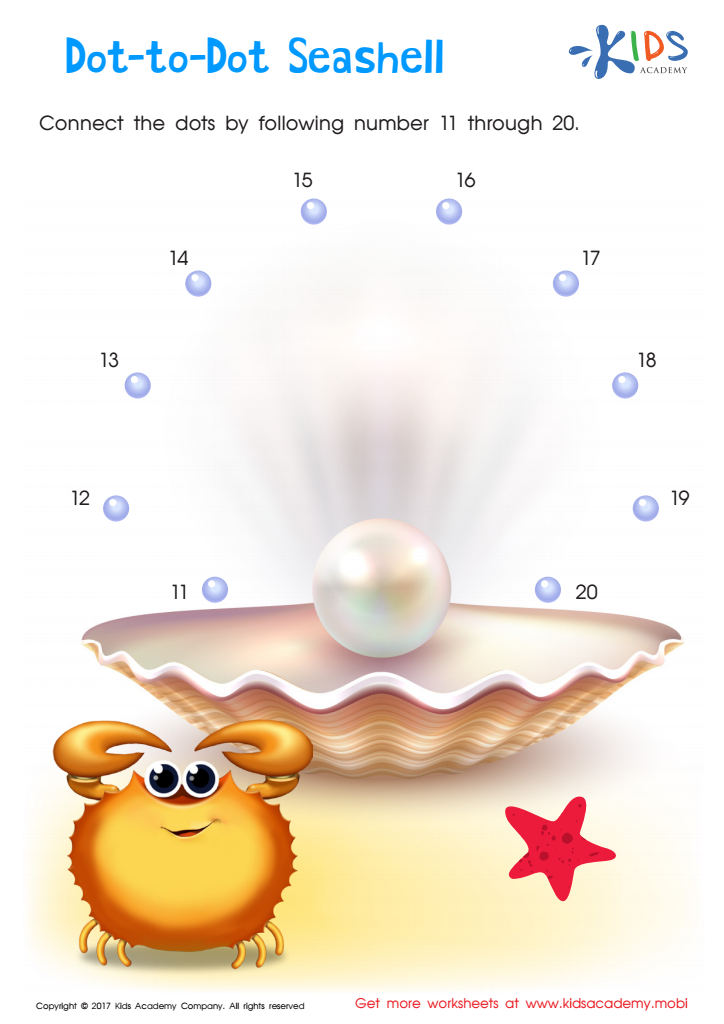
Ordering 11–20: Dot–to–dot Seashell Printable
 Assign to My Students
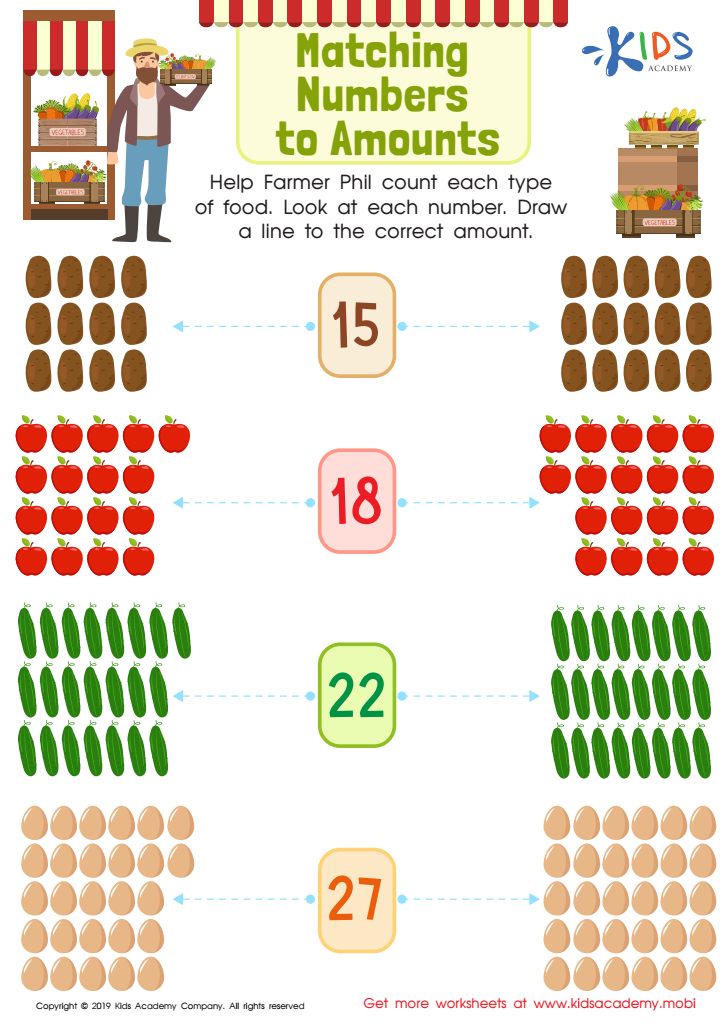
Matching Numbers to Amounts Worksheet

Counting on the City Skyline: Dot-to-Dot Worksheet








Understanding numbers up to 100 at the ages of 6-8 is fundamental for several reasons, benefiting both parents and teachers who are instrumental to early childhood development. First, grasping basic numerical concepts is a crucial milestone in foundational mathematics. This knowledge aids children in performing everyday tasks such as counting objects, telling time, and handling money, which are essential life skills.
Moreover, proficiency with numbers up to 100 equips kids with the ability to engage in more complex mathematical operations. As they advance in education, they'll tackle addition, subtraction, multiplication, and division—all of which build on their knowledge of smaller numbers. This early familiarity helps in developing crucial problem-solving and critical thinking skills.
Additionally, numerical skills contribute substantially to cognitive development. Recognizing patterns, sequences, and relationships between numbers is an exercise in logical thinking and analytical reasoning. These capabilities are transferable to other academic subjects and real-world contexts, underpinning overall intellectual growth.
For teachers, creating a solid foundation at this stage ensures a smoother transition into higher-level arithmetic and boosts children's confidence in handling math-related tasks. Parents, through support and involvement, can enrich their child's learning experience, fostering a positive attitude towards mathematics that can influence their academic trajectory long-term.








