Understanding place value Place Value Worksheets for Ages 6-8
11 filtered results
Difficulty Level
Grade
Age
-
From - To
Subject
Activity
Standards
Unlock essential math skills with our "Understanding Place Value" worksheets, designed for ages 6-8. These engaging activities help young learners grasp the concept of place value, forming the foundation for more complex arithmetic. Each worksheet includes fun exercises where kids practice breaking down numbers into ones, tens, and hundreds. Aligned with early grade standards, these printables strengthen comprehension through colorful visuals and interactive tasks. Ideal for classroom use or at-home practice, our worksheets make learning place value an enjoyable experience. Visit our page to explore a variety of resources that support children's mathematical growth and confidence.
Favorites
With answer key
Interactive
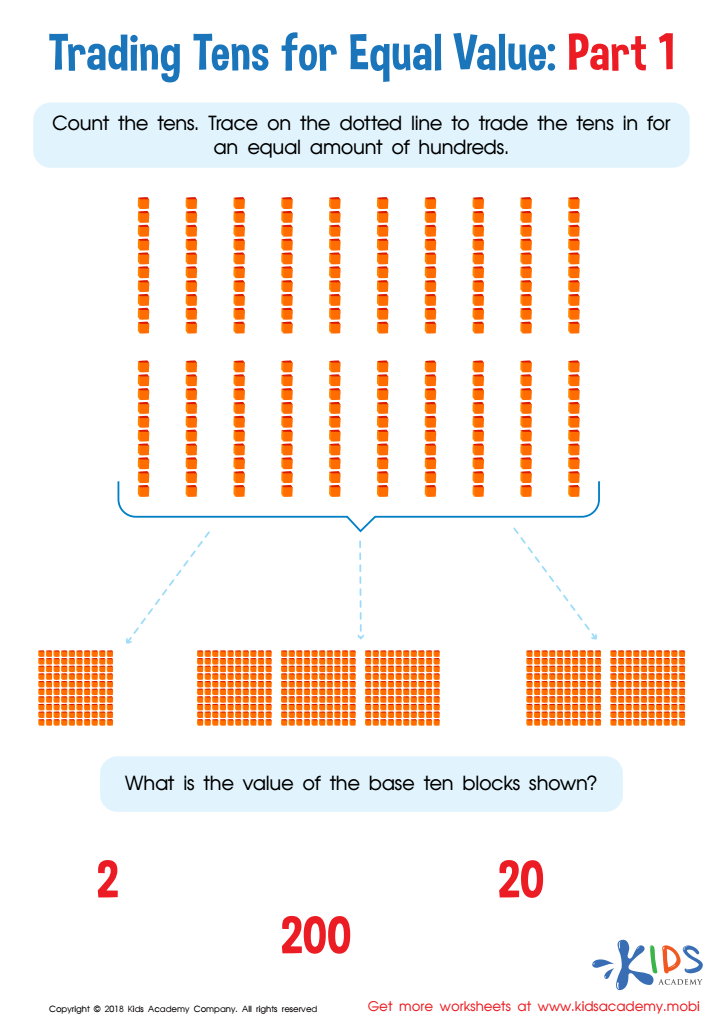
Trading Tens for Equal Value Worksheet: Part 1
This worksheet helps 3rd graders count large numbers and recognize base numbers. It lists 10 cubes and asks students to identify the hundreds, then circle the base blocks. This colorful pdf provides a fun, visual way to help students strengthen their math basics.
 Assign to My Students
Trading Tens for Equal Value Worksheet: Part 1
Worksheet
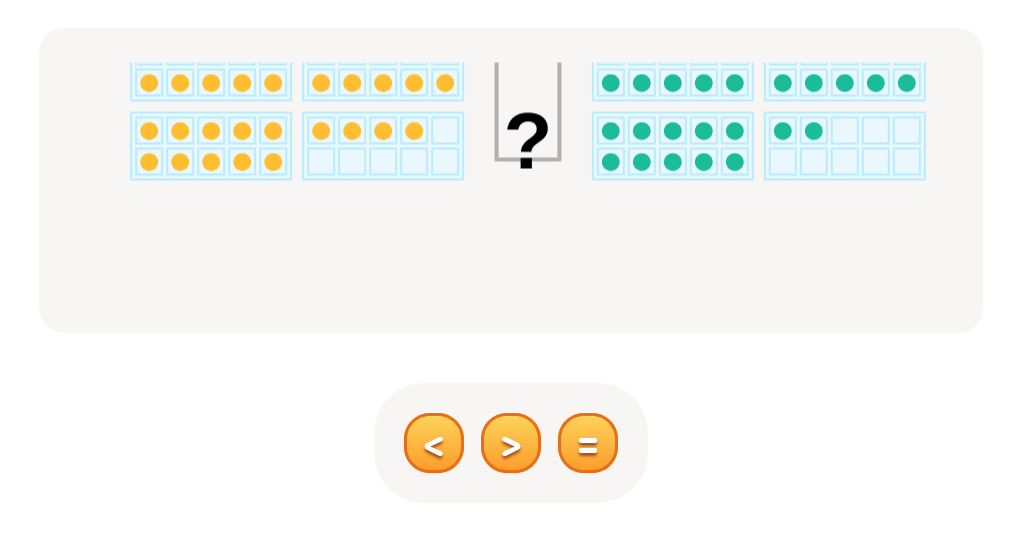

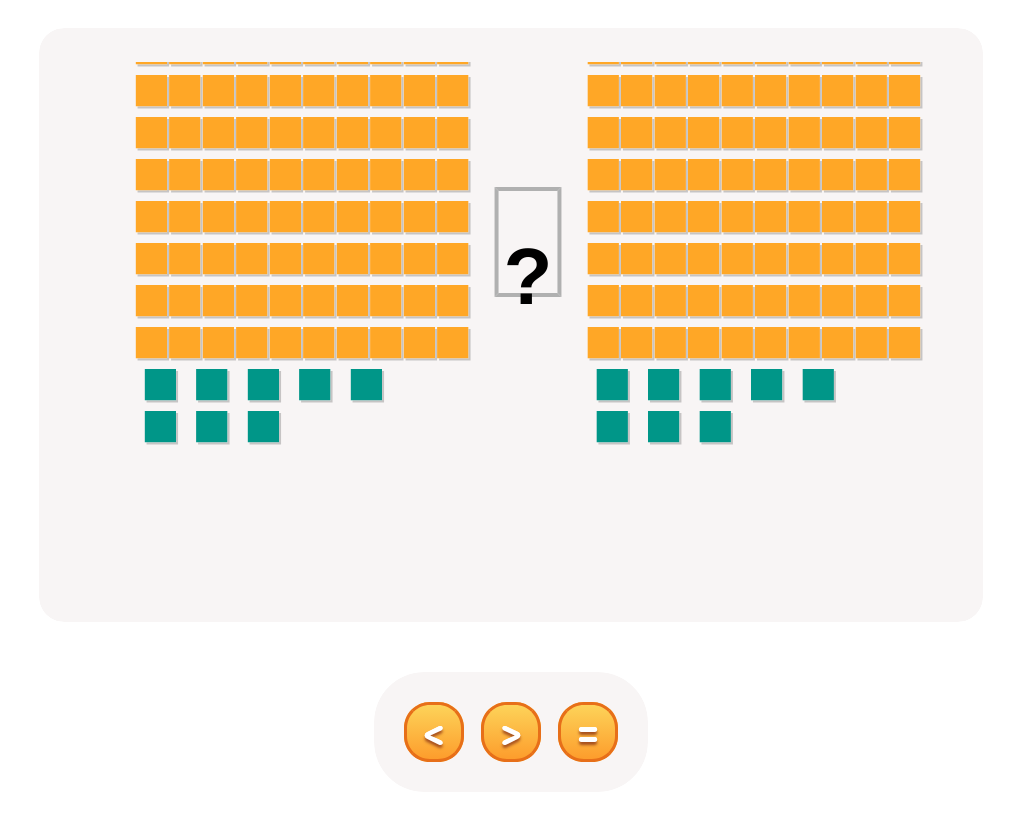
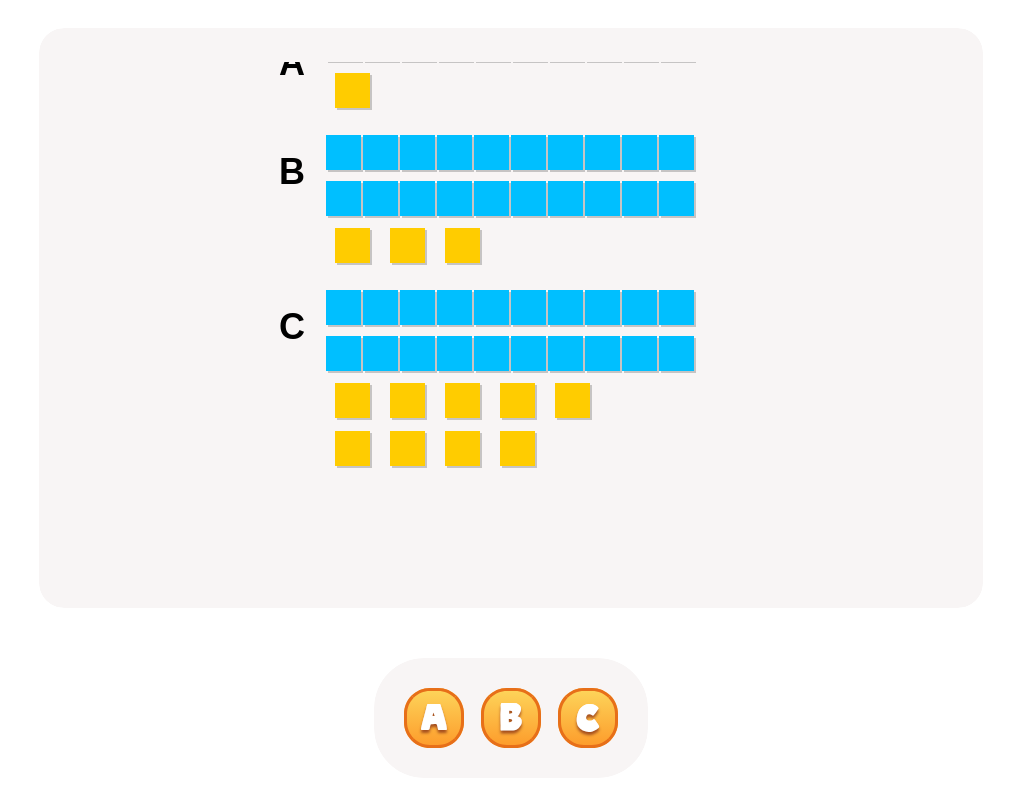
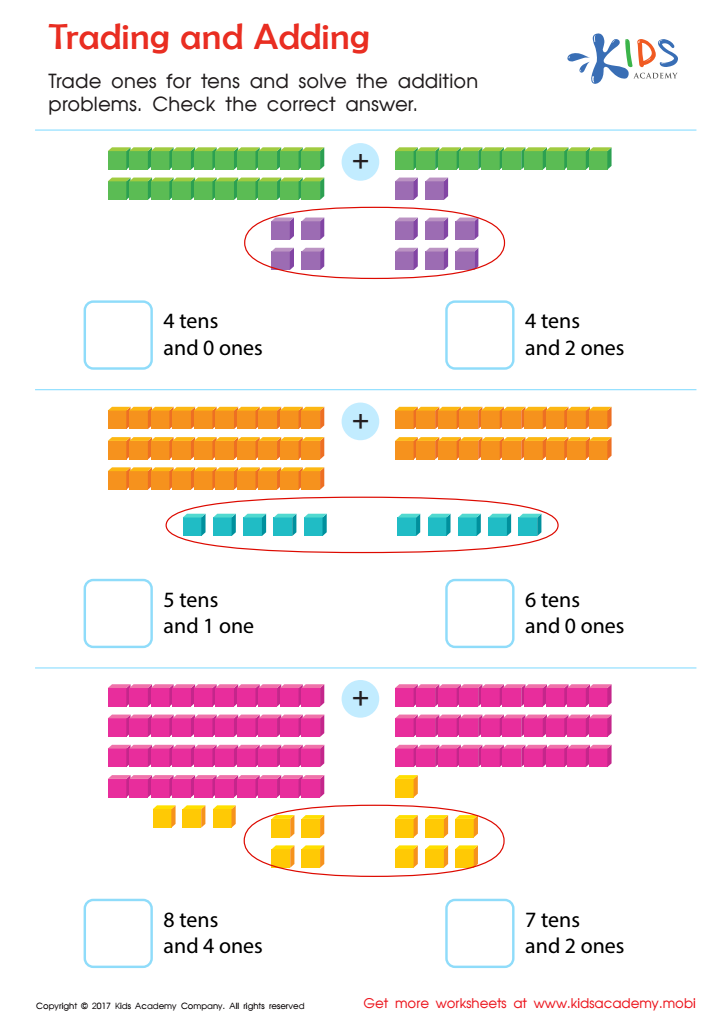
Trading and Adding Worksheet
Help your child learn place value and addition with this free worksheet! Colorful base blocks let them understand the concept of trading ones for tens. Count the blocks on either side of the equation, add, and if there are ten or more ones, regroup them to make tens. Check the answer to complete the page and take your child's learning to the next level!
Trading and Adding Worksheet
Worksheet
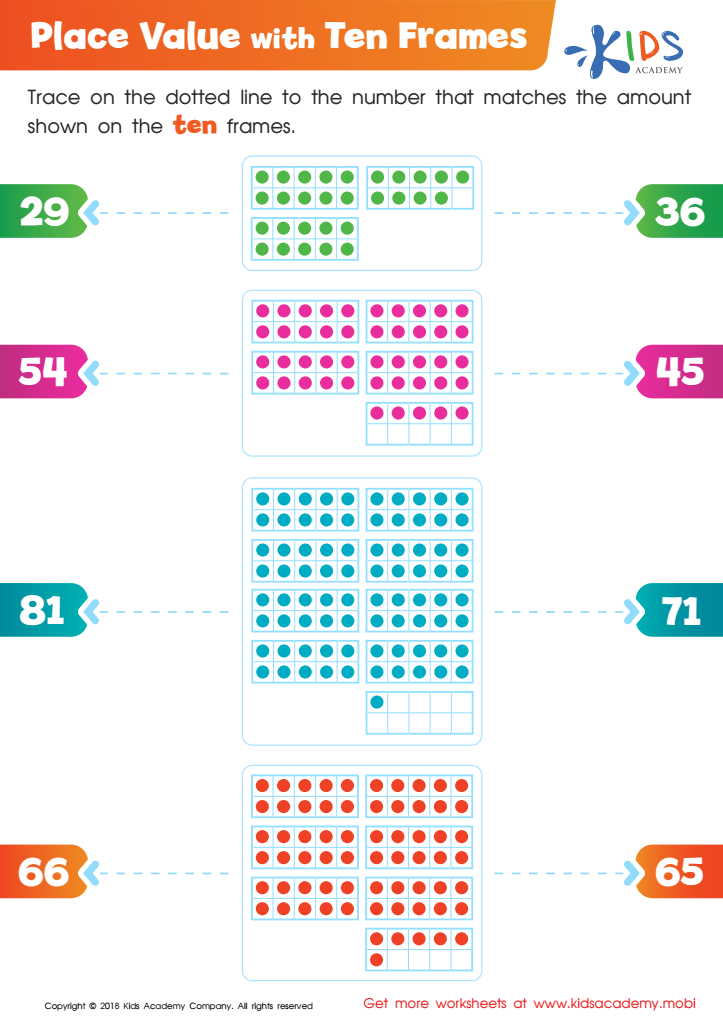
Place Values with Ten Frames Worksheet
Assist your child in counting the dots in each of the framed numbers. Then, guide them as they trace the dotted lines to the number that matches the amount shown. This worksheet will help them learn more about mathematics, as well as how to count numbers.
Place Values with Ten Frames Worksheet
Worksheet
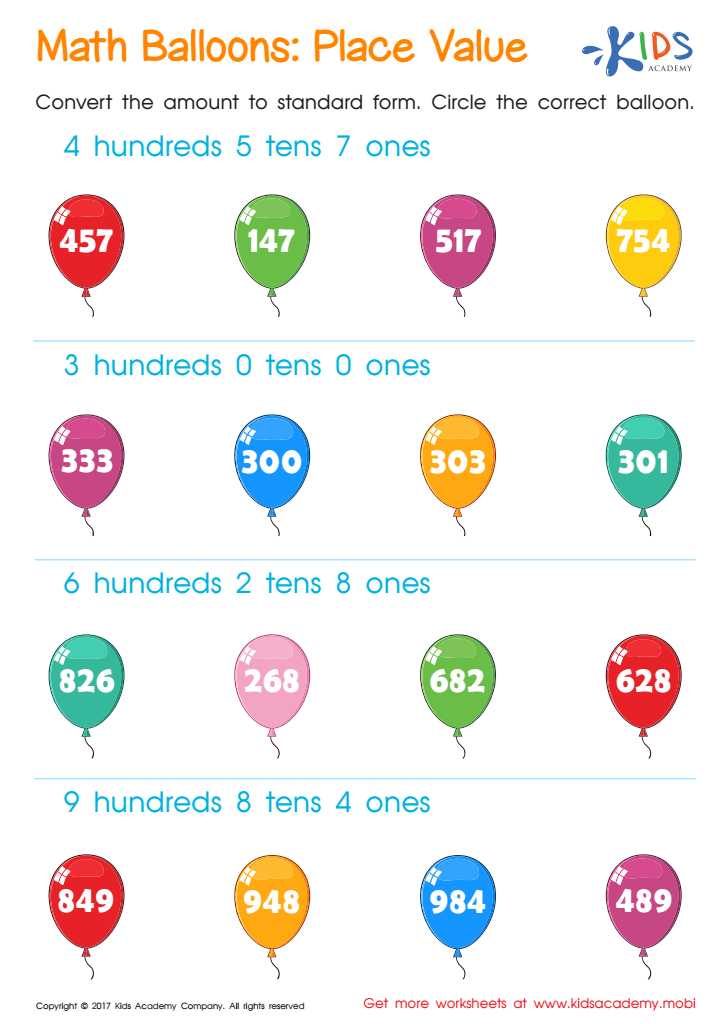
Place Value Printable Worksheet
Understand large numbers using this fun worksheet! Read numbers in hundreds, tens, and ones, then convert them to standard form and select the corresponding amount. Challenging and rewarding, this printable PDF will help your child master place value!
Place Value Printable Worksheet
Worksheet
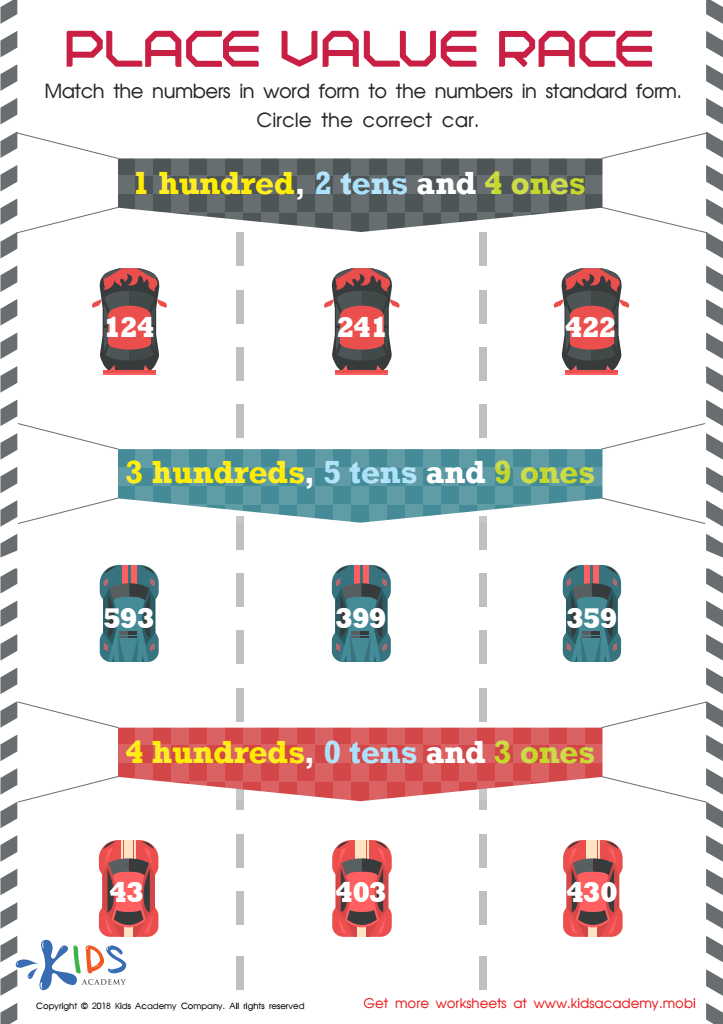
Place Value Race Worksheet
Teach your child to count, then write numbers in word form and back to standard form. In this worksheet, they'll match the numbers written in word form to their standard form and circle the correct car with the correct answer.
Place Value Race Worksheet
Worksheet
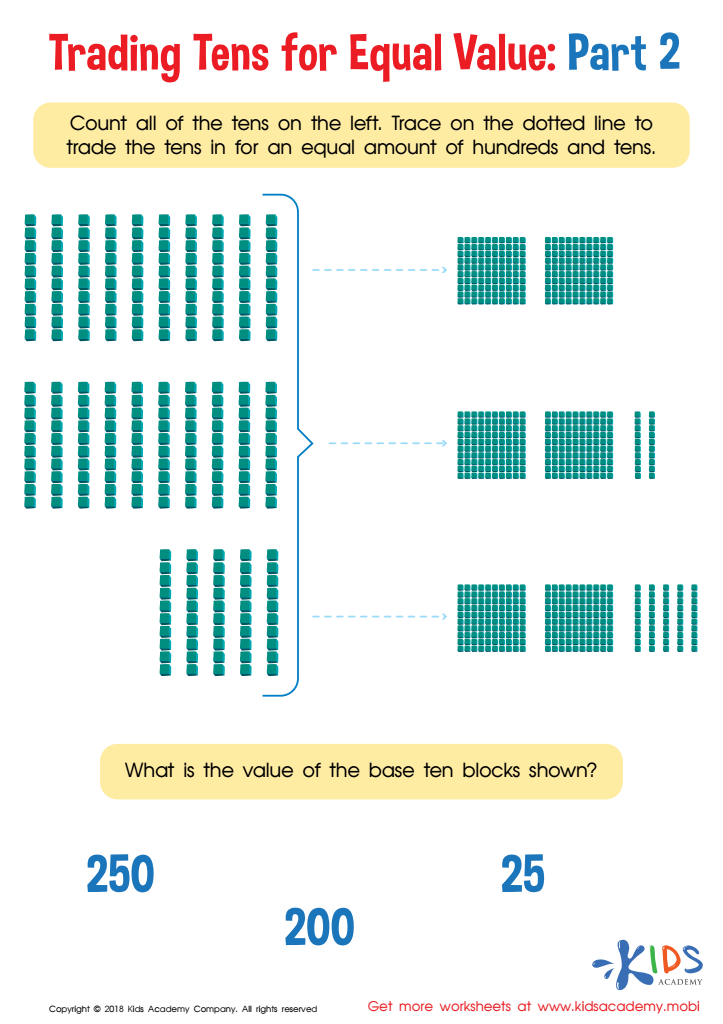
Trading Tens for Equal Value Worksheet: Part 2
Exchange coins for bills and cubes for longs or flats with this helpful place value worksheet! Encourage children to count all the tens, then trace the dotted line to the correct answer and determine the value. This concept can be tricky to teach in elementary math, but this worksheet can help!
Trading Tens for Equal Value Worksheet: Part 2
Worksheet
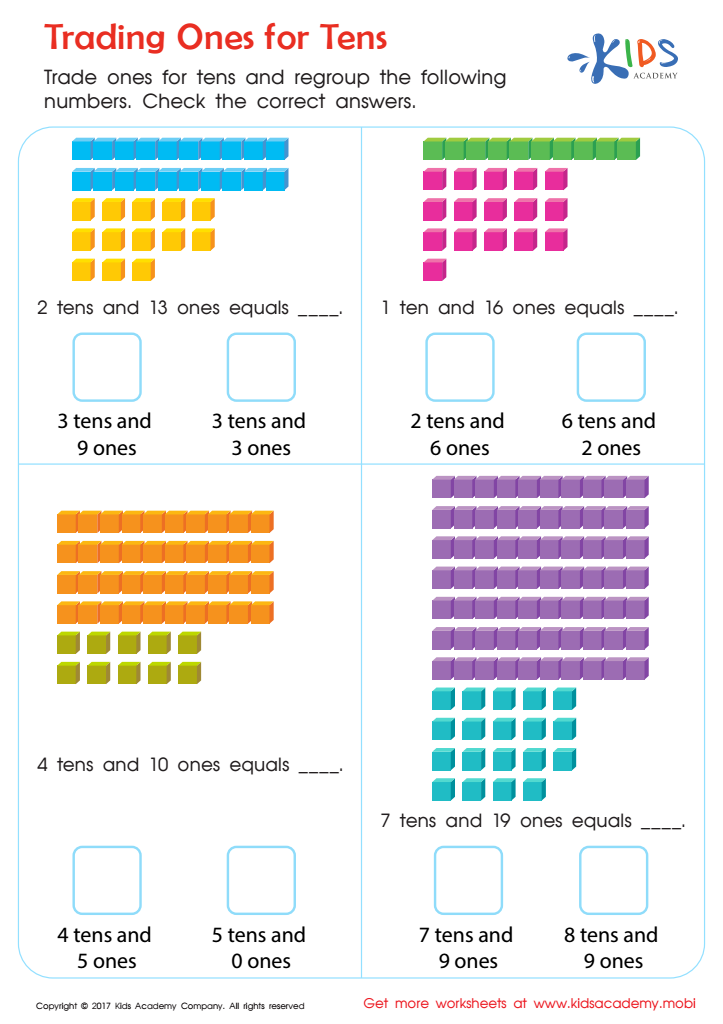
Trading Ones for Tens Worksheet
Kids Academy asserts that mastering place value is essential for developing math capabilities, like addition and subtraction. Using base ten blocks to regroup numbers aids kids in becoming numerate, plus it prepares them for further math operations. We have an illustrative worksheet that plus provides the cubes needed to understand the process of trading ones for tens.
Trading Ones for Tens Worksheet
Worksheet
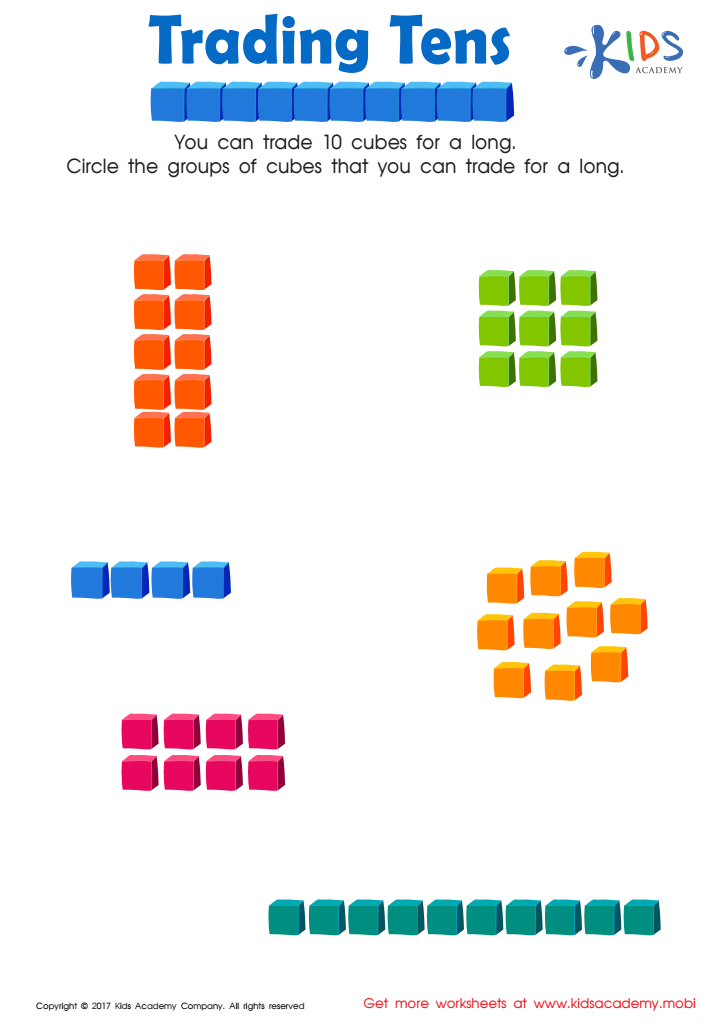
Trading Tens Worksheet
Students will hone their counting skills with this worksheet. They must identify groups of 10 cubes to trade for a long. The cubes are arranged in different ways, so students must rely on individual counting. Completing this printable pdf will help 1st graders develop problem-solving abilities and a better understanding of counting.
Trading Tens Worksheet
Worksheet
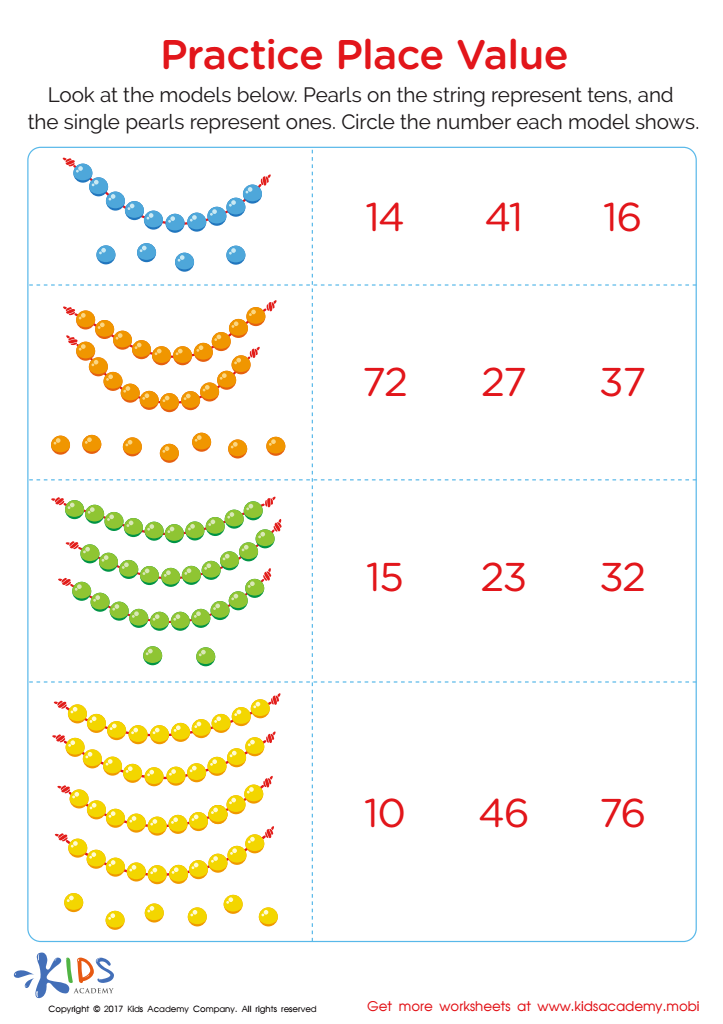
Practice Place Value Printable
This worksheet is ideal for honing your child's place value and mental math skills. It encourages them to learn by looking at models and performing calculations based on instructions. Build your child's number sense with this handy tool!
Practice Place Value Printable
Worksheet
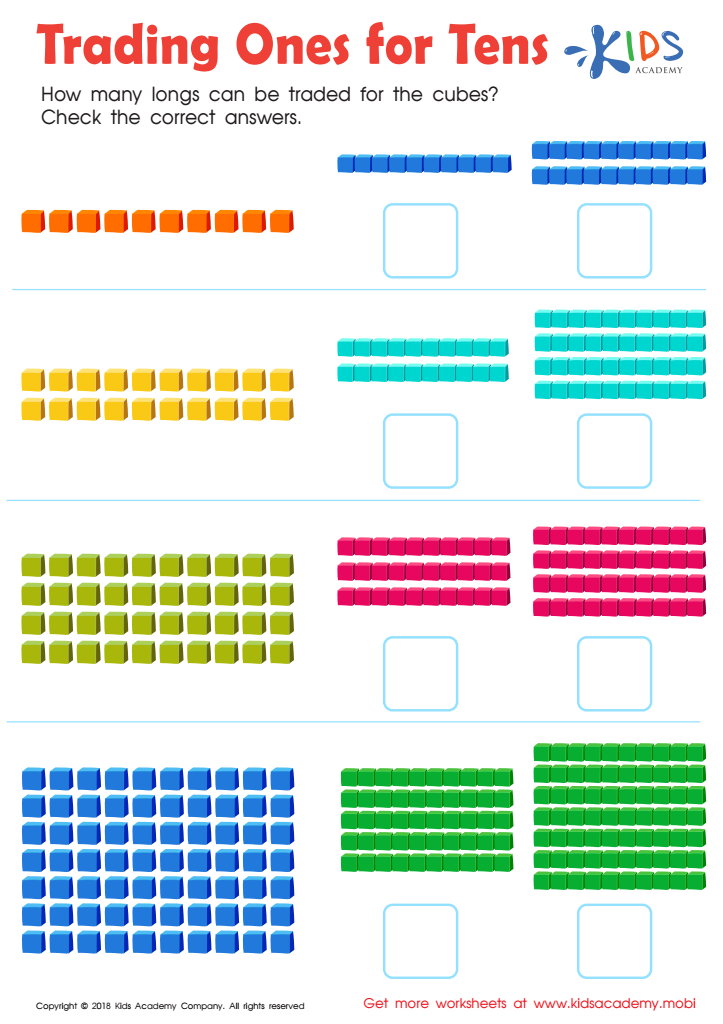
Trading Ones for Tens Worksheet: Part 2
Introduce your early learners to regrouping numbers! Catch their attention with this brightly colored worksheet. See how many 10s can be created from the cubes. Then, check the box with the correct answer to complete the sheet! Download now and get started!
Trading Ones for Tens Worksheet: Part 2
Worksheet
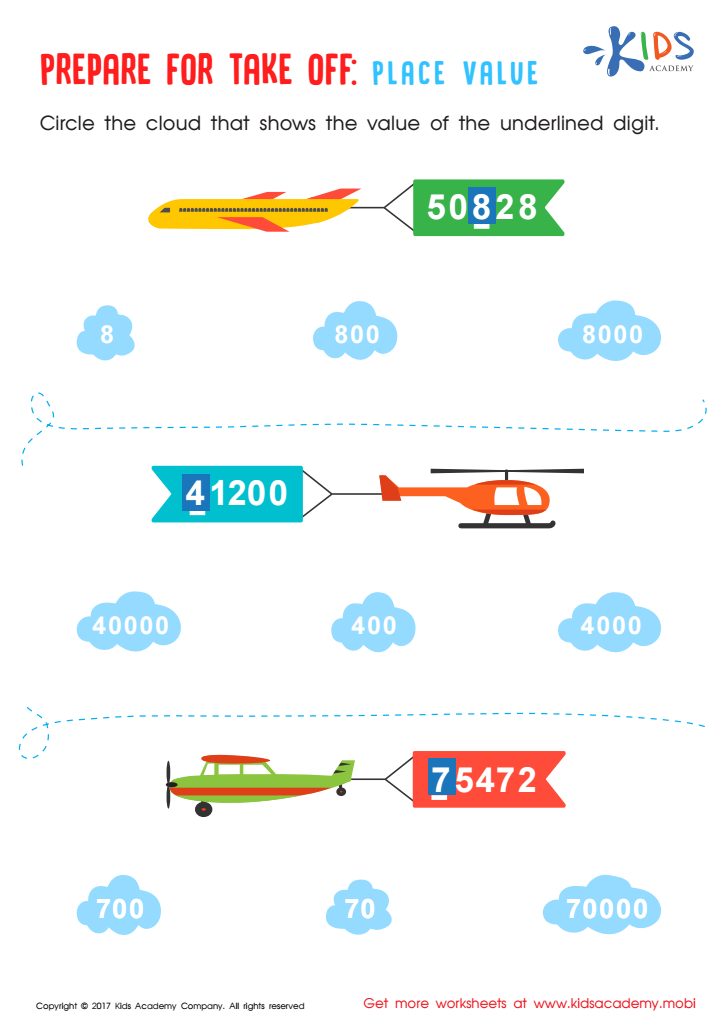
Free Place Value Worksheet for 3rd Grade
Take place value to new heights with this free 3rd grade worksheet! Your child will use large numbers in the tens of thousands and identify the place value of the underlined digit. Explore sky-high numbers and soar in place value skills!
Free Place Value Worksheet for 3rd Grade
Worksheet
Join Kids Academy for Free
Who is primarily going to use this learning content?







Understanding place value is fundamental for children ages 6-8 because it underpins their ability to grasp more complex mathematical concepts. At this age, children transition from simple counting to more advanced operations like addition and subtraction of larger numbers. Place value—the idea that the position of a digit in a number determines its value—enables them to comprehend and perform these operations effectively.
For instance, understanding that in the number 247, the digit '2' represents 200, '4' represents 40, and '7' represents 7, helps children see the number as a whole rather than separate units. This awareness makes it easier for them to carry out addition and subtraction with regrouping or "borrowing."
Moreover, place value lays the foundation for future understanding of decimals, fractions, and even algebra. Early mastery of this concept fosters numerical fluency, which boosts a child's confidence and competence in mathematics. Children who grasp place value well are more likely to enjoy and excel in math, leading to better academic performance overall.
Parents and teachers should provide engaging, hands-on activities, like using base-ten blocks or playing numerical games, to strengthen place value comprehension. Encouraging this skill ensures children develop a solid mathematical foundation, critical for their ongoing education and everyday problem-solving skills.