Problem Solving Subtraction Worksheets for Ages 6-8
3 filtered results
-
From - To
Discover our engaging Problem-Solving Subtraction Worksheets designed for ages 6-8. These carefully crafted resources blend fun and learning to enhance kids’ subtraction skills. Each worksheet features colorful, interactive problems that challenge young minds to think critically and build essential math concepts. Our problem-solving approach helps children apply subtraction to real-life scenarios, fostering greater understanding and retention. Perfect for classroom or at-home practice, these worksheets aim to boost confidence and proficiency in math while making learning enjoyable. Start your child’s educational journey with our dynamic worksheets and watch their skills flourish.
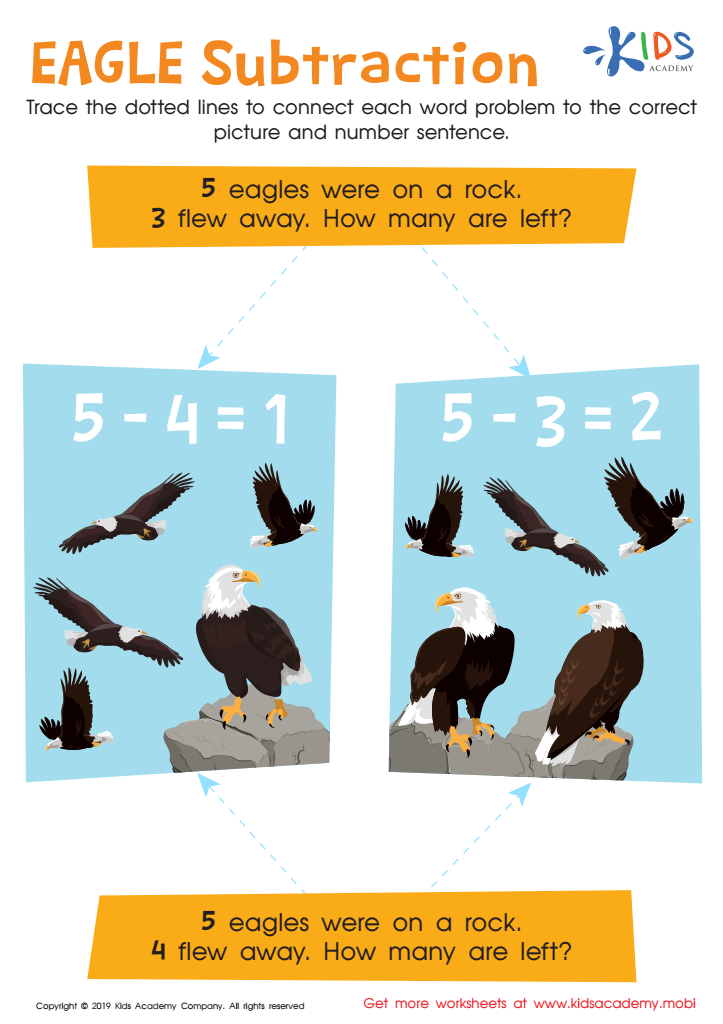
Eagle Subtraction Worksheet
 Assign to My Students
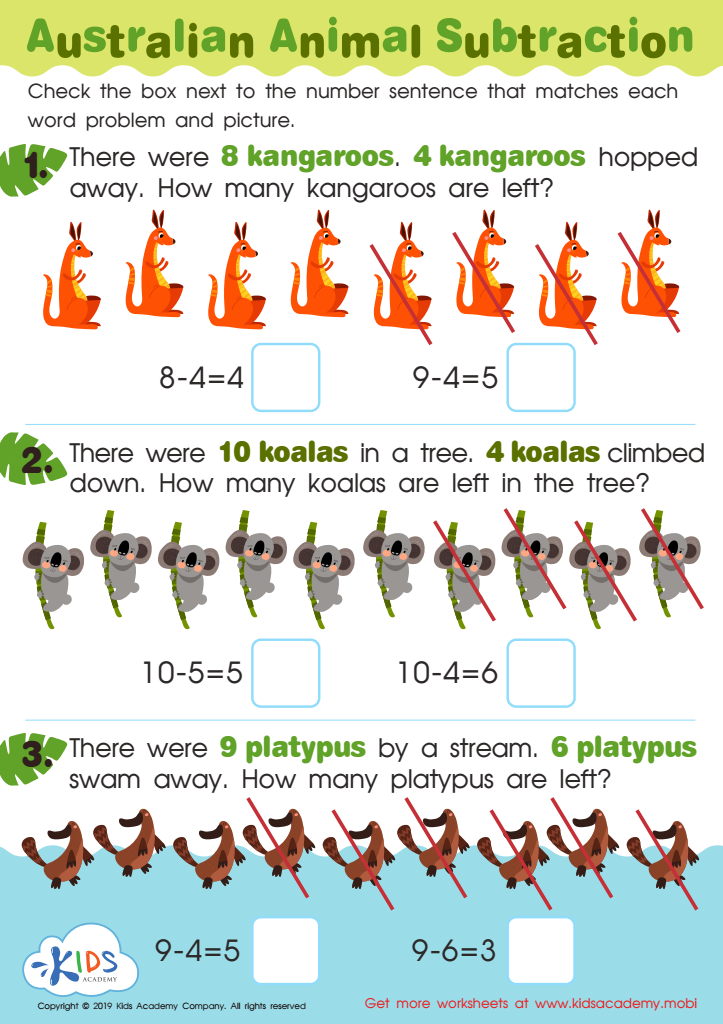
Australian Animal Subtraction Worksheet
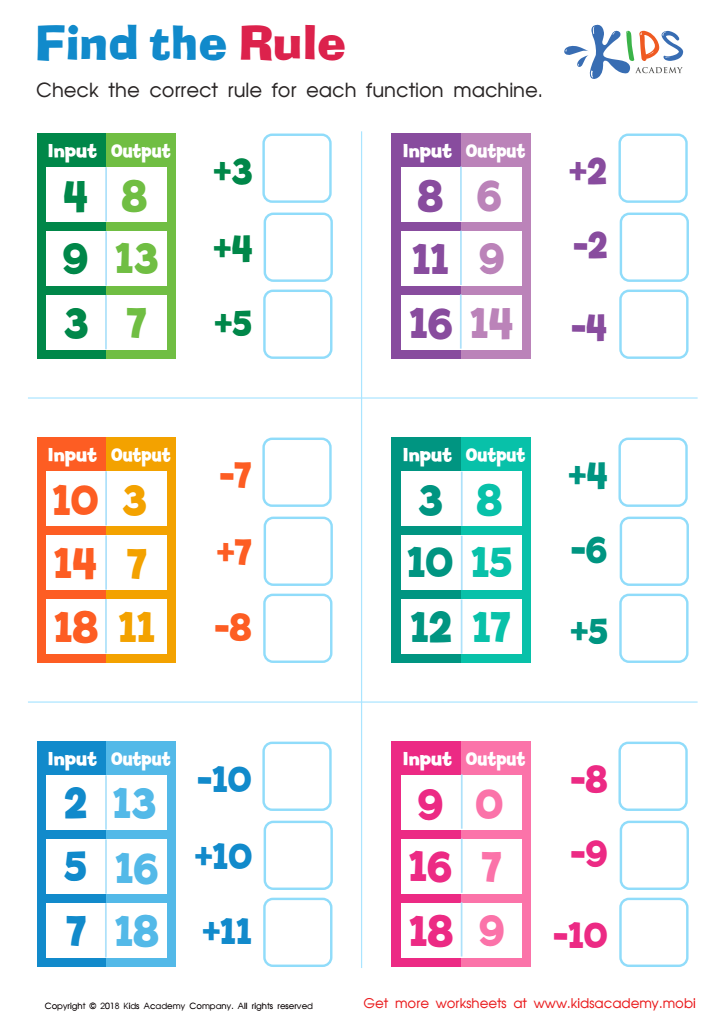
Find the Rule Worksheet








Subtraction is a fundamental math skill, especially critical for children ages 6 to 8 as they build their foundational knowledge for future mathematical learning. At this age, children are transitioning from simple, concrete representations of numbers to more abstract numerical concepts. Focusing on problem-solving subtraction helps youngsters to develop these essential cognitive skills and enhances their understanding of basic arithmetic.
Firstly, problem-solving with subtraction strengthens critical thinking and reasoning. It encourages children to think deeply about what is being asked and to devise strategies to find the solution. This builds their confidence and prepares them for more complex problems, both in math and in real-life situations.
Secondly, grasping subtraction is vital for overall number sense. Children learn to see numbers in relation to each other, recognizing patterns and structures, and understanding that subtraction is not merely "taking away" but can also mean finding the difference, or comparing quantities.
Lastly, mastering this skill positively impacts other areas of the curriculum. Competence in subtraction supports learning in geometry, measurement, and later, in algebra. It lays the groundwork for financial literacy later in life and plays a significant role in everyday decision-making situations, like understanding time or handling money.
Thus, prioritizing subtraction problem-solving for young learners equips them with invaluable skills that extend beyond the math classroom and into everyday life.








