Reading comprehension Subtraction Worksheets for Ages 6-8
4 filtered results
-
From - To
Boost your child's reading comprehension and subtraction skills with our engaging worksheets designed specifically for ages 6-8! These fun and interactive activities combine subtraction problems with reading exercises, helping children enhance their understanding while enjoying their learning journey. Each worksheet presents relatable scenarios and challenges that encourage critical thinking and application of math concepts. Perfect for use at home or in the classroom, these resources aim to foster a love for math and literacy simultaneously. Encourage your child to grasp essential skills with our creative and supportive materials that make learning subtraction exciting and rewarding! Download and watch them thrive!
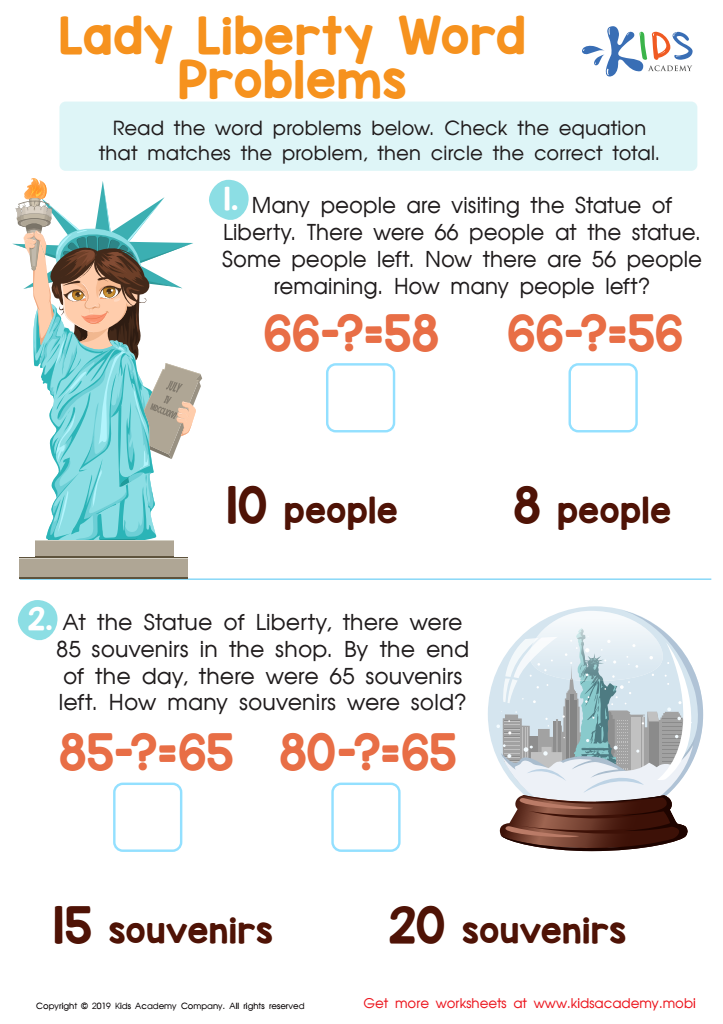
Lady Liberty Worksheet
 Assign to My Students
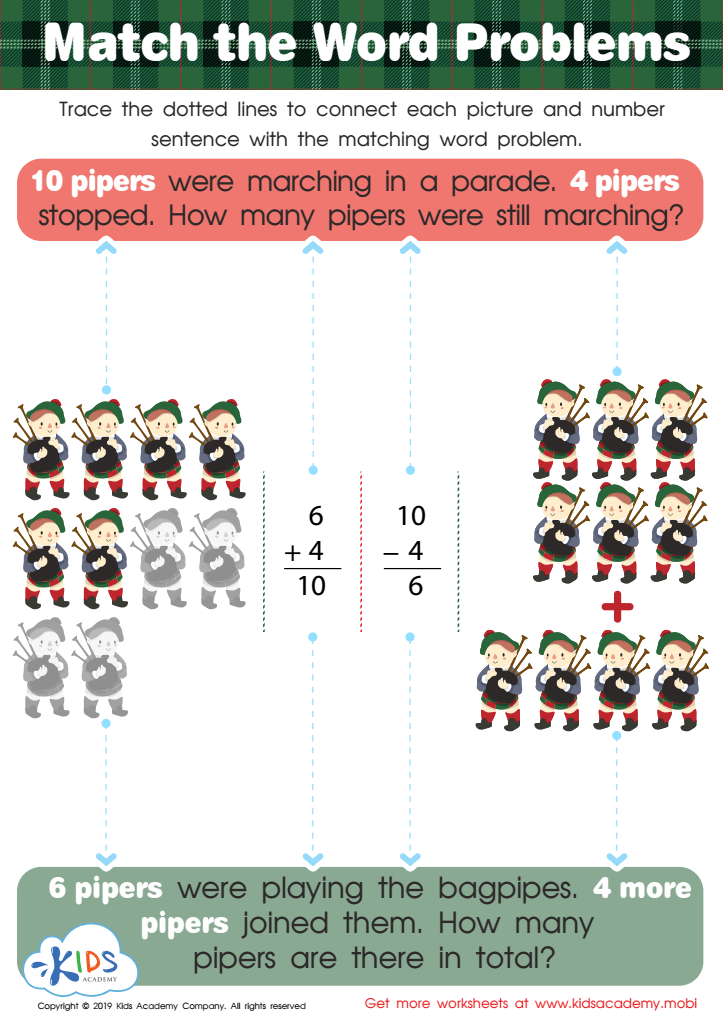
Match the Word Problems Worksheet
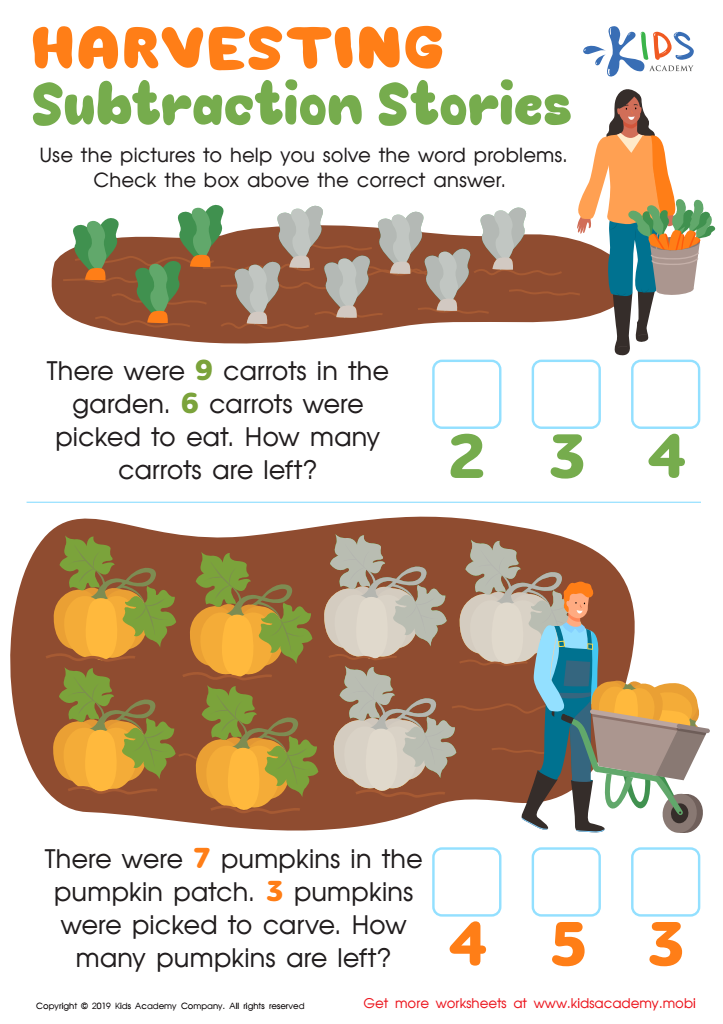
Harvesting Subtraction Stories Worksheet
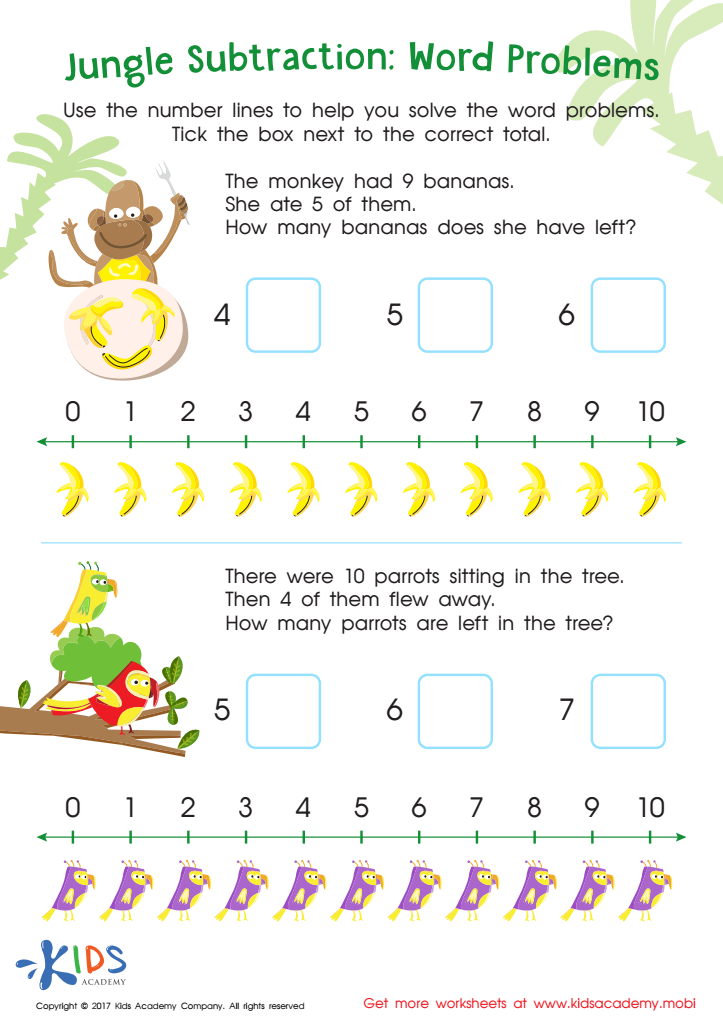
Jungle Subtraction Word Problems Substraction Worksheet


.jpg)





Reading comprehension is crucial for children aged 6-8, as it lays the foundation for their academic success and personal development. During these formative years, children are transitioning from learning to read to reading to learn. A strong grasp of reading comprehension skills enables them to understand and process information, which is essential for all subjects, including math and science.
Parents and teachers should emphasize reading comprehension in mathematics, particularly subtraction, because effective comprehension enhances problem-solving skills. When children read word problems, they need to identify the relevant information, comprehend the context, and extract the necessary details to perform mathematical operations accurately. Without strong reading comprehension skills, children may struggle to understand the problem, leading to frustration and academic challenges.
Moreover, fostering reading comprehension encourages critical thinking and analytical skills, beneficial in all aspects of life. It helps children become independent learners, capable of approaching complex concepts with confidence. By integrating reading comprehension strategies into their teaching, parents and educators can support children in developing a holistic understanding of both literary and numerical challenges, facilitating a smoother educational journey and a love for lifelong learning. Prioritizing these skills is vital to shaping successful learners who can navigate their educational environments effectively.








