Time recognition Time Worksheets for Ages 6-8
3 filtered results
-
From - To
Discover the perfect resource to help kids aged 6-8 master time recognition! Our expertly crafted worksheets engage young minds with fun, interactive activities focused on reading clocks and understanding time. Tailored for early learners, these printable exercises support the development of essential math skills, including recognizing different time formats and solving real-life problems. Ideal for both classroom and home use, our time worksheets make learning an enjoyable experience, fostering confidence and precision in reading hours and minutes. Equip your child with the fundamental skills needed for time management and enhance their mathematical journey with these delightful and effective tools!
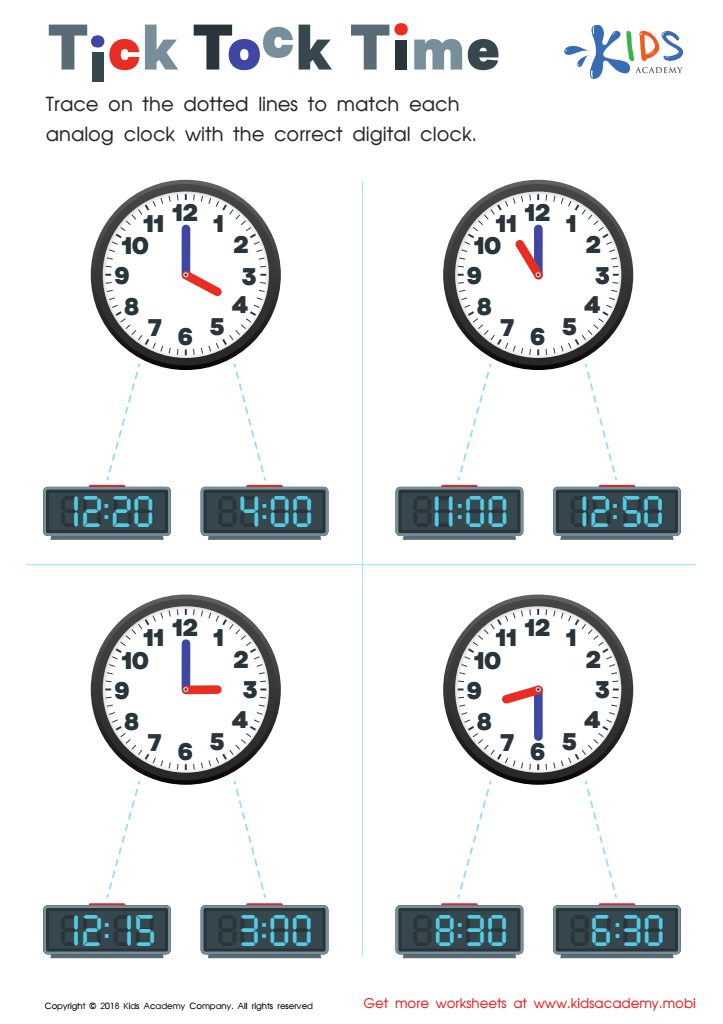
Tick Tock Time Worksheet
 Assign to My Students
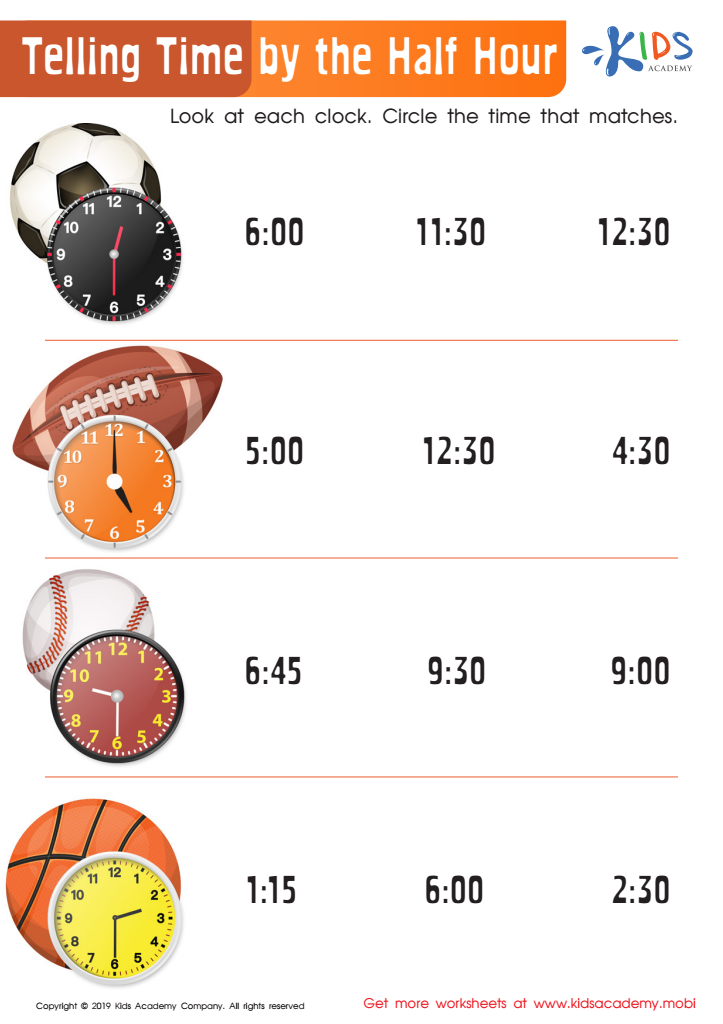
Telling Time by the Half Hour Worksheet
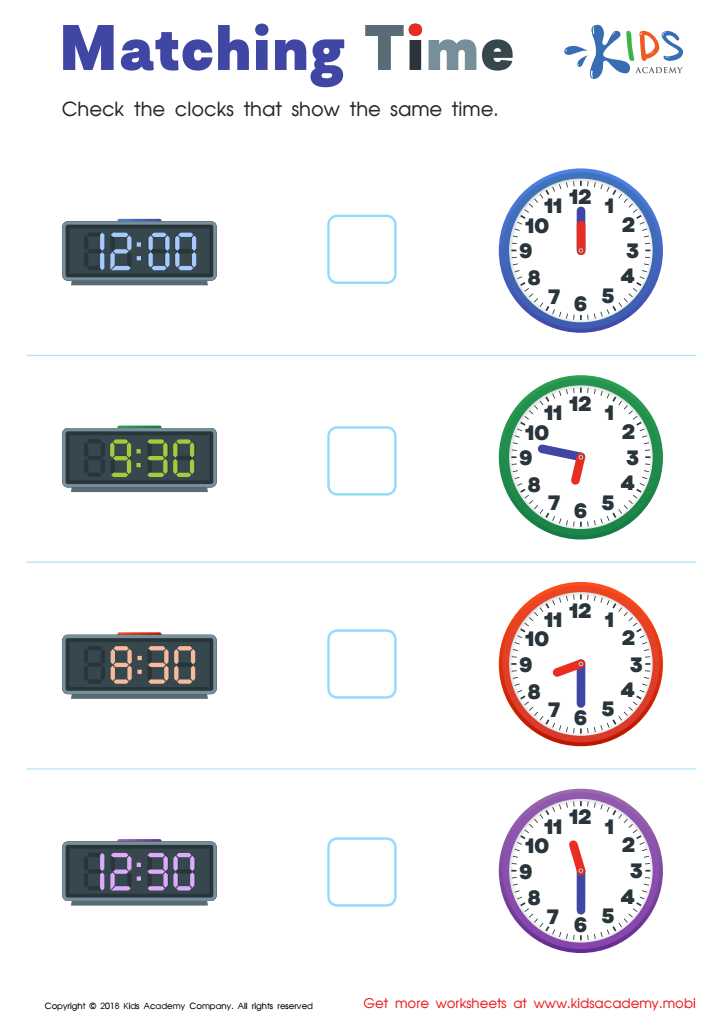
Matching Time Worksheet








Understanding time is crucial for young children as it lays the foundation for their overall cognitive and social development. For children aged 6-8, learning to tell time helps improve their numerical skills and encourages critical thinking. Recognizing hours and minutes enhances their ability to measure and calculate, indirectly supporting their arithmetic progress.
Moreover, time management skills begin with the fundamental ability to recognize and understand time. This is a life skill that significantly influences their future success in both academic and personal realms. By knowing how much time tasks take and organizing schedules, children learn to prioritize and make informed decisions about their activities.
Beyond academics, time recognition is essential for daily routines and fosters a sense of responsibility. Punctuality, for instance, is grounded in a solid understanding of time. This helps children develop discipline as they adhere to school schedules, extracurricular activities, and family commitments.
Socially, time recognition aids in better understanding shared activities and cooperating within peer groups. Whether it’s scheduling playdates or knowing when a TV show starts, being able to tell time enhances a child's ability to fit in and collaborate with others.
Thus, both parents and teachers have a crucial role in emphasizing time recognition skills, ensuring a comprehensive educational experience that nurtures future-ready individuals.








