Understanding time Time Worksheets for Ages 6-8
3 filtered results
-
From - To
Discover engaging and educational "Understanding Time Worksheets" designed for children aged 6-8! These worksheets provide a fun way to help young learners grasp essential time concepts, such as telling time on analog and digital clocks, distinguishing between AM and PM, and understanding hours and minutes. Our carefully crafted activities encourage practice through various exercises, including matching, fill-in-the-blank, and visual aids. Perfect for classroom lessons or at-home learning, these worksheets will build a strong foundation in time management skills. Enhance your child's learning experience today with our vibrant and interactive resources, paving the way for confident future learners!
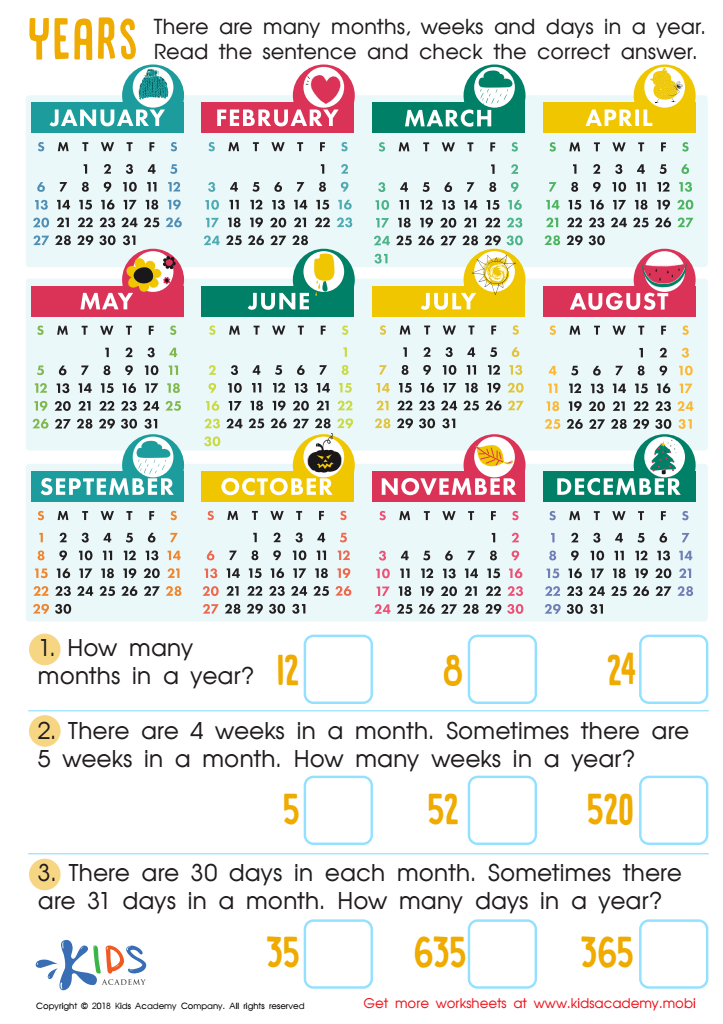
Years Worksheet
 Assign to My Students
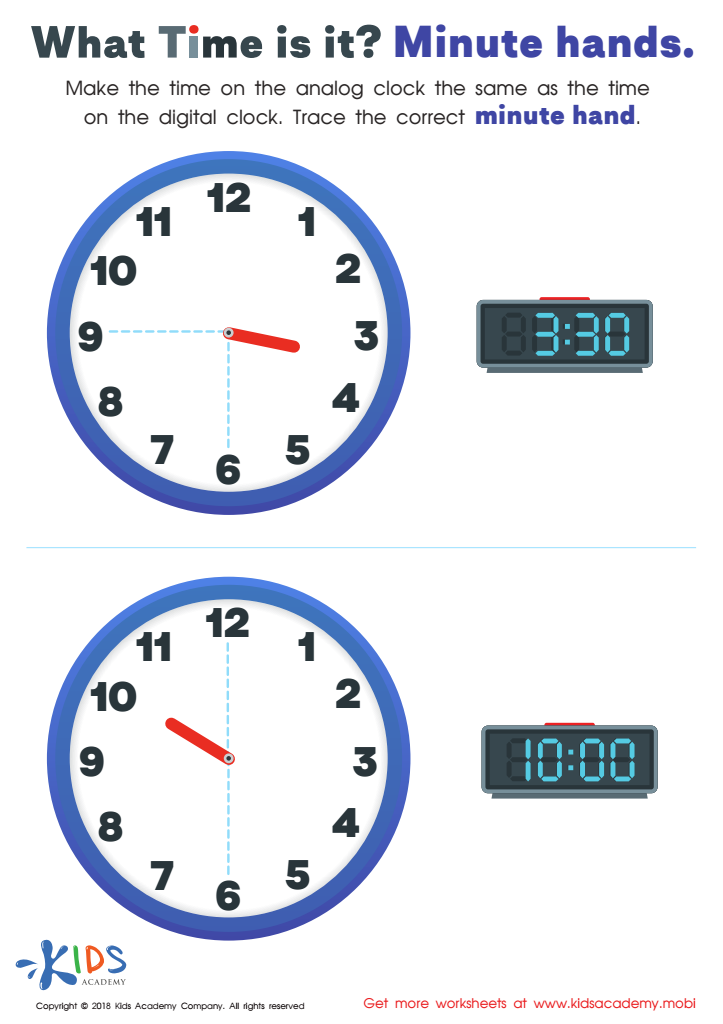
What Time Is it? Minute Hands Worksheet
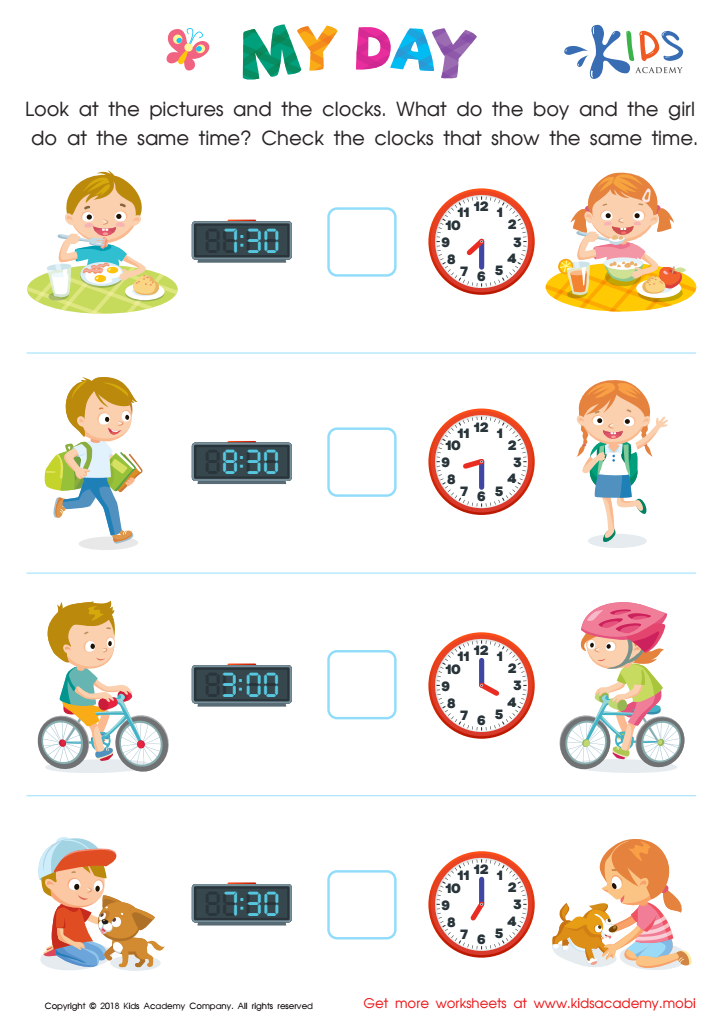
My Day Worksheet







.jpg)
Understanding time is crucial for children aged 6-8 as it lays the groundwork for essential life skills. During these formative years, children develop cognitive abilities that help them grasp abstract concepts. Learning to tell time enhances their organizational skills, fostering a sense of responsibility and independence. For instance, being able to read analog and digital clocks allows children to manage their schedules, such as getting ready for school, attending extracurricular activities, or completing homework on time.
Moreover, a solid grasp of time supports academic achievement in various subjects. For example, it enhances mathematical skills by introducing concepts like intervals, durations, and patterns. Time also plays a significant role in understanding historical events, developing a sense of sequential awareness that helps children comprehend "before" and "after."
Socially, knowing how to manage time aids in teamwork and cooperation, as children learn to share activities, wait for turns, and participate in group projects effectively. Ultimately, when parents and teachers prioritize teaching time management, they equip children with crucial tools for navigating their daily lives and fostering a lifelong ability to plan, prioritize, and execute tasks efficiently. By investing in teaching time, we empower our children to thrive in both academic and personal spheres.








