
Counting skills Building Vocabulary Worksheets for Ages 6-8
26 filtered results
Difficulty Level
Grade
Age
-
From - To
Subject
Activity
Standards
Unlock your child's potential with our Counting Skills Building Vocabulary Worksheets designed for ages 6-8. Perfectly tailored to enhance both counting and language proficiency, these worksheets blend fun with foundational learning. They include activities that engage young minds through a combination of colorful visuals and interactive exercises, promoting numerical understanding and vocabulary expansion. Ideal for both classroom use and at-home practice, our worksheets support essential skills such as number recognition, word association, and reading comprehension. Give your child the tools they need for academic success and build a strong foundation for future learning with our expertly crafted resources.
Favorites
With answer key
Interactive
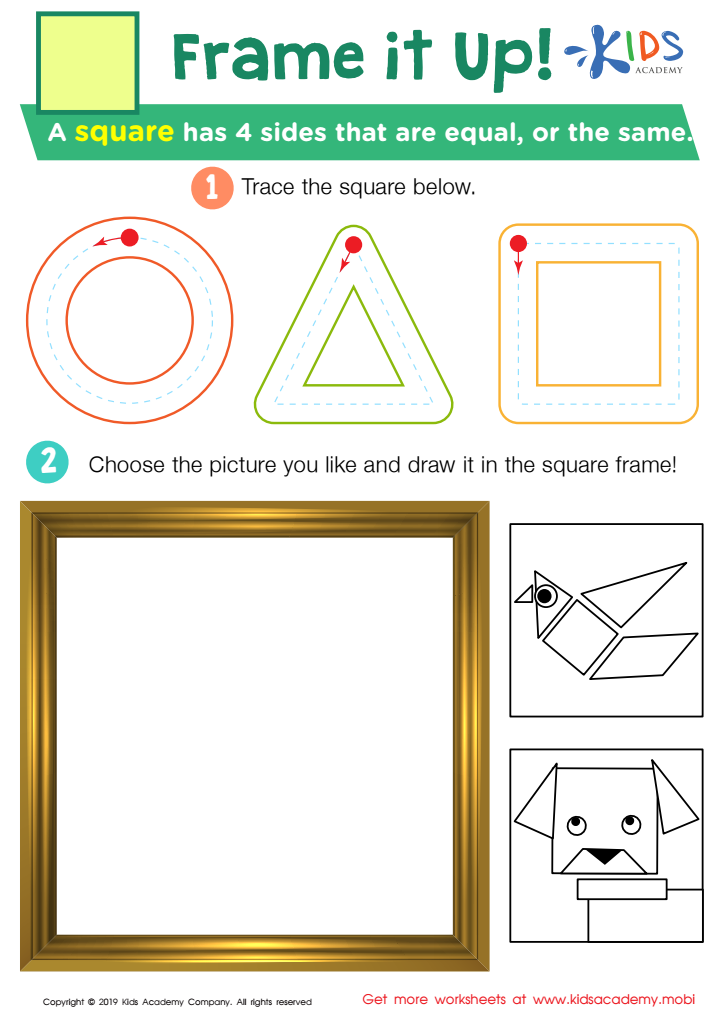
Frame it Up Worksheet
This worksheet helps kids learn the difference between squares and other shapes. It guides them to trace a square and draw a picture inside it. Examples of shapes-based drawings are included. Kids will have fun and clear up any confusion about squares.
 Assign to My Students
Frame it Up Worksheet
Worksheet











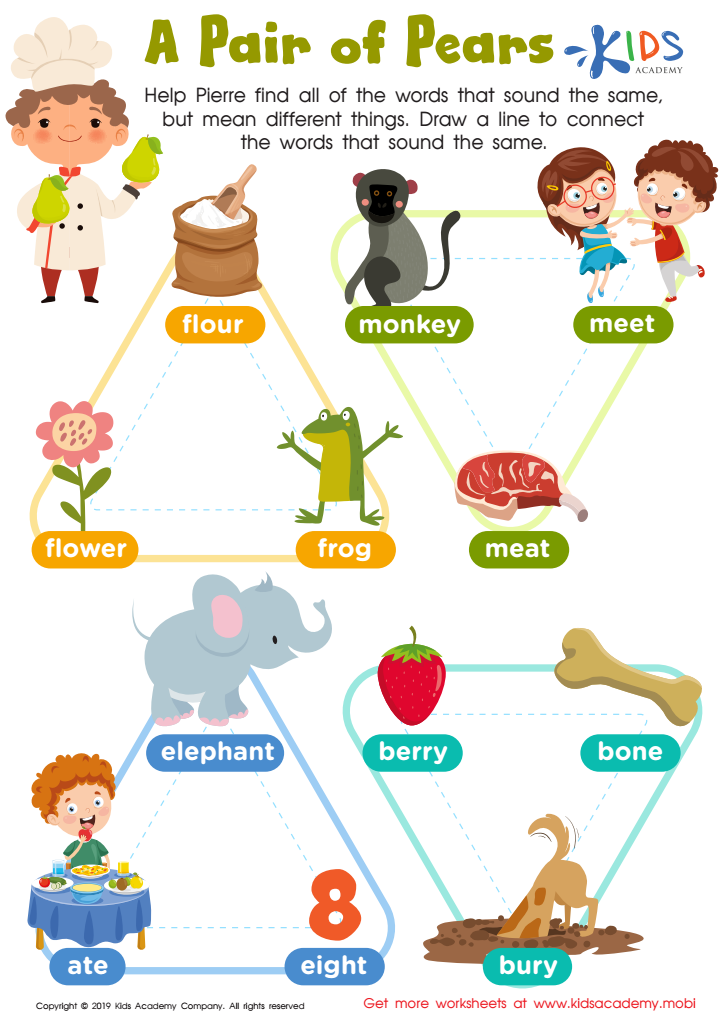
Pair Pears Worksheet
Young readers can have difficulty knowing when to use the right homophone. This free worksheet helps them use familiar imagery to understand better by connecting words that sound similar but are spelled and mean different things. Students will trace the lines to form a picture and have a reference image to differentiate between the different homophones.
Pair Pears Worksheet
Worksheet
Join Kids Academy for Free
Who is primarily going to use this learning content?


.jpg)





Counting skills and building vocabulary are foundational elements of early education that play a crucial role in the cognitive development of children aged 6-8.
Counting skills go beyond mere number recognition. They help children develop an understanding of numerical concepts, patterns, and basic arithmetic. This foundation is vital as math continues to become more complex. Counting also enhances problem-solving skills and logical reasoning. For example, accurately counting objects helps kids form a basis for more complex operations such as addition and subtraction, essential for later challenges both in academics and in daily life scenarios, like making sure they have the right amount of change or sharing calmly with friends.
Simultaneously, vocabulary building is essential for effective communication and literacy. A rich vocabulary aids in reading comprehension, enabling children to understand and follow instructions accurately. It also enhances their ability to express thoughts clearly and creatively, boosting both academic performance and interpersonal skills. Conversations filled with a diverse vocabulary allow children to grasp different concepts quicker and foster a love for reading, setting a positive cycle of growth.
When teachers and parents focus on these key areas, they provide children with crucial tools for learning. This support not only boosts academic success but also promotes confidence and curiosity, fostering a lifelong love of learning and communication.








