Phonics recognition Building Vocabulary Worksheets for Ages 6-8
5 filtered results
-
From - To
Boost your child's vocabulary and reading skills with our Phonics Recognition Building Vocabulary Worksheets designed for ages 6-8. These fun and engaging printable worksheets focus on phonics recognition, helping young learners decode words and enhance their reading fluency. Our curriculum-aligned resources cover essential phonics rules and word patterns, making learning both enjoyable and effective. Perfect for both classroom use and at-home practice, these worksheets support children in mastering the foundational skills necessary for successful reading and vocabulary development. Give your child the tools they need to become confident and competent readers with Kids Academy's expert-designed worksheets.
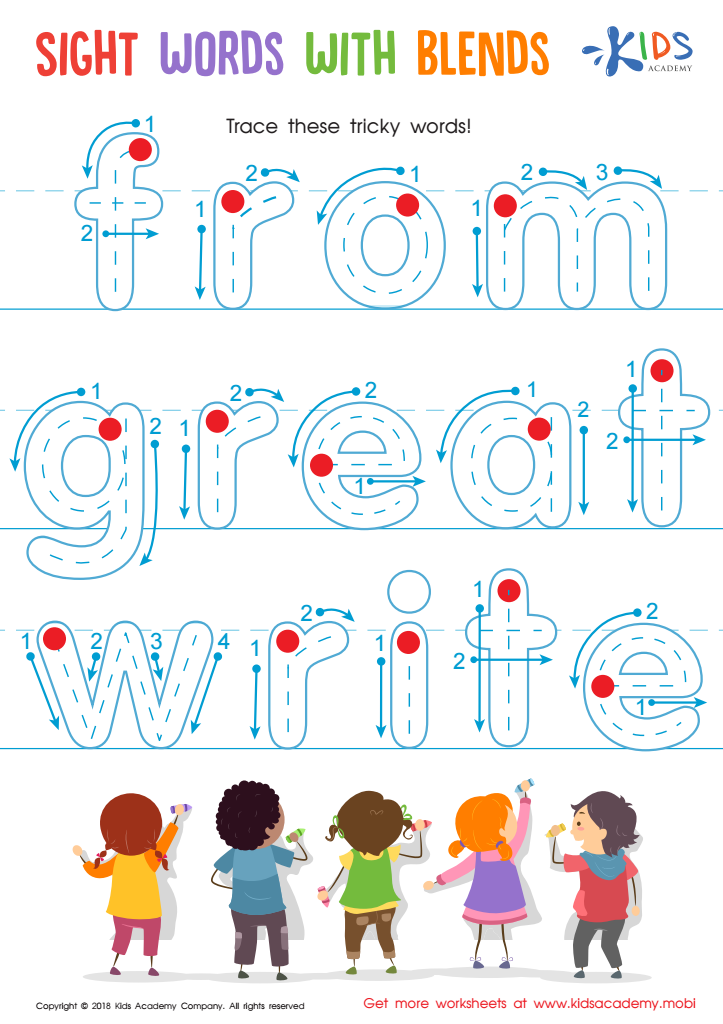
Sight Words with Blends Worksheet
 Assign to My Students











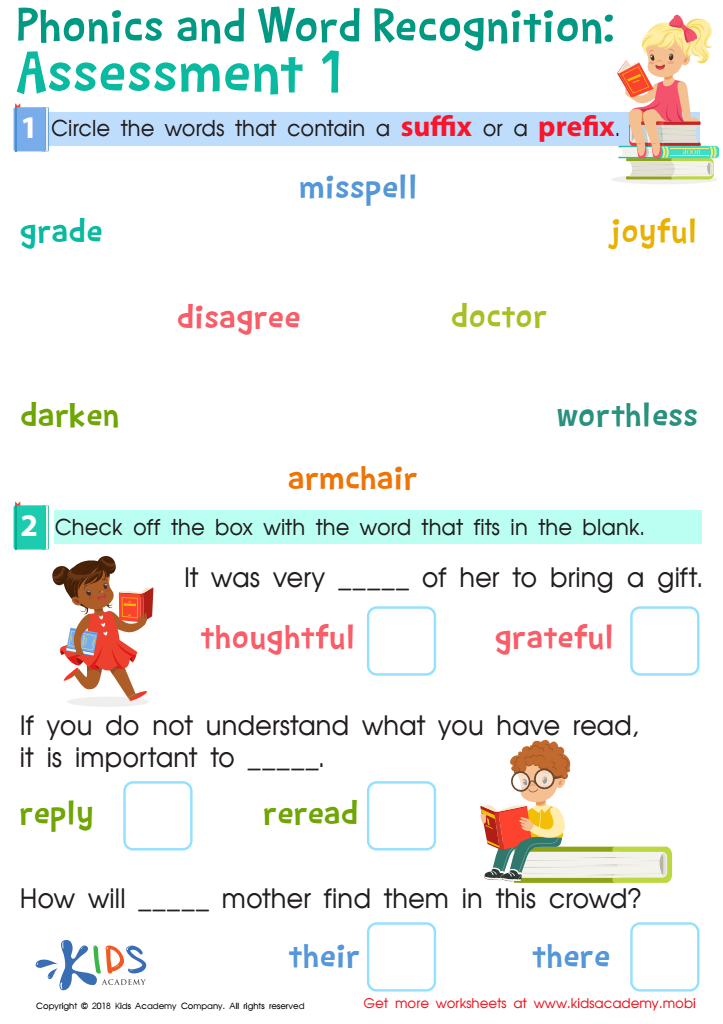
Phonics and Word Recognition: Assessment 1 Worksheet
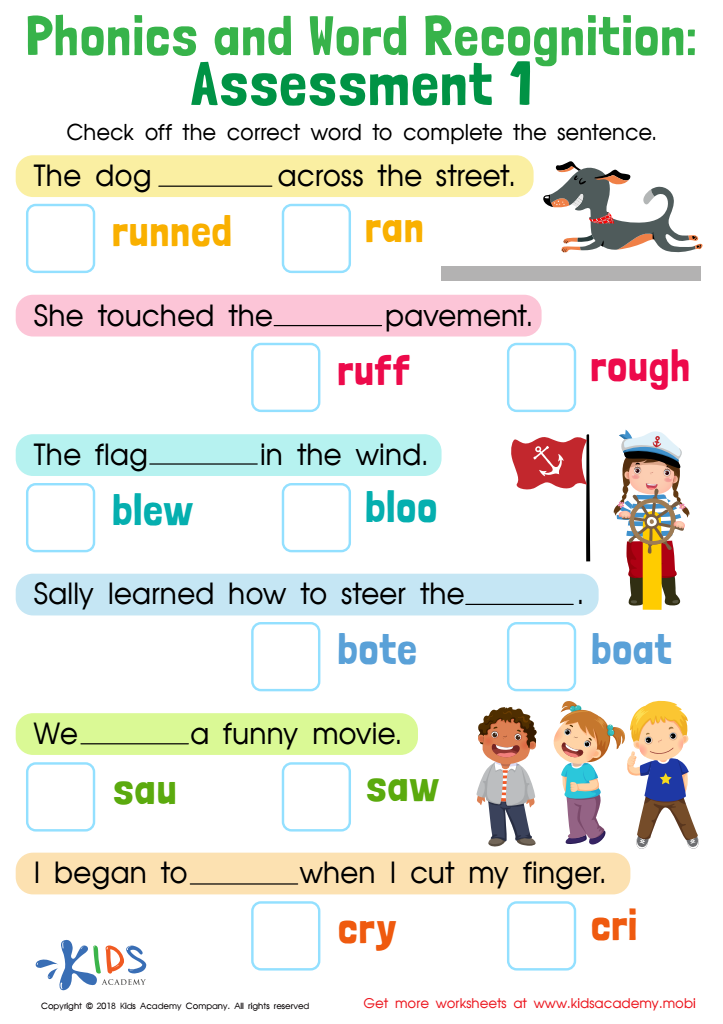
Phonics and Word Recognition: Assessment 1 Worksheet
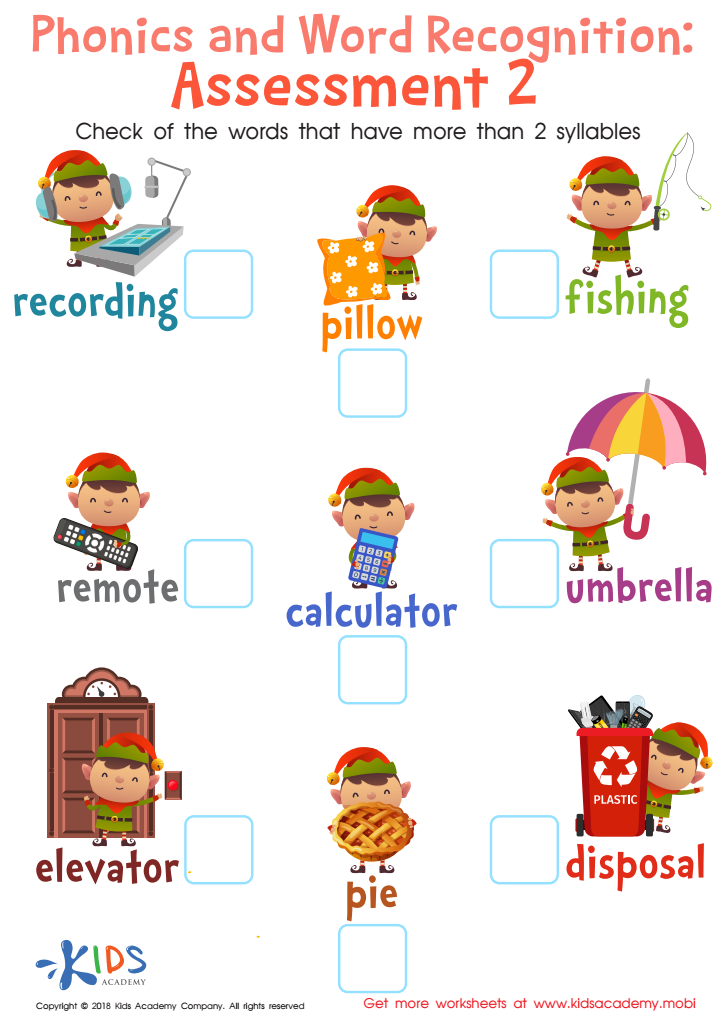
Phonics and Word Recognition: Assessment 2 Worksheet
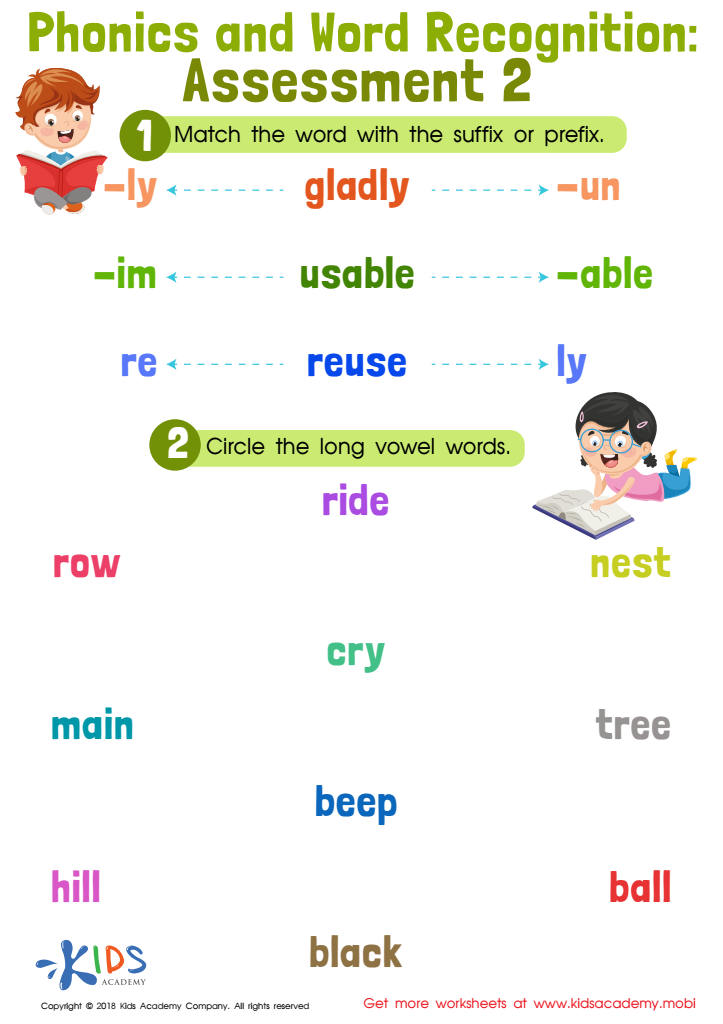
Phonics and Word Recognition: Assessment 2








Phonics recognition and vocabulary development are critical components of early literacy essential for children aged 6-8. At this age, children's brains are highly receptive to learning language, making it the ideal time to build a strong foundation in reading and comprehension. Understanding phonics—where students learn the relationship between sounds and their corresponding letters—enables children to decode new words, enhancing their reading fluency. This skill is vital as it helps children independently figure out unfamiliar words, fostering confidence and the motivation to read.
Building vocabulary concurrently with phonics instruction expands a child's linguistic repertoire, which improves both their reading and writing abilities. A extensive vocabulary assists in better comprehension of texts, allowing students to understand and enjoy stories fully, which in turn nurtures a love for reading. This can have long-term educational benefits, as reading proficiency is closely linked to overall academic success.
For parents and teachers, focusing on phonics and vocabulary equips children with critical tools that lead to effective communication and learning across all subjects. It sets a trajectory for lifelong learning and curiosity, proving to be a significant investment in their future. By prioritizing these elements, educators and families contribute profoundly to children's educational journeys and their ability to navigate the world with understanding and confidence.








