
Story sequencing Building Vocabulary Worksheets for Ages 6-8
5 filtered results
Difficulty Level
Grade
Age
-
From - To
Subject
Activity
Standards
Introduce young learners to the fundamentals of storytelling with our Story Sequencing Building Vocabulary Worksheets for ages 6-8. These engaging activities help children practice putting events in the correct order while expanding their vocabulary. By providing visual and textual clues, these worksheets make it fun and educational to understand story structure. Ideal for classroom or home use, they support critical learning skills like reading comprehension, logical thinking, and writing confidence. Perfectly tailored for early grade students, these worksheets are a dynamic tool to enhance language development and creativity. Make storytelling an exciting adventure with our carefully designed resources!
Favorites
With answer key
Interactive
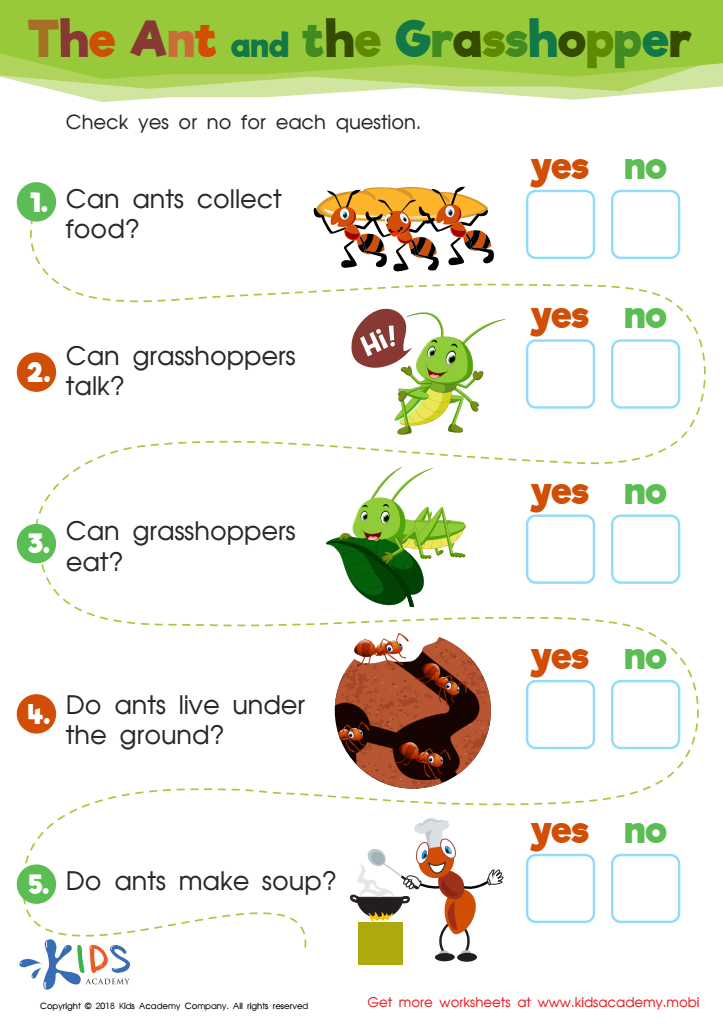
The Ant and The Grasshopper Worksheet
Does your child know about insects? If they're a nature lover or scared of them, use this worksheet to learn more. Read each of the questions and help them fill in the yes or no boxes. This may help them become less scared of insects.
 Assign to My Students
The Ant and The Grasshopper Worksheet
Worksheet











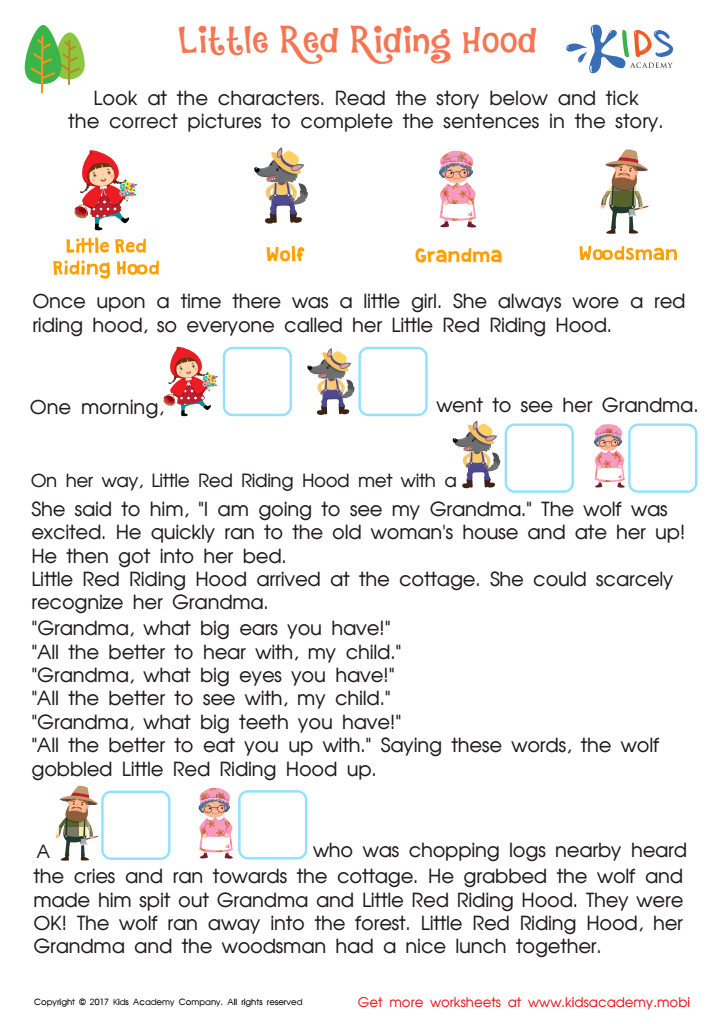
Little Red Riding Hood Printable
Give them this worksheet to practice.
Help your child strengthen their reading skills with this worksheet. It asks them to read Little Red Riding Hood and fill in the missing words using context clues from the text. Encourage your child to look at the surrounding words to determine the answer and get the best results!
Little Red Riding Hood Printable
Worksheet
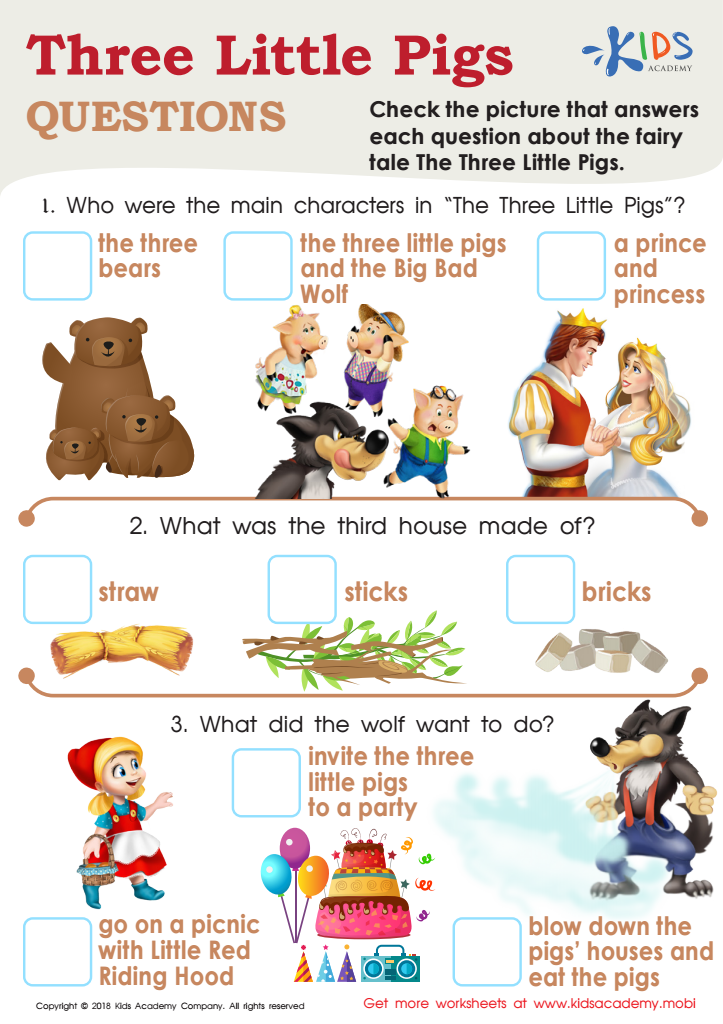
Three Little Pigs Questions Worksheet
Does your kid love bedtime stories? Test their classic fairytale knowledge with this worksheet! If they mention The Three Little Pigs, they're in luck - this pdf has them answering questions based off the classic fairytale. They'll check the picture that answers each question about the story. Is their fairytale knowledge up to scratch?
Three Little Pigs Questions Worksheet
Worksheet
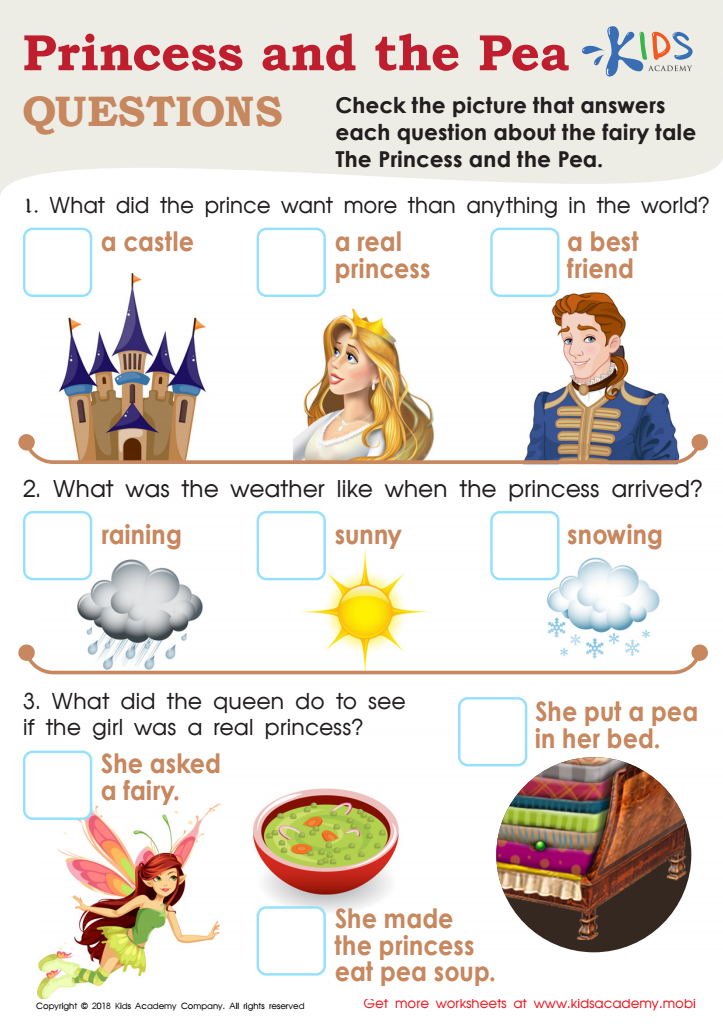
Princess and the Pea Questions Worksheet
Your kid knows The Princess and the Pea inside-out? Test their knowledge with this worksheet. Ask your little one to read the questions and match each one to the picture. It's a fun way to see just how much attention they've paid to their bedtime story.
Princess and the Pea Questions Worksheet
Worksheet
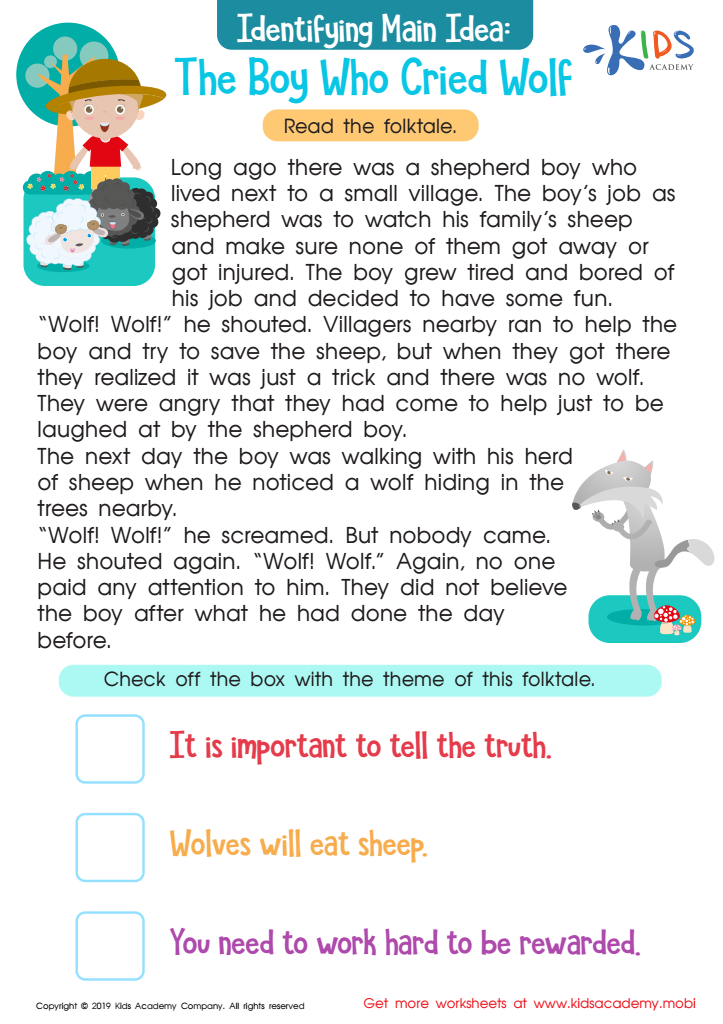
The Boy Who Cried Wolf Part 2 Worksheet
Kids love story time - no doubt they know their favorites! This worksheet tells a story with a theme or main idea. Read it carefully with your kids and ensure they understand every word. Then, help them answer the simple questions at the bottom of the page.
The Boy Who Cried Wolf Part 2 Worksheet
Worksheet
Join Kids Academy for Free
Who is primarily going to use this learning content?







.jpg)
Story sequencing and vocabulary building are essential components of literacy development for children aged 6-8, and both parents and teachers play crucial roles in fostering these skills. At this age, children are honing their ability to understand and narrate stories, which directly impacts their reading comprehension. Sequencing helps children grasp the beginning, middle, and end structure of stories, enhancing their ability to follow and predict narrative flow. This skill is foundational not only for reading but also for understanding events and processes in everyday life.
Building a robust vocabulary is equally important. A rich vocabulary allows children to express themselves more clearly and understand others better. It also enables them to grasp the meanings of text they encounter. When children encounter new words in the context of a story, they can infer meanings and understand nuances, enriching their oral and written communication.
By focusing on story sequencing and vocabulary, parents and teachers equip children with critical thinking, comprehension, and expression tools. These skills lay the groundwork for academic success across all subjects and nurture a lifelong love of reading and learning. Encouraging these practices at home and in the classroom sets children on a path toward robust literacy and cognitive development.








