Verb identification Building Vocabulary Worksheets for Ages 6-8
3 filtered results
-
From - To
Enhance your child’s understanding of verbs with our engaging Verb Identification Building Vocabulary Worksheets designed specifically for ages 6-8. These worksheets provide a fun and interactive way for young learners to identify, classify, and use verbs in sentences. By incorporating colorful visuals and lively exercises, kids will become more confident in their reading and writing skills. Perfect for at-home learning or classroom activities, these resources encourage creativity while reinforcing essential grammar concepts. Watch as your child blossoms into a language pro by exploring the world of verbs and expanding their vocabulary in an enjoyable manner!
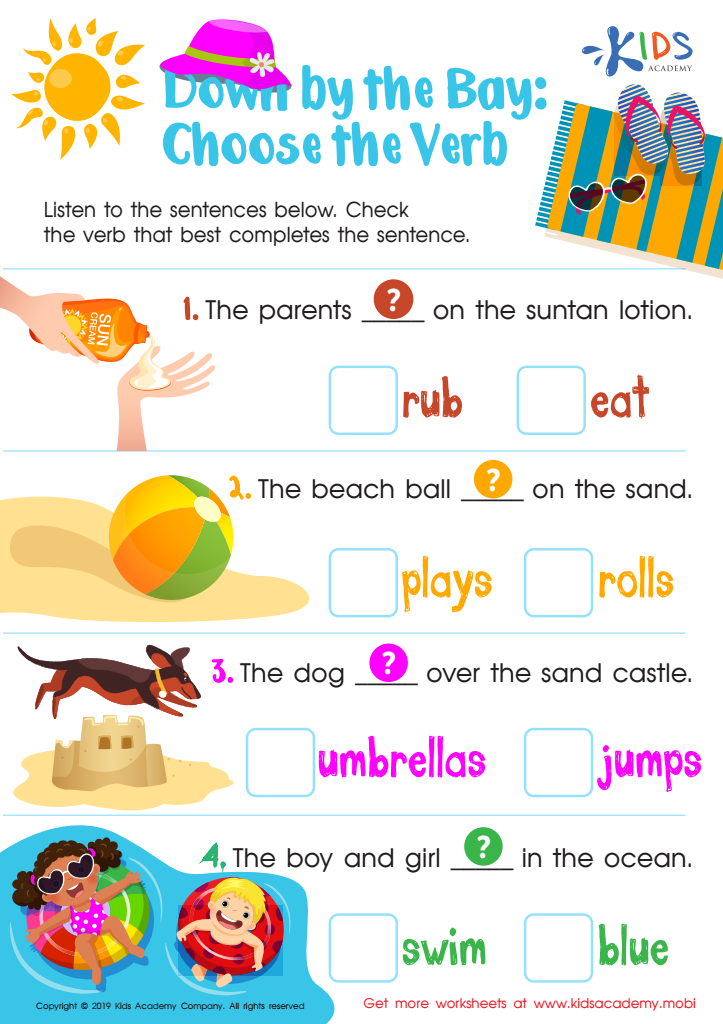
Down by the Bay: Choose the Verb Worksheet
 Assign to My Students











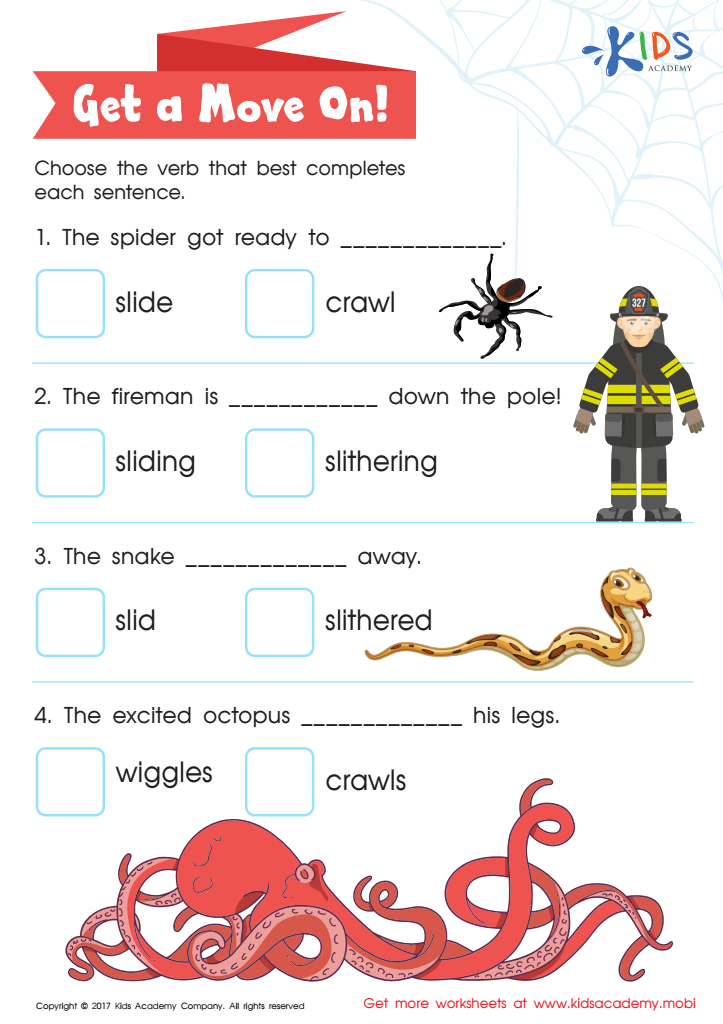
Verb Worksheet
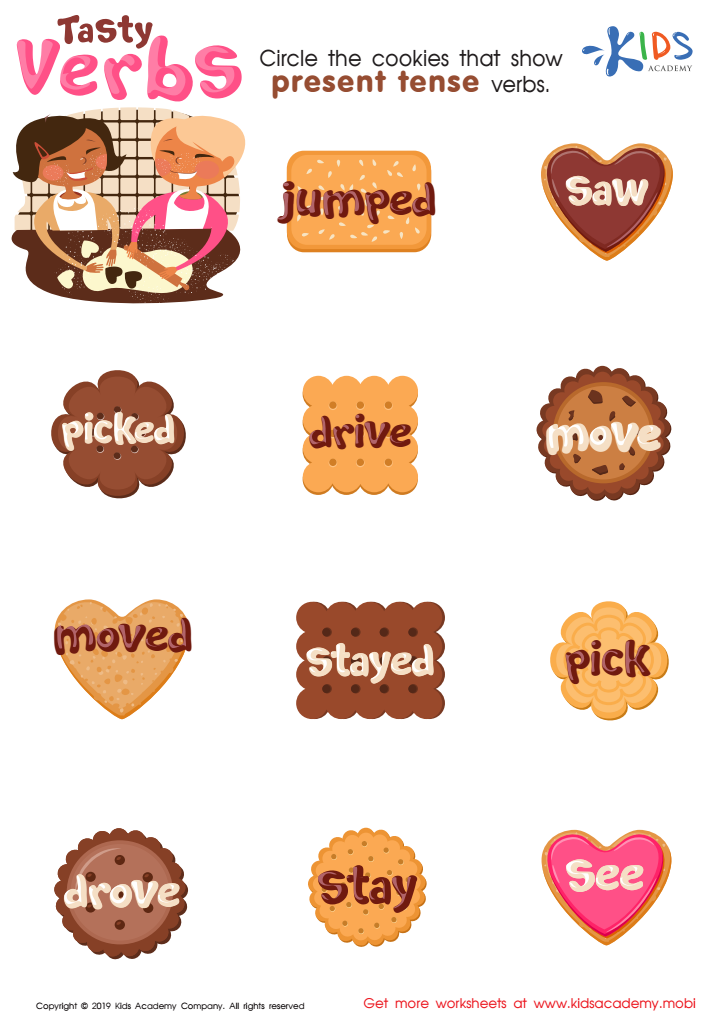
Tasty Verbs Worksheet


.jpg)





Verb identification and vocabulary building are crucial for children aged 6-8, as these skills lay the foundation for effective communication and comprehension. At this developmental stage, children are beginning to express themselves more clearly and understand complex thoughts. Verbs are action words that drive sentences, and knowing them helps children describe their experiences and ideas accurately.
When parents and teachers prioritize verb identification, they empower children to expand their vocabulary. A rich vocabulary enhances reading comprehension, allowing children to grasp the meaning of texts, follow instructions, and participate in discussions confidently. Moreover, strong vocabulary skills foster enthusiasm for learning and literacy, encouraging children to read more and engage with diverse subjects.
Additionally, mastering verbs aids in spelling, grammar, and sentence construction—key components for academic success. As children learn to identify and use diverse verbs, they develop creativity in their writing, enabling them to express their thoughts dynamically.
Ultimately, teaching children about verbs and expanding their vocabulary not only supports their academic journey but also nurtures their communication skills, emotional expression, and critical thinking abilities, laying a strong foundation for lifelong learning and interpersonal connections.








