Visual interpretation Building Vocabulary Worksheets for Ages 6-8
3 filtered results
-
From - To
Enhance your child’s language skills with our "Visual Interpretation Building Vocabulary Worksheets for Ages 6-8". Specially designed by educational experts, these worksheets utilize vibrant images to make vocabulary learning engaging and effective. Children will expand their word knowledge by associating pictures with words, fostering better retention and understanding. Ideal for early learners, our printable worksheets cover a range of topics to keep young minds captivated. Whether at school or home, these resources aim to build a strong vocabulary foundation, improve comprehension, and boost overall reading proficiency. Equip your child with the tools they need to succeed in their language journey!
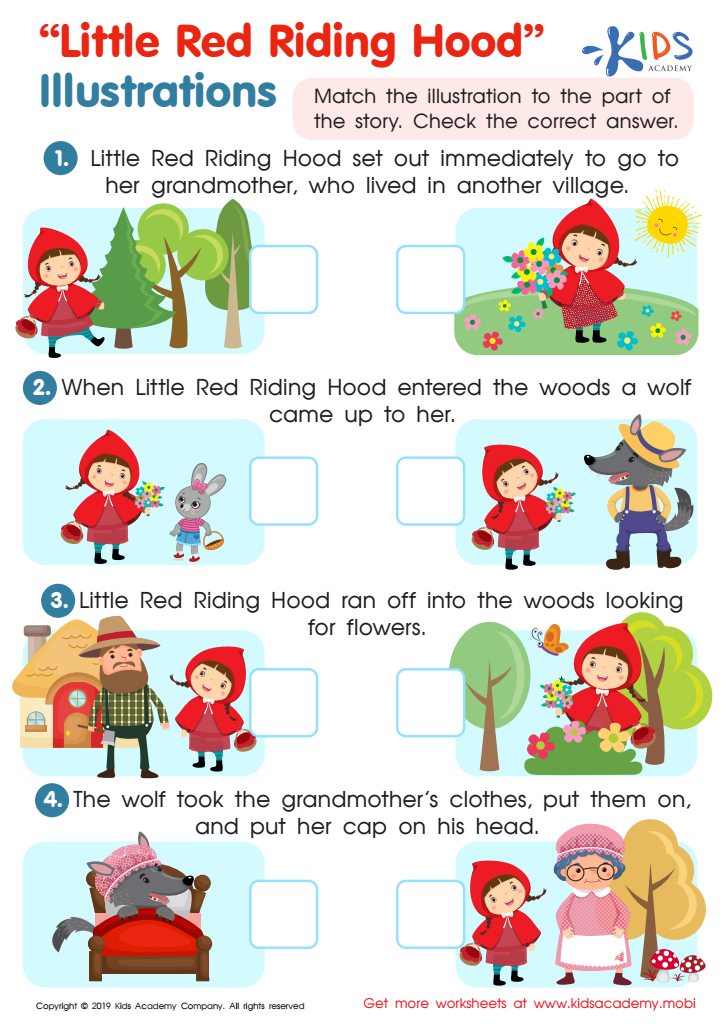
Little Red Riding Hood: Illustrations Worksheet
 Assign to My Students











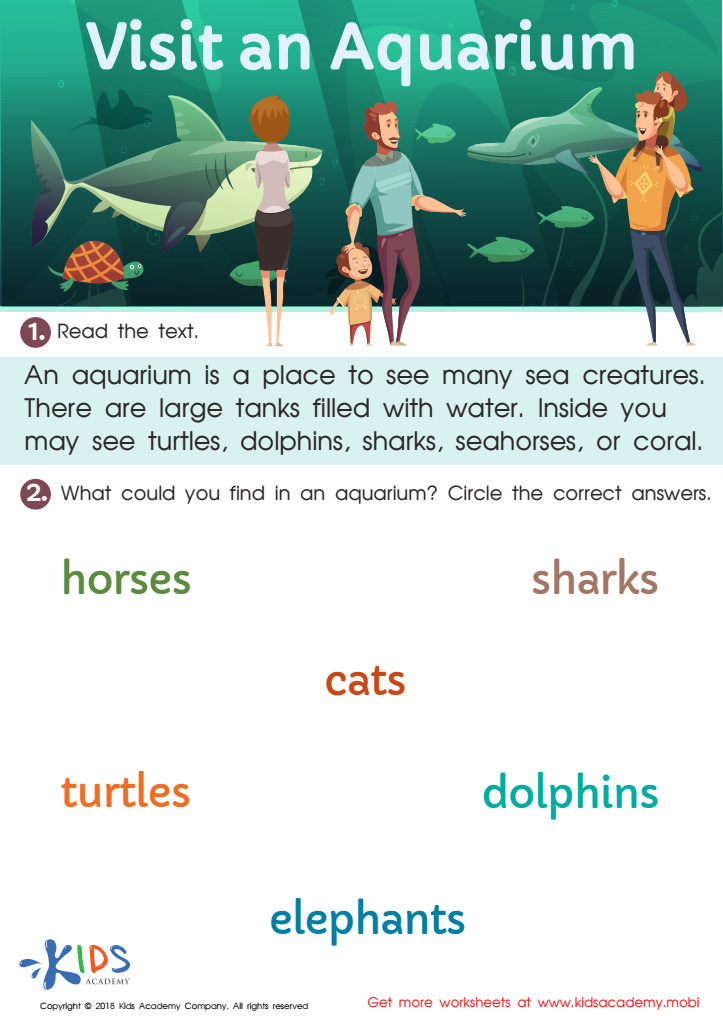
Visit an Aquarium Worksheet
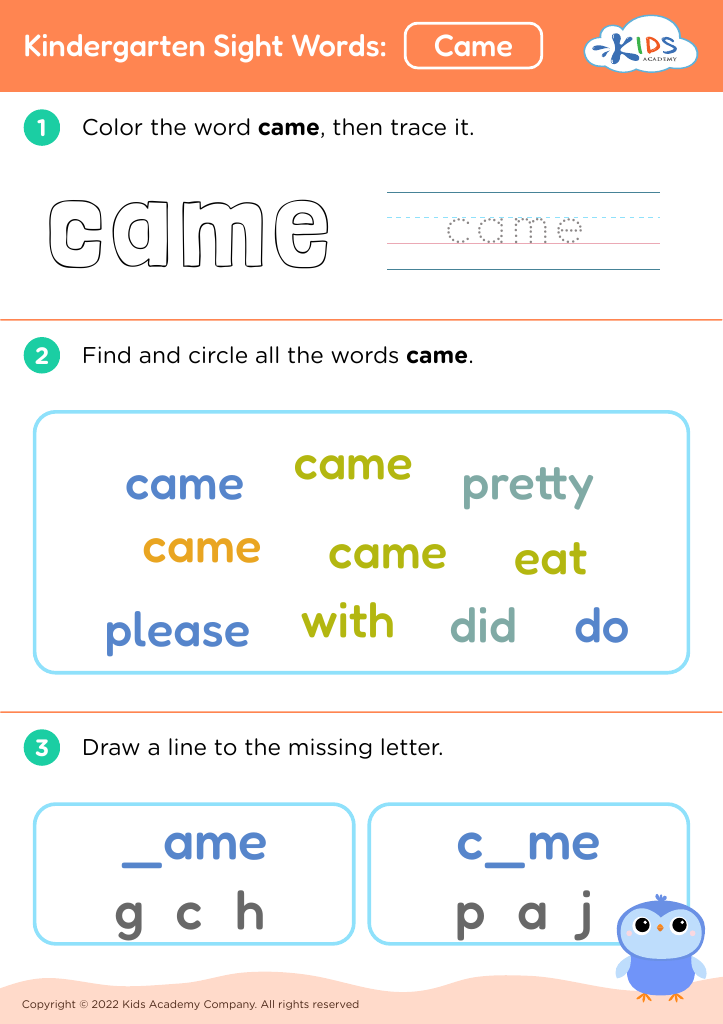








For children ages 6-8, the development of vocabulary and visual interpretation skills is crucial because these foundational abilities support overall academic success and communication skills. Visual interpretation—understanding and making sense of what one sees—enhances comprehension, critical thinking, and retention of information. At this age, kids are often learning to read and write more independently, and encountering graphic organizers, charts, and illustrated texts are common. By cultivating the ability to interpret these visuals, children can better grasp complex concepts and retain information more effectively.
Building a robust vocabulary during these formative years is equally important. A good vocabulary aids in understanding reading material, following instructions, and expressing ideas clearly. When children encounter new words in conjunction with pictures, they can more easily infer meanings and make connections, leading to deeper comprehension.
Furthermore, strong visual and vocabulary skills aid communication and social interactions, as children become more adept at expressing themselves and understanding others. Finally, fostering these skills early on sets a solid foundation for lifelong learning, ensuring that children are well-prepared for the increasingly visual and text-rich world they will interact with. Therefore, parents and teachers should prioritize activities and lessons that enhance both vocabulary and visual interpretation.








