Animal identification Reading Worksheets for Ages 6-8
5 filtered results
-
From - To
Discover exciting Animal Identification Reading Worksheets designed for children aged 6-8! These engaging resources help young learners enhance their reading skills while exploring the fascinating world of animals. Each worksheet includes vibrant illustrations and interactive activities that encourage identification, vocabulary building, and comprehension. Perfect for both classroom use and at-home learning, these worksheets foster curiosity and a love for reading in early learners. Suitable for various learning styles, these materials empower children to connect with nature through fun and educational exercises. Explore our collection today and support your child’s reading journey with the delightful surprises of the animal kingdom!
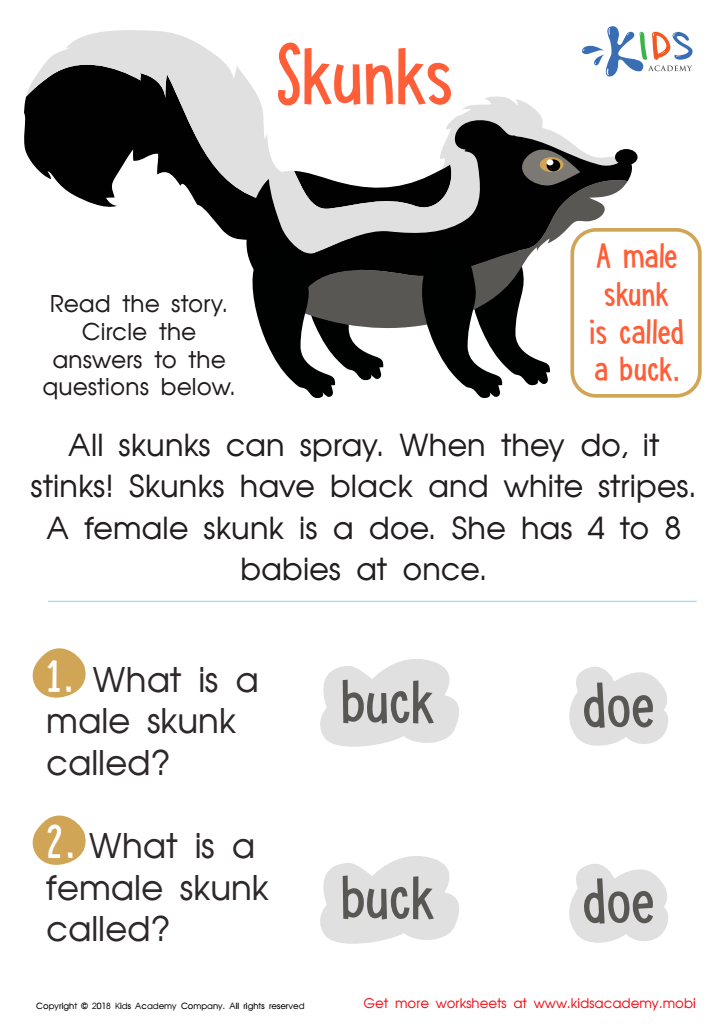
Skunks Worksheet
 Assign to My Students
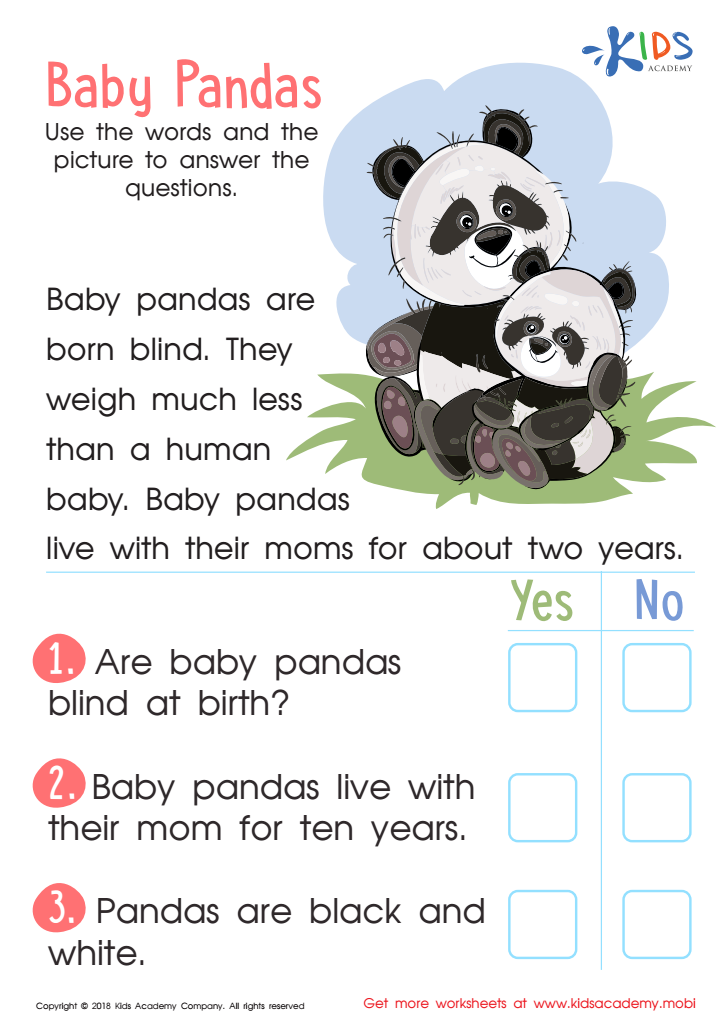
Baby Pandas Worksheet
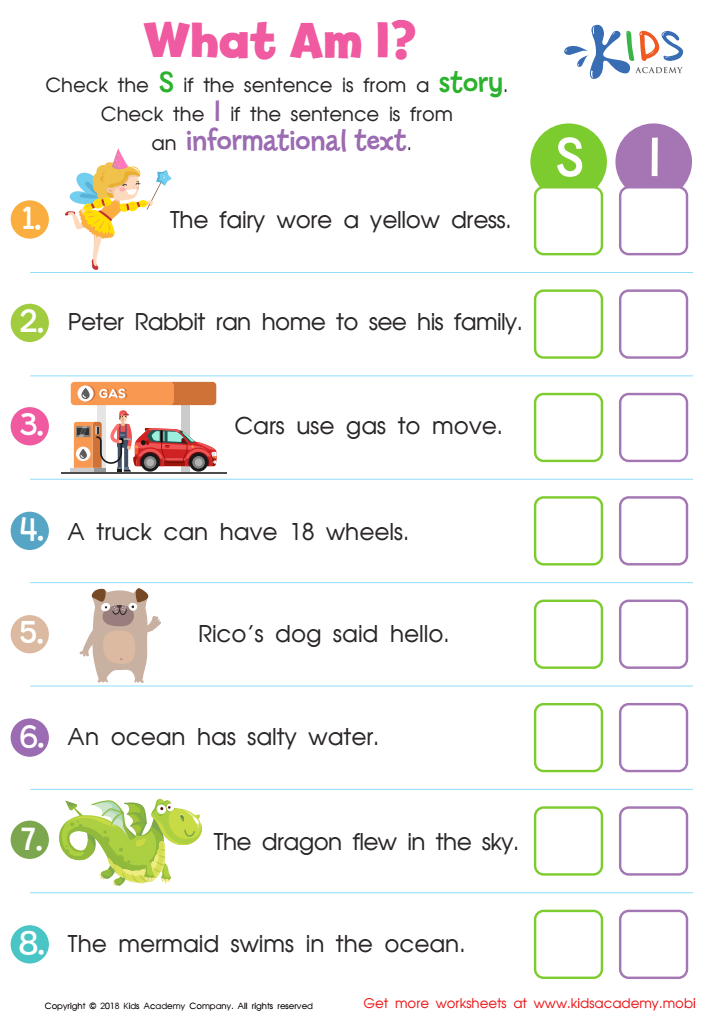
What Am I? Worksheet
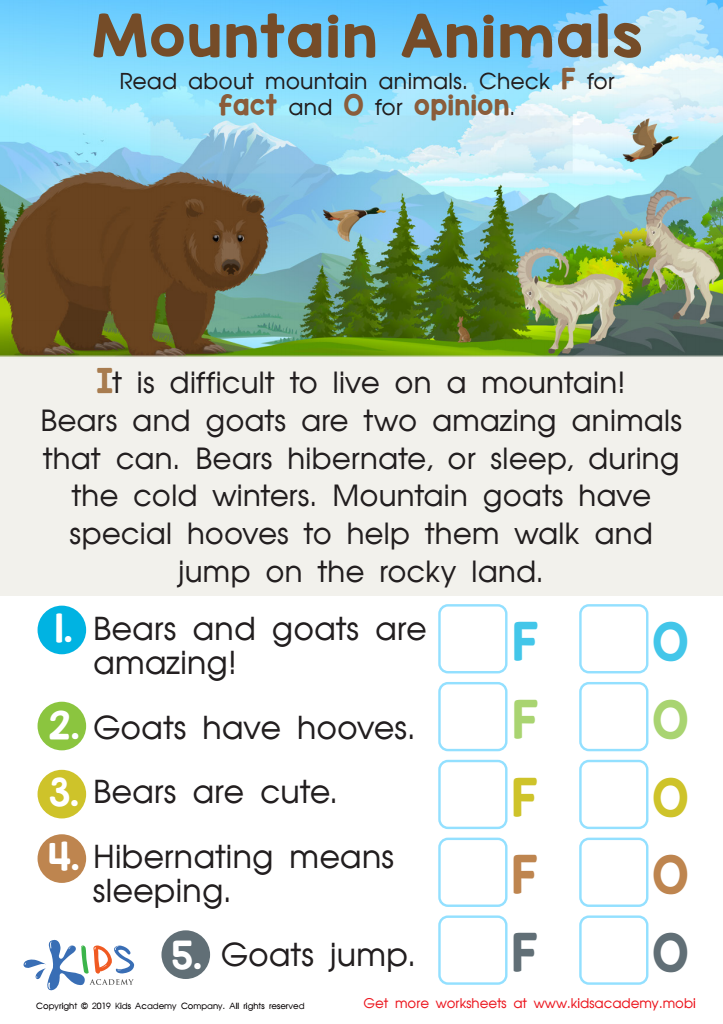
Mountain Animals Worksheet
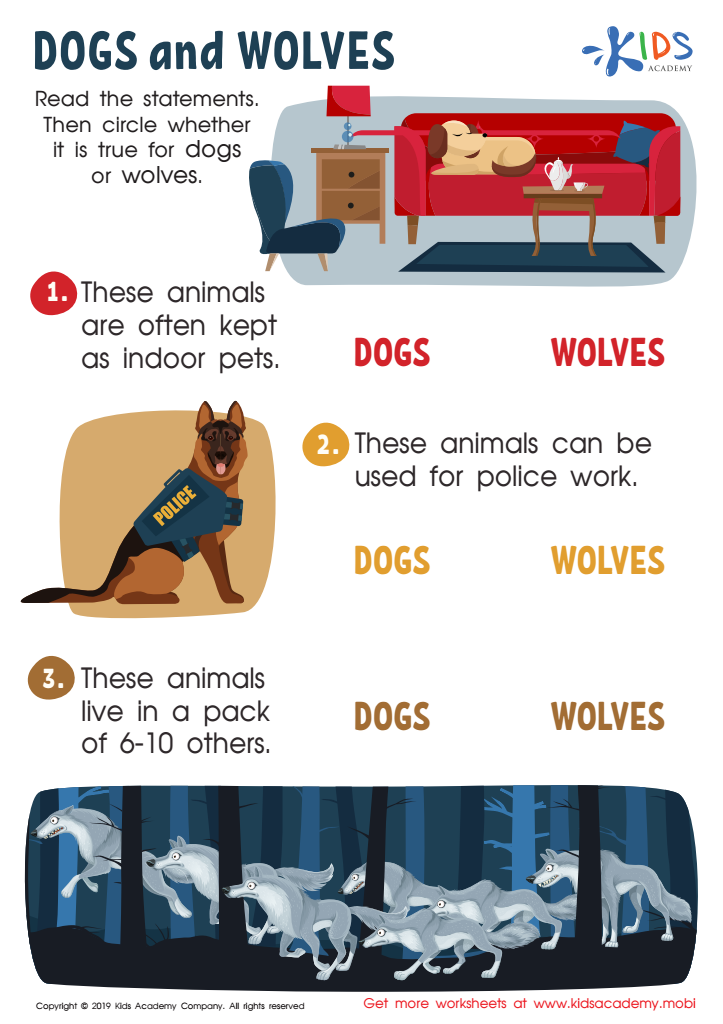
Dogs and Wolves Worksheet







Animal identification reading is essential for children aged 6-8 as it serves as a gateway to deeper understanding of the natural world. During this formative stage, children's curiosity is at its peak, and that curiosity can foster a love for learning and the environment, which is crucial for their overall development.
Parents and teachers should care because animal identification reading enhances vocabulary, comprehension, and critical thinking skills. Children learn to recognize different animals and understand their habitats, behaviors, and roles in the ecosystem, promoting scientific literacy. This foundational knowledge can cultivate empathy and responsibility towards animals and nature, encouraging stewardship from a young age.
Moreover, such reading materials often incorporate engaging visuals and stories that ignite imagination, aiding in retention. Combining learning with fun supports varied learning styles, making it easier for children to absorb information.
Additionally, teachers can use animal identification reading to incorporate interdisciplinary lessons, connecting science, literacy, and art. This cross-curricular approach validates the learning process and motivates children to explore further. By supporting animal identification reading, parents and teachers empower children to become informed, compassionate individuals who respect the world around them.








