
Sound recognition Reading Worksheets for Ages 6-8
5 filtered results
Difficulty Level
Grade
Age
-
From - To
Subject
Activity
Standards
Discover our engaging Sound Recognition Reading Worksheets designed for children ages 6-8. These worksheets help young learners enhance their phonemic awareness, ensuring a strong foundation for reading skills. Each activity is crafted to make learning sounds enjoyable, promoting the connection between letters and their corresponding sounds. As kids practice distinguishing different sounds, they become more confident readers, ready to tackle more challenging texts. Perfect for both classroom use and at-home practice, our worksheets offer a fun and effective way to boost your child’s reading proficiency early on. Explore now and watch their literacy skills flourish!
Favorites
With answer key
Interactive
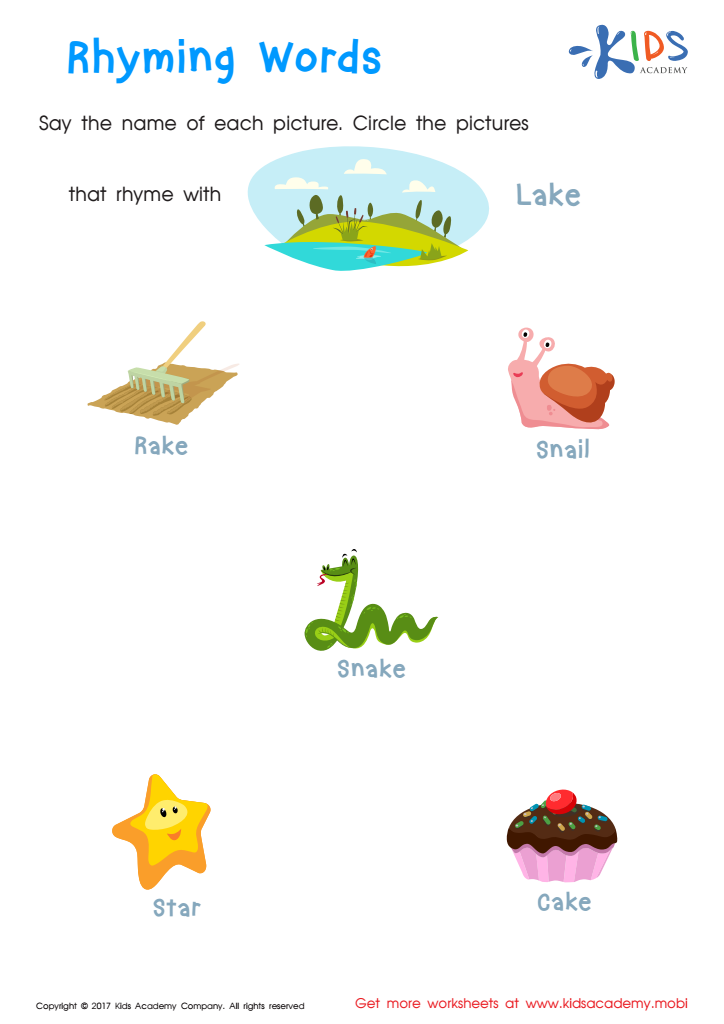
Rhyming Words Rhyming Worksheet
This worksheet is great for honing pre-reading skills. It helps kids make connections between pictures and written words, use problem-solving, and recognize sounds and words that rhyme. Have fun exploring rhyming words with your child, and they'll be rhyming in no time!
Rhyming Words Rhyming Worksheet
Worksheet

Long and Short U Worksheet
Revised: Spice up your lesson on long and short vowels with this fun printout! Kids read the words "tube" and "tub," then reinforce the sound by coloring in the words and pictures. It's a great way to make phonics class enjoyable!
Download (PDF)
 Assign to My Students
Assign to My Students
Long and Short U Worksheet
Worksheet
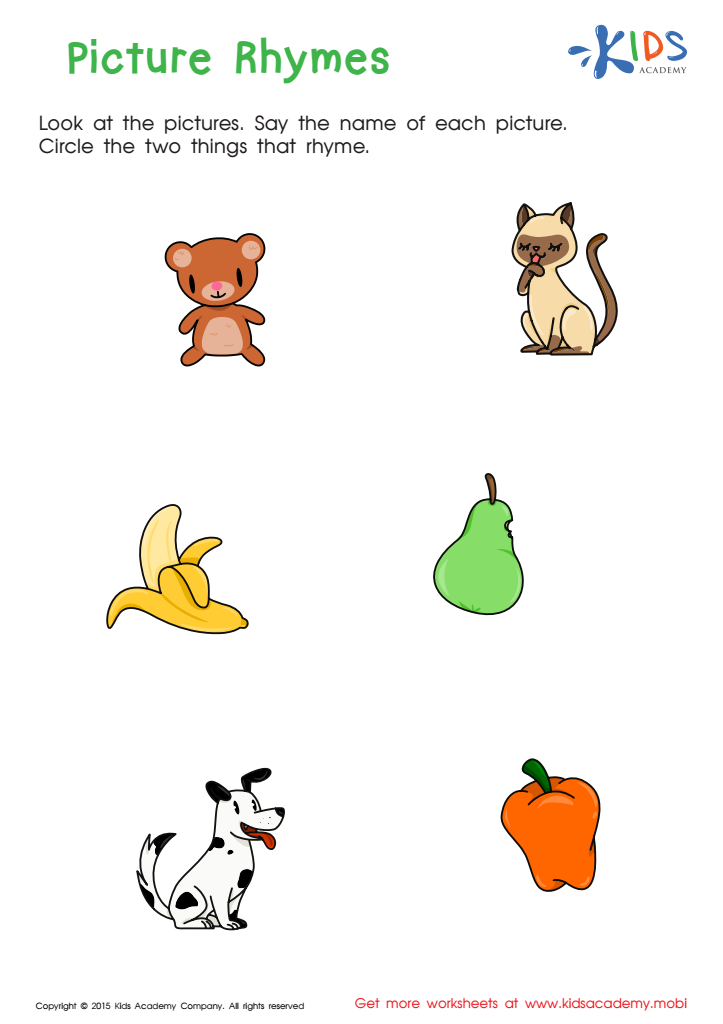
First Words: Picture Rhymes Worksheet
Rhyming helps kids understand language, read and write better. This printable worksheet boosts problem-solving and cognitive skills with vibrant pictures. It teaches kids to identify words, recognize rhymes, complete mental tasks and write words. An extra activity: show them how rhyming words share some of the same letters.
First Words: Picture Rhymes Worksheet
Worksheet
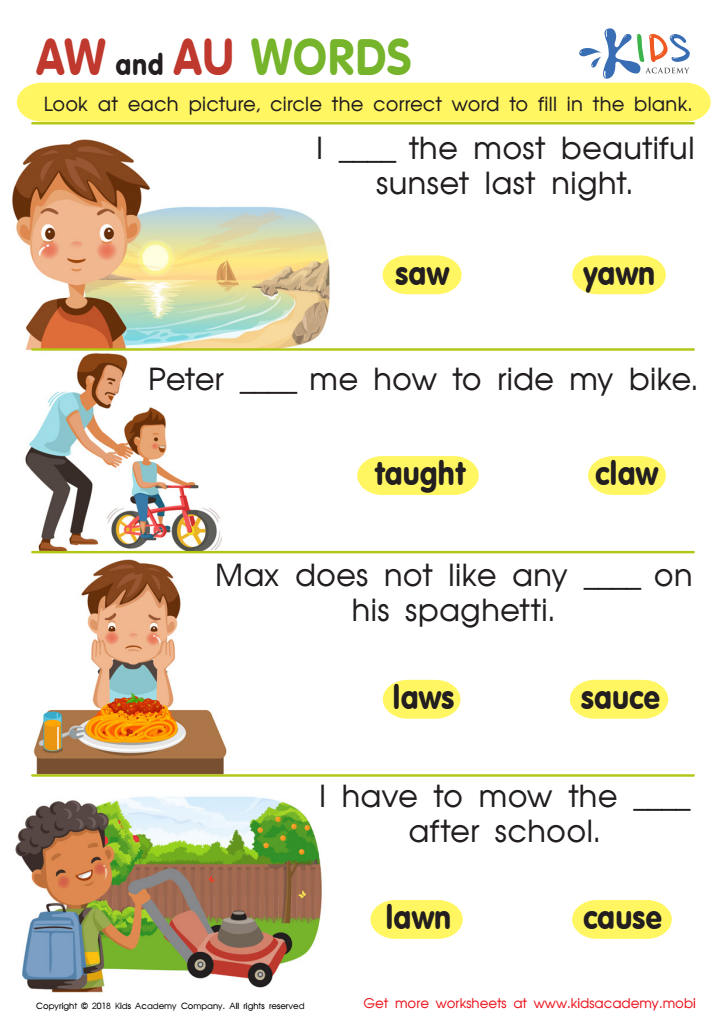
Reading: AW and AU Words Worksheet
This worksheet helps kids recognize that /au/ and /aw/ can make the same sound. Students read sentences and pick the correct word with one of the digraphs. Understanding digraphs improves decoding and reading fluency. Perfect for reading and phonics classes.
Reading: AW and AU Words Worksheet
Worksheet
Join Kids Academy for Free
Who is primarily going to use this learning content?






Sound recognition reading is a foundational skill crucial for children's literacy development, especially for ages 6-8. At this stage, children transition from recognizing individual letters to understanding the relationship between letters and sounds—a key component of phonemic awareness. Developing this skill helps children decode new words, improve reading fluency, and enhances comprehension.
Parents and teachers must prioritize sound recognition because it lays the groundwork for more complex literacy skills. When children can efficiently connect sounds to letters and words, they become more confident and proficient readers. This capability reduces the likelihood of future reading difficulties, which can impact academic performance across all subjects, including math and science, that require reading skills for problem-solving and comprehension.
Furthermore, strong sound recognition skills support vocabulary expansion and better expressive language. This fosters clearer, effective communication and enriches children's ability to express thoughts and ideas, both verbally and in writing. Engaging activities, like phonics games and reading aloud, can make mastering sound recognition enjoyable and impactful.
Ultimately, prioritizing sound recognition reading sets a solid foundation, influencing a child's academic trajectory and lifelong love for reading. This empowers children to explore and understand the world around them, leveraging literacy as a powerful tool for learning and growth.








