
Understanding suffixes Reading Worksheets for Ages 6-8
6 filtered results
Difficulty Level
Grade
Age
-
From - To
Subject
Activity
Standards
Explore our engaging "Understanding Suffixes" reading worksheets tailored for children aged 6-8! These worksheets are designed to enhance young learners’ vocabulary and comprehension skills by introducing them to the concept of suffixes. Through fun activities and exercises, kids will identify and learn how suffixes alter the meanings of root words, making reading more enjoyable and enriching. Each worksheet promotes critical thinking and helps reinforce language concepts in an interactive way, ensuring children become confident readers. Perfect for use at home or in the classroom, our resources will spark a love for language and empower students on their literacy journey!
Favorites
With answer key
Interactive
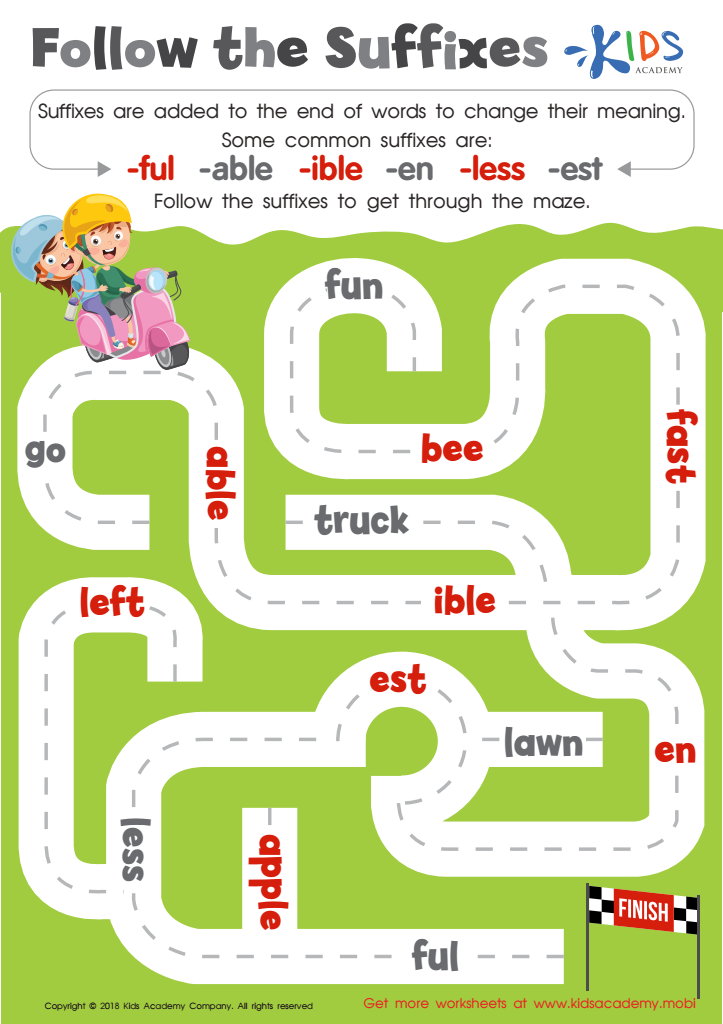
Reading: Follow the Suffixes Worksheet
Students use suffixes to find the right way through a maze in this enjoyable activity! Understanding suffixes helps kids decode and comprehend more words, leading to better reading fluency. A great addition to your reading classes, keep this printable close!
 Assign to My Students
Reading: Follow the Suffixes Worksheet
Worksheet
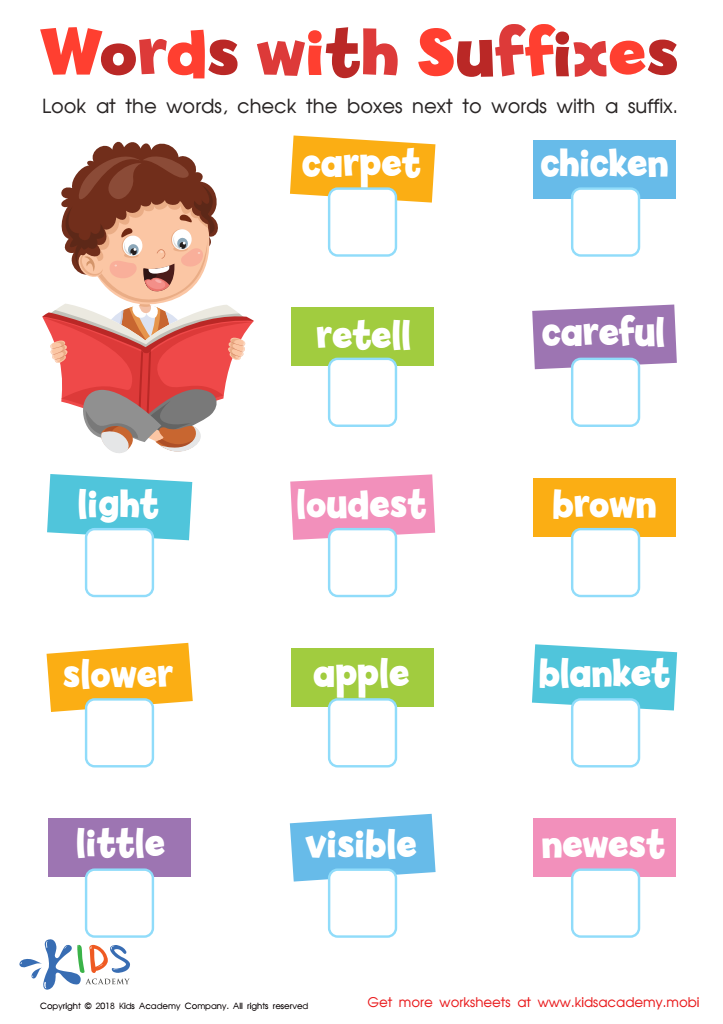
Reading: Words With Suffixes Worksheet
Help your students understand suffixes and build reading fluency with this worksheet. Have them read each word, then choose the ones with a suffix. Practicing this will lead to better comprehension and more confident reading. Save it for future use in language and reading classes.
Reading: Words With Suffixes Worksheet
Worksheet
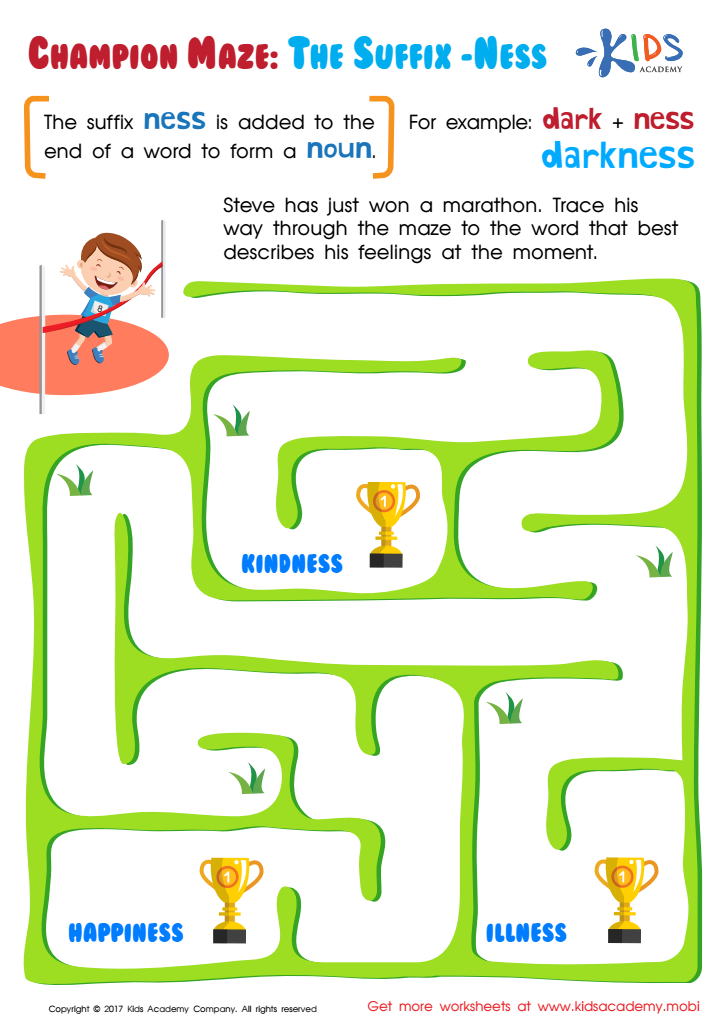
Suffix Ness Worksheet
Words are amazing! Add an ending and they can change part of speech. Make nouns out of adjectives with -ness. This worksheet has a fun maze to help learners increase vocabulary and language skills.
Suffix Ness Worksheet
Worksheet
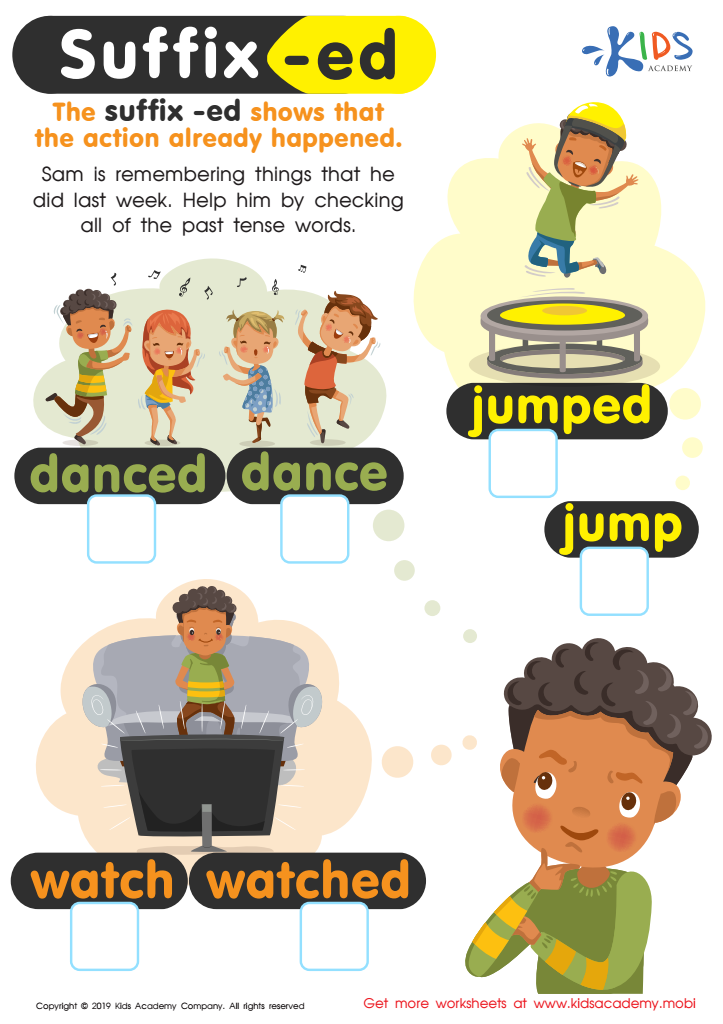
Suffix-ed Worksheet
Ask your kids if they know what suffixes are, and explain they are words added to the end of another word which changes the meaning. This worksheet focuses on the suffix -ed which shows something already happened. Help the kid in the picture find the past tense words.
Suffix-ed Worksheet
Worksheet
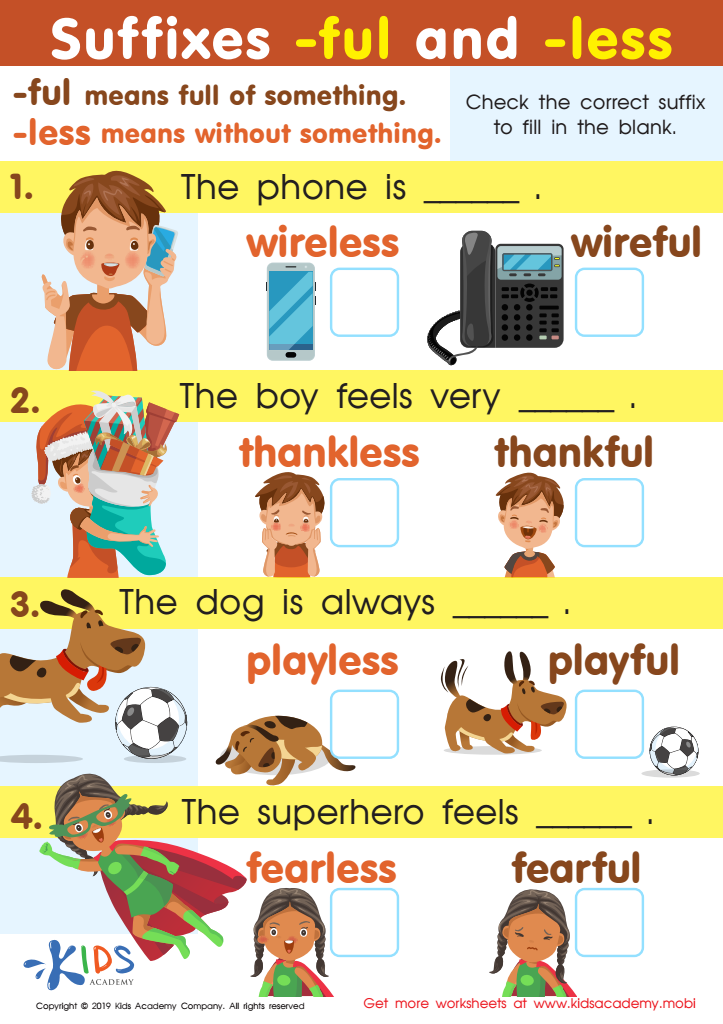
Suffixes –ful and –less Worksheet
Before you start this worksheet, make sure your kids know about suffixes. Explain that they're added to the end of words to change their meaning. In the worksheet, kids will learn about the suffixes –ful and –less. Look at the sentences in the picture with them, and help them to choose the right one for each blank.
Suffixes –ful and –less Worksheet
Worksheet
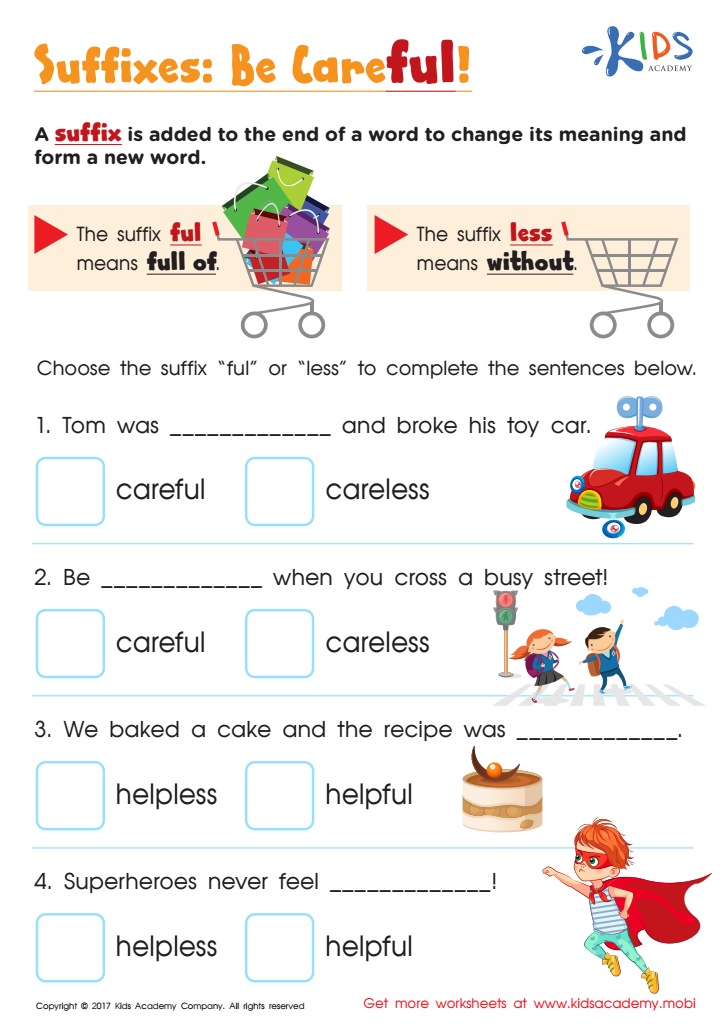
Suffixes Ful and Less Worksheet
Uh oh! Careful and careless might look similar, but have very different meanings. To avoid mix-ups, learn to spot and use the right suffixes. Use this suffixes ful and less worksheet to help your child master common suffixes!
Suffixes Ful and Less Worksheet
Worksheet
Join Kids Academy for Free
Who is primarily going to use this learning content?







Understanding suffixes is crucial for children aged 6-8 as it significantly enhances their reading and language skills. Suffixes are word endings that modify the meaning of a root word, and learning them helps children decode unfamiliar words more effectively. For instance, recognizing that adding “-ing” converts a verb into a noun helps kids understand words like “jump” to “jumping,” enriching their vocabulary and comprehension abilities.
Moreover, familiarity with suffixes aids in the development of spelling skills. As children grasp patterns associated with suffixes, they become more confident in spelling and writing. This foundational understanding also lays the groundwork for grammar knowledge, helping young learners form various parts of speech correctly.
From an educational perspective, proficiency in suffixes contributes to literacy, a primary goal in early education. Parents and teachers who prioritize this aspect of language development foster greater engagement with reading materials. Enhanced vocabulary and comprehension not only improve reading fluency but also boost overall academic performance.
Ultimately, caring about suffixes in young learners paves the way for successful communication skills and a love for reading, empowering students to thrive both in school and beyond. Encouraging this understanding nurtures lifelong learners who appreciate the beauty and complexity of language.








