Rhyme recognition Reading Comprehension Worksheets for Ages 6-8
4 filtered results
-
From - To
Enhance your child's reading skills with our Rhyme Recognition Reading Comprehension Worksheets, specially designed for ages 6-8! These engaging worksheets foster essential literacy skills by helping children identify and create rhymes, boosting their reading comprehension and phonemic awareness. Featuring colorful illustrations and age-appropriate exercises, these resources promote active learning through fun activities that encourage critical thinking and creativity. Perfect for classroom use or at-home practice, our worksheets make learning enjoyable and effective. Empower your young readers to recognize patterns in language and improve their overall reading fluency while they explore the magical world of rhymes. Start their reading adventure today!
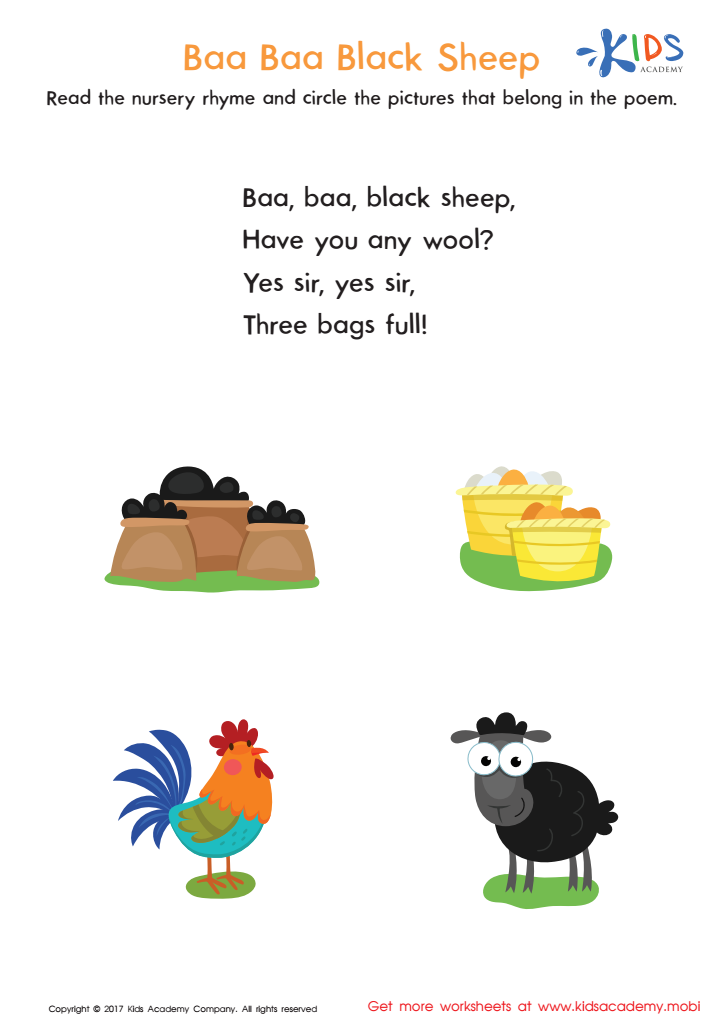
Baa Baa Black Sheep Printable
 Assign to My Students
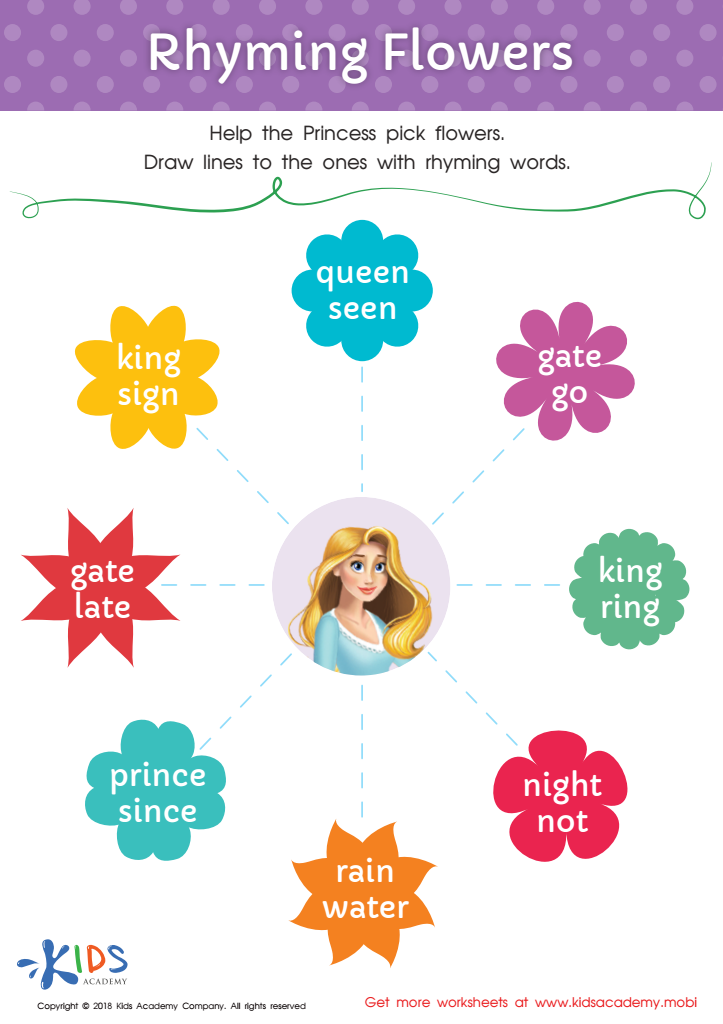
Rhyming Flowers Worksheet
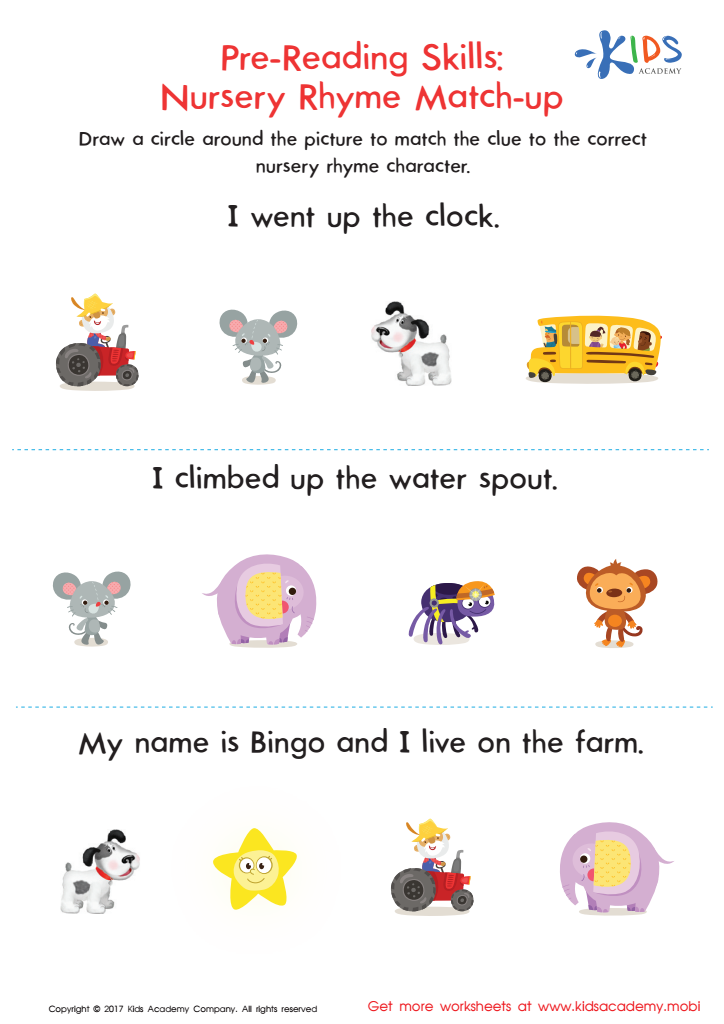
Nursery Rhyme Match–Up Worksheet
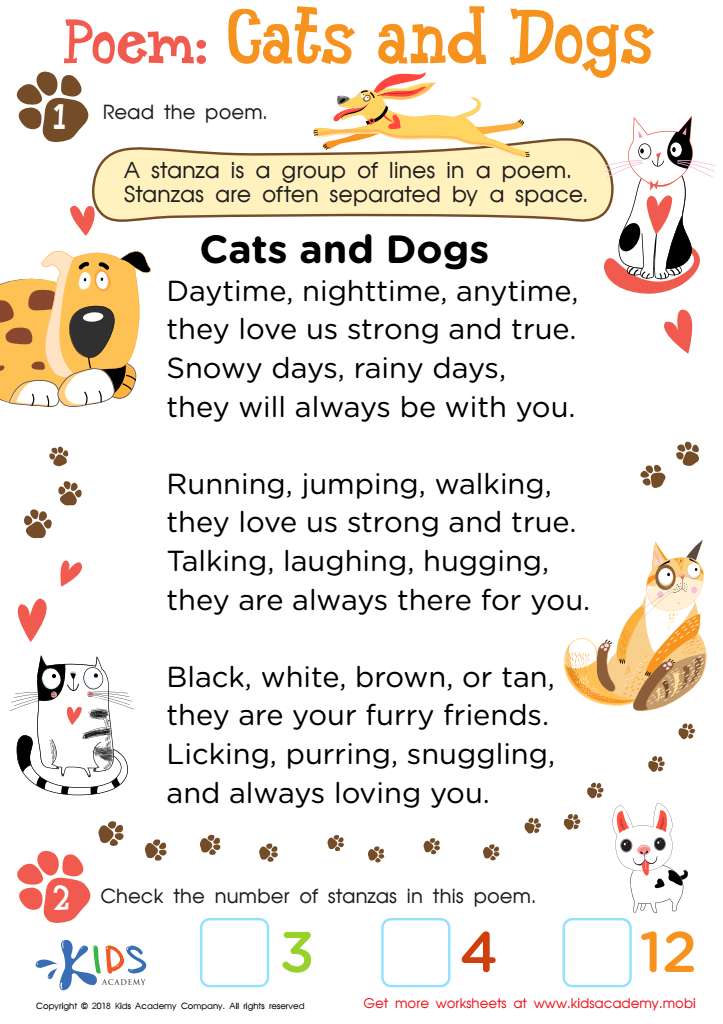
Poem: Cats and Dogs Worksheet







Rhyme recognition plays a crucial role in the development of reading comprehension for children aged 6 to 8. During these formative years, children begin to develop foundational literacy skills that significantly impact their overall reading proficiency. Recognizing and understanding rhymes helps kids identify patterns in language, promoting phonemic awareness—the ability to hear, identify, and manipulate sounds in words.
When children engage with rhymes, they become more attuned to the rhythm and structure of language, which aids in decoding and pronunciation. This enhanced sound awareness translates into improved reading fluency and vocabulary acquisition. Moreover, reading comprehension is not merely about decoding words; it's about making connections and deriving meaning, which rhyme-rich texts facilitate by presenting familiar sounds and structures.
Additionally, rhyming texts often contain playful language and repetitive patterns, making reading more enjoyable and engaging for young learners. This joy of reading fosters a love for books, encouraging deeper exploration of stories and themes. Encouraging rhyme recognition through songs, poetry, and playful reading activities empowers children not only to become better readers but also to enhance their cognitive and social skills, ultimately laying the groundwork for lifelong literacy and learning success.








