Story analysis Reading Comprehension Worksheets for Ages 6-8
5 filtered results
-
From - To
Unlock the world of storytelling with our engaging Story Analysis Reading Comprehension Worksheets, designed specifically for children aged 6 to 8. These thoughtfully crafted worksheets help enhance vital reading skills, including understanding plot, identifying characters, and grasping themes. Through interactive exercises and fun activities, young readers will develop critical thinking abilities while enjoying captivating stories. Our resources encourage creativity and deeper connections to text, fostering a lifelong love for reading. Perfect for classroom or home use, these worksheets empower children to analyze stories, improve comprehension, and build confidence as readers. Explore the joys of story analysis with Kids Academy today!
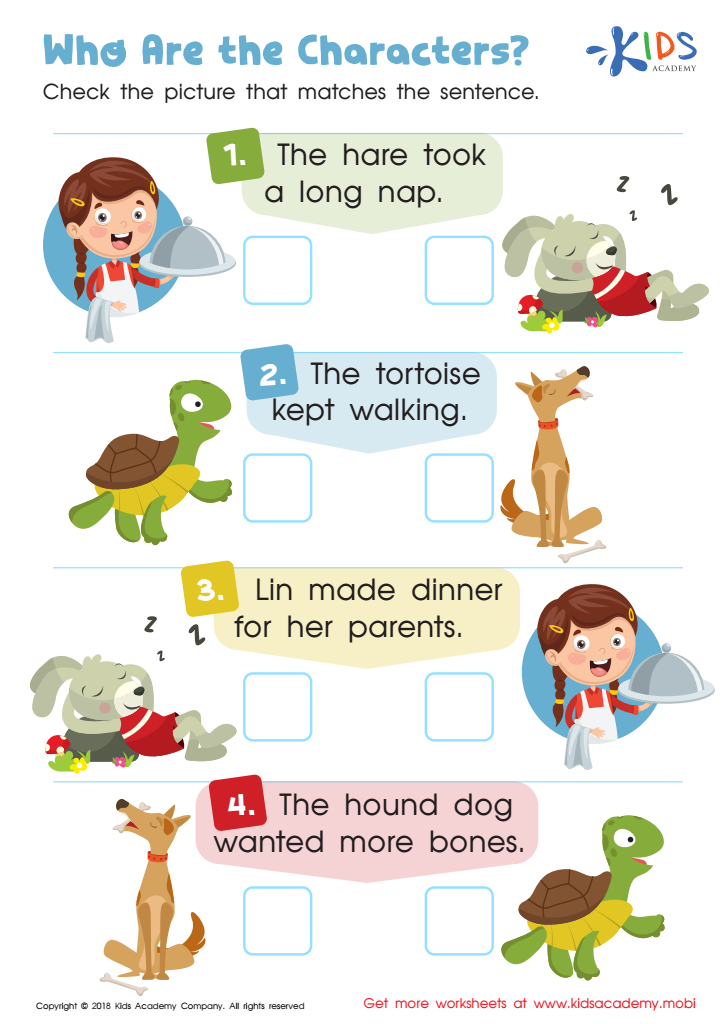
Who Are The Characters Worksheet
 Assign to My Students
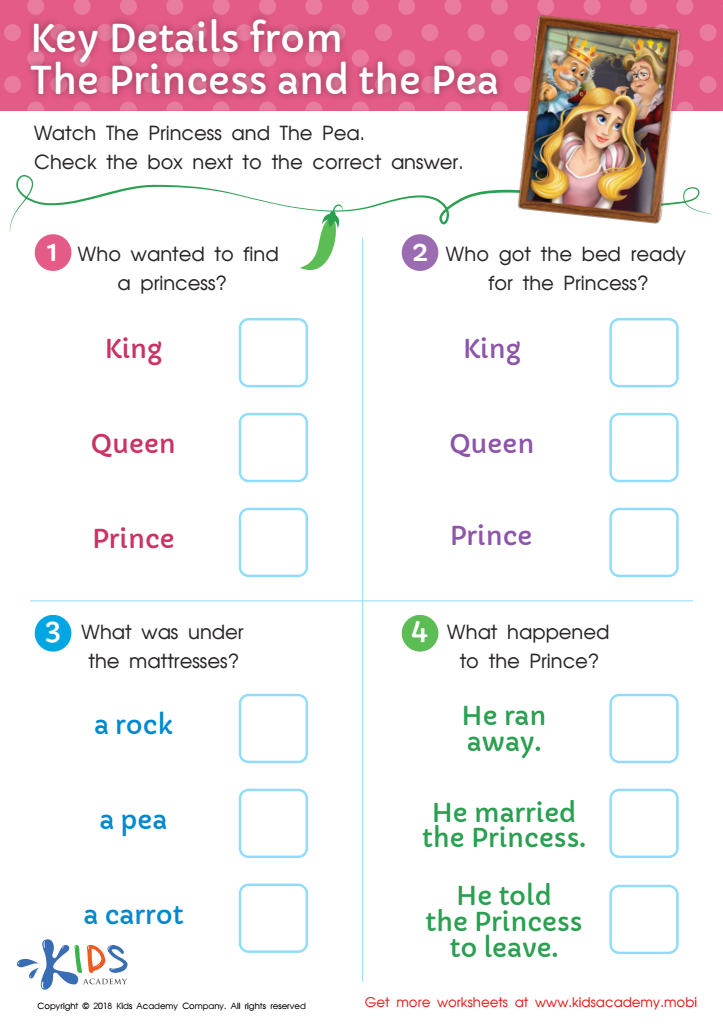
Key Details from the Princess and the Pea Worksheet
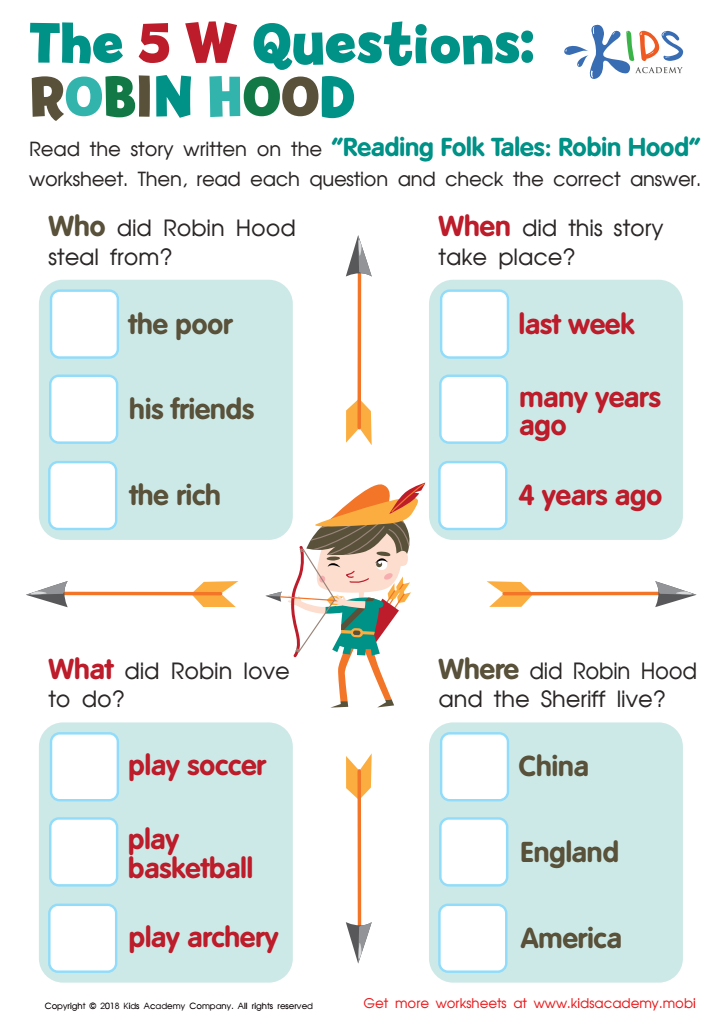
The 5 W Questions: Robin Hood Worksheet
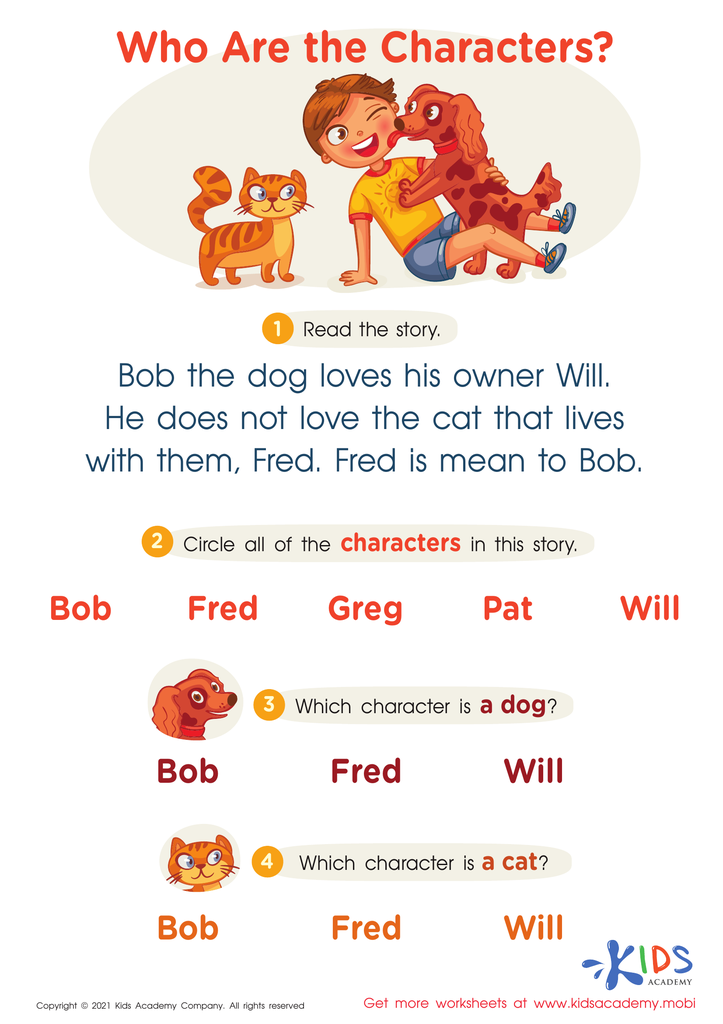
Who Are the Characters? Worksheet
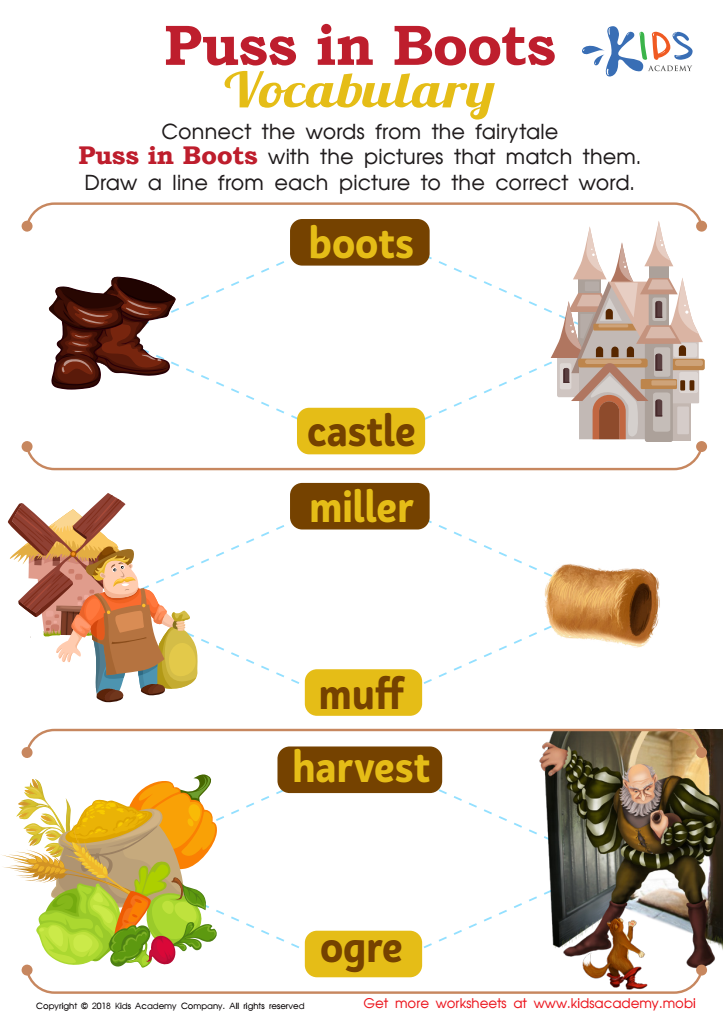
Puss in Boots Vocabulary Worksheet








Story analysis in reading comprehension is vital for children ages 6-8 as it lays the foundation for critical thinking and cognitive development. During this age, children transition from learning to read to reading to learn; thus, understanding stories deeply enhances their overall literacy skills. By engaging in story analysis, children learn to identify key elements such as characters, settings, plot, and themes, which nurtures their ability to comprehend not just the surface but the deeper meanings within texts.
Parents and teachers should recognize that strong comprehension skills positively impact children’s academic performance across subjects. It fosters their ability to make inferences, draw conclusions, and connect information to their own lives. Additionally, story analysis nurtures creativity and imagination, encouraging conversations about different perspectives and emotions.
Furthermore, interacting with stories enhances vocabulary acquisition and language skills, as children encounter new words within context. Integrating story analysis in everyday learning promotes enjoyment of reading as a lifelong habit, setting the stage for future academic success. Ultimately, prioritizing this aspect of literacy education empowers young learners to become thoughtful, articulate communicators and cultivates a genuine appreciation for literature.








