Understanding perspectives Reading Comprehension Worksheets for Ages 6-8
3 filtered results
-
From - To
Enhance your child's reading skills with our "Understanding Perspectives Reading Comprehension Worksheets" designed for ages 6-8. These engaging worksheets help young readers grasp different viewpoints within stories, fostering empathy and critical thinking. Through fun and relatable exercises, children learn to identify characters' perspectives, motivations, and feelings, improving their overall comprehension. Perfect for parents and teachers alike, these worksheets are an excellent resource for developing a deeper understanding of literature and enhancing cognitive skills. Make reading an exciting adventure with our thoughtfully crafted, printable worksheets.
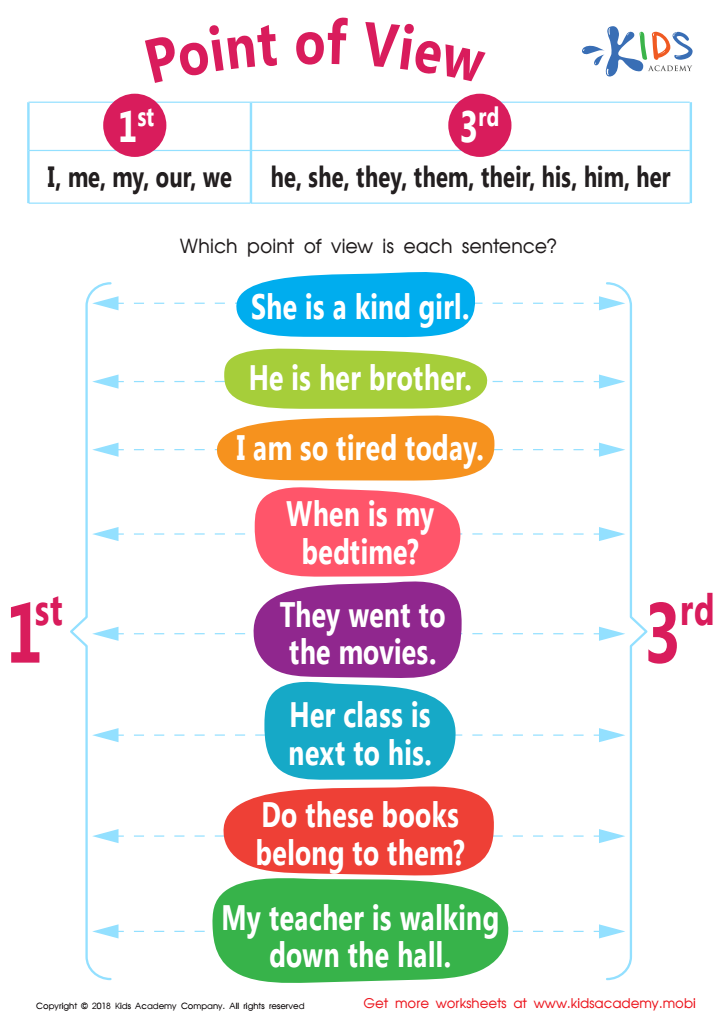
Point of View Worksheet
 Assign to My Students
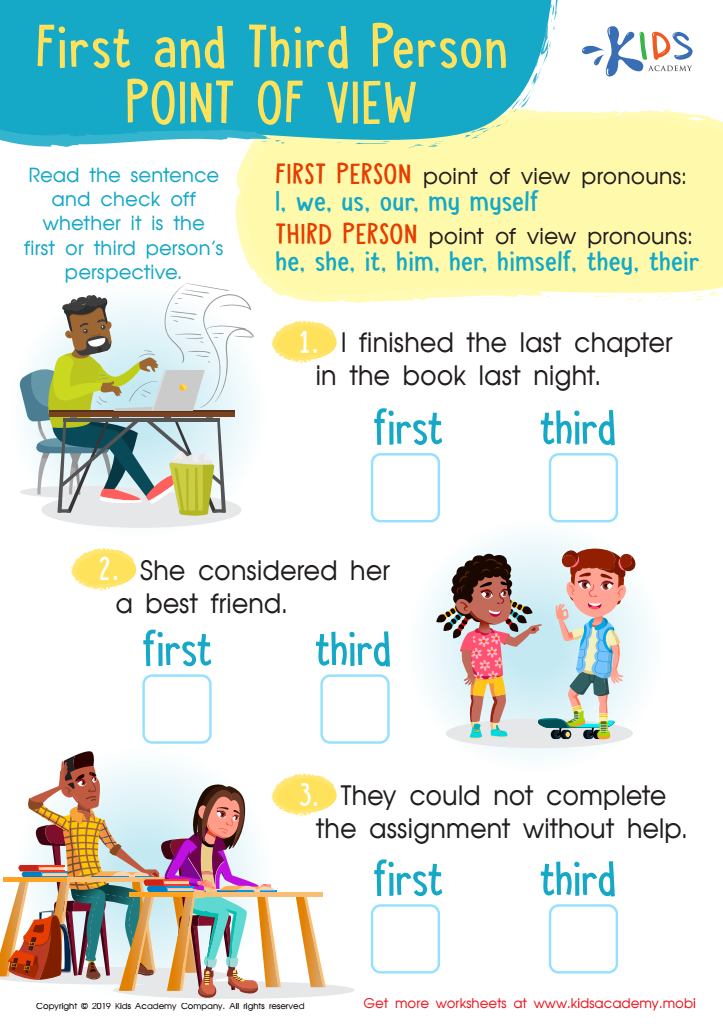
First and Third Person Point of View Worksheet
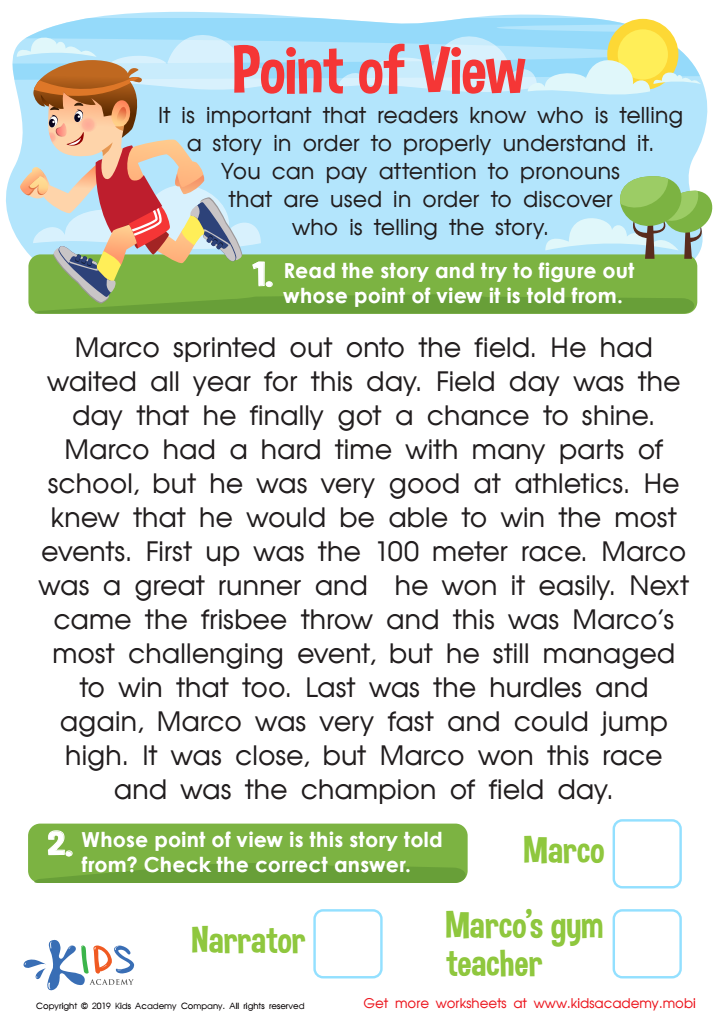
Point of View Worksheet








Understanding perspectives in reading comprehension is crucial for children ages 6-8 as it forms the foundation for both social and academic development. At this age, children are stepping into more complex social relationships and experiencing greater engagement with diverse reading materials. Here are key reasons why parents and teachers should care about this skill:
Firstly, comprehending differing perspectives aids in developing empathy. When children understand characters' motivations, feelings, and viewpoints in stories, they learn to relate to others in real life. This ability fosters kindness and emotional intelligence, integral to their interpersonal interactions.
Secondly, understanding perspectives enhances critical thinking. As children explore various angles of a story, they learn to compare, contrast, and infer meanings beyond explicit text. This kind of analytical thinking is the bedrock of advanced academic skills they will need in higher grades.
Lastly, fostering perspective-taking improves communication skills. Children become adept at understanding and articulating their ideas while considering others' viewpoints. This ability benefits not just their academic discussions but also their everyday conversations with peers and adults.
In summary, cultivating this skill early aligns with core academic standards and shapes a child’s social growth. It encourages a well-rounded development where emotion, empathy, and intellect combine, which are essential attributes for personal and educational success.








