
Understanding Sequences Reading Comprehension Worksheets for Ages 6-8
3 filtered results
Difficulty Level
Grade
Age
-
From - To
Subject
Activity
Standards
Discover the engaging "Understanding Sequences Reading Comprehension Worksheets" tailored for children aged 6-8. These worksheets help young learners develop critical reading skills by focusing on sequencing, a key component in reading comprehension. Each activity is designed to enhance children's ability to identify the order of events in stories, boosting their understanding and retention. With age-appropriate illustrations and story prompts, students will find learning both fun and informative. Perfect for classroom or at-home practice, these worksheets cultivate essential comprehension skills that lay the foundation for more advanced reading abilities. Explore the delightful world of sequences and watch your child's skills grow!
Favorites
With answer key
Interactive
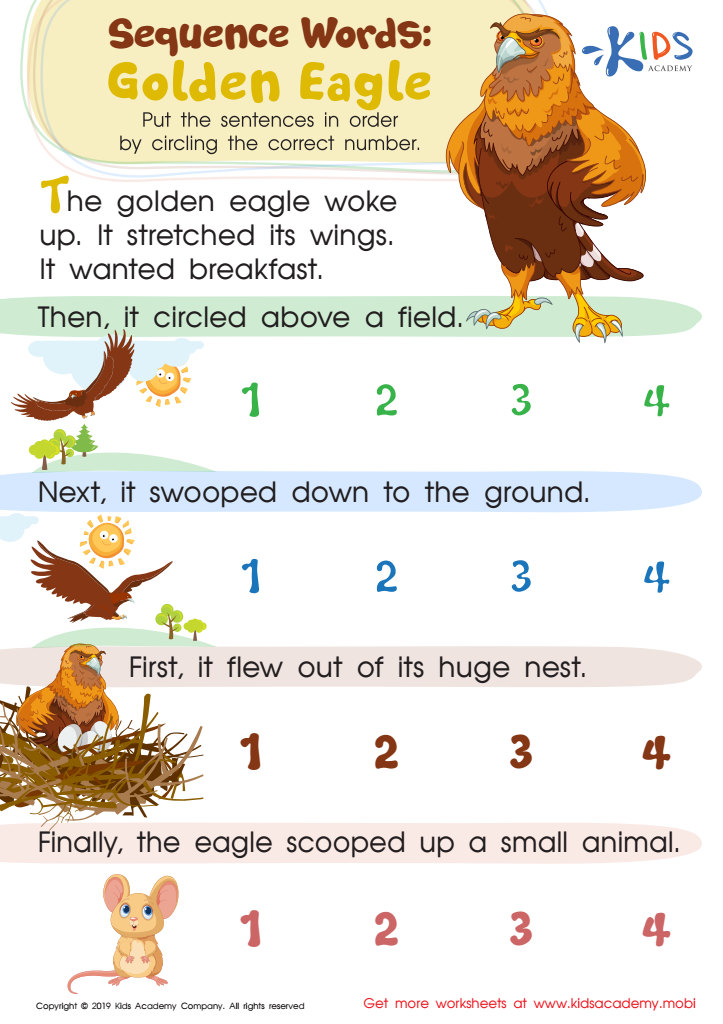
Sequence Word Eagle Worksheet
Help your child brush up on reading and writing with this fun worksheet. Read the story of the golden eagle's day, then have the child circle the numbers in the right order. Point out the sequence words that tell the order of events. This helps learners understand how to make their writing clear and understandable to others.
 Assign to My Students
Sequence Word Eagle Worksheet
Worksheet
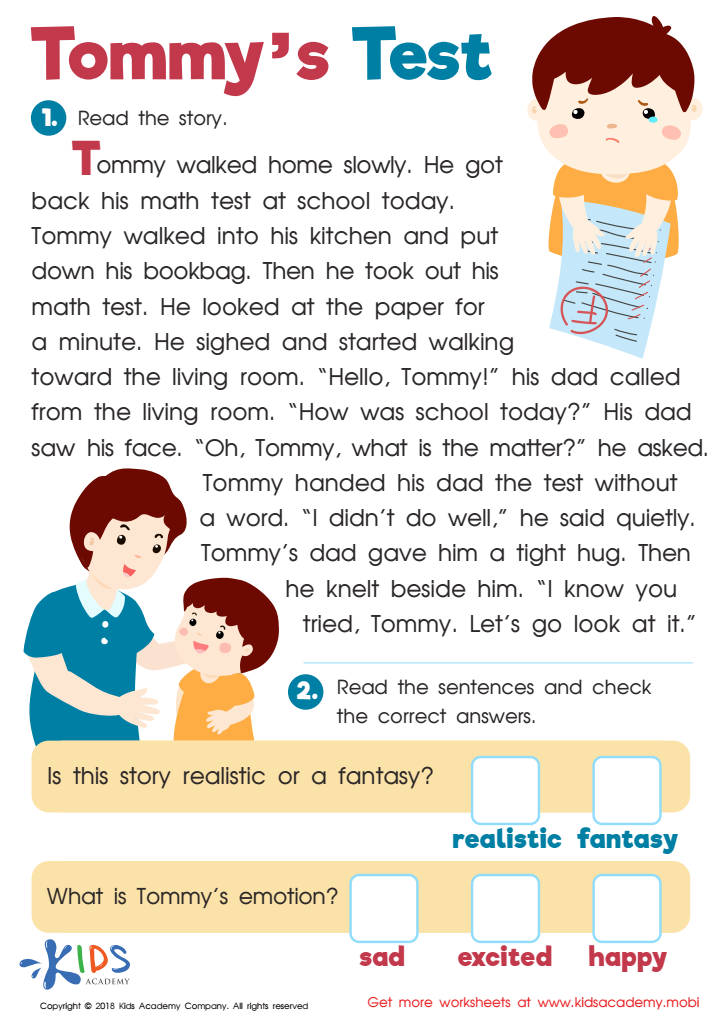
Tommys Test Worksheet
Reading short stories to your students builds a bond, teaches new words and lessons. Read the story aloud and then have them listen for details. Ask them the questions at the bottom and help them check the answers.
Tommys Test Worksheet
Worksheet
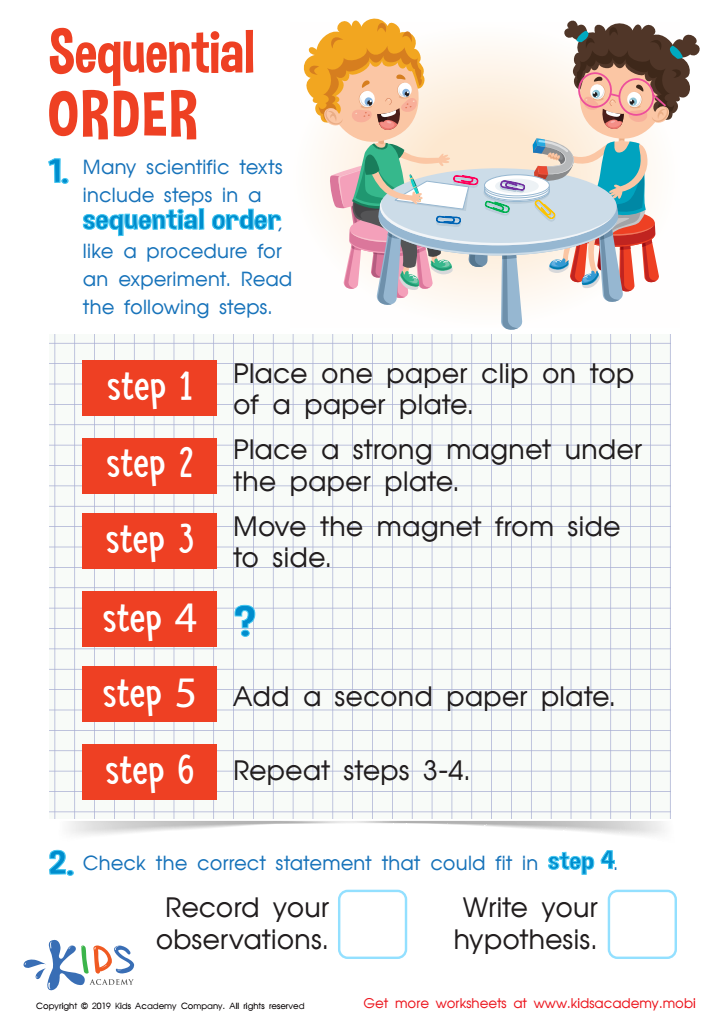
Sequencential Order Worksheet
This worksheet is perfect for science-lovers: it'll test how good your child is at following instructions by asking them to complete the steps in the right order. Have them read the steps and then choose the statements that correctly fill in the blanks. It's more than just fun experiments and results - science also requires careful procedure.
Sequencential Order Worksheet
Worksheet
Join Kids Academy for Free
Who is primarily going to use this learning content?




.jpg)



Understanding sequences is a crucial skill in reading comprehension for children aged 6-8, and parents and teachers should care deeply about fostering this ability. At this developmental stage, children are learning to read more complex texts and decipher storylines that often unfold in chronological order. By mastering sequences, children can identify the beginning, middle, and end of a story, which enhances their overall understanding and retention of the material.
Furthermore, comprehension of sequences helps young readers make predictions about what will happen next in a narrative, allowing them to engage more fully with the text and become active participants in their reading journey. This skill also lays the foundation for critical thinking and problem-solving, as recognizing patterns and order is vital in many areas of learning, from math to science.
Moreover, improved reading comprehension leads to greater academic success, building confidence and a love for reading that can last a lifetime. By emphasizing the importance of understanding sequences, parents and educators can provide children with the tools they need for effective communication and analysis. Encouraging this proficiency fosters not only literacy skills but also an appreciation for storytelling and narrative structure, cultivating well-rounded readers.








