Visual Perception Skills Reading Comprehension Worksheets for Ages 6-8
3 filtered results
-
From - To
Enhance your child's reading journey with our Visual Perception Skills Reading Comprehension Worksheets for ages 6–8. Designed to blend fun with learning, these worksheets boost reading comprehension through engaging activities. Each sheet focuses on developing crucial visual perception skills, ensuring young readers can efficiently identify, interpret, and understand visual information. This foundational practice supports improved fluency and accuracy in reading, better preparing students for future academic success. Perfect for classroom use or at-home practice, our worksheets provide a pathway to elevated learning, making reading an enjoyable and beneficial experience for every child. Explore the transformative power of visual perception now!
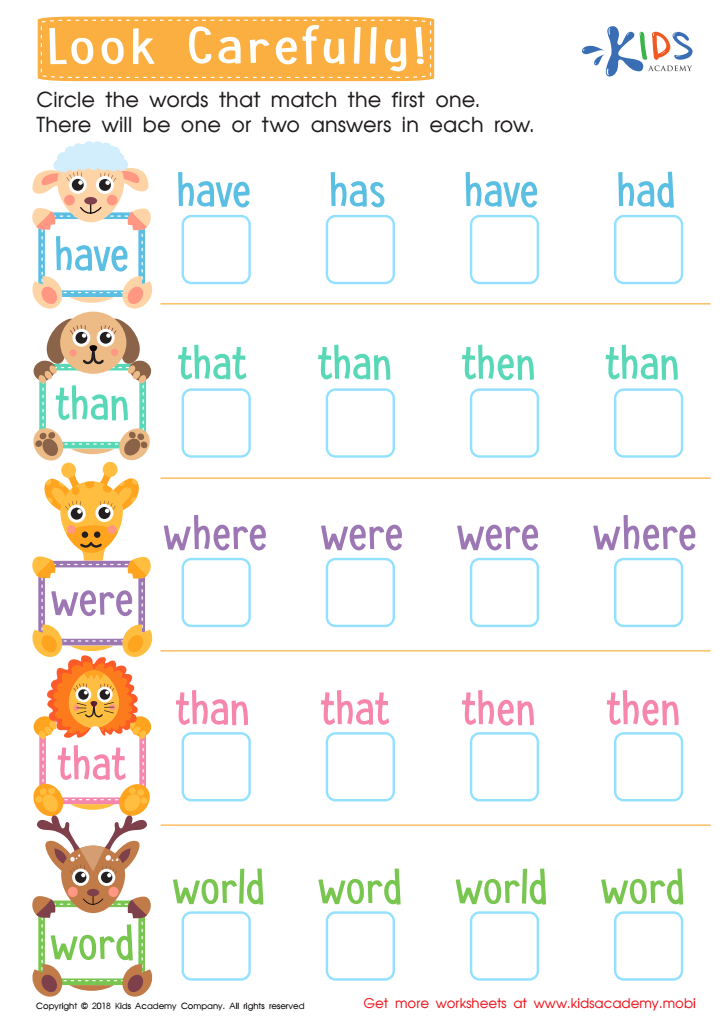
Look Carefully Worksheet
 Assign to My Students
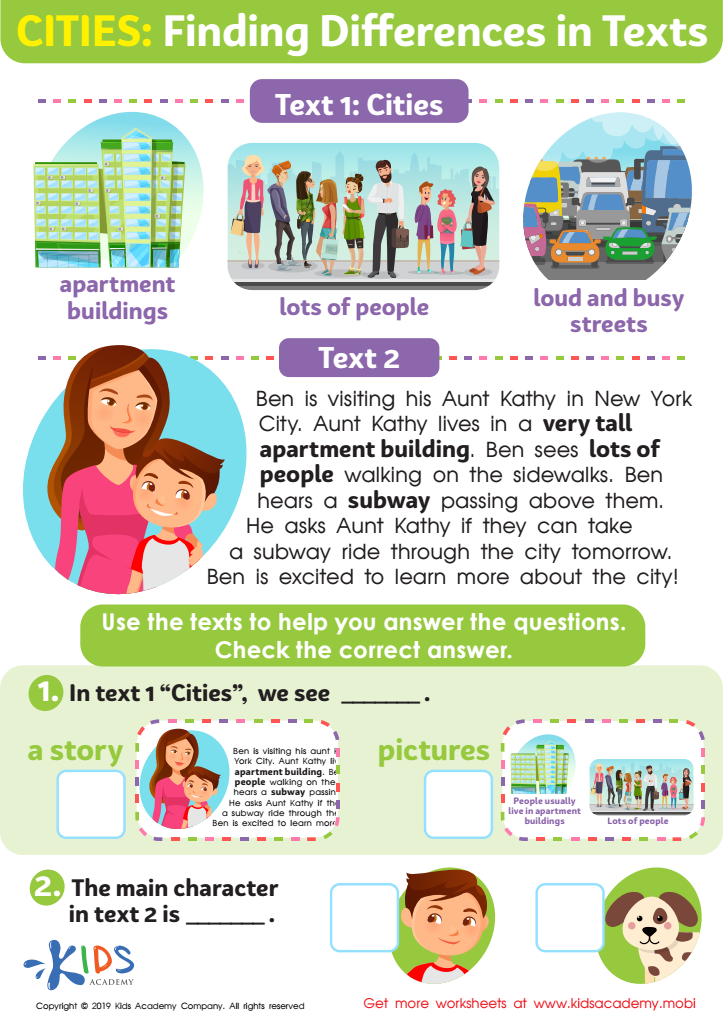
Cities: Finding Differences Worksheet
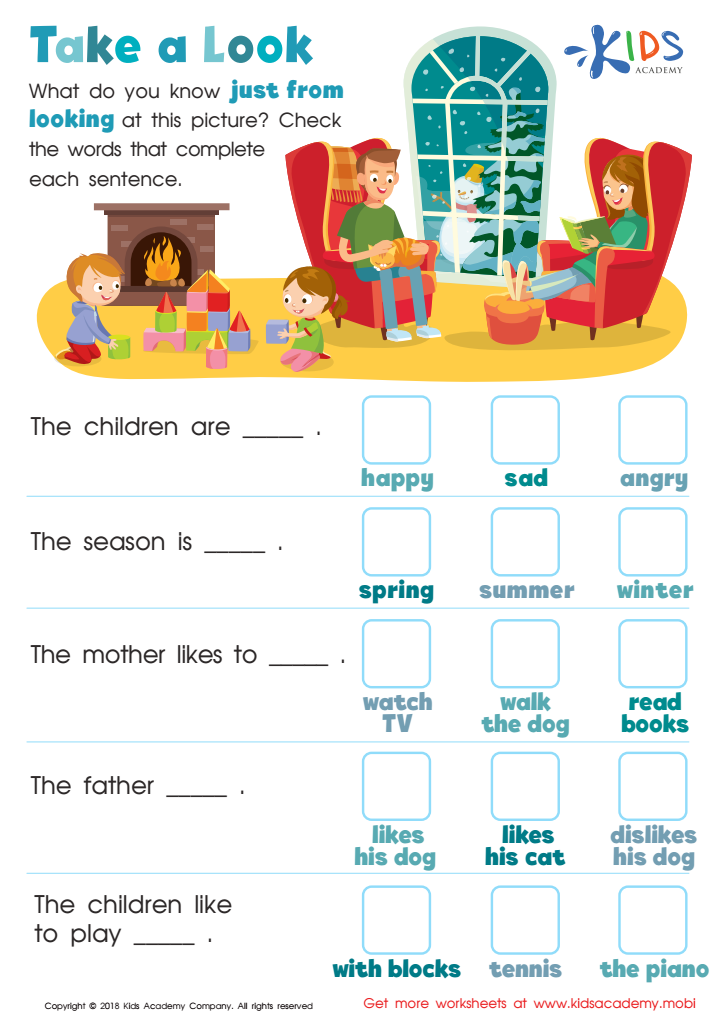
Take a Look - Part 1 Worksheet








Visual perception skills are essential for reading comprehension, particularly in children ages 6-8, who are in a critical stage of reading development. These skills allow children to interpret and make sense of visual information, including identifying letters and words, recognizing patterns, and understanding spatial relationships on a page. If a child struggles with visual perception, they may find it challenging to recognize words accurately and quickly, which can hinder their ability to read smoothly and understand the text.
Furthermore, strong visual perception skills support other foundational skills like handwriting and math, enabling children to follow complex sentences and paragraphs, understand story sequences, and comprehend visual cues, such as pictures and diagrams that often accompany early reading materials. Without well-developed visual perception abilities, children are more likely to encounter difficulties in their overall academic progression, which can affect their confidence and enthusiasm for learning.
By focusing on enhancing children's visual perception skills, parents and teachers can help foster better reading comprehension, leading to greater academic success. Encouraging activities such as puzzles, matching games, and visual memory exercises can strengthen these skills. Ensuring a strong foundation in visual perception will equip children with the tools they need to become proficient readers and lifelong learners.








