Vocabulary enhancement Reading Comprehension Worksheets for Ages 6-8 - Page 3
51 filtered results
-
From - To
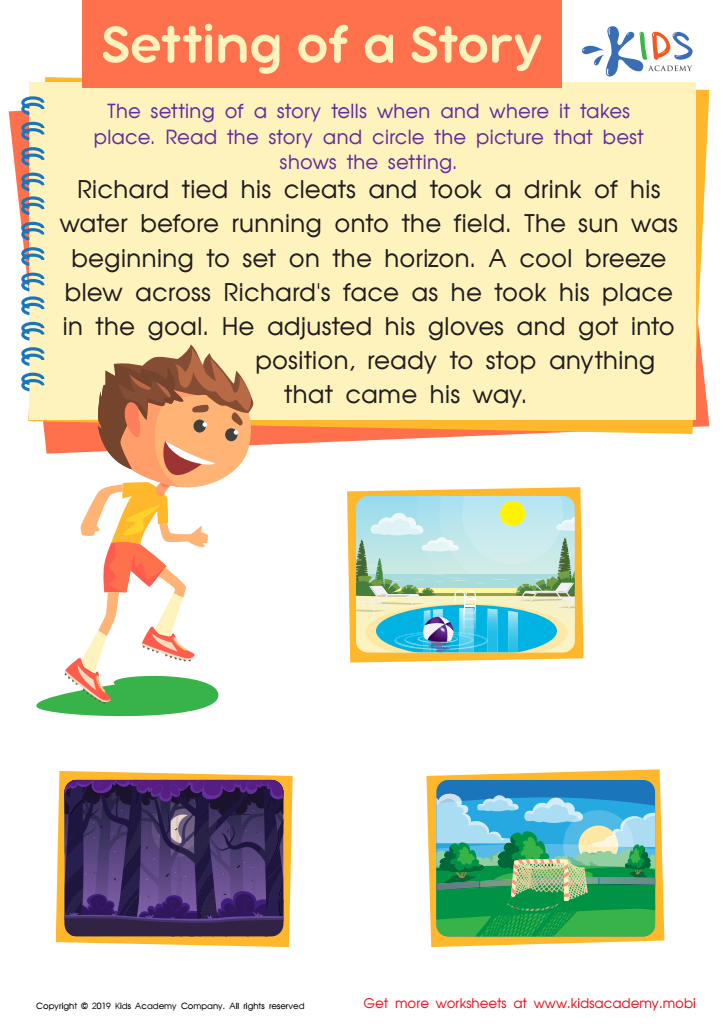
Setting of a Story Worksheet
 Assign to My Students
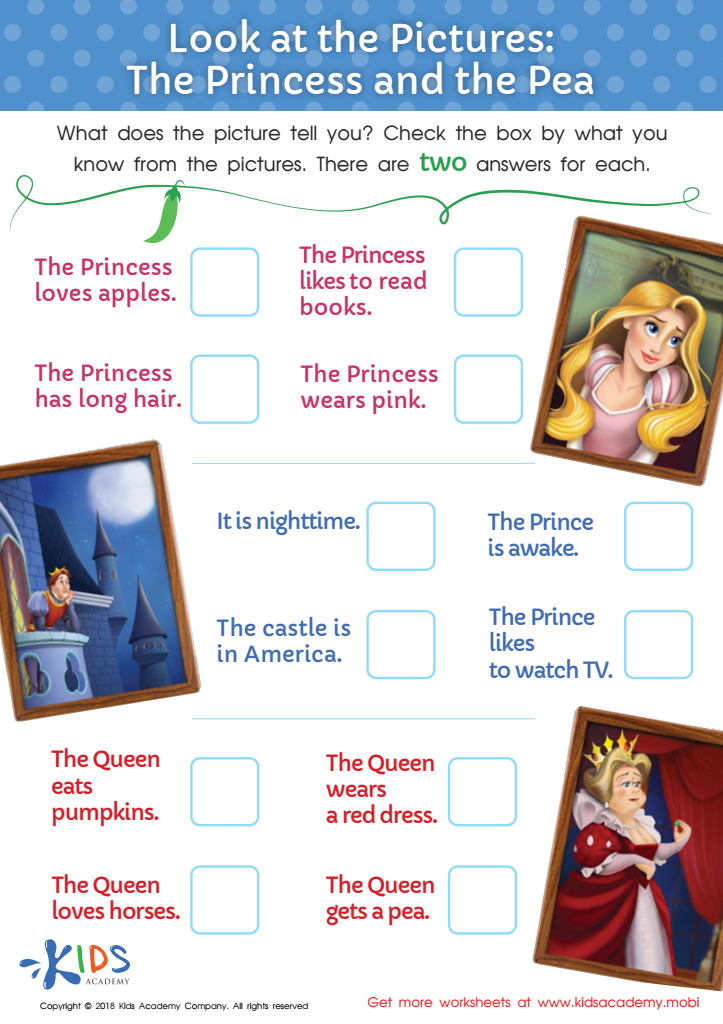
Look at the Pictures: The Princess and the Pea Worksheet
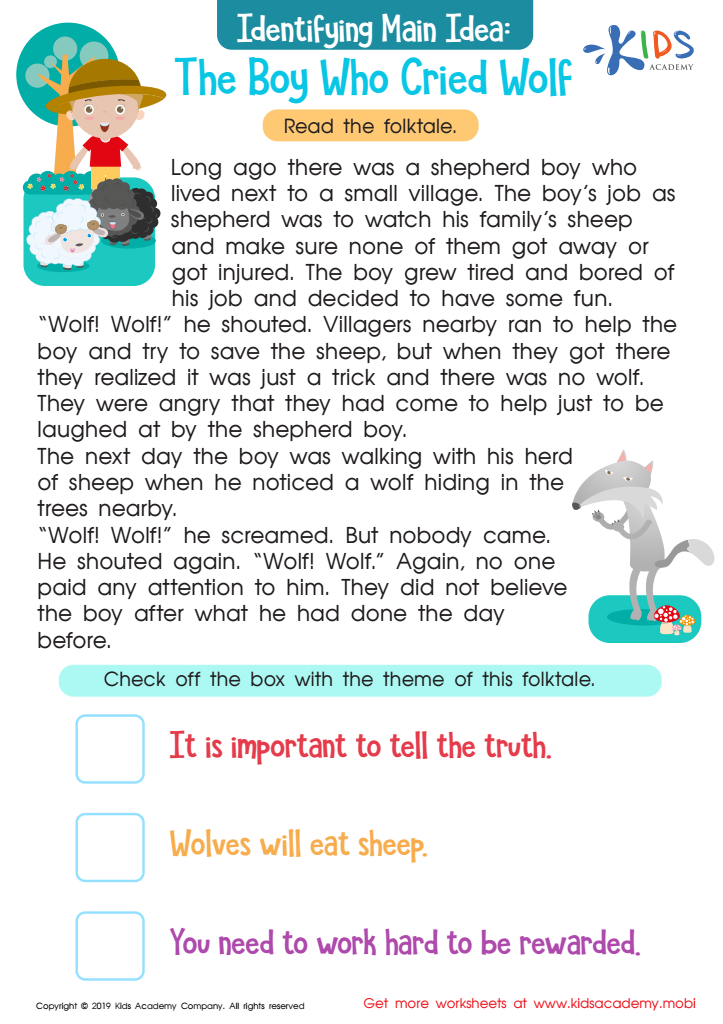
The Boy Who Cried Wolf Part 2 Worksheet








Enhancing vocabulary and reading comprehension in children aged 6-8 is crucial as it lays the foundation for future academic success and effective communication. At this pivotal age, children are transitioning from "learning to read" to "reading to learn." A robust vocabulary helps children better understand what they read, allowing them to grasp new ideas and information more efficiently. This understanding boosts their confidence and motivation to read more, creating a positive feedback loop that enhances overall literacy skills.
Furthermore, a strong vocabulary and comprehension ability are not only essential for language arts but extend across all subjects, including math, science, and social studies. Reading comprehension is integral to problem-solving and critical thinking, skills that are important in all areas of life. When children understand what they read, they can follow instructions better, participate more actively in discussions, and express their thoughts more clearly.
Parents and teachers play a key role in this development by providing a language-rich environment, encouraging exploration of new words, and engaging in conversations that challenge young minds. Reading stories aloud, discussing new words, and asking open-ended questions about texts can make a significant difference, fostering lifelong learners and effective communicators. Prioritizing vocabulary and comprehension at this stage will equip children with the tools they need for both academic achievement and real-world success.








