Identifying story elements Reading Fiction Worksheets for Ages 6-8
4 filtered results
-
From - To
Help your child master the fundamentals of reading with our "Identifying Story Elements Reading Fiction Worksheets" designed for ages 6-8. These captivating worksheets introduce young readers to key elements of fiction, including characters, settings, plots, and more. Through engaging activities and thought-provoking questions, kids learn to identify and analyze essential components of a story, boosting their comprehension and critical thinking skills. Perfect for at-home practice or classroom reinforcement, these worksheets provide a fun and educational experience that cultivates a lifelong love for reading. Download now to set your child on the path to reading success!
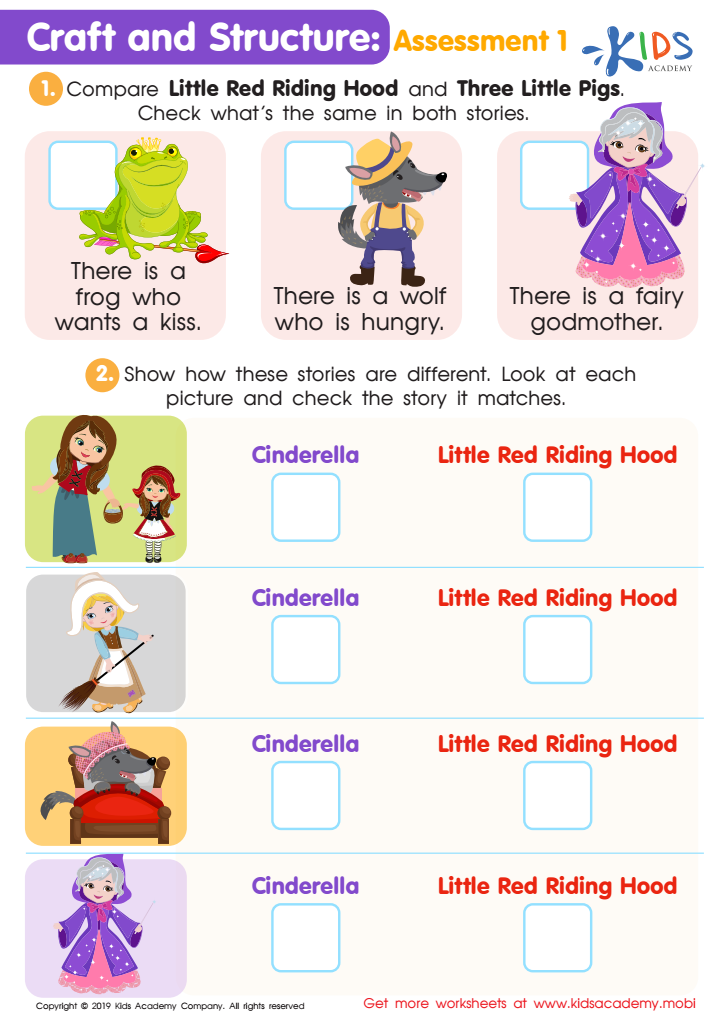
Craft and Structure: Assessment 1 Worksheet
 Assign to My Students
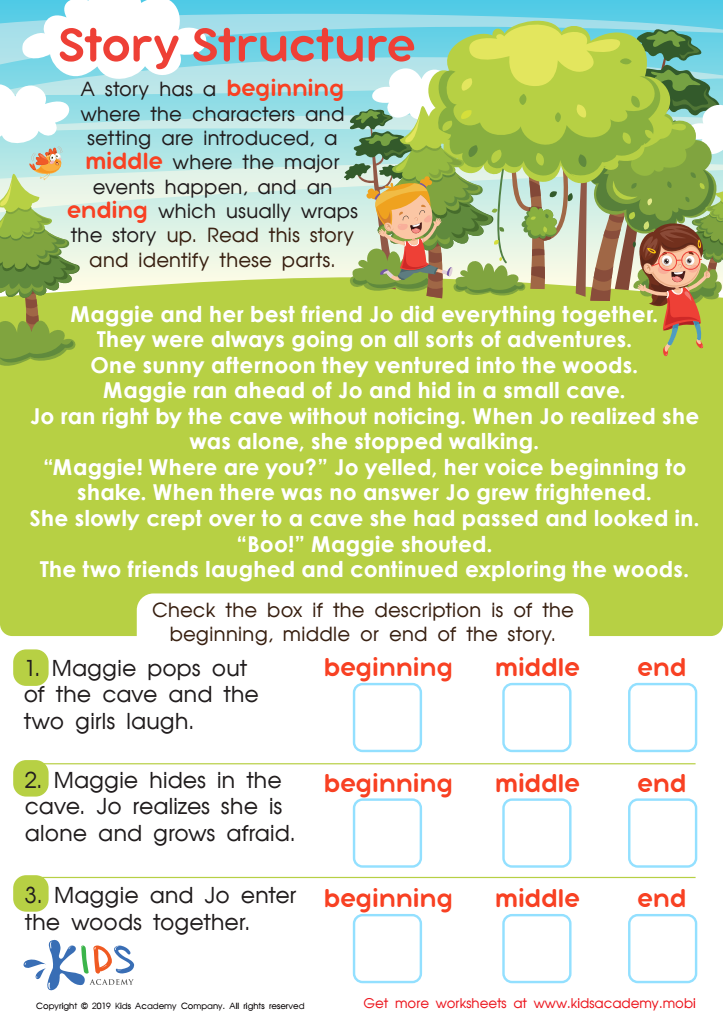
Story Structure Worksheet
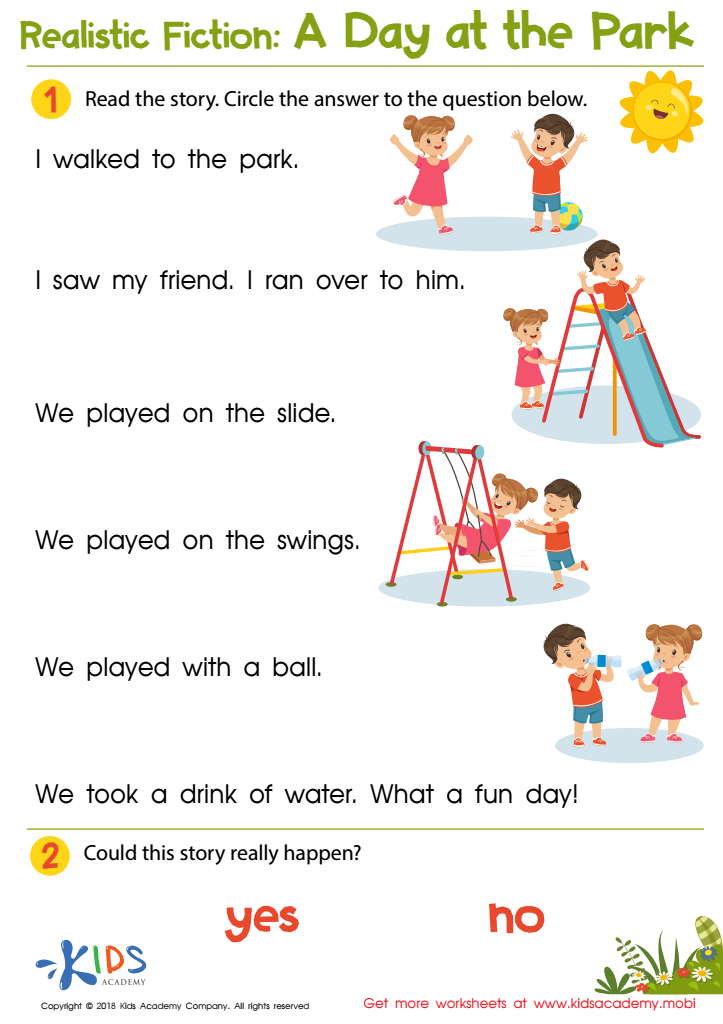
A Day at the Park Worksheet
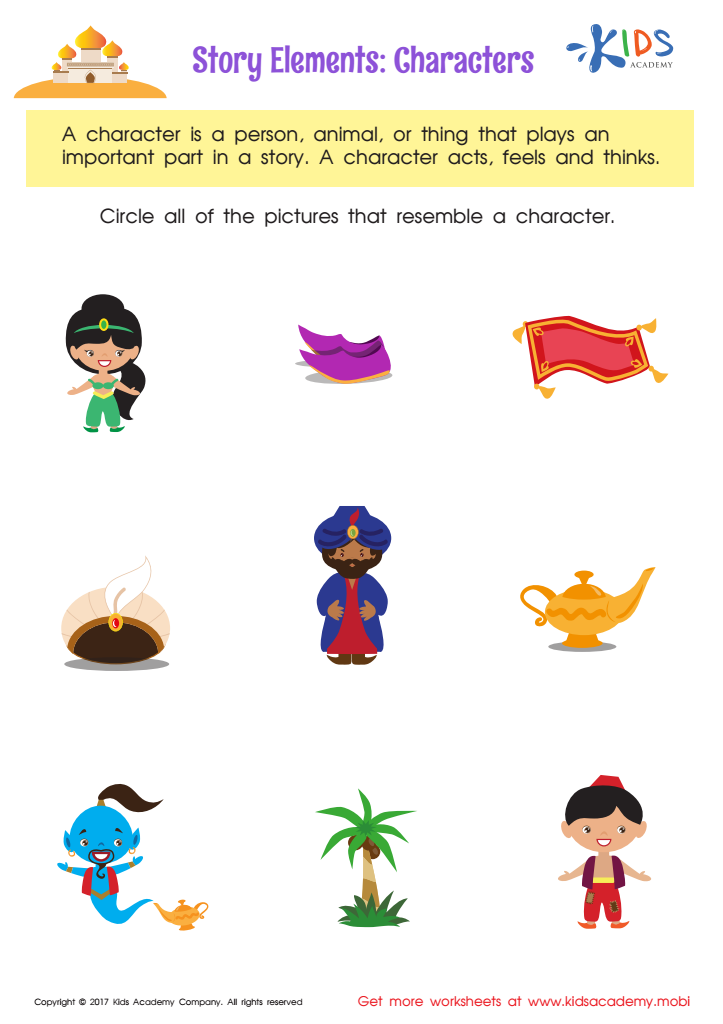
Story Elements Printable







Identifying story elements—such as characters, setting, plot, conflict, and resolution—is crucial for children aged 6-8 as they begin reading fiction. Understanding these elements enhances comprehension, enabling children to grasp the essence of the story. This foundational skill aids in improving overall literacy, ensuring young readers can follow complex narratives as they advance in their education.
Focusing on story elements also stimulates critical thinking. Children learn to ask probing questions about the plot, consider character motivations, and make predictions. This analytical ability translates to improved critical thinking skills that extend well beyond the classroom.
Moreover, discussing story elements fosters a deeper connection with the text, making reading a more enjoyable and engaging activity. Enjoyment leads to a positive attitude towards reading, encouraging a lifelong love for books.
From a social-emotional perspective, understanding characters and their conflicts allows children to develop empathy and insight into human behavior. They learn to see the world through different lenses, which supports emotional intelligence and ethical thinking.
For educators and parents, investment in teaching story elements is also an investment in a child's cognitive, social, and emotional growth. By making these narrative structures clear, we equip children with tools that enhance their academic journey and enrich their personal development.








