Moral understanding Reading Fiction Worksheets for Ages 6-8
5 filtered results
-
From - To
Our "Moral Understanding Reading Fiction Worksheets for Ages 6-8" are perfect tools to help children develop empathy and strong moral values while improving their reading skills. These engaging worksheets feature a range of delightful fictional stories and characters that teach vital lessons about honesty, kindness, and responsibility. Designed to provoke thoughtful discussions and reflections, each worksheet includes comprehension questions and activities that encourage children to identify and connect with the moral themes presented. Ideal for both classroom and home use, these resources support critical thinking and character building, nurturing well-rounded young readers with strong ethical foundations.
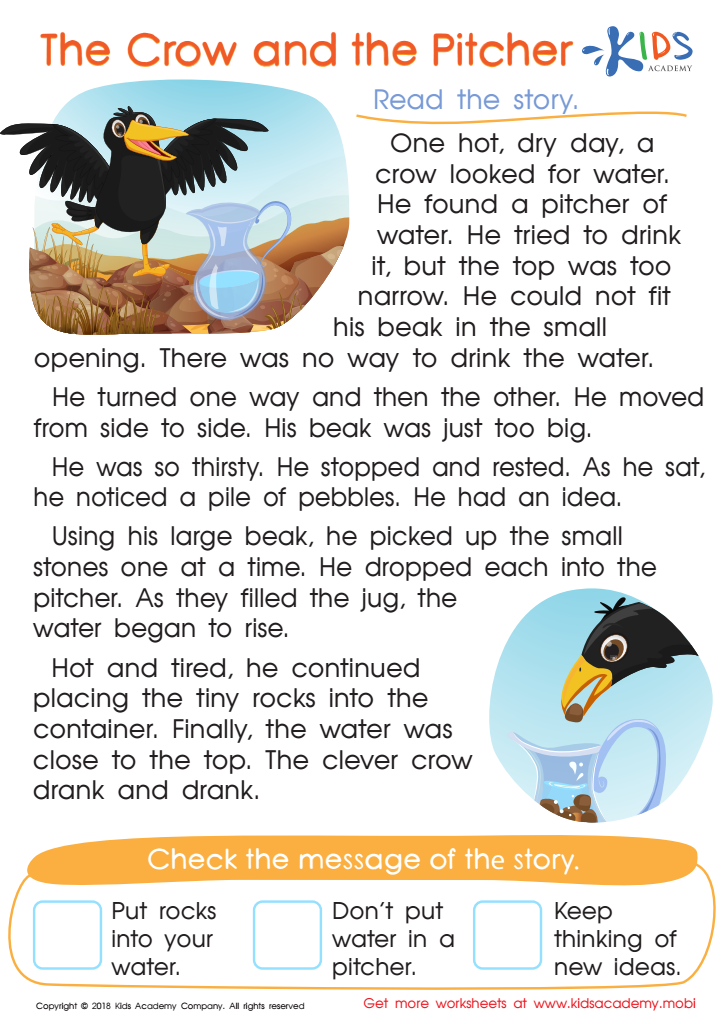
The Crow and the Pitcher Worksheet
 Assign to My Students
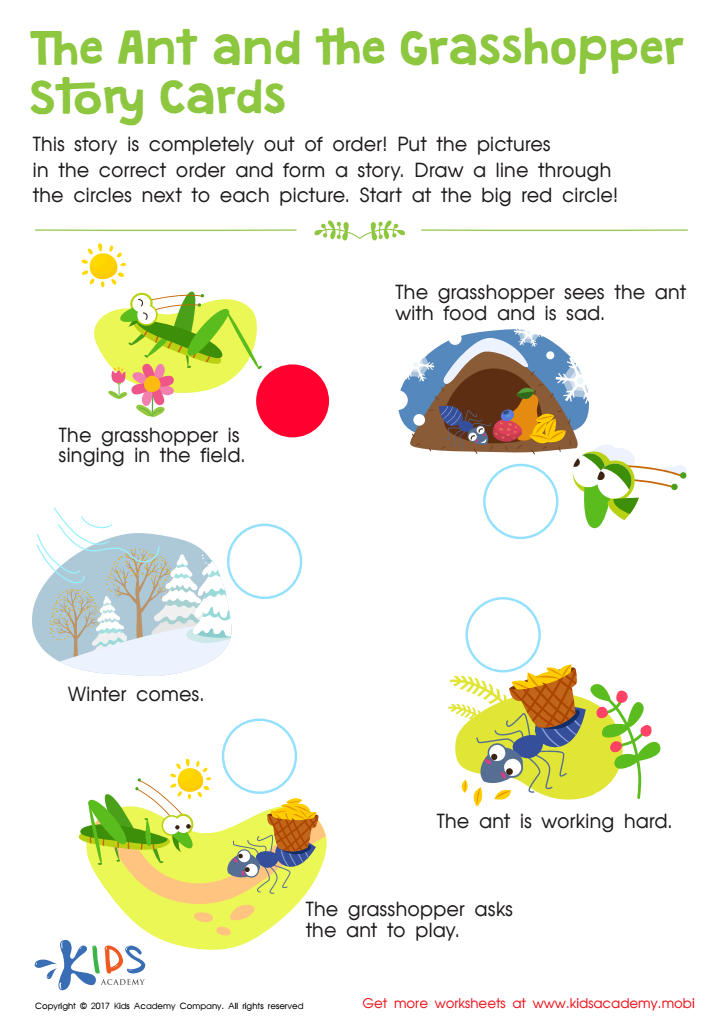
The Ant and The Grasshopper Worksheet
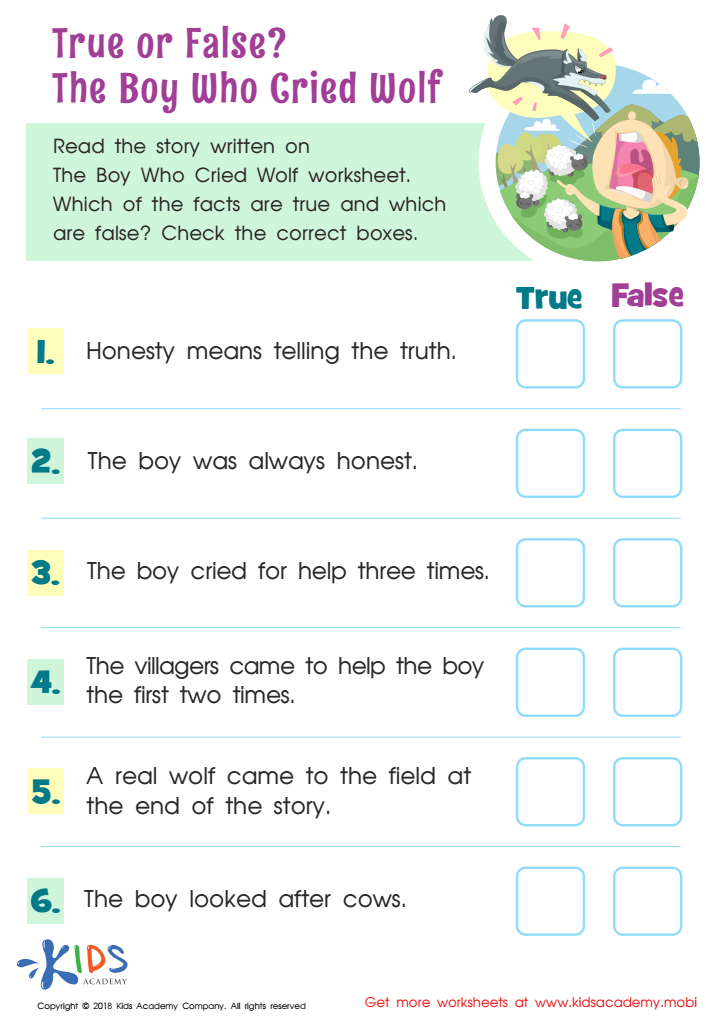
True or False? The Boy Who Cried Wolf Worksheet
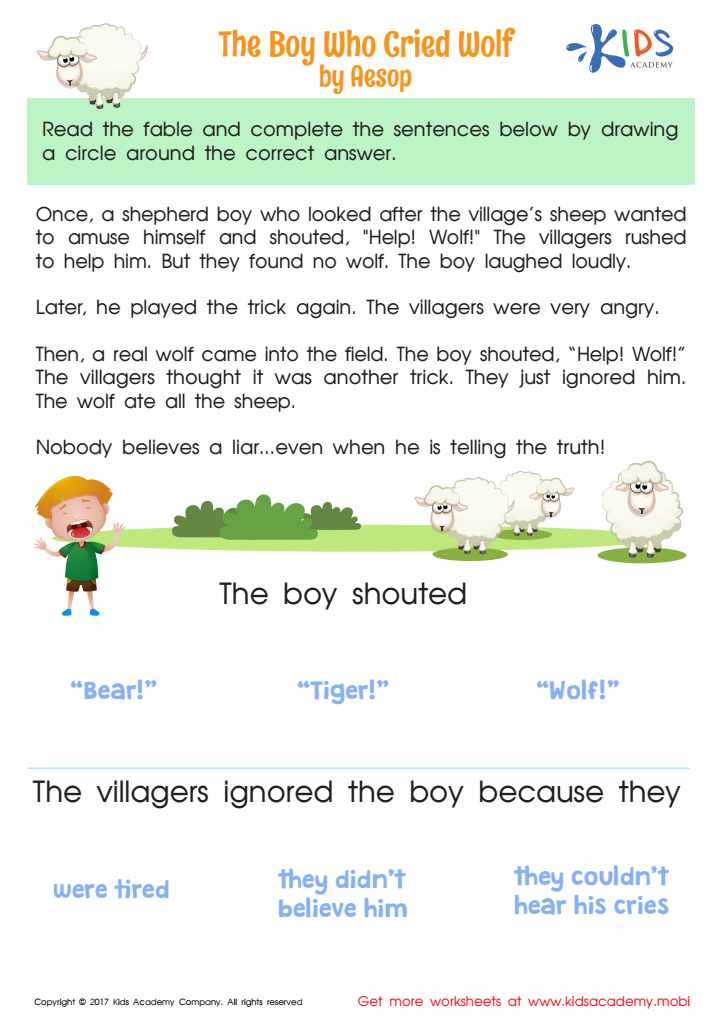
The Boy Who Cried Wolf Worksheet
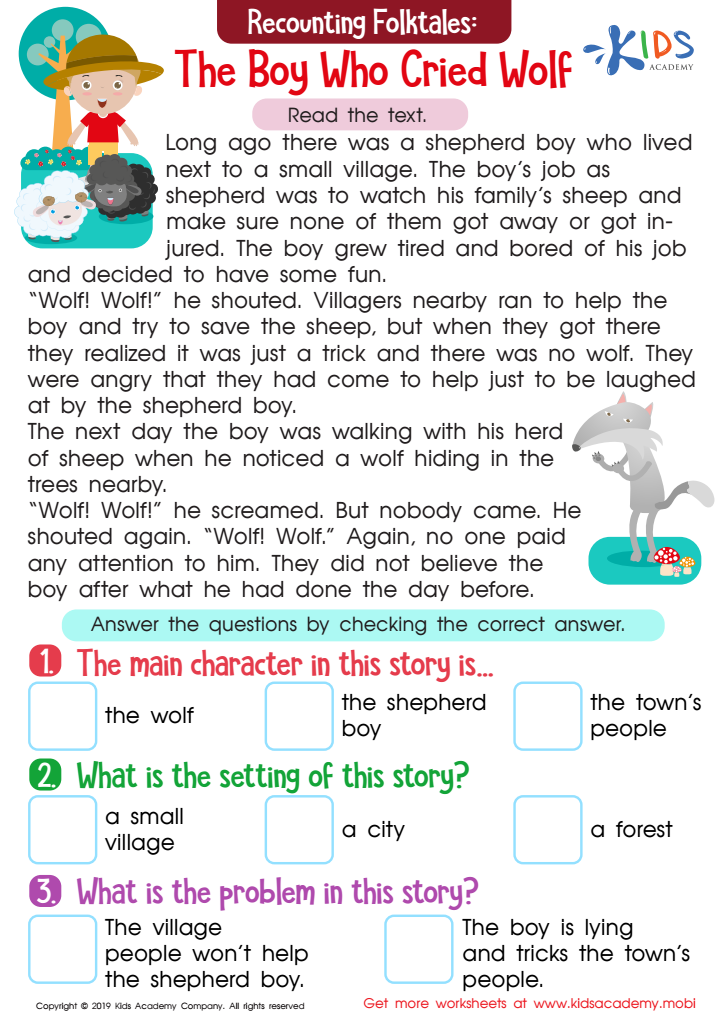
The Boy Who Cried Wolf Part 1 Worksheet


.jpg)





Moral understanding is a crucial component of a child's development, and reading fiction for ages 6-8 plays an instrumental role in cultivating this trait. At this formative stage, children are not only learning to decode words and sentences but also absorbing fundamental values and ethical principles.
Engaging with fiction allows young readers to explore diverse characters, scenarios, and moral dilemmas in a safe and imaginative environment. Through stories, children encounter complex situations where characters must make difficult choices, encouraging them to think about right and wrong from different perspectives. This helps children develop empathy by putting themselves in others' shoes, fostering emotional intelligence and a deeper understanding of others' feelings and motivations.
Moreover, fiction often simplifies ethical concepts, presenting them in ways that are accessible and relatable for young minds. This accessibility is vital as it aids in the internalization of social norms and compassion, promoting behaviors like sharing, truthfulness, and kindness. Sharing these stories in a classroom or home setting opens up discussions between parents or teachers and children, providing opportunities to reinforce positive moral lessons and guide them toward ethical reasoning.
Overall, by incorporating moral stories in early reading materials, parents and teachers can help shape a child's foundational understanding of morality, empathy, and ethical behavior, supporting their development into thoughtful, conscientious individuals.








