Understanding perspectives Reading Fiction Worksheets for Ages 6-8
3 filtered results
-
From - To
Discover the "Understanding Perspectives Reading Fiction Worksheets" designed specifically for children ages 6-8. These engaging worksheets help young readers explore different viewpoints in stories, fostering empathy and critical thinking skills. With a variety of activities that encourage children to identify characters' feelings, motivations, and perspectives, these worksheets make learning fun and interactive. Perfect for both classroom and home use, they support early literacy development while inspiring imagination. Download now to provide your child with the tools needed to understand the richness of fictional narratives and enhance their reading experience! Dive into the world of stories and unlock the power of perspective today!
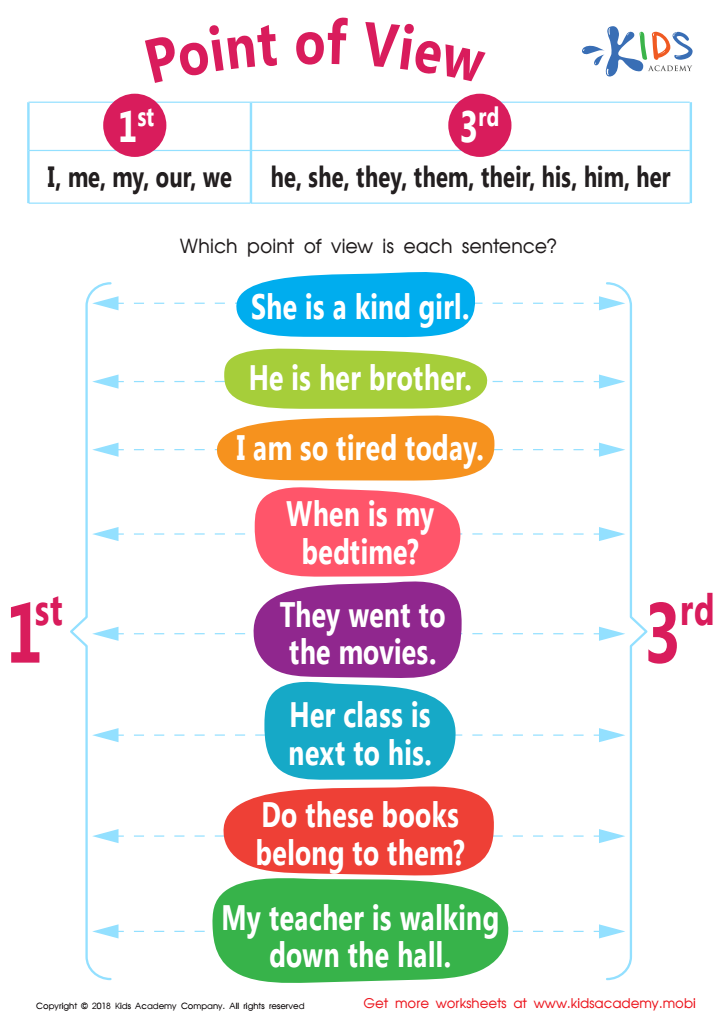
Point of View Worksheet
 Assign to My Students
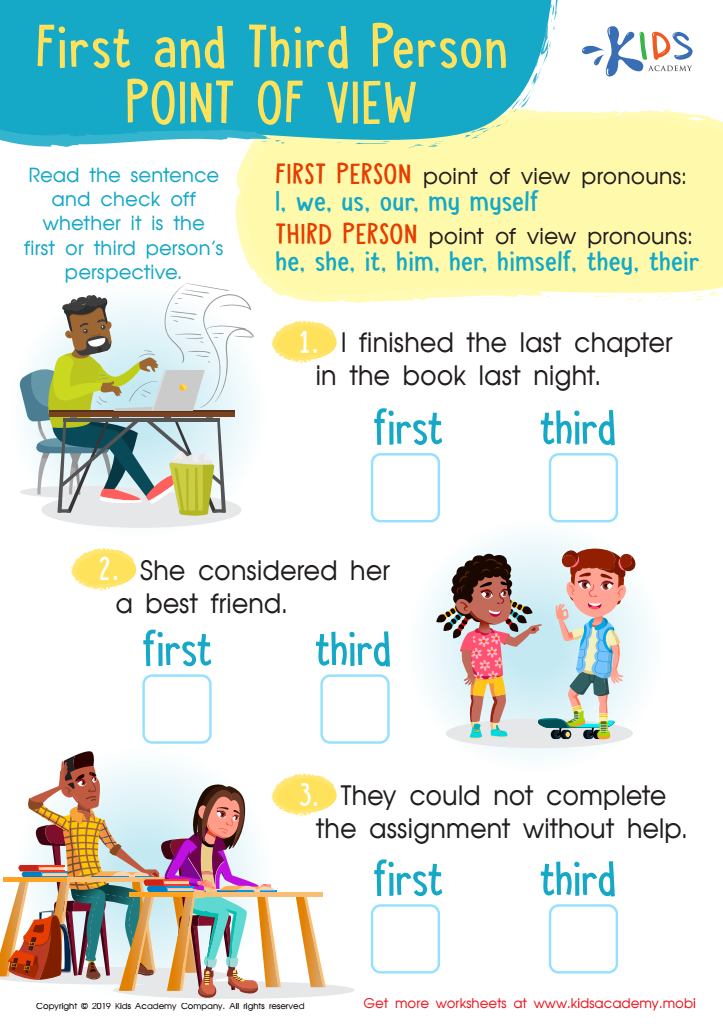
First and Third Person Point of View Worksheet
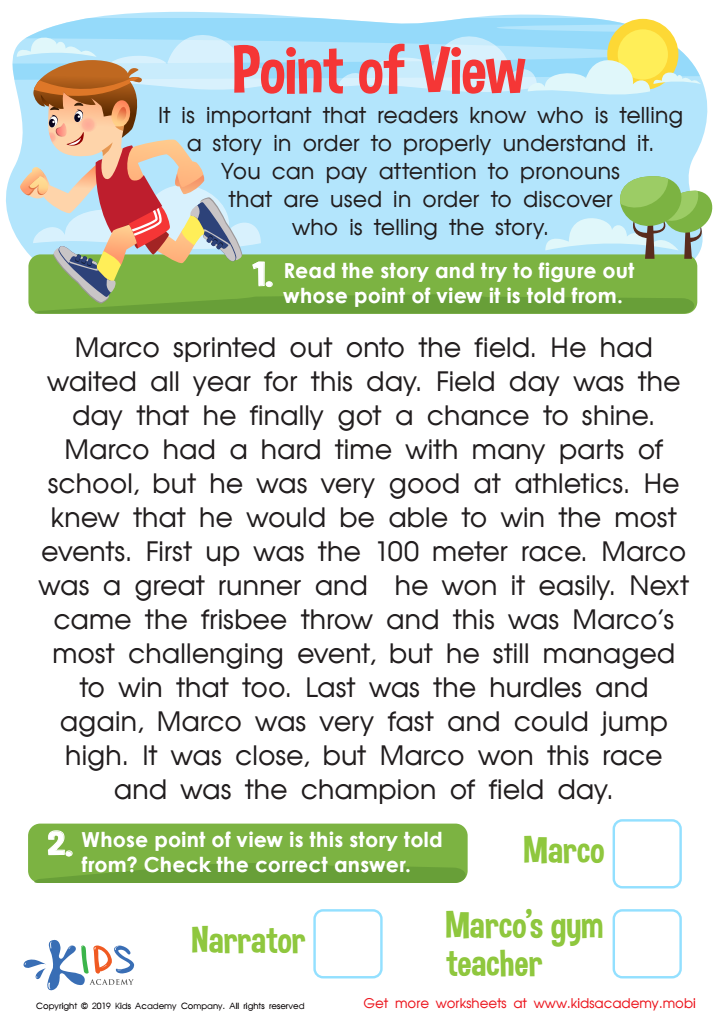
Point of View Worksheet




.jpg)
.jpg)


Understanding perspectives through reading fiction is crucial for children aged 6-8 as it nurtures their social and emotional development. At this age, children begin to enhance their empathy skills, recognizing that others have thoughts, feelings, and experiences distinct from their own. When parents and teachers encourage reading fiction, they introduce young readers to diverse characters and situations, allowing them to explore different viewpoints and cultures.
This engagement in storytelling helps children develop critical thinking skills as they analyze characters' motivations and actions. Discussing these perspectives can spark meaningful conversations about right and wrong, friendship, and conflict resolution. Furthermore, reading fiction together fosters bonding opportunities, promoting a love for literature and discussion that resonates throughout their lives.
In today’s increasingly interconnected world, being able to appreciate diversity and understand different viewpoints is essential for effective communication and collaboration. By prioritizing perspective-taking in reading, parents and teachers equip children with tools to navigate social relationships more adeptly, encouraging inclusivity and compassion. Ultimately, understanding perspectives through reading fiction lays the foundation for emotional intelligence and is instrumental in shaping well-rounded, empathetic individuals prepared to engage with the complexities of the world around them.








