Vocabulary expansion Rhyming Words Worksheets for Ages 6-8
4 filtered results
-
From - To
Boost your child's vocabulary with our engaging Rhyming Words Worksheets, specifically designed for ages 6-8! These fun and interactive resources help young learners develop essential language skills through rhythm and sound recognition. Each worksheet incorporates vibrant illustrations and playful activities that encourage creativity and reinforcement of rhyming concepts. As your child explores various word pairs, they'll enhance their phonemic awareness, boost their reading proficiency, and expand their vocabulary in an enjoyable way. Ideal for both classroom settings and home learning, these worksheets offer an effective and entertaining way to cultivate a love for words. Start exploring the world of rhymes today!
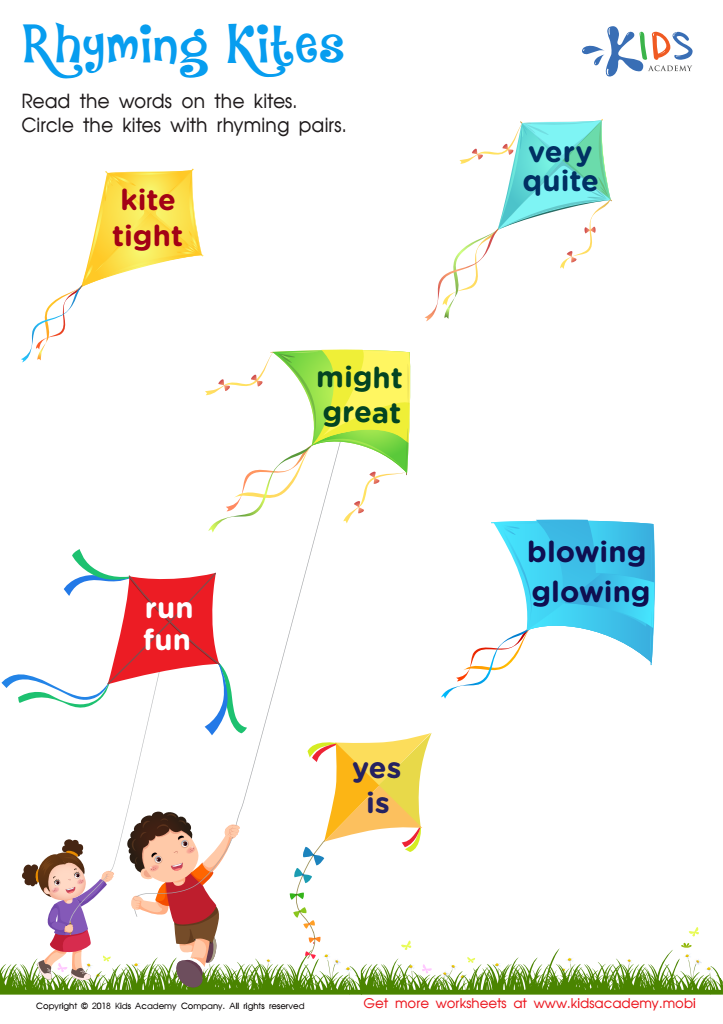
Rhyming Kites Worksheet
 Assign to My Students
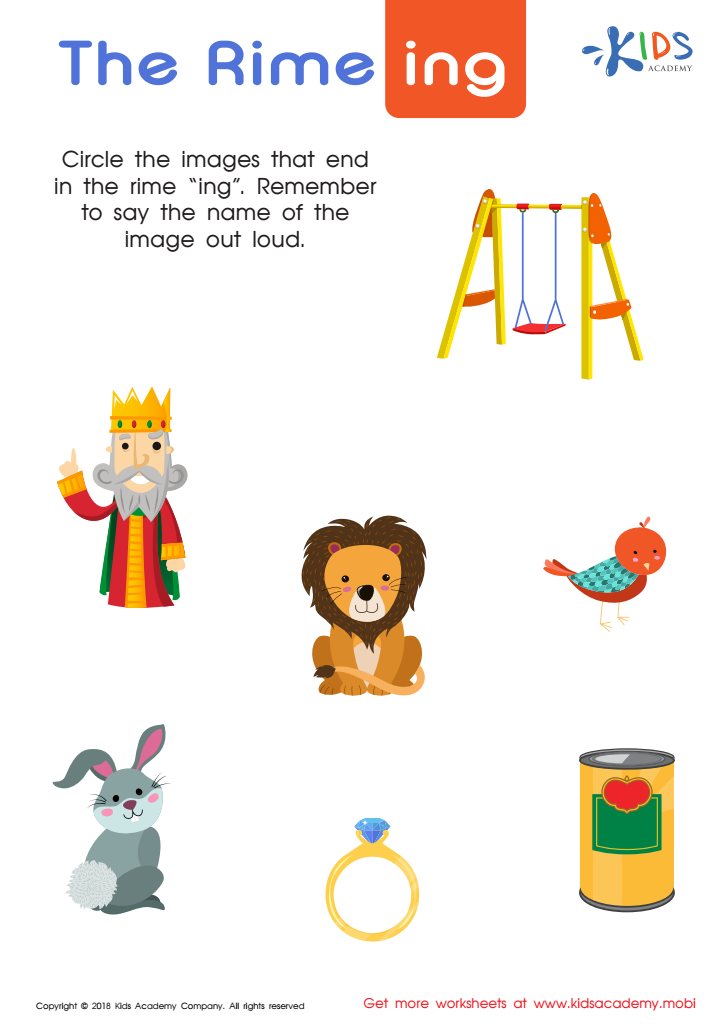
The Rime "ing" Worksheet
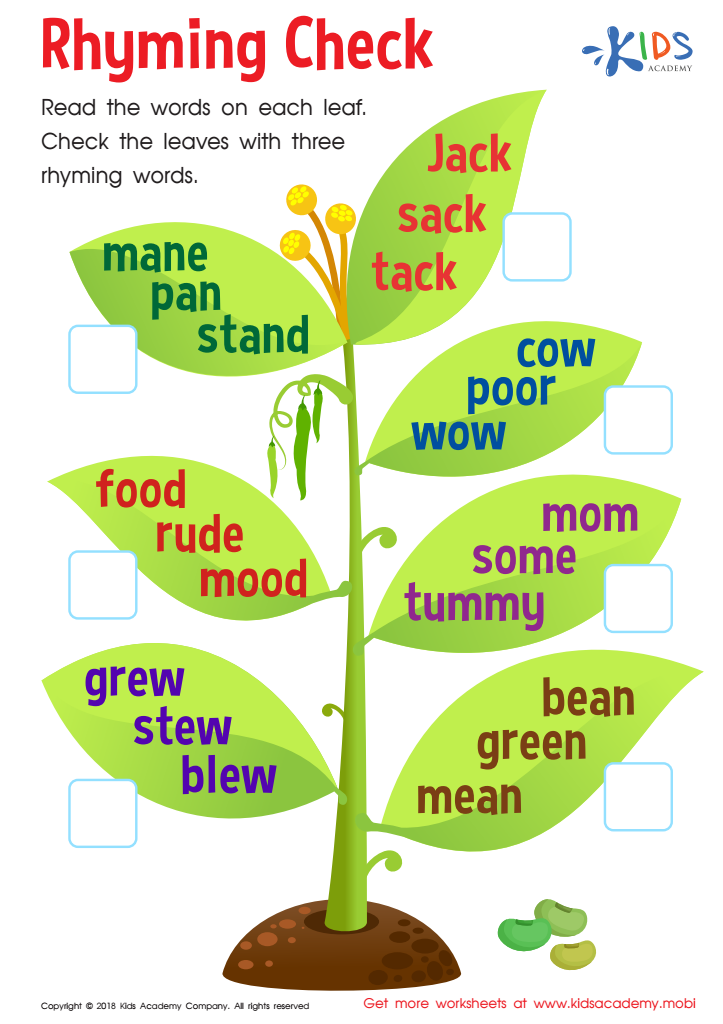
Rhyming Check Worksheet
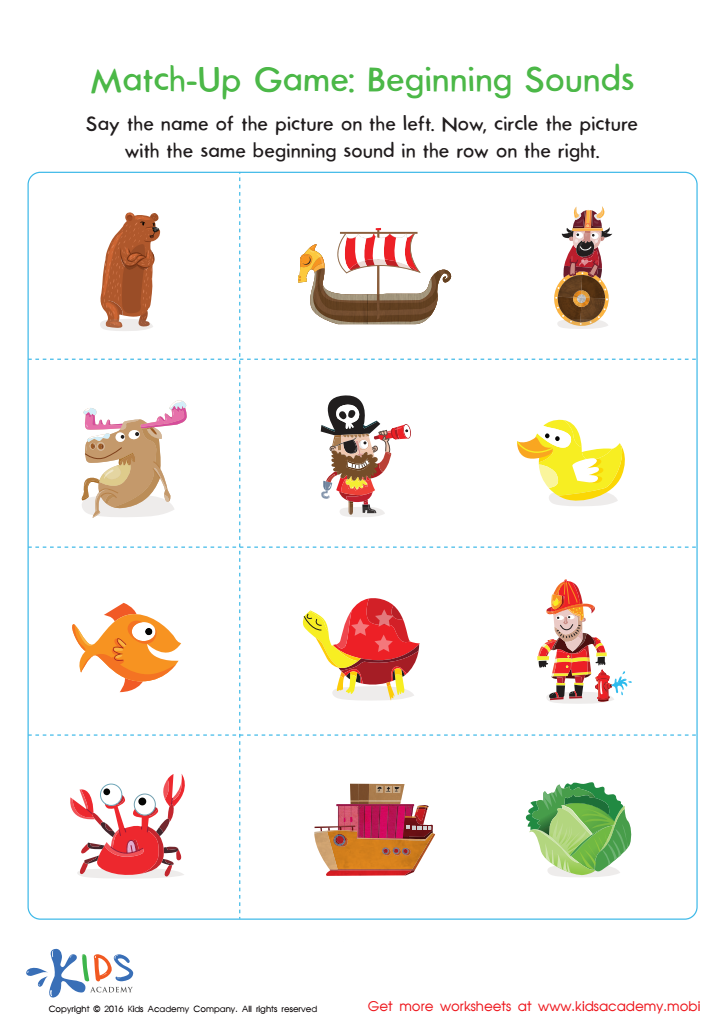
Match–Up Game: Beginning Sounds Worksheet


.jpg)




Vocabulary expansion, particularly through the use of rhyming words, is crucial for children aged 6-8 as it fosters language development and cognitive skills. At this stage, children are enhancing their phonemic awareness, and engaging with rhymes supports this process by helping them recognize and manipulate sounds in words. Rhyming words make learning fun and memorable; children are more likely to recall enjoyable activities, which encourages recurrent use of new vocabulary.
Rhymes also enhance reading and writing skills by introducing children to patterns in language. They build confidence as children practice speaking, listening, and eventually create their own rhymes. This playful manipulation of language enhances their creativity and expression. Simplified structures in rhyming teach them how words interact and fit together, reinforcing syntax and grammar in an enjoyable way.
Additionally, rhyming activities support social interaction and cooperative learning; children often engage in group games that feature rhymes, fostering collaboration and communication skills. When teachers and parents emphasize rhyming words, they are not only enriching a child’s vocabulary but also laying the groundwork for literacy, critical thinking, and a lifelong love for reading. Ultimately, caring about vocabulary expansion through rhyming means investing in their overall educational journey.








