Learning about ecosystems Animals Worksheets for Ages 6-8
4 filtered results
-
From - To
Discover the wonders of ecosystems with our engaging Learning about Ecosystems Animals Worksheets, designed specifically for children aged 6-8! These interactive worksheets help young learners explore diverse habitats and the animals that thrive within them. Packed with colorful illustrations and fun activities, kids will enhance their understanding of animal roles, food chains, and the importance of biodiversity. Perfect for classroom use or at-home learning, these worksheets foster critical thinking and creativity while making science exciting. Download now to inspire curiosity about the natural world and encourage a love for environmental studies! Explore, learn, and grow with our fun resources today!
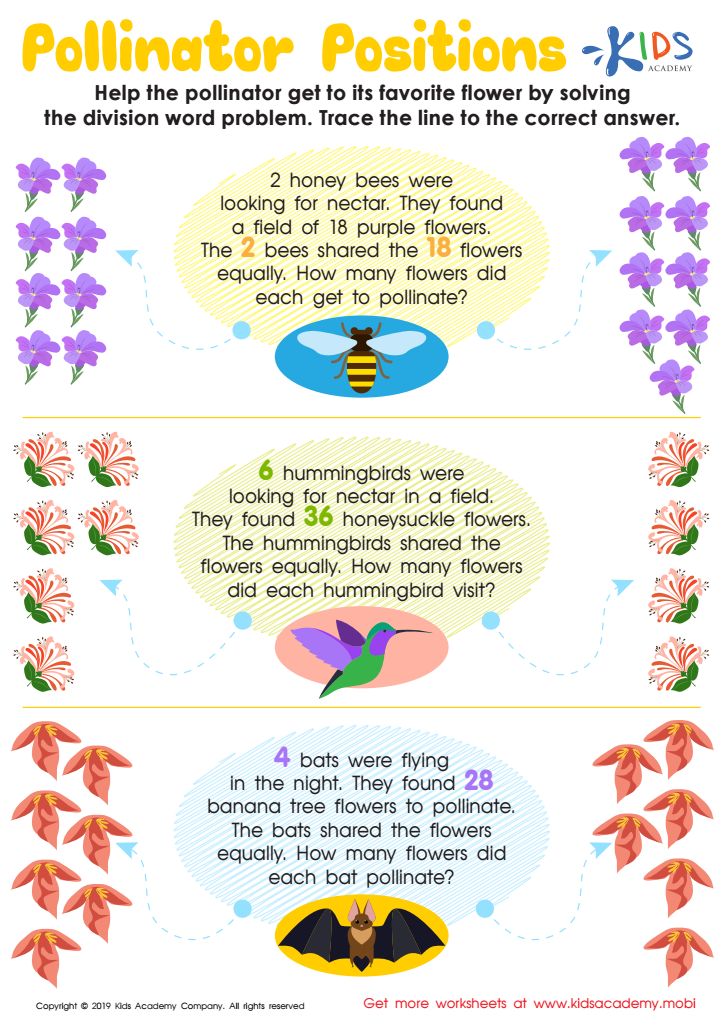
Pollinator Positions Worksheet
 Assign to My Students
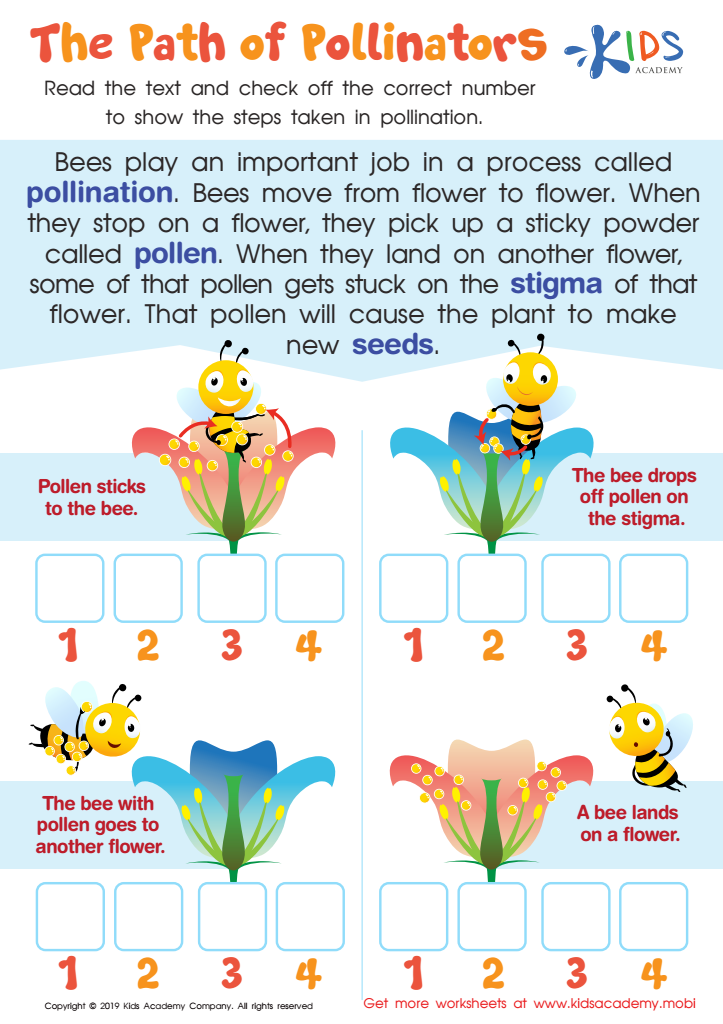
The Path of Pollinators Worksheet
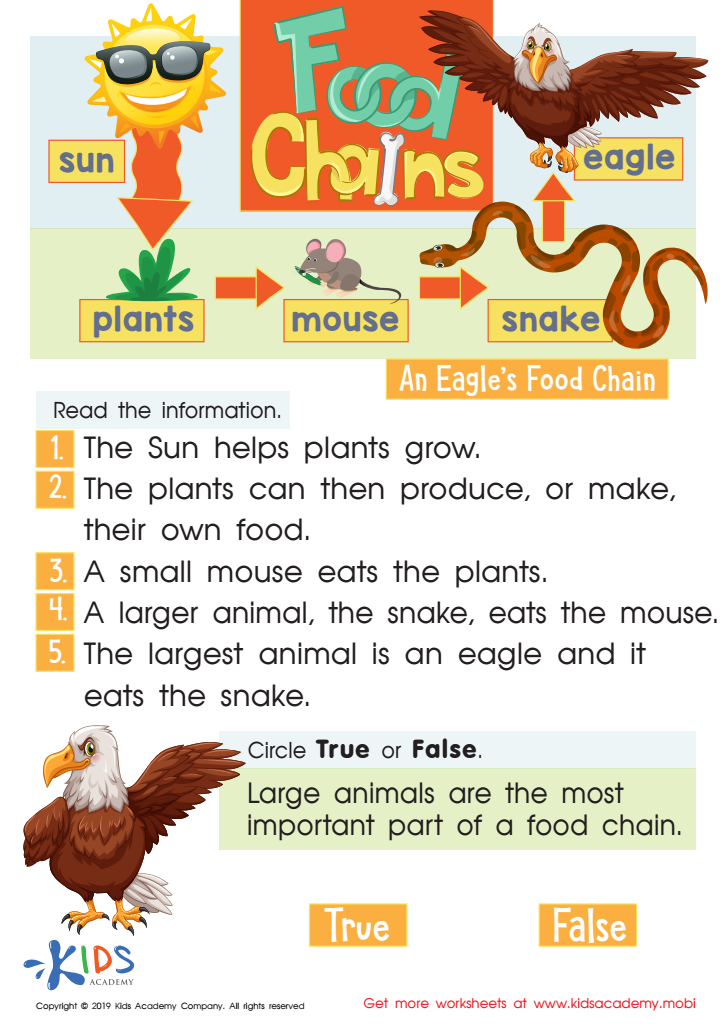
Food Chains Worksheet
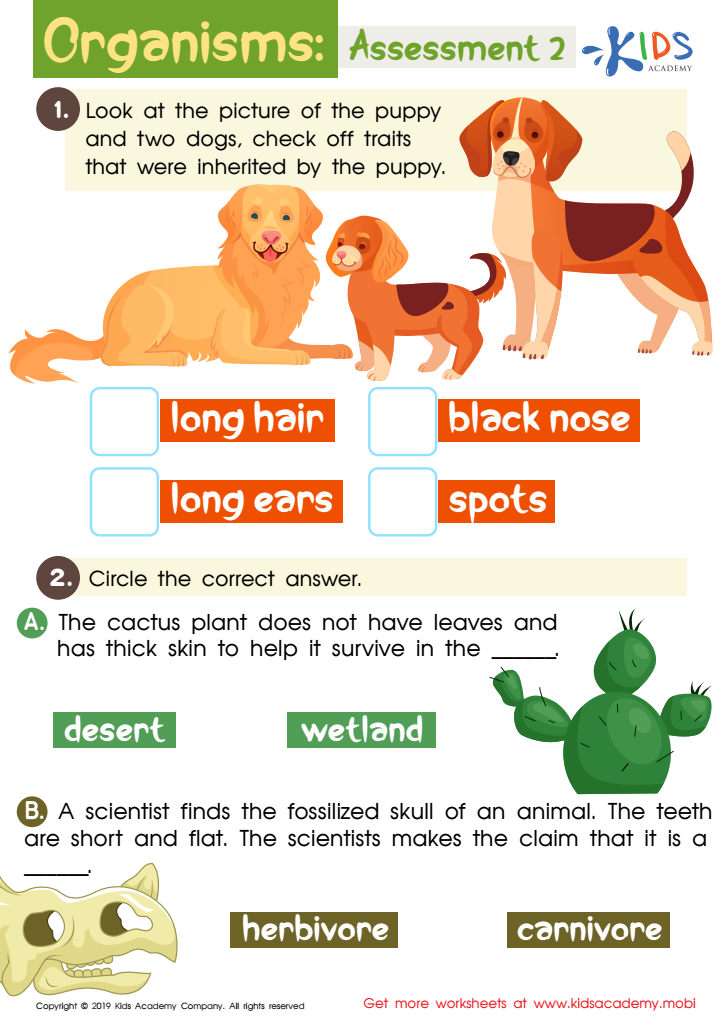
Organisms: Assessment 2 Worksheet





%20(1).jpg)


Understanding ecosystems and animals is crucial for children aged 6-8 because it nurtures curiosity about the natural world and fosters a sense of responsibility for the environment. At this age, children are naturally inquisitive, and lessons about ecosystems can stimulate their interest in science and promote critical thinking skills. These early lessons help build a foundation for a lifetime of learning and awareness.
Learning about ecosystems also teaches children the interconnectedness of living things, illustrating how animals, plants, and climate interact. This holistic view encourages empathy as children learn to appreciate the roles different animals play in their environments. By exploring topics such as food chains, habitats, and conservation, children can develop a sense of stewardship, understanding that their actions can impact both the ecosystem and its inhabitants.
Furthermore, integrating these subjects into early education enhances literacy and numeracy skills through engaging activities like categorizing animals or calculating populations in an ecosystem. Ultimately, exposing young learners to the wonders of ecosystems and animals not only enriches their education but also inspires a generation that is informed, caring, and proactive about protecting our planet and its biodiversity.