Understanding food chains Animals Worksheets for Ages 6-8
3 filtered results
-
From - To
Enhance your students’ knowledge of animal ecosystems with our "Understanding Food Chains" worksheets for ages 6-8. These engaging printables are designed to simplify the concept of food chains, illustrating the relationships between different animals and their roles as producers, consumers, and decomposers. Each worksheet includes captivating illustrations and interactive activities that guide children through the hierarchy of the food chain, helping them comprehend essential ecological relationships. Perfect for classroom use or at-home learning, these worksheets lay the foundation for environmental science, promoting critical thinking and a deeper understanding of nature. Explore and nurture young minds with fun, educational resources today!
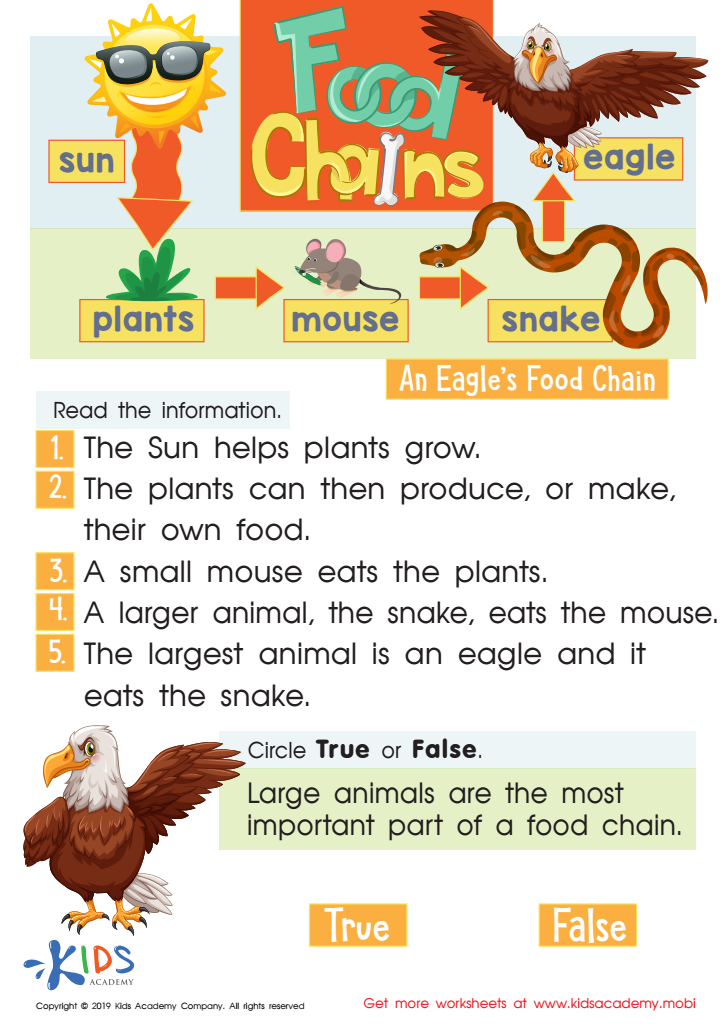
Food Chains Worksheet
 Assign to My Students
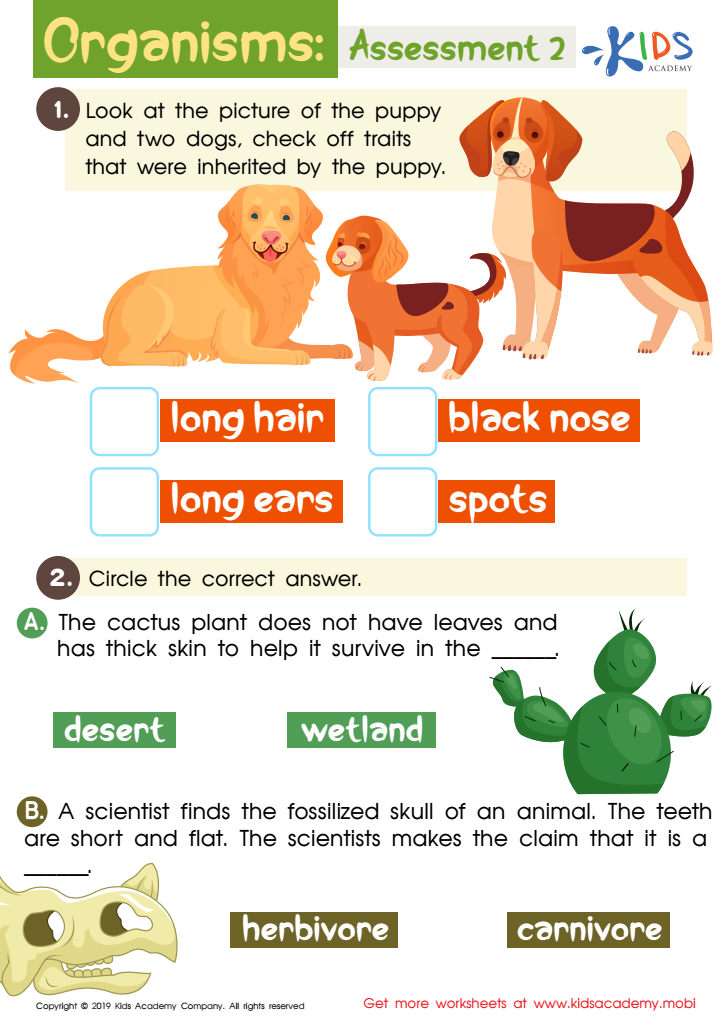
Organisms: Assessment 2 Worksheet
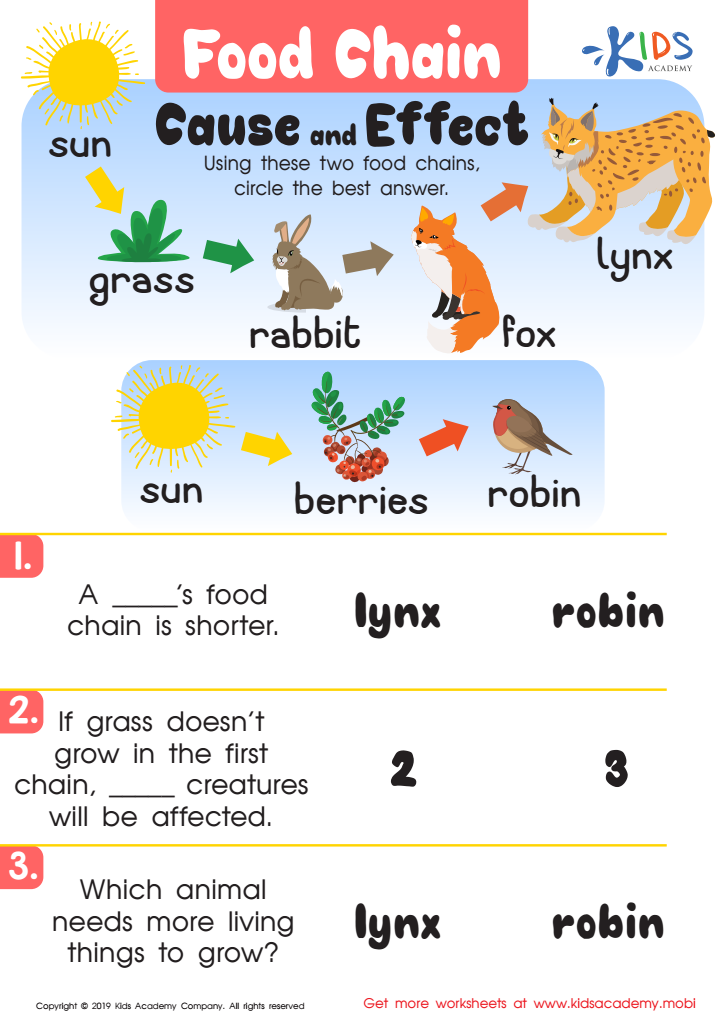
Food Chain Cause Worksheet






Understanding food chains is crucial for young children aged 6-8 because it fosters an early appreciation of the natural world and the intricate relationships that support life. Parents and teachers should care about this topic because it lays the foundation for future ecological knowledge and encourages a respect for all living things. When children grasp the concept of food chains, they learn how energy flows through ecosystems—how plants create energy through photosynthesis, herbivores consume plants, and carnivores eat herbivores.
This understanding promotes environmental consciousness and stewardship early in life. Kids can see firsthand the impact of human actions like pollution, deforestation, and climate change on these delicate food chains. This knowledge can inspire them to engage in more sustainable practices as they grow.
Moreover, learning about food chains can enhance children's critical thinking and scientific inquiry skills. They become adept at asking questions, forming hypotheses, and observing patterns in nature. This intellectual curiosity is essential for academic growth and can transfer to other subject areas like math and reading.
Ultimately, by caring about food chains, parents and teachers help nurture well-rounded, informed future citizens who are more likely to make decisions that protect and preserve our environment.








