Categorization skills Science Worksheets for Ages 6-8
4 filtered results
-
From - To
Explore our engaging categorization skills science worksheets designed specifically for ages 6-8! These printable activities help young learners develop essential organizational skills through fun, interactive lessons. Kids will enjoy sorting animals, plants, and other natural elements, fostering both their critical thinking and science knowledge. Our worksheets support early childhood education standards, making them valuable tools for teachers and parents looking to enhance learning at home or in the classroom. With vibrant illustrations and easy-to-follow instructions, these worksheets provide an enjoyable learning experience, ensuring students grasp the importance of categorization in understanding the natural world. Enhance your child’s learning journey today!
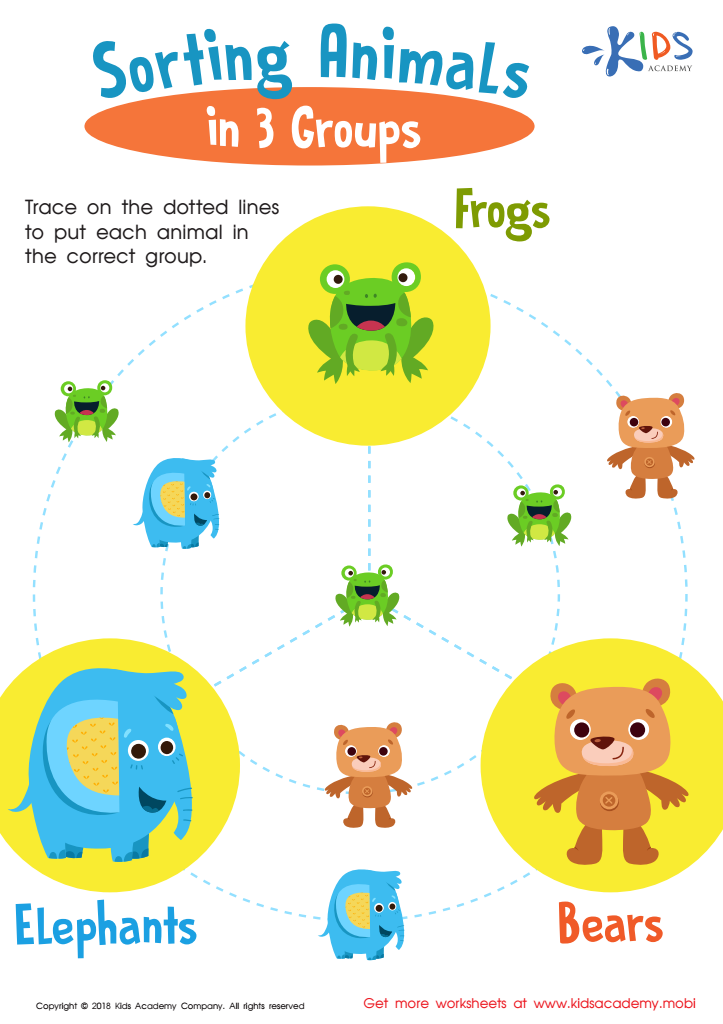
Sorting Animals in 3 Groups Worksheet
 Assign to My Students
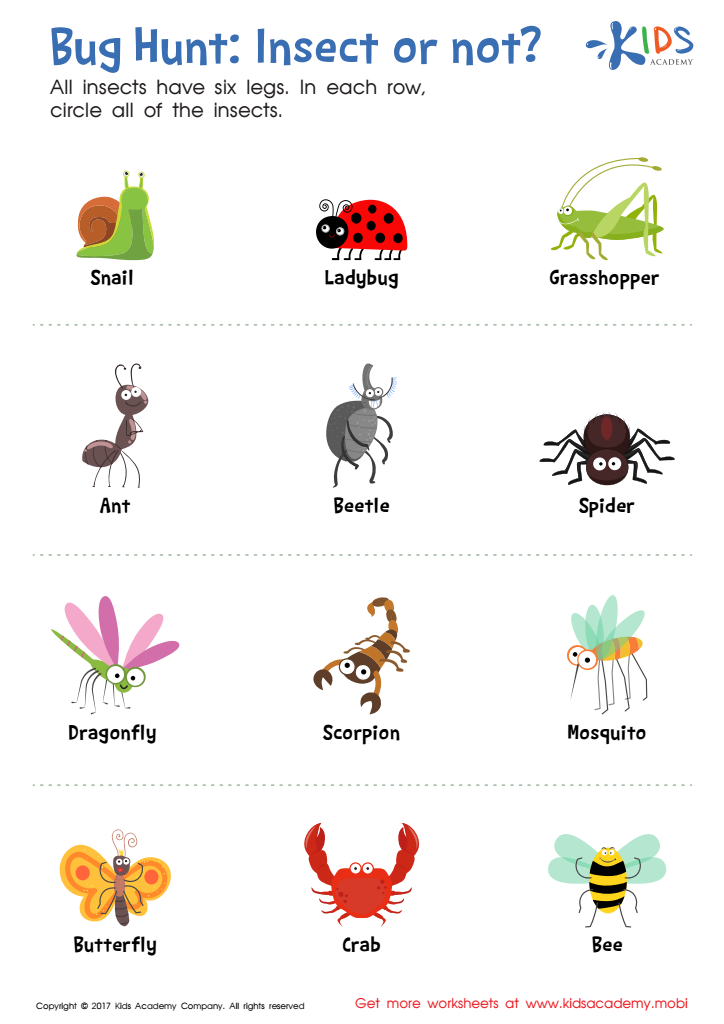
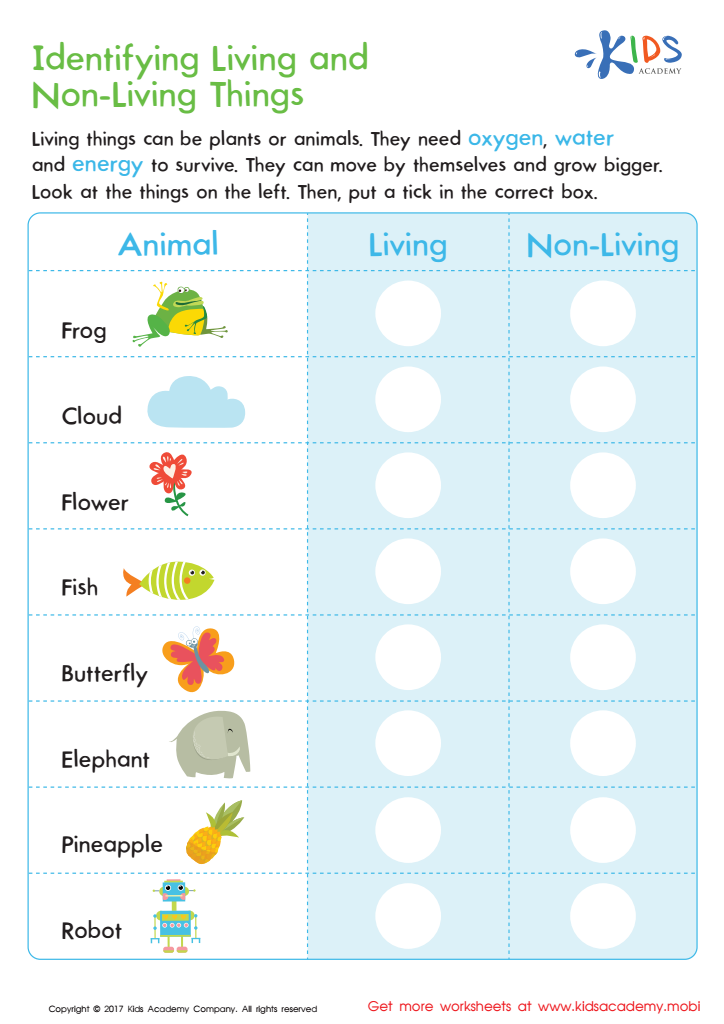
Identifying Living or Non–living Worksheet
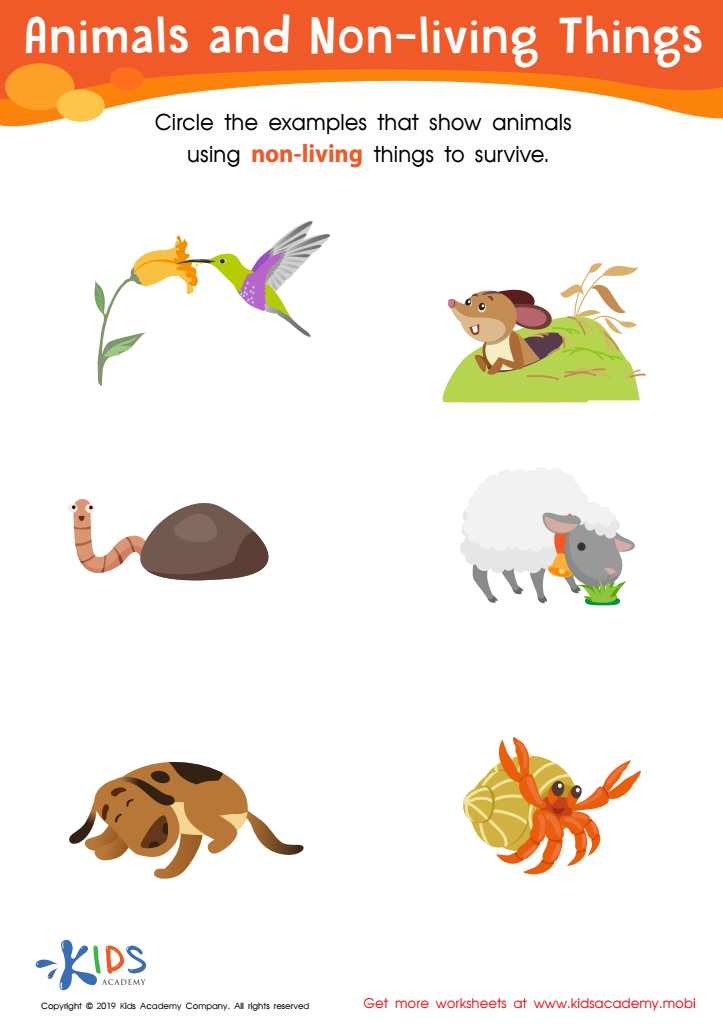
Animals and Non-Living Things Worksheet






Categorization skills are a fundamental aspect of cognitive development for children aged 6-8, and they significantly impact their learning, problem-solving, and communication abilities. For parents and teachers, fostering these skills is crucial because they form the foundation for scientific understanding and critical thinking.
At this developmental stage, children are naturally curious, eager to explore the world around them. By learning how to categorize objects and information, they enhance their ability to make sense of complex concepts and relationships. For example, sorting animals by their habitat helps them understand ecosystems, while grouping plants by their characteristics teaches them about biodiversity.
Additionally, categorization aids in language development; children expand their vocabulary as they learn labels for different groups and describe their attributes. This skill not only strengthens academic performance in science but also supports literacy and numeracy. Furthermore, encouraging categorization skills nurtures children's ability to think analytically and make connections between ideas—essential skills for lifelong learning.
In summary, when parents and teachers emphasize the importance of categorization, they not only support academic achievement but also equip children with critical thinking and problem-solving skills that will benefit them in various aspects of life.







