Identifying Animals Science Worksheets for Ages 6-8
3 filtered results
-
From - To
Discover the world of wildlife with our "Identifying Animals Science Worksheets for Ages 6-8." Designed to spark curiosity and enhance learning, these engaging and colorful worksheets allow young learners to explore different animal species, habitats, and characteristics. Ideal for kids ages 6-8, each worksheet features fun activities like matching, sorting, and labeling, promoting critical thinking and observation skills. Parents and teachers will appreciate the easy-to-follow instructions and the opportunity to expand children's knowledge of biology and nature. Start an exciting educational adventure with our interactive science worksheets, and inspire your child's love for animals and learning!
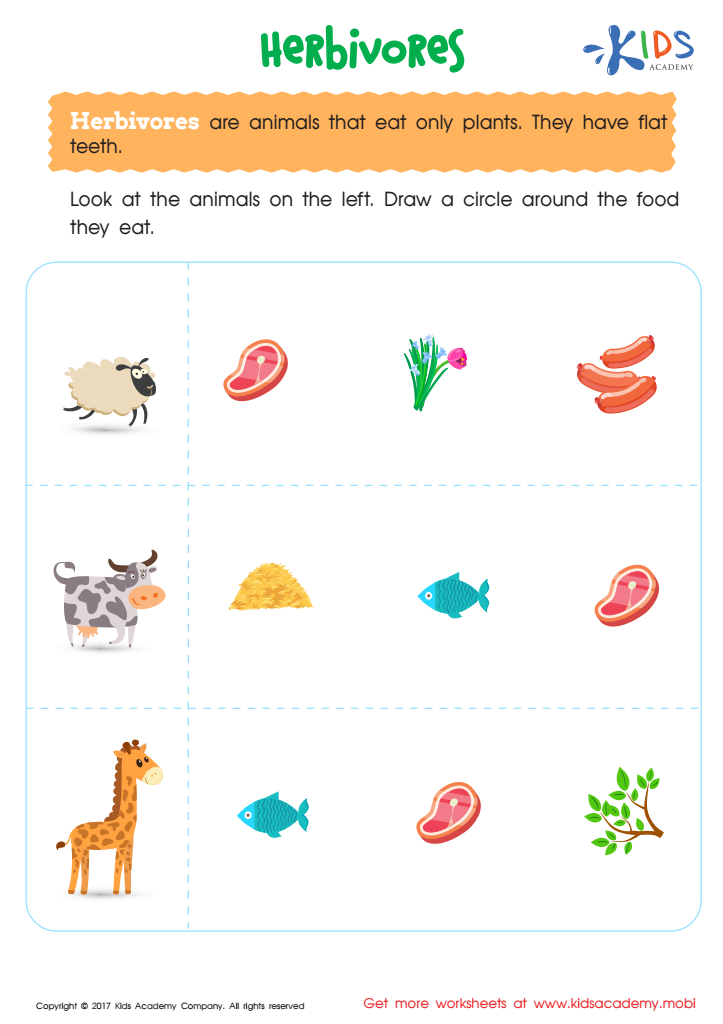
Herbivores Printable
 Assign to My Students
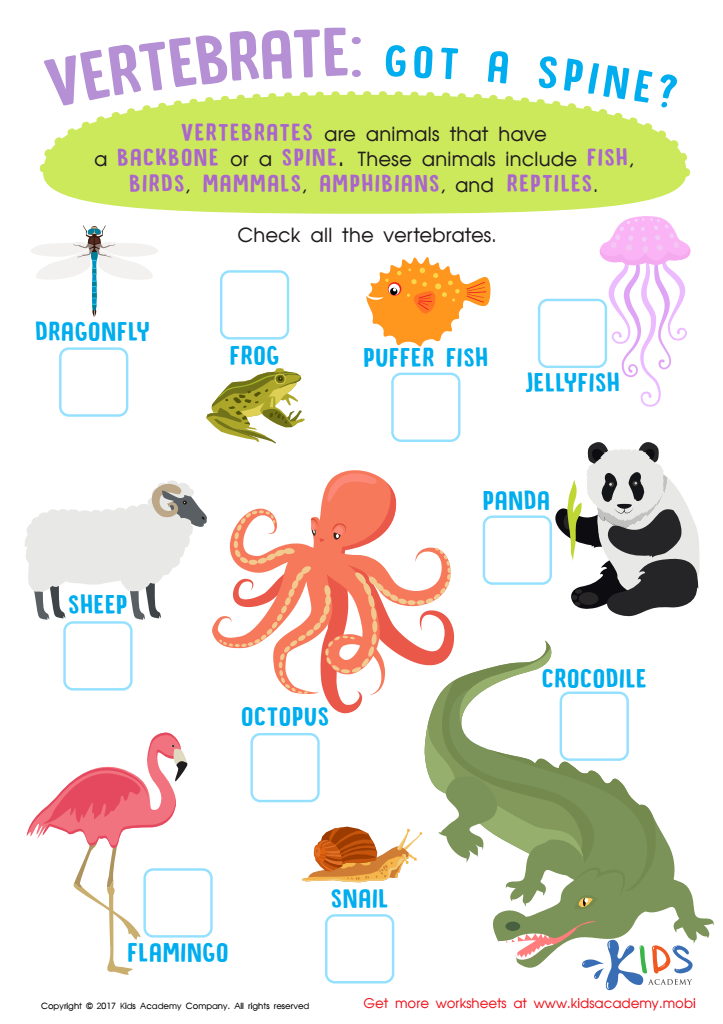
Vertebrates Animals Worksheet for 3rd Grade
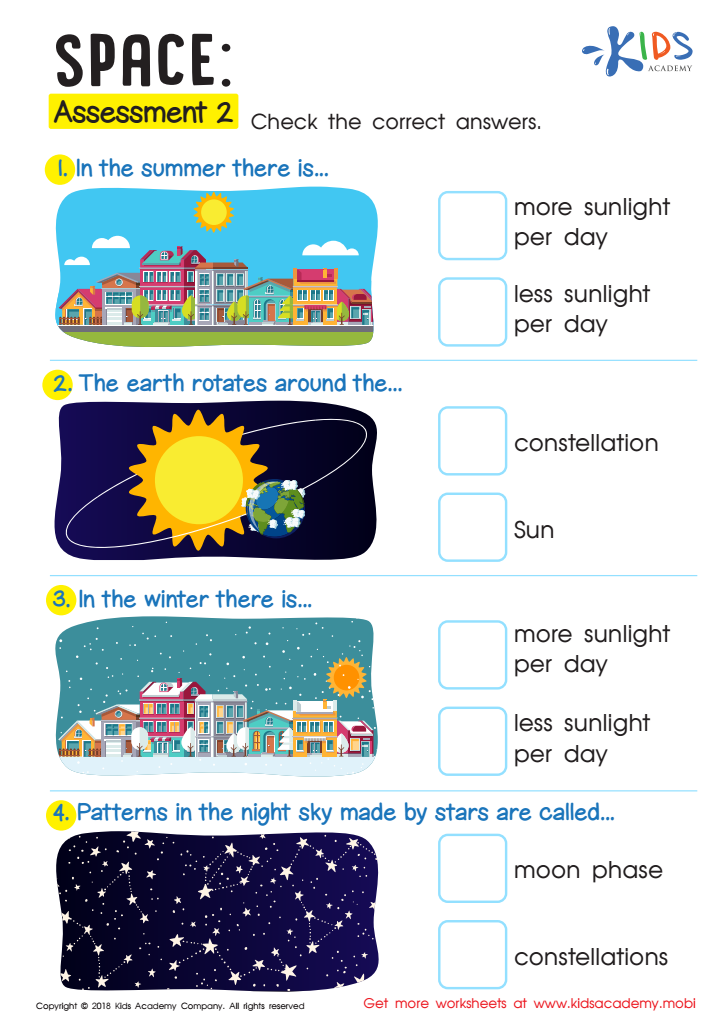
Space: Assessment 2 Worksheet


.jpg)





Identifying animals is an important aspect of early scientific education for children aged 6-8 for several reasons that parents and teachers should consider. Firstly, it promotes curiosity and a sense of wonder about the natural world. By learning to recognize different animals, children develop observational skills and improve their attention to detail. Enthusiastic engagement with nature can spark lifelong interests in science and the environment.
Secondly, identifying animals helps build fundamental knowledge in biology and ecology. Understanding various animals’ characteristics and habitats fosters an appreciation for biodiversity and the interconnectedness of living organisms. This awareness is vital in cultivating responsible attitudes toward conservation and sustainability at a young age.
Additionally, integrating animal identification into education supports cognitive development. Memorizing animal traits, names, and behaviors enhances memory and comprehension skills. It also encourages critical thinking as children learn to classify and differentiate between species.
On an emotional level, interacting with and learning about animals can develop empathy and compassion in children. Knowing more about other living beings encourages kindness and respect towards animals and instills values of stewardship.
Overall, including animal identification activities in the curriculum or daily life provides a multifaceted educational experience that benefits children academically, emotionally, and socially.







