Enhancing observation skills Physical Science Worksheets for Ages 6-8
3 filtered results
-
From - To
Boost your child's scientific curiosity with our expertly designed "Enhancing Observation Skills Physical Science Worksheets" for ages 6-8. These engaging worksheets help young learners develop critical observation and analytical skills through fun, hands-on activities, and experiments. Tailored to stimulate young minds, our resources foster a deeper understanding of physical science concepts including motion, energy, and matter. Each worksheet encourages kids to think like scientists, observing and recording their discoveries, enhancing their educational experience. Ideal for both classroom and at-home learning, these worksheets are the perfect tool to ignite a lifelong interest in science. Let's explore and discover together!
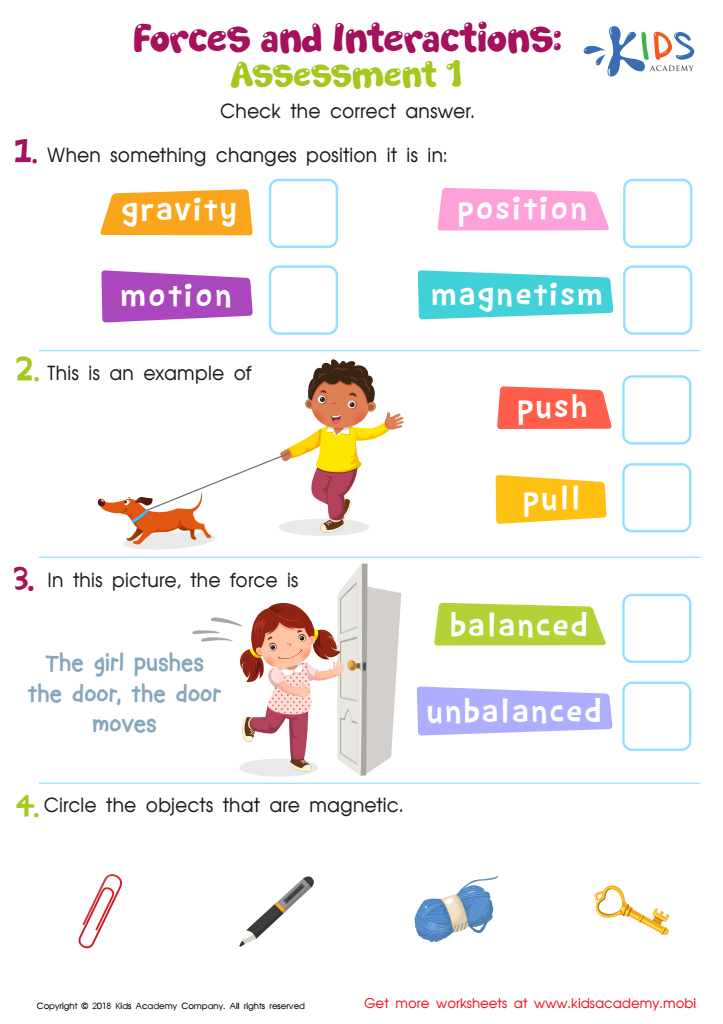
Forces and Interactions Printable
 Assign to My Students
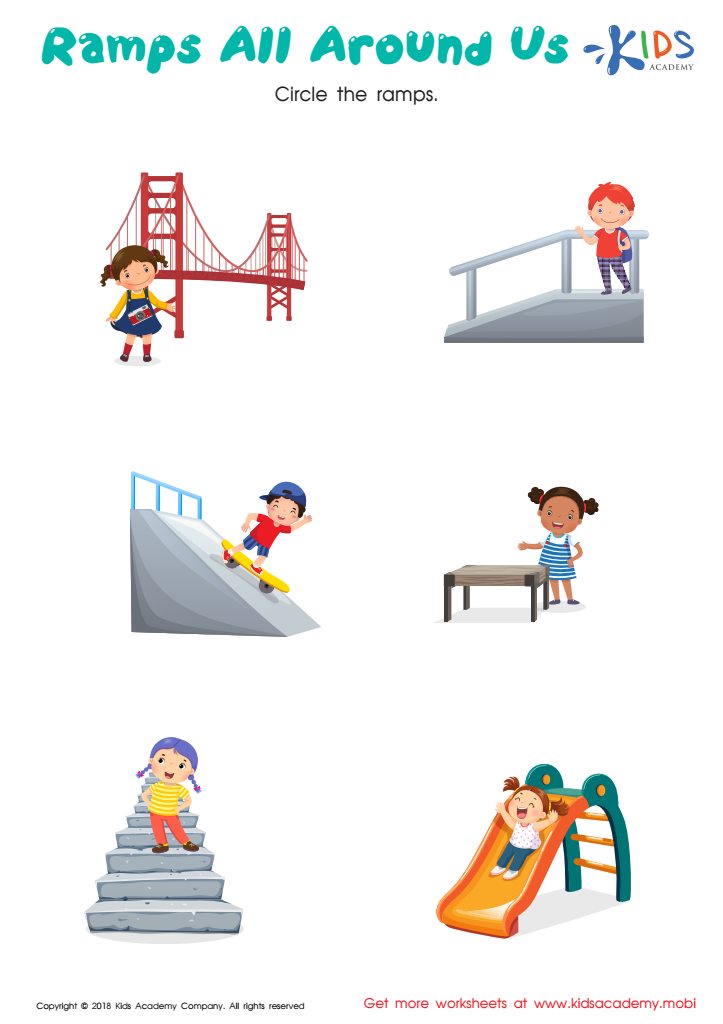
Ramps All Around us Worksheet
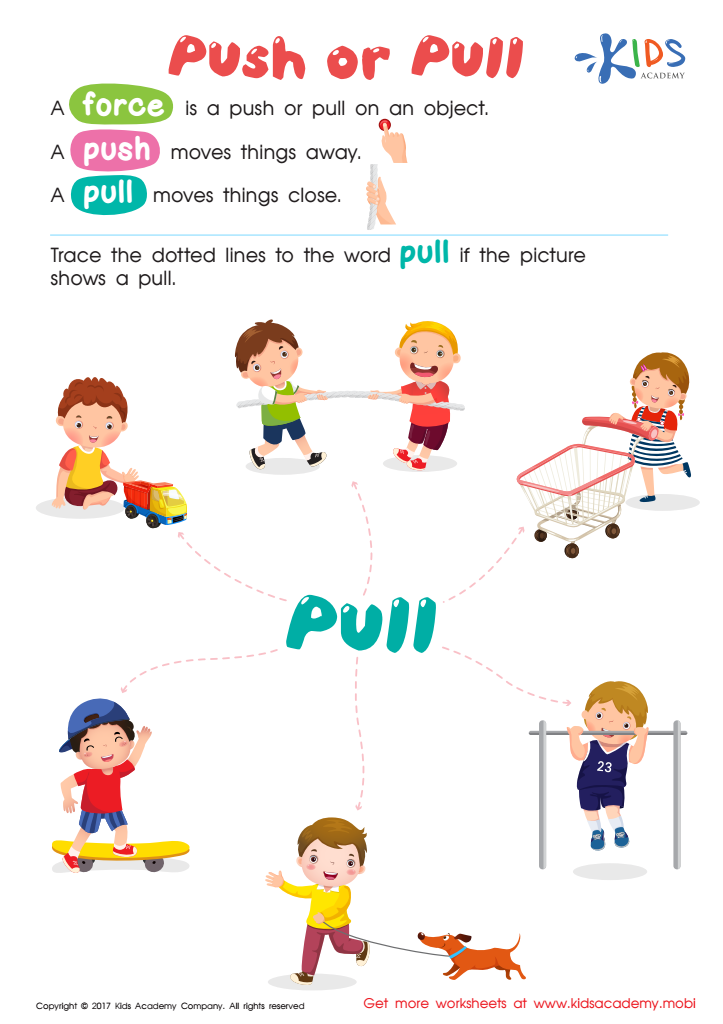
Pull or Push Worksheet








Enhancing observation skills in Physical Science for children aged 6-8 is pivotal for several reasons. At this developmental stage, children are naturally curious and observant of the world around them. Strengthening these skills can significantly benefit their cognitive growth and academic foundation. Observation is the cornerstone of scientific inquiry; by becoming adept observers, children learn to pay attention to detail, recognize patterns, and make connections between what they see and the underlying scientific principles.
This skill set not only aids their understanding of physical science concepts, such as the properties of matter, magnetism, and the basics of weather patterns, but also enhances critical thinking skills that are applicable in various domains. It fosters a sense of curiosity and encourages a proactive approach to learning, whereby children ask questions, form hypotheses, and seek out answers.
Moreover, good observation skills are invaluable beyond academics. They improve a child’s ability to focus, increase their attention span, and teach them to appreciate details in their everyday surroundings. For parents and teachers, nurturing these skills can support a child’s overall development, instilling a sense of confidence and competence in their abilities to explore and understand the world. Thus, investing time and effort in enhancing these abilities during early childhood can lay a robust foundation for future academic and life success.







