Shape Recognition Physical Science Worksheets for Ages 6-8
3 filtered results
-
From - To
Explore our engaging "Shape Recognition Physical Science Worksheets perfect for ages 6-8"! Designed to captivate young minds, these worksheets blend fundamental geometry concepts with exciting physical science activities. Your child will explore shapes, their properties, and their relevance in everyday life through fun, interactive challenges. Perfect for kindergarten and early elementary students, these printable worksheets foster both critical thinking and problem-solving skills through hands-on learning. Enhance your child’s understanding of the physical world, promote a love for science, and watch them embark on a fascinating journey of discovery with our expertly crafted educational resources.
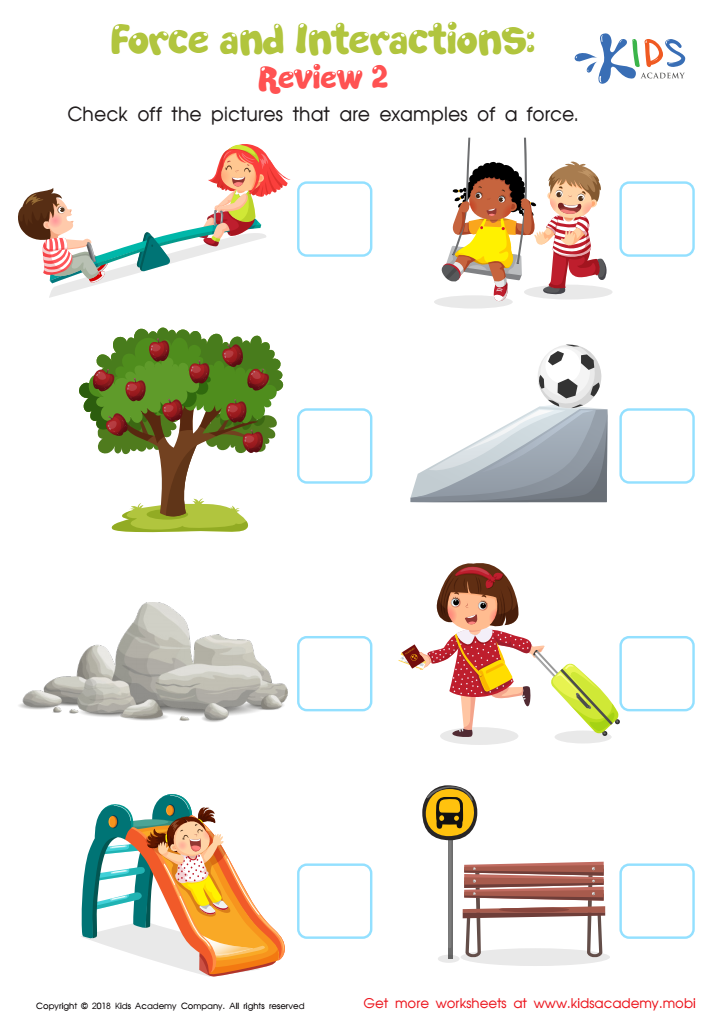
Force and Interactions: Review 2 Worksheet
 Assign to My Students
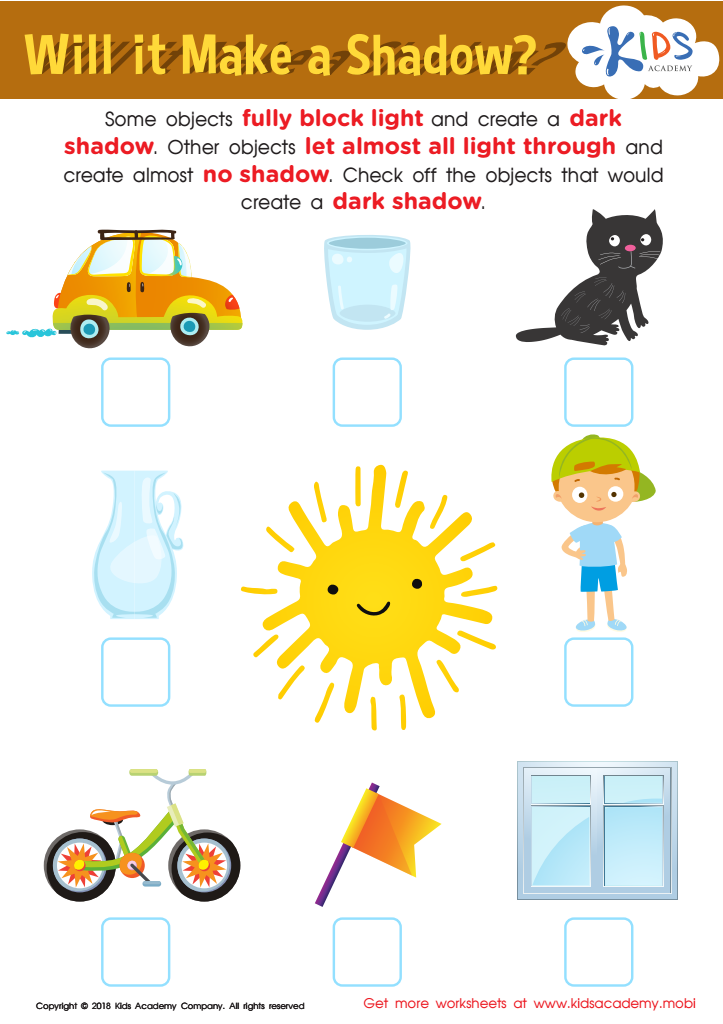
Will It Make a Shadow? Worksheet
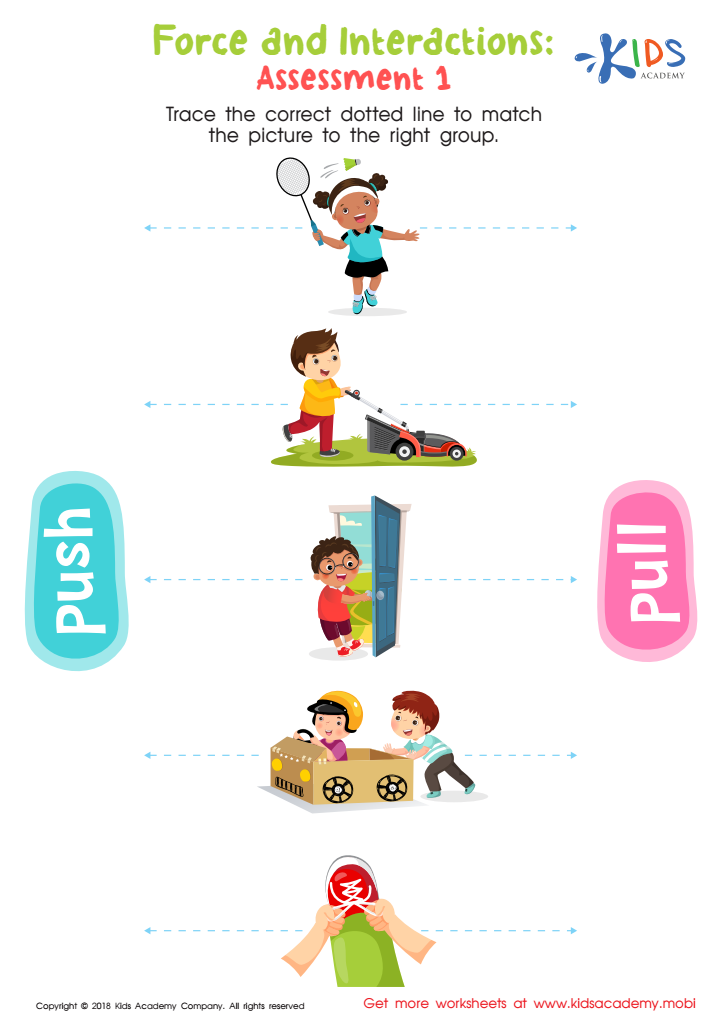
Force and Interactions: Assessment 2 Worksheet







.jpg)
Shape recognition and the basic principles of physical science play a crucial role in early childhood development for children aged 6-8. First and foremost, shape recognition enhances a child's spatial awareness and geometric understanding, which are foundational skills for more advanced mathematical concepts encountered later in their education.
Understanding different shapes such as circles, squares, and triangles supports cognitive development by improving problem-solving skills and enabling children to make sense of the world around them. This awareness also assists in the development of fine motor skills as children engage in activities such as drawing, cutting, and assembling shape-based puzzles.
Introducing physical science concepts at an early age instills a sense of curiosity and critical thinking. Simple experiments and observations related to everyday phenomena like the behavior of objects in water (sink or float) stimulate analytical thinking and provide practical knowledge that bridges the gap between theoretical learning and real-world applications.
Furthermore, early exposure to these elements encourages positive attitudes towards learning, making science and mathematics feel approachable and engaging from a young age. As parents and teachers nurture these skills, they lay a solid foundation for the child's future academic success, fostering lifelong learners who are equipped to explore and understand complex scientific and mathematical principles.







